- Company Articles
- Industry articles
- Industry standards
- EN 755 vs. ASTM: How 2040 EU Standard Aluminum Profile Stands Out Globally

EN 755 vs. ASTM: How 2040 EU Standard Aluminum Profile Stands Out Globally
Related Product
2040 EU Standard Aluminum Profile
2040 is a 2.00 x 4.00CM fractional 20 series square extrusion T-slot profile with four open T-slots, two side with 2.00cm face, the other side with 4.00cm face. The profile has align-a-grooves to assist in aligning connecting profiles.
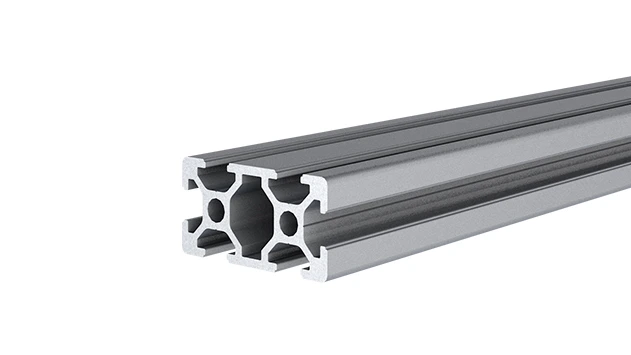
Walk into any modern factory, workshop, or tech facility, and you'll likely spot them: sleek, silver structures holding up assembly lines, supporting workbenches, or organizing tools with quiet efficiency. These are aluminum profiles—unsung heroes of manufacturing that turn chaotic workspaces into streamlined hubs of productivity. But not all aluminum profiles are created equal. Behind their unassuming exteriors lies a world of standards, engineering, and precision that can make or break a production line's efficiency. Today, we're diving into two of the most influential standards shaping this industry: EN 755 (Europe's benchmark) and ASTM (America's go-to). And at the center of this showdown? The 2040 EU Standard Aluminum Profile—a game-changer that's winning over factories from Berlin to Bangkok. Let's unpack why.
Why Standards Matter: The Backbone of Reliable Manufacturing
Before we jump into EN 755 and ASTM, let's talk about why standards exist in the first place. Imagine ordering a batch of aluminum profiles for your factory, only to find they're slightly too narrow to fit your existing brackets. Or worse, they bend under the weight of your equipment because the material wasn't tested for strength. That's where standards come in: they're rulebooks that ensure materials meet specific criteria for strength, durability, dimensions, and safety. Without them, manufacturing would be a guessing game—costly, risky, and inefficient.
EN 755 and ASTM are two of the most widely recognized standards for aluminum profiles. They're not competitors, exactly—more like different philosophies shaped by regional needs, industry priorities, and decades of engineering tradition. But understanding their differences is key to choosing the right profile for your project. And when it comes to global appeal, one profile stands out: the 2040 EU Standard Aluminum Profile. Let's start by getting to know the standards themselves.
EN 755 vs. ASTM: A Tale of Two Standards
What is EN 755?
EN 755 is Europe's answer to aluminum profile quality. Developed by the European Committee for Standardization (CEN), it's a suite of standards (EN 755-1 to EN 755-9) that cover everything from mechanical properties to tolerances for aluminum and aluminum alloys used in extruded profiles. Think of EN 755 as a stickler for precision—its focus is on consistency, tight tolerances, and material purity. European manufacturers, known for their meticulous attention to detail (hello, German engineering!), lean on EN 755 to ensure parts fit together like puzzle pieces, even across borders.
What is ASTM?
ASTM International (formerly the American Society for Testing and Materials) takes a slightly different approach. Its standards for aluminum profiles (like ASTM B221, which covers extruded bars, rods, and profiles) prioritize flexibility and adaptability. ASTM standards are widely used in North America and many global markets, emphasizing performance in diverse conditions—from extreme temperatures to heavy loads. They're designed to accommodate a broad range of applications, making them a favorite for industries that value versatility over ultra-tight tolerances.
Key Differences: A Side-by-Side Look
To really see how these standards stack up, let's compare their core focus areas. The table below breaks down the critical differences that impact manufacturers worldwide:
| Category | EN 755 (EU) | ASTM (U.S.) |
|---|---|---|
| Tolerances | Extremely tight (e.g., ±0.1mm for profile width in precision grades). Critical for modular systems where parts must interlock perfectly. | More flexible (e.g., ±0.3mm for similar dimensions). Allows for cost-effective production in high-volume, less precision-critical applications. |
| Mechanical Properties | Strict minimums for tensile strength, yield strength, and elongation (e.g., 6063-T6 alloy requires ≥215 MPa tensile strength). | Performance-based; specifies ranges rather than strict minimums (e.g., 6063-T6 allows 180–240 MPa tensile strength). |
| Material Purity | Stringent limits on impurities (e.g., iron content ≤0.35% for 6063 alloy). Ensures consistency in extrusion and finishing. | More lenient impurity thresholds, prioritizing cost-efficiency for non-critical applications. |
| Testing Requirements | Mandatory batch testing for every production run, including ultrasonic inspection for internal defects. | Sampling-based testing; frequency depends on manufacturer certification. |
At first glance, these differences might seem minor, but they add up. For a factory assembling high-precision electronics, EN 755's tight tolerances could mean the difference between a seamless workflow and constant rework. For a construction site needing lightweight beams, ASTM's flexibility might be the more practical choice. But where does the 2040 EU Standard Aluminum Profile fit into this? Let's zoom in.

The 2040 EU Standard Aluminum Profile: A Masterclass in Precision
When we talk about the "2040" profile, we're referring to its dimensions: 20mm in width and 40mm in height. Sounds simple, right? But within those measurements lies a design so thoughtful, it's become the gold standard for modular manufacturing systems worldwide. Let's break down what makes it special.
Dimensions with a Purpose
20mm x 40mm might seem arbitrary, but it's a sweet spot for versatility. It's narrow enough to fit into tight spaces (think: electronics assembly lines where every inch counts) yet sturdy enough to support heavy loads (up to 200kg per linear meter when properly braced). Unlike bulkier profiles that waste space or flimsier ones that compromise safety, 2040 strikes a balance that makes it indispensable in industries from automotive to aerospace.
Engineered to EN 755's Highest Standards
What really sets the 2040 profile apart is that it's built to EN 755's strictest guidelines. That means:
- Pinpoint Tolerances: Its width, height, and wall thickness (typically 1.5mm) vary by no more than ±0.1mm. When you're building a workstation with 2040 profiles and aluminum profile accessories like brackets or connectors, this precision ensures every piece slots together without gaps—no hammering, no forcing, no wasted time.
- Uncompromising Strength: Made from 6063-T6 aluminum alloy (the workhorse of extruded profiles), it boasts a tensile strength of 215 MPa and yield strength of 180 MPa—numbers that translate to real-world durability. In practice, that means a 2040-based shelf can hold 50kg of tools without bending, even after years of use.
- Consistent Quality: Thanks to EN 755's mandatory batch testing, every 2040 profile you buy is virtually identical to the last. No surprises, no weak links in your assembly line.
Why 2040 Stands Out Globally: Beyond the Specs
Numbers and standards tell part of the story, but the 2040 profile's global popularity comes down to how it solves real manufacturing problems. Let's look at the reasons factories around the world are making the switch.
1. It's a Lean System Dream
In today's fast-paced manufacturing world, "lean" isn't just a buzzword—it's a survival strategy. Lean systems prioritize efficiency, reducing waste, and adaptability. The 2040 profile was practically born for this. Its modular design lets you build, modify, and reconfigure workstations, material racks, and conveyor systems in hours, not days. Need to rearrange your assembly line for a new product? Just loosen the aluminum profile accessories (like T-slot nuts or corner brackets), adjust the 2040 frames, and tighten them back up. No welding, no custom fabrication, no downtime. It's why companies like Siemens and Bosch rely on 2040 profiles to keep their lean manufacturing lines agile.
2. Aluminum Extrusion Profile: Built for the Future
The 2040 profile isn't just a piece of metal—it's a product of cutting-edge aluminum extrusion profile technology. Extrusion, the process of pushing heated aluminum through a die to create complex shapes, is where EN 755's influence shines brightest. European extrusion facilities (many of which have been perfecting their craft for over a century) use precision dies and computer-controlled cooling to ensure every 2040 profile has uniform strength and surface quality. The result? A profile that's not just strong, but also easy to machine, anodize, or paint—critical for industries where aesthetics and corrosion resistance matter (looking at you, medical device manufacturers).
3. A Ecosystem of Aluminum Profile Accessories
A profile is only as good as the accessories that bring it to life. The 2040 EU profile has spawned a massive ecosystem of aluminum profile accessories designed to work seamlessly with it. Think: T-slot nuts that slide into the profile's grooves to attach shelves, hinges that connect panels at perfect angles, and even cable management clips that keep wires tidy. Because EN 755 ensures every 2040 profile is dimensionally consistent, these accessories work across brands and borders. A manufacturer in France can order brackets from a supplier in Poland and trust they'll fit—no compatibility headaches.
4. Sustainability That Matters
Today's manufacturers aren't just focused on profits—they're under pressure to reduce their environmental footprint. The 2040 profile delivers here, too. Aluminum is 100% recyclable, and EN 755's strict material purity standards mean recycled 2040 profiles retain their strength and precision. What's more, its lightweight design (about 0.8kg per linear meter) reduces shipping emissions compared to steel alternatives. For companies aiming for net-zero goals, switching to 2040 profiles is a tangible step forward.
Real-World Wins: How 2040 Profiles Solve Industry Pain Points
Still skeptical? Let's look at how 2040 profiles are transforming real businesses:
Case Study 1: Automotive Assembly Lines
A major German automaker was struggling with downtime on its electric vehicle (EV) battery assembly line. The problem? Their old steel frames were heavy, hard to reconfigure, and prone to rust. Switching to 2040 profiles changed everything. The lighter frames reduced wear on conveyor motors, cutting maintenance costs by 30%. EN 755's precision meant they could reconfigure workstations in hours (not days) when switching between battery models. And the aluminum's corrosion resistance eliminated rust-related delays. Result: Production output increased by 15% in six months.
Case Study 2: Electronics Manufacturing
A Taiwanese electronics company needed workstations for assembling delicate circuit boards. Their previous setup used wooden shelves that warped over time, leading to misaligned components. Enter 2040 profiles and aluminum honeycomb panels (a popular accessory for work surfaces). The profiles' stability kept shelves level, while EN 755's tight tolerances ensured circuit board jigs fit perfectly. Defect rates dropped by 22%, and workers reported less eye strain from leaning over wobbly surfaces.
Why ASTM Profiles Can't Compete (in Some Cases)
Don't get us wrong—ASTM profiles have their place. For applications like outdoor signage or temporary structures, their flexibility and lower cost make sense. But when precision, durability, and adaptability are non-negotiable, the 2040 EU profile pulls ahead. Let's say you're building a lean system for a pharmaceutical lab, where even a 0.5mm misalignment could compromise sterile conditions. ASTM's ±0.3mm tolerance might mean some profiles fit and others don't, risking contamination. With 2040's ±0.1mm, you're guaranteed consistency—every time.
The Future of Manufacturing: Why 2040 Will Keep Leading
As manufacturing grows more global, more automated, and more focused on sustainability, the 2040 EU Standard Aluminum Profile is poised to become even more dominant. Its blend of EN 755 precision, versatility, and eco-friendliness checks every box for modern factories. And with the rise of Industry 4.0—where modularity and adaptability are key—2040 profiles and their aluminum profile accessories will be the backbone of smart factories, powering everything from collaborative robot workstations to automated material handling systems.
So, the next time you walk through a factory and spot those sleek silver profiles, take a closer look. Chances are, they're 2040s—quietly revolutionizing how we build, create, and innovate. In the battle of standards, EN 755 vs. ASTM, the 2040 profile isn't just a winner—it's a game-changer that's making manufacturing smarter, stronger, and more sustainable, one precise extrusion at a time.