- Company Articles
- Industry articles
- Industry standards
- EN vs. ISO Standards: Compliance for Flat Swivel Castor Wheel with Brake in Global Markets

EN vs. ISO Standards: Compliance for Flat Swivel Castor Wheel with Brake in Global Markets
Related Product
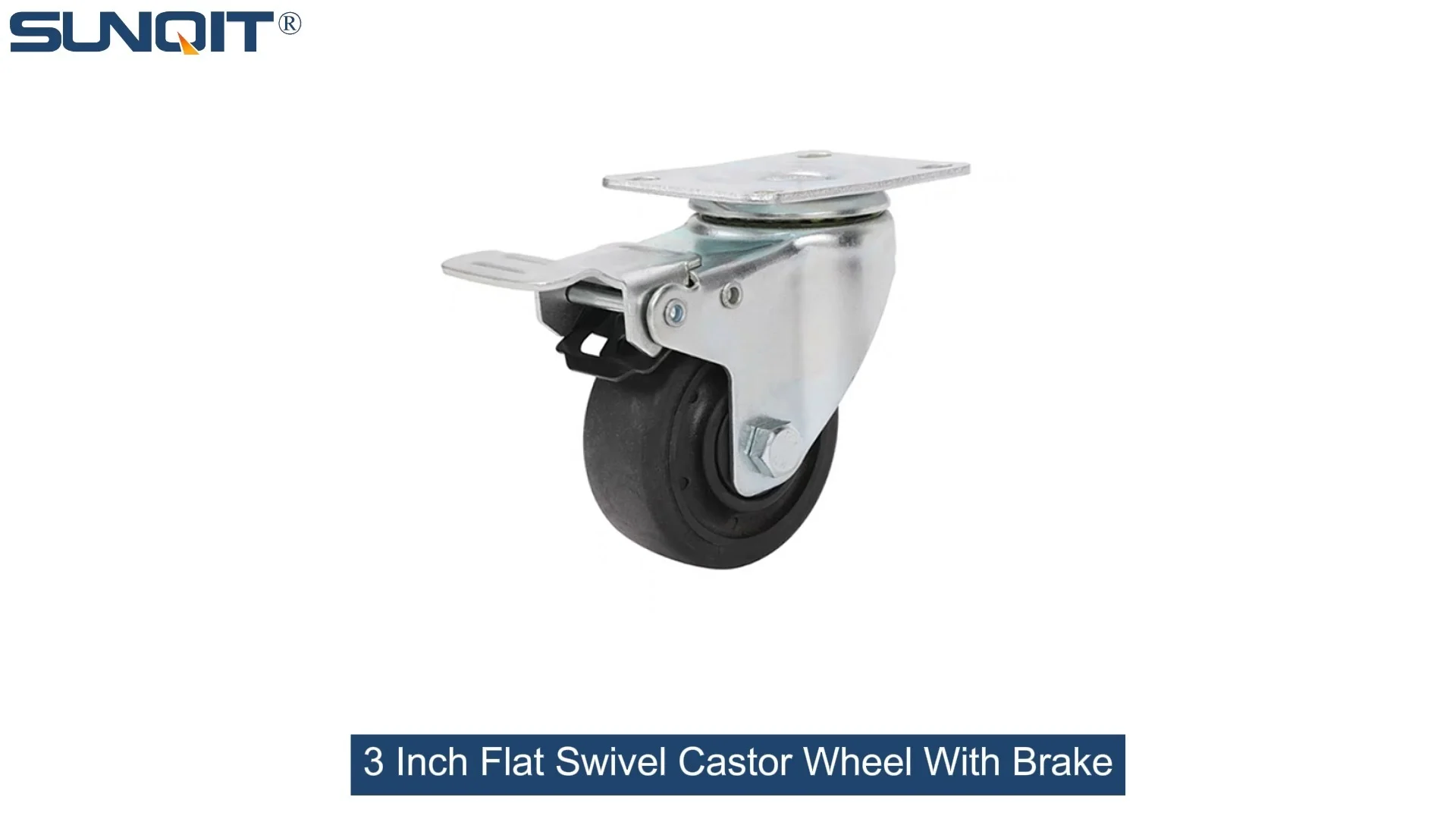
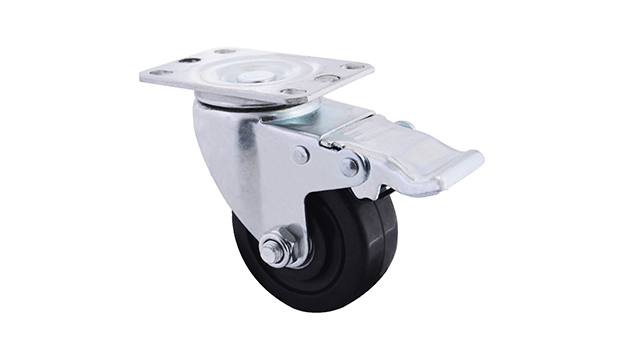
Flat Swivel Castor Wheel With Brake
Chair Casters Ball Bearing Wheels Rubber Base with brake design. Resistant to abrasion, impact and corrosion. Heavy payload can hold 70Kgs per pcs,which can make it works at a stable and smooth status.
Navigating the intricate world of safety standards to keep your operations rolling smoothly
The Unsung Heroes: Why Flat Swivel Castor Wheels with Brakes Matter
Walk through any factory floor, hospital corridor, or warehouse, and you'll spot them—quietly supporting everything from heavy machinery to delicate medical carts. Flat swivel castor wheels with brakes are the unsung workhorses of modern operations, turning static workbenches into mobile hubs, into agile transport tools, and rigid assembly lines into flexible workspaces. But here's the thing: not all castor wheels are created equal. A single faulty brake or a weak caster wheel can bring a production line to a halt, risk workplace injuries, or even damage valuable goods. That's where standards like EN and ISO step in—not as rulebooks, but as guardians of reliability, safety, and consistency.
For manufacturers, distributors, and lean system suppliers, understanding the difference between EN (European Norms) and ISO (International Organization for Standardization) standards isn't just about checking boxes. It's about building trust with clients, ensuring products perform as promised, and unlocking access to global markets. Whether you're sourcing castor wheels for a hospital's mobile workbench or a factory's turnover trolley, the right compliance can mean the difference between a smooth operation and a costly disaster.
EN vs. ISO: What Are These Standards, Anyway?
Let's start with the basics. EN standards are developed by the European Committee for Standardization (CEN) and are legally binding in the European union (EU) and European Economic Area (EEA). Think of them as Europe's way of ensuring products sold within its borders meet strict safety, health, and environmental requirements. If you're selling flat swivel castor wheels with brakes in Germany, France, or any EU country, EN compliance is non-negotiable.
ISO standards, on the other hand, are global. Developed by the International Organization for Standardization—a non-governmental body with members from 167 countries—ISO standards are voluntary but widely adopted worldwide. They focus on promoting international trade by harmonizing technical specifications, making it easier for businesses to sell products across borders. While ISO isn't legally required in most places, many countries and industries treat it as a benchmark for quality. For example, a manufacturer in China supplying castor wheels to both Europe and North America might choose to comply with both EN and ISO standards to streamline their processes.
Key Takeaway: EN = Regional (EU), ISO = Global (Voluntary but Universal)
EN standards are mandatory for EU markets, while ISO standards are a global language of quality. Many businesses aim for both to maximize market reach.
Diving Deep: EN Standards for Flat Swivel Castor Wheels with Brake
When it comes to flat swivel castor wheels with brakes, EN standards leave no stone unturned. The most relevant EN standard here is EN 12530 , which specifically covers castors and wheels for industrial applications. Let's break down its key requirements:
1. Load Capacity: How Much Weight Can They Handle?
EN 12530 categorizes castor wheels by their dynamic load capacity (the weight they can support while moving) and static load capacity (the weight when stationary). For example, a flat swivel castor wheel with brake rated for "Medium Duty" under EN standards must handle at least 100 kg dynamically and 300 kg statically. These numbers aren't arbitrary—they're based on real-world scenarios, like a workbench loaded with tools or a trolley transporting heavy components.
2. Brake Performance: Stopping Power That Saves Lives
The brake mechanism is where EN standards get particularly strict—and for good reason. A faulty brake can lead to accidents, especially in busy environments like factories or hospitals. EN 12530 requires that the brake on a flat swivel castor wheel must:
- Engage and disengage smoothly with minimal force (no more than 50 N, roughly the force of lifting a 5 kg bag of flour).
- Hold the castor stationary under 1.5 times the dynamic load capacity. So if the wheel is rated for 100 kg dynamic load, the brake must hold 150 kg without slipping.
- Withstand 10,000 cycles of engagement and disengagement without failure. That's equivalent to using the brake multiple times a day for years—EN standards expect durability.
3. Materials: No Cutting Corners on Quality
EN 12530 also specifies materials for both the caster wheel and its components. For example, if the wheel is made of rubber, it must resist wear, oil, and chemicals commonly found in industrial settings. The brake mechanism, often made of steel or aluminum, must be corrosion-resistant to ensure longevity. Even caster accessories like axles and bearings are covered—EN standards demand that these parts meet tensile strength and hardness requirements to prevent snapping or bending under stress.

ISO Standards: The Global Benchmark for Flat Swivel Castor Wheels with Brake
While EN standards focus on Europe, ISO standards aim for global consistency. The primary ISO standard for castor wheels is ISO 22889 , which covers castors and wheels for general industrial use. Let's see how it compares:
1. Load Capacity: A Slightly Different Approach
Like EN 12530, ISO 22889 defines load capacities, but its categories are broader. Instead of "Medium Duty" or "Heavy Duty," ISO uses numerical ratings (e.g., Load Class 3 = 160 kg dynamic load). This flexibility makes ISO standards easier to adapt to diverse global markets, from small workshops in India to large factories in the U.S.
2. Brake Testing: More Emphasis on Real-World Conditions
ISO 22889's brake requirements overlap with EN 12530 but add a few unique tests. For instance, it mandates testing the brake's performance on different floor surfaces—smooth concrete, rough asphalt, even wet floors. Why? Because a castor wheel that works perfectly on a factory's polished floor might fail on a warehouse's uneven concrete. ISO standards ensure that the brake works reliably everywhere, not just in controlled environments.
3. Environmental Resistance: Built to Last Anywhere
ISO standards place extra emphasis on environmental durability. Castor wheels must resist extreme temperatures (from -30°C to 70°C), humidity, and common chemicals like oils and solvents. This is crucial for global suppliers—imagine a caster wheel sold in the Middle East's hot deserts vs. a cold warehouse in Canada. ISO ensures the product holds up, no matter the climate.

EN vs. ISO: A Side-by-Side Comparison
To make it easier to see the differences, let's compare key aspects of EN 12530 and ISO 22889 for flat swivel castor wheels with brakes:
| Aspect | EN 12530 (EU) | ISO 22889 (Global) |
|---|---|---|
| Load Capacity Categories | Defined as Light/Medium/Heavy Duty with specific kg ranges | Uses numerical Load Classes (1-8) with broader kg ranges |
| Brake Force Requirement | Must hold 1.5x dynamic load capacity | Must hold 2x dynamic load capacity (stricter for some classes) |
| Temperature Resistance | -20°C to 60°C | -30°C to 70°C (wider range) |
| Floor Surface Testing | Primarily smooth concrete | Includes rough concrete, asphalt, and wet surfaces |
| Legal Status | Mandatory in EU/EEA | Voluntary but widely adopted globally |
As you can see, ISO standards often have broader or stricter requirements, reflecting their global focus. For example, the higher brake force requirement (2x dynamic load vs. 1.5x) ensures that castor wheels perform reliably in diverse environments, from busy Asian factories to European warehouses.
What This Means for You: The Lean System Supplier's Perspective
If you're a lean system supplier , compliance with EN and ISO standards isn't just about selling products—it's about delivering on the promise of "lean" itself. Lean manufacturing is all about efficiency, waste reduction, and reliability. A castor wheel that fails because it doesn't meet standards introduces waste (downtime, repairs) and risks (injuries, delays). By choosing flat swivel castor wheels with brakes that comply with both EN and ISO, you're ensuring your clients' operations stay lean and uninterrupted.
Case Study: How Compliance Unlocked a New Market
Let's take a hypothetical example: A mid-sized lean system supplier in China specializes in workbenches and turnover trolleys. For years, they sold locally, using castor wheels that met basic national standards. But when they decided to expand to Europe, they hit a wall—their castors didn't comply with EN 12530. After redesigning their products to meet EN standards (and later ISO 22889 for global appeal), they not only entered the EU market but also saw increased demand in Southeast Asia, where ISO compliance is viewed as a mark of quality. Today, their flat swivel castor wheels with brakes, paired with high-quality caster accessories like durable axles and corrosion-resistant brakes, are their best-selling components.
Pro Tip for Suppliers: Aim for Dual Compliance
Designing castor wheels to meet both EN and ISO standards might require slightly higher upfront costs, but it pays off by opening doors to more markets. Many buyers, especially large corporations, now require dual compliance as a baseline.
Beyond the Standards: The Human Side of Compliance
At the end of the day, standards like EN and ISO aren't just about technical specs—they're about people. Think of the warehouse worker who relies on a brake to keep a loaded trolley from rolling away, or the nurse who needs a stable workbench to prepare medication. When a flat swivel castor wheel with brake meets these standards, it's not just a product—it's a promise that someone's safety and efficiency are being prioritized.
This human element is why so many caster wheel manufacturers invest in compliance. It's not just about avoiding fines or passing inspections; it's about building a reputation for reliability. When a customer buys a workbench with EN/ISO-compliant castors, they're not just buying a piece of equipment—they're buying peace of mind.
Looking Ahead: The Future of Castor Wheel Standards
As industries evolve, so do standards. We're already seeing trends like:
- Eco-Friendly Materials: Both EN and ISO are likely to introduce stricter requirements for recyclable or low-VOC (volatile organic compound) materials in castor wheels and caster accessories.
- Smart Castors: With the rise of Industry 4.0, future standards might include requirements for castors with sensors that monitor load, brake wear, or temperature in real time.
- Ergonomics: More focus on reducing the force needed to engage brakes or swivel castors, making them easier to use for workers of all physical abilities.
For suppliers and manufacturers, staying ahead of these trends will be key. Those who start adapting now—by testing eco-friendly materials or integrating smart technology—will be the leaders of tomorrow's castor wheel market.