- Company Articles
- Industry articles
- Industry standards
- Ensuring Equipment Compliance: Suction Cup Anti-Slip Foot Adjusters & Safety Protocols

Ensuring Equipment Compliance: Suction Cup Anti-Slip Foot Adjusters & Safety Protocols
Related Product
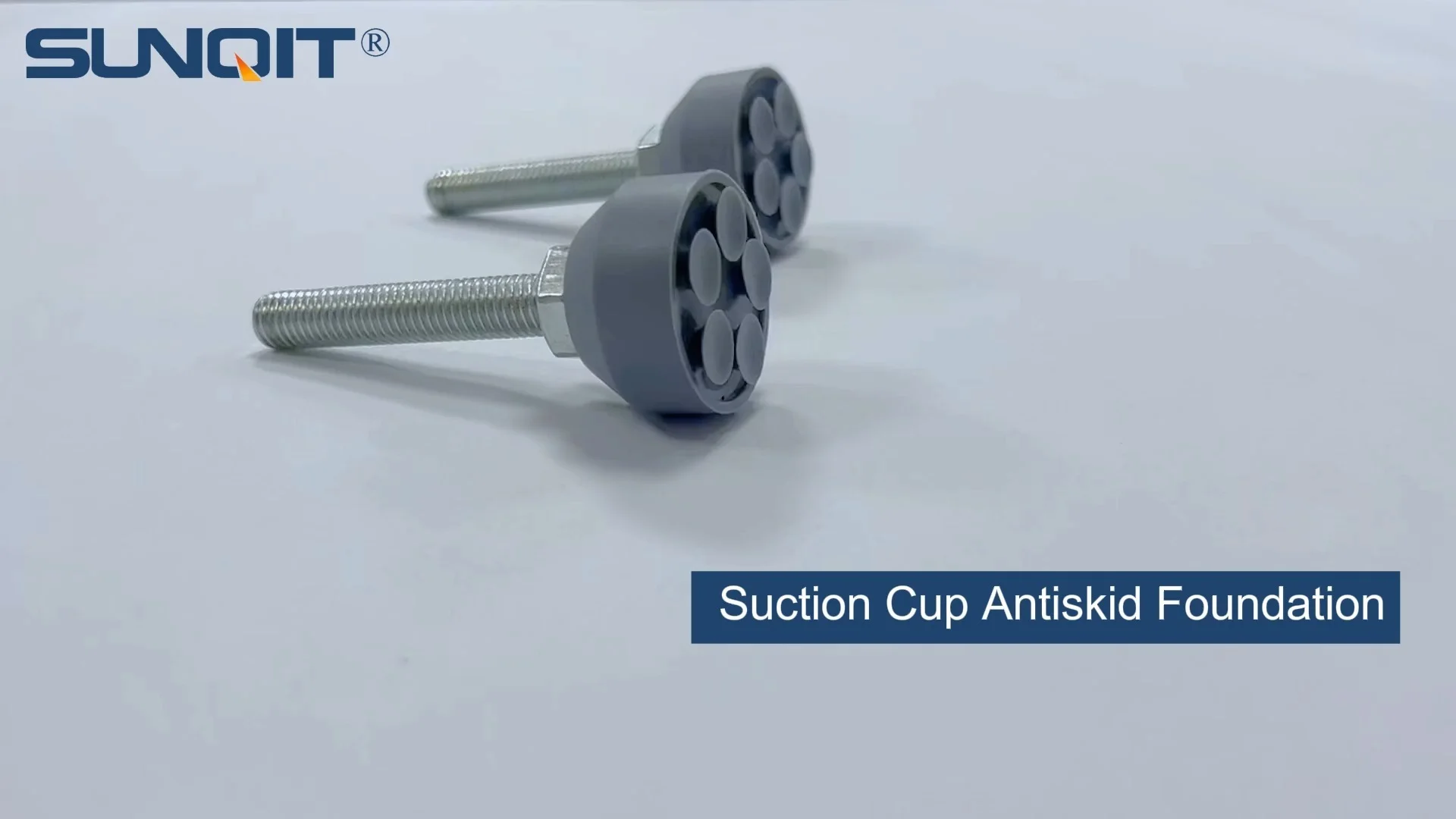
Suction Cup Anti-slip Foot Adjuster
D=35mm suction cup anti-slip foot adjusterï¼screw M10*55ï¼with a blot, used for workbench, flowrack pipe contact with groud.
Walk into any manufacturing plant, warehouse, or workshop, and you'll notice a symphony of moving parts: conveyor belts hum, workbenches hold tools and materials, and employees dart between stations to keep production on track. But amid all this activity, there's an invisible foundation keeping everything from falling apart—equipment compliance. When machines, workstations, and tools are stable, secure, and up to code, they don't just prevent accidents; they make workflows smoother, teams more confident, and businesses more profitable. Today, we're diving into one unsung hero of this foundation: the suction cup anti-slip foot adjuster. We'll explore how these small but mighty components keep equipment compliant, why they matter in lean systems, and how pairing them with smart safety protocols can transform your workplace from "just functional" to "rock-solid reliable."
Why Equipment Compliance Isn't Just a "Box-Checking" Task
Let's start with the obvious: no one wants to deal with workplace accidents. But compliance is about more than avoiding fines or legal trouble. Think of it as an investment in your team's well-being and your operation's efficiency. According to the U.S. Bureau of Labor Statistics, over 20% of non-fatal workplace injuries in manufacturing involve "contact with objects and equipment"—many of which stem from unstable machinery, sliding workbenches, or tools that tip over. These incidents don't just cost time (think: downtime for investigations, medical leave for employees); they erode trust. When workers worry their workstation might slide mid-task or a material rack could topple, their focus splits between doing their job and staying safe. That's a recipe for mistakes, delays, and frustration.
So, what does "compliance" actually mean for equipment? It's about meeting standards set by organizations like OSHA (Occupational Safety and Health Administration) or ISO (International Organization for Standardization), which outline requirements for stability, load capacity, and hazard prevention. For example, OSHA's General Duty Clause mandates that employers "furnish to each of his employees employment and a place of employment which are free from recognized hazards that are causing or are likely to cause death or serious physical harm." Translated? If your workbench wobbles when someone leans on it, or a material rack shifts under the weight of inventory, you're not just cutting corners—you're putting people at risk.
Here's where context matters: compliance looks different across industries. A lab might need equipment that resists chemical spills, while a warehouse focuses on load-bearing stability. But one common thread? The need for equipment to stay put . That's where suction cup anti-slip foot adjusters come in. They're not the flashiest tech, but they're critical for turning "maybe stable" into "absolutely secure."
The Suction Cup Anti-Slip Foot Adjuster: Small Part, Big Impact
Picture this: You're assembling electronics on a workbench. The bench has four metal feet, but the concrete floor is uneven—one corner wobbles slightly. You ignore it at first, but by mid-morning, that wobble has thrown off your precision; a tiny screw rolls off the table, and you spend 10 minutes hunting for it. Now multiply that by 50 workbenches across a factory, and you've got hours of lost productivity. Enter the suction cup anti-slip foot adjuster. These devices screw into the bottom of equipment (think: workbenches, material racks, even some conveyor supports) and use a rubber or silicone suction cup base to grip the floor. Twist them to adjust height (perfect for uneven surfaces) and press down to activate the suction—suddenly, that wobbly bench feels like it's bolted to the ground.
But how do they work, exactly? Let's break it down. The "adjuster" part is straightforward: a threaded stem lets you raise or lower the foot to level the equipment. The "suction cup" is where the magic happens. When pressed against a smooth surface (like concrete, tile, or even polished wood), the cup creates a vacuum seal. This seal resists lateral movement (sliding) and vertical lift (tipping), even under heavy loads. Unlike standard rubber feet, which rely on friction alone, suction cups adhere to the floor, turning two points of contact (foot and floor) into a mini "anchor."
Materials matter here, too. Many suction cup adjusters use durable rubber or silicone cups that stand up to oils, chemicals, and daily wear—critical in messy environments like auto shops or food processing plants. The stems are often made from steel or aluminum profile, which adds strength without adding bulk. And because they're adjustable, they're versatile: a single adjuster can adapt to a slightly warped warehouse floor or a sloped workshop, ensuring compliance no matter the space.

Why Lean Systems Can't Thrive Without Stable Equipment
If you're familiar with lean manufacturing, you know the goal is to eliminate waste—whether that's wasted time, materials, or motion. But here's a truth many overlook: unstable equipment is a silent waste generator. Think about it: when a workbench slides, employees have to stop and readjust it. When a material rack tips, they have to restack items. When tools roll off an unlevel surface, they spend time retrieving them. All of these are "non-value-added" activities—the very thing lean systems aim to stamp out.
Lean systems thrive on predictability. In a well-designed lean workflow, every tool has a place, every movement is intentional, and every step builds on the last. But instability introduces chaos. A study by the Lean Enterprise Institute found that factories with unstable workstations reported 30% more "micro-stoppages" (short pauses to fix equipment issues) than those with stabilized setups. Over a year, those micro-stoppages add up to weeks of lost production.
Suction cup anti-slip foot adjusters fit into lean systems like a missing puzzle piece. By keeping workbenches, racks, and even lightweight conveyors steady, they eliminate the need for constant readjustments. Employees can focus on their tasks, not on "babysitting" equipment. And because they're adjustable, they support one of lean's core principles: flexibility. Need to reconfigure your production line? Loosen the adjusters, move the workbench, retighten, and you're back in business—no need for permanent installations or heavy machinery to reset the space.

Stability vs. Mobility: When to Use Caster Wheels (and When to Lock Them Down)
Now, you might be thinking: "Wait, some of our equipment needs to move—like turnover trolleys or mobile workbenches. If we use suction cup adjusters, won't that make them immobile?" Great question. The key here is balance: mobility is essential for flexibility, but stability is non-negotiable when the equipment is in use. That's where caster wheels and suction cup adjusters team up.
Many mobile workbenches come with both caster wheels and adjustable feet. When you need to move the bench (say, to reposition it for a new project), you raise the feet, unlock the casters, and roll. When you're ready to work, you lower the feet (activating the suction cups), lock the casters, and voilà—stability and mobility in one. It's a simple system, but it's surprisingly effective. In fact, OSHA recommends this "dual-mode" design for equipment that needs to be both movable and stationary, as it reduces the risk of accidental movement during operation.
Let's compare two scenarios to see the difference. In Factory A, a mobile workbench has only caster wheels (no feet). During use, a worker bumps into it, and it rolls into a conveyor, damaging both. In Factory B, the same workbench has caster wheels with brakes and suction cup feet. The worker lowers the feet before starting, so even if someone bumps it, the suction cups keep it anchored. No damage, no downtime, no near-miss. Which factory would you rather work in?

Not All Foot Adjusters Are Created Equal: A Quick Comparison
Suction cup anti-slip foot adjusters aren't the only game in town. Let's break down how they stack up against other common options, so you can decide what's best for your equipment.
| Adjuster Type | Grip Strength (on Smooth Concrete) | Max Load Capacity (per foot) | Best For | Compliance with OSHA 1910.22 (Floor Stability) |
|---|---|---|---|---|
| Standard Rubber Feet | Moderate (friction-only) | Up to 500 lbs | Light equipment (e.g., small toolboxes) | Meets minimum requirements |
| Metal Spike Feet | High (penetrates soft floors like asphalt) | Up to 2,000 lbs | Outdoor or rough-terrain equipment | Meets requirements but may damage indoor floors |
| Suction Cup Anti-Slip Adjusters | Very High (vacuum + friction) | Up to 1,500 lbs | Indoor workbenches, material racks, conveyors | Exceeds requirements (ideal for high-traffic areas) |
| Magnetic Feet | High (on metal floors only) | Up to 1,000 lbs | Metal workshop floors | Meets requirements but limited to metal surfaces |
*Data based on industry testing and manufacturer specifications. Always check load capacity for your specific equipment.
Aluminum Profile: The Perfect Partner for Stable, Lightweight Equipment
So far, we've talked about the "feet" of the equation, but what about the "body" of the equipment? Even the best foot adjusters can't stabilize a flimsy workbench or a wobbly material rack. That's why the materials used to build equipment matter just as much. Enter aluminum profile—a lightweight, durable material that's become a staple in modern manufacturing and warehousing.
Aluminum profile (think: those modular, T-slot frames you see in workbenches, shelving, and machine guards) is popular for a reason. It's strong enough to support heavy loads (thanks to its extrusion process, which creates uniform strength), but light enough to move when needed. It's also resistant to rust and corrosion, making it ideal for humid or messy environments. But here's the kicker: aluminum profile's modular design pairs perfectly with suction cup anti-slip foot adjusters. Because the profiles are hollow and have standardized slots, you can easily attach adjusters at key points (like the corners of a workbench) to distribute weight evenly. This even distribution ensures the suction cups grip the floor uniformly, eliminating weak spots that could lead to tipping or sliding.
Take a typical aluminum profile workbench, for example. The frame is built from 40x40mm aluminum extrusion, with a plywood or steel top. By adding suction cup adjusters to each of the four legs, you create a stable base that can handle 500+ lbs of tools and materials without budging. And because the adjusters are screwed into the profile's T-slots, you can reposition them if you need to modify the bench's design—no drilling or welding required. It's a flexibility that aligns with lean principles and makes compliance easy to maintain, even as your needs change.
Beyond the Adjuster: Building Safety Protocols That Stick
Suction cup anti-slip foot adjusters are powerful, but they're not a "set-it-and-forget-it" solution. To keep equipment compliant long-term, you need clear safety protocols that your team actually follows. Let's break down the key steps:
1. Regular Inspections (Yes, Weekly!)
Even the best suction cups wear out over time. Rubber degrades, threads get stripped, and debris (like dust or oil) can break the vacuum seal. Set a schedule—say, every Monday morning—to inspect adjusters on high-use equipment. Check for cracks in the suction cup, ensure the threads still adjust smoothly, and wipe away any gunk that might prevent a tight seal. Make it a team effort: assign each workstation to an employee, and have them log inspections in a shared digital tool. It takes 5 minutes per station, but it catches issues before they become accidents.
2. Training: Teach Your Team to "Feel" Stability
Your employees are the first line of defense. Train them to recognize when equipment feels unstable: Does the workbench rock when they press down on a corner? Does the material rack shift when they pull out a bin? If yes, they should know to stop work, adjust the foot adjusters (or call maintenance), and only resume when the equipment is stable. Role-play scenarios during safety meetings—like simulating a wobbly bench—and walk through how to fix it. The more comfortable your team is with these quick checks, the faster they'll act when something feels off.
3. Document Everything (Yes, Even Adjustments)
Compliance isn't just about doing the work—it's about proving you did it. Keep a log of adjuster inspections, repairs, and replacements. If an OSHA inspector visits, you can show them dates, who did the check, and what was fixed. It also helps track patterns: if a certain workbench's adjusters wear out faster than others, maybe it's carrying more weight than it should, or the floor under it is extra uneven. Documentation turns anecdotes into data, making it easier to solve root causes.
4. Pair Adjusters with Visual Cues
Humans are visual creatures. Use tape or stickers to mark "no-go" zones around equipment—areas where feet or materials shouldn't be placed, as they could interfere with the suction cups. For example, a red circle around each foot adjuster on a workbench reminds employees not to stack boxes or stand on that spot, which could break the seal. Simple visual cues reduce mistakes and keep everyone on the same page.
Case Study: How One Factory Cut Accidents by 40% with Suction Cup Adjusters
Let's put this all into context with a real-world example. A mid-sized electronics manufacturer in Ohio was struggling with a recurring problem: their assembly workbenches kept sliding on the factory floor, leading to dropped components and two minor injuries in six months. The team had tried standard rubber feet, but the concrete floor was slightly uneven, and the feet couldn't get a good grip. Production was slowing down as workers wasted time retrieving parts, and morale was low—no one wanted to be the next person to trip over a sliding bench.
The plant manager decided to test suction cup anti-slip foot adjusters on 10 workbenches (about a third of their total). They also trained the assembly team to inspect the adjusters weekly and adjust them as needed. Within a month, something remarkable happened: not a single bench slid. Components stayed on the tables, retrieval time dropped by 80%, and the team reported feeling "more in control" of their work. Encouraged, the factory rolled out adjusters to all workbenches and added them to their material racks and mobile trolleys (paired with caster brakes, as we discussed earlier).
Six months later, the results spoke for themselves: workplace accidents related to unstable equipment dropped by 40%, and production output increased by 12% (thanks to less downtime). The plant manager summed it up: "We thought we were 'compliant enough' with rubber feet, but the suction cup adjusters turned 'enough' into 'excellent.' Our team doesn't just feel safer—they trust the equipment, and that trust makes them faster and more accurate."
Looking Ahead: The Future of Equipment Stability
As technology advances, so too will the tools that keep our workplaces stable. We're already seeing smart suction cup adjusters with built-in sensors that alert maintenance when the vacuum seal weakens (think: a small LED light that turns red when grip is low). There's also research into "self-healing" rubber cups that repair minor cracks, extending their lifespan. And as more factories adopt IoT (Internet of Things) systems, adjusters could sync with floor sensors to automatically level equipment if the foundation shifts—no human intervention needed.
But even with these innovations, the core principle remains the same: compliance starts with stability. Whether you're using today's suction cup adjusters or tomorrow's smart sensors, the goal is to create a workplace where equipment works with your team, not against them. After all, a stable foundation isn't just about avoiding accidents—it's about building a business that can grow, adapt, and thrive, one steady workbench at a time.
Wrapping Up: Your Equipment's Stability = Your Team's Success
At the end of the day, suction cup anti-slip foot adjusters are more than just parts—they're a statement. They say: "We care about our team's safety. We value efficiency. We're committed to doing things right." When paired with lean systems, aluminum profile equipment, and clear safety protocols, they become the backbone of a compliant, productive workplace. So take a walk through your facility today. Check a workbench—does it wobble? Look at a material rack—does it shift when you touch it? If the answer is "yes," it's time to upgrade. Your team, your bottom line, and your peace of mind will thank you.