- Company Articles
- Industry articles
- Industry standards
- Environmental Benefits of Using 4040F EU Standard Aluminum Profile in Production Facilities

Environmental Benefits of Using 4040F EU Standard Aluminum Profile in Production Facilities
Related Product
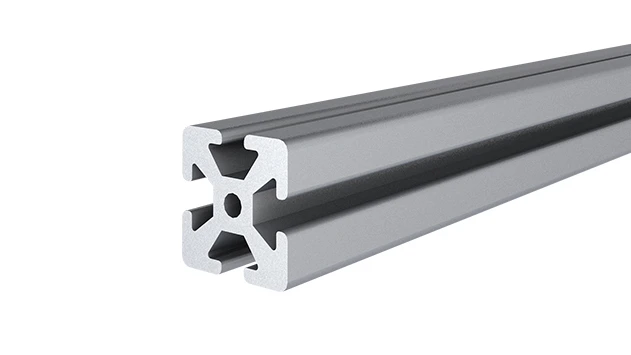
4040F EU Standard Aluminum Profile
4040F is a 4.00x4.00 CM fractional 40 series square extrusion T-slot profile with four side open T-slots, each side with 4.00cm face. The profile has align-a-grooves to assist in aligning connecting profiles.
Walk through any production facility, and you'll likely notice the hum of machinery, the organized chaos of assembly lines, and rows of workbenches stacked with tools. What you might not see, though, is the silent environmental impact woven into every beam, bracket, and work surface. For decades, manufacturing has prioritized efficiency and cost over sustainability, treating material choices as afterthoughts. But in an era where climate action is no longer optional, the "hidden" costs of these choices—carbon emissions, waste, and resource depletion—are impossible to ignore. Enter the 4040F EU Standard Aluminum Profile : a humble yet revolutionary material that's quietly reshaping how production facilities balance productivity with planet health. Let's dive into why this unassuming aluminum extrusion profile is becoming a cornerstone of green manufacturing.
What Exactly Is 4040F EU Standard Aluminum Profile?
Before we unpack its environmental perks, let's get to know the star of the show. The 4040F EU Standard Aluminum Profile is part of the broader family of aluminum extrusion profiles —materials shaped by forcing molten aluminum through a die to create consistent, custom cross-sections. The "4040" refers to its dimensions: roughly 40mm by 40mm, a versatile size that fits everything from small workbench frames to large material racks. The "F" in its name? Think of it as a seal of quality: EU standards demand rigorous testing for durability, safety, and yes, sustainability. This isn't just any aluminum bar; it's engineered to meet strict European guidelines for low environmental impact, from raw material sourcing to end-of-life disposal.
What truly sets the 4040F apart, though, is its compatibility with aluminum profile accessories —nuts, bolts, brackets, and connectors designed to snap or screw into place without welding or heavy tools. This modularity isn't just a convenience for factory managers; it's a sustainability superpower. Instead of cutting, welding, or gluing materials (processes that generate waste and emissions), 4040F profiles and their accessories let facilities build, modify, and rebuild structures with minimal fuss—and minimal environmental footprint. It's like building with giant, industrial-grade Legos, but for grown-ups who care about the planet.
Environmental Benefit #1: Infinite Recyclability—Aluminum's Secret Superpower
If there's one statistic that makes sustainability experts weak at the knees, it's this: aluminum can be recycled infinitely without losing quality. Unlike plastic, which degrades with each cycle, or steel, which requires energy-intensive reprocessing, aluminum retains 100% of its structural integrity no matter how many times it's melted down and reshaped. And the 4040F profile leans into this advantage hard.
Most 4040F profiles are already made with 30-50% recycled aluminum, and when they reach the end of their lifespan (which, as we'll see, is a long time), they can go straight back into the recycling stream. The energy savings here are staggering: producing aluminum from recycled scrap uses just 5% of the energy needed to make "primary" aluminum from bauxite ore. To put that in perspective, recycling one ton of aluminum saves enough energy to power a typical U.S. home for 10 years. For production facilities churning through materials, this isn't just a green talking point—it's a tangible way to slash carbon footprints. Imagine a factory that replaces its steel workbenches with 4040F aluminum ones. When those benches wear out (decades from now), they won't end up in a landfill; they'll become new profiles, new accessories, or even new car parts. It's a closed-loop system that turns "waste" into wealth—for both the business and the planet.

Environmental Benefit #2: Energy Efficiency Starts at the Source
Sustainability isn't just about what happens to a material after use—it's about how it's made in the first place. Aluminum extrusion, the process used to create the 4040F profile, is inherently energy-efficient compared to other manufacturing methods like steel casting or plastic injection molding. Aluminum's low melting point (660°C, vs. steel's 1,538°C) means less energy is needed to shape it, and EU standards for the 4040F profile go even further. Manufacturers must adhere to strict emissions limits, use renewable energy where possible, and minimize waste during extrusion. Some 4040F producers now run their facilities on solar or wind power, bringing the carbon footprint of production down to near-zero.
But the efficiency doesn't stop at the factory gate. The 4040F's precision-engineered design—smooth, consistent, and free of excess material—means less scrap is generated during production. Traditional steel or wood profiles often require cutting, sanding, or drilling on-site, creating piles of sawdust or metal shavings that end up in landfills. With 4040F, what you see is what you get: pre-cut lengths, standardized holes, and a perfect fit with aluminum profile accessories mean almost zero on-site waste. A small electronics manufacturer in Poland recently reported cutting its annual waste by 30% simply by switching to 4040F workbenches—all because the profiles arrived ready to assemble, no extra cutting required.
Environmental Benefit #3: Durability That Outlives Trends (and Landfills)
In sustainability, "durable" is just another word for "low-waste." A material that lasts longer needs to be replaced less often, reducing the demand for new resources and the emissions from manufacturing replacements. Here, the 4040F profile shines brighter than most. Aluminum's natural resistance to corrosion (thanks to a thin oxide layer that forms on its surface) means it can withstand the humidity, chemicals, and daily wear of production facilities without rusting or degrading. Unlike wood, which warps or rots, or plastic, which becomes brittle under heat or UV light, a 4040F frame can last 30+ years with minimal maintenance. That's three decades of service from a single set of materials—no need for frequent replacements, no mountains of old brackets cluttering landfills.
Consider a lean system —a production setup designed to minimize waste and maximize flow. Traditional lean systems often use wood or plastic racks that sag under heavy loads or crack after a few years. Replacements are frequent, and each new rack brings with it the carbon cost of manufacturing and shipping. Now imagine that same lean system built with 4040F aluminum profiles. The racks can support heavy components without bending, the workbenches stay level for decades, and the aluminum profile accessories (like connectors and casters) are just as durable. A automotive parts plant in Germany has been using the same 4040F-based lean system for 15 years, and their maintenance team reports only needing to replace a few caster wheels—everything else is still going strong. That's 15 years of productivity without the environmental toll of constant overhauls.
Environmental Benefit #4: Lightweight Strength Cuts Transport Emissions
Transportation is a hidden villain in manufacturing's carbon story. Every beam, bracket, and workbench has to be shipped from the supplier to the facility, and heavier materials mean more fuel burned, more emissions released. Aluminum's claim to fame? It's strong *and* lightweight. A 4040F profile weighs roughly one-third as much as a steel profile of the same size, making it cheaper and cleaner to transport. For a facility ordering a truckload of workbenches or material racks, that translates to fewer shipments, lower fuel costs, and a smaller carbon footprint.
Take a mid-sized facility in Spain that switched from steel to 4040F aluminum profiles for its material racks. The steel racks weighed 200kg each; the 4040F racks weigh just 70kg. Overnight, the facility went from needing two trucks to ship a month's worth of racks to one. Over a year, that's 12 fewer truck trips, saving 1.2 tons of CO2 emissions—all because the material itself is lighter. When multiplied across thousands of facilities, that's a massive reduction in transportation-related emissions.
How 4040F Stacks Up Against Traditional Materials: A Side-by-Side Comparison
Still not convinced? Let's put the 4040F EU Standard Aluminum Profile head-to-head with three common alternatives: steel, plastic, and wood. The table below breaks down their environmental impact across key metrics:
| Metric | 4040F Aluminum Profile | Steel Profile | Plastic Profile | Wood Profile |
|---|---|---|---|---|
| Recyclability Rate | 95% (infinitely recyclable) | 80% (recyclable, but quality degrades over time) | 9% (most plastic profiles are not recycled) | 60% (biodegradable, but not infinitely recyclable) |
| Energy Use in Production (per kg) | 5-7 kWh (recycled aluminum) | 15-18 kWh | 6-8 kWh (but relies on fossil fuels) | 3-5 kWh (but requires deforestation) |
| Typical Lifespan in a Production Facility | 30+ years | 15-20 years (with corrosion) | 5-8 years (brittles over time) | 8-12 years (rots/warps) |
| On-Site Waste Generated During Assembly | Almost none (pre-cut, uses aluminum profile accessories) | High (requires cutting/welding) | Moderate (may require drilling) | High (sawdust, splinters) |
| Transport Emissions (per ton shipped) | Low (lightweight) | High (heavy) | Moderate (light but bulky) | Moderate (heavy, prone to damage) |
The numbers speak for themselves: 4040F aluminum profiles outperform traditional materials in recyclability, lifespan, and on-site waste, and they're competitive in energy use when recycled content is factored in. For facilities serious about sustainability, there's no contest.
Real-World Impact: 4040F in Action
Let's look at a real example of how 4040F is making a difference. A leading automotive parts manufacturer in Germany recently revamped its assembly line using 4040F aluminum profiles, aluminum profile accessories, and lean system principles. The goal? Reduce waste and cut carbon emissions without slowing production. Here's what happened:
- Workbenches: The facility replaced 20 steel workbenches with 4040F aluminum ones. Each steel bench weighed 150kg; the 4040F benches weigh 50kg. Shipping emissions dropped by 67%.
- Material Racks: Old wooden racks were swapped for 4040F-based racks. The wooden racks needed replacement every 8 years; the 4040F racks are expected to last 30+ years, eliminating 2-3 replacements over the same period.
- Modularity: When the assembly line reconfigured six months later, the 4040F structures were disassembled, and 95% of the profiles and accessories were reused. With steel or wood, 70% would have been scrapped.
The result? The facility cut its annual carbon emissions by 8% and waste by 25%—all while improving workflow efficiency. "We didn't just go green; we got smarter," said the plant manager. "The 4040F profiles made it easy to adapt without waste, which is exactly what lean manufacturing is all about."
The EU Standard: More Than a Stamp of Approval
You might be wondering: Why "EU Standard"? What makes European aluminum profiles different? The answer lies in Europe's strict environmental regulations. To earn the EU standard label, 4040F manufacturers must meet rigorous criteria: recycled content minimums, emissions caps during production, and third-party audits of their sustainability practices. This isn't just greenwashing; it's a legal requirement. For facilities in Europe, using 4040F profiles ensures compliance with regulations like the EU's Circular Economy Action Plan, which mandates 55% of municipal waste be recycled by 2025. For facilities elsewhere, it's a guarantee that the material aligns with global best practices for sustainability.
Looking Ahead: The Future of Green Manufacturing
As more facilities wake up to the environmental cost of their material choices, demand for sustainable solutions like 4040F aluminum profiles is skyrocketing. Innovations in aluminum extrusion are making the profiles even greener: some manufacturers now add recycled ocean plastic to aluminum profile accessories (like end caps or connectors), turning plastic waste into useful components. Others are developing "zero-carbon" extrusion processes, using 100% renewable energy and carbon capture technology.
But the real potential lies in scaling this approach. Imagine a world where every production facility uses 4040F profiles for workbenches, racks, and lean systems. A world where material waste is the exception, not the rule. A world where "sustainable manufacturing" isn't a buzzword, but the default. It's not as far-fetched as it sounds. The 4040F EU Standard Aluminum Profile is proof that small, intentional choices—like the material in a workbench—can add up to big change.
Conclusion: Choose 4040F, Choose the Planet
Production facilities are the backbone of our economy, but they don't have to be a burden on our planet. The 4040F EU Standard Aluminum Profile shows us that sustainability and productivity can go hand in hand—through recyclability, energy efficiency, durability, and smart design. It's not just a material; it's a statement: that manufacturing can be part of the climate solution, not the problem.
So the next time you walk through a production facility, take a closer look at those workbenches and racks. Are they made of steel that will rust, wood that will rot, or plastic that will pollute? Or are they built with 4040F aluminum profiles—quietly, steadily, doing their part to build a greener future? The choice is clear. The planet is counting on it.