- Company Articles
- Industry articles
- Industry standards
- ESD Certification for 40 Steel Roller Track Black Wheels: What Manufacturers Need

ESD Certification for 40 Steel Roller Track Black Wheels: What Manufacturers Need
Related Product
40 Steel Roller Track Black Wheel
The roller track can be installed with multiple accessories to create different slopes and configurations of flow racks.All steel conveyor 40 roller track accessories are engineered to perfectly fit the sliding rail.
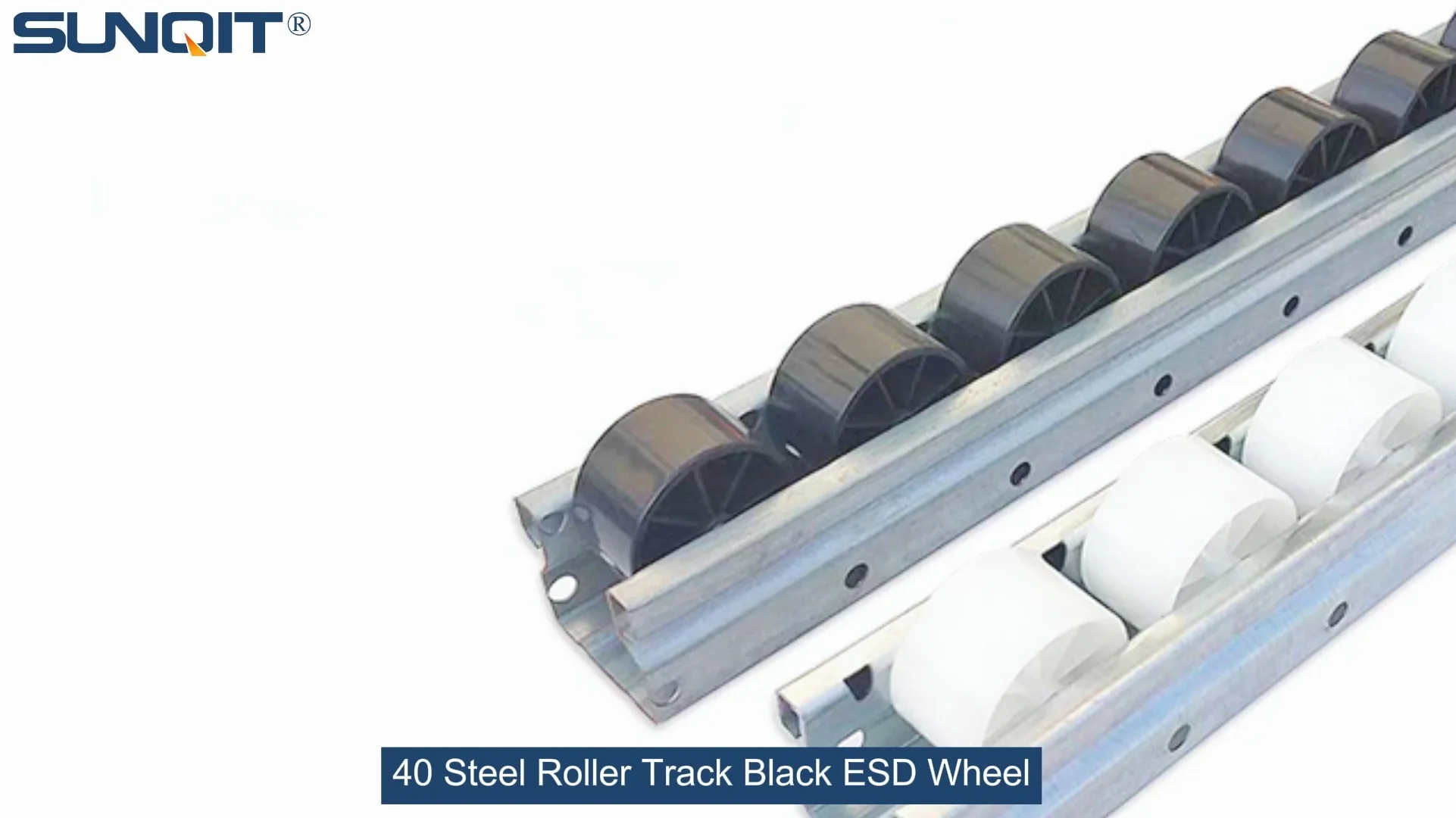
In the fast-paced world of manufacturing, where precision and reliability can make or break production lines, even the smallest components play a starring role. Take the 40 steel roller track black wheels, for example—these unassuming parts are the unsung heroes of smooth material flow, quietly supporting the movement of goods from assembly to packaging. But when electrostatic discharge (ESD) enters the equation, their role becomes critical. For manufacturers working with sensitive electronics, medical devices, or precision components, ensuring these wheels meet strict ESD certification standards isn't just a box to check—it's a promise of safety, efficiency, and product integrity. Let's dive into why ESD certification matters for 40 steel roller track black wheels, what manufacturers need to consider, and how these components fit into the bigger picture of lean manufacturing systems.
Understanding ESD Certification: More Than Just a Label
First, let's clarify what ESD certification really means. Electrostatic discharge occurs when two objects with different electrical charges come into contact, releasing a sudden flow of electricity. In manufacturing, this can damage sensitive components like microchips, circuit boards, or medical sensors—costing companies thousands in scrap, rework, and lost trust. ESD certification ensures that products like roller track wheels are designed to control or dissipate static electricity, preventing these costly incidents.
The most recognized standards in this space include ANSI/ESD S20.20 (a U.S.-based standard) and IEC 61340 (an international framework). Both set strict guidelines for materials, testing, and quality control, but they're not one-size-fits-all. For instance, ANSI/ESD S20.20 focuses heavily on systemic management, requiring organizations to implement comprehensive ESD control programs, while IEC 61340 dives deeper into material-specific resistance levels. For manufacturers, choosing the right standard depends on their industry, client requirements, and global market reach.
| Standard | Key Focus | Resistance Range (Ohms) | Common Industry Applications |
|---|---|---|---|
| ANSI/ESD S20.20 | System-wide ESD control programs | 10⁶ – 10¹¹ (dissipative) | Electronics, aerospace, defense |
| IEC 61340-5-1 | Material-specific electrostatic properties | 10⁴ – 10¹¹ (conductive/dissipative) | Medical devices, automotive electronics |
But certification isn't a one-time achievement. It requires ongoing testing and documentation. For 40 steel roller track black wheels, this means regular checks of surface resistance (using a megohmmeter), friction voltage testing (to measure static generation during use), and environmental controls (like humidity, which affects static buildup). Skipping these steps can turn a "certified" label into a false promise—and that's a risk no manufacturer can afford.
The 40 Steel Roller Track Black Wheels: Engineering for ESD Safety & Durability
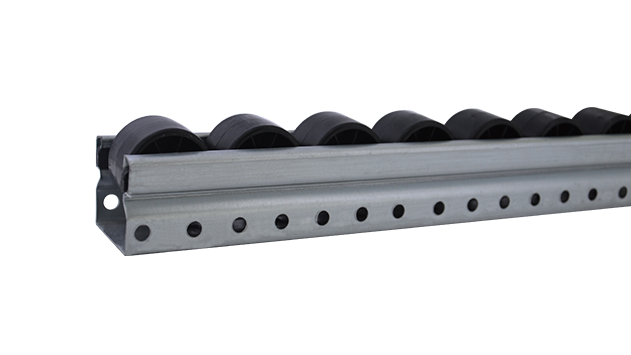
Now, let's zoom in on the star of the show: 40 steel roller track black wheels. What makes them stand out, and why are they a top choice for ESD-sensitive environments? Let's break down their key features:
- Steel Construction: Unlike plastic or aluminum alternatives, steel offers superior strength and load capacity—critical for heavy-duty applications like automotive part transport or bulk material handling. A single 40 steel roller can typically support 50-80 kg, making them ideal for high-throughput lines.
- Black Wheel Design: The black coating isn't just for aesthetics. It's often a specialized ESD-safe finish, like conductive rubber or powder coating infused with carbon black. This coating ensures the wheel maintains a consistent surface resistance (usually between 10⁶ – 10⁹ Ohms), dissipating static without becoming a conductor itself.
- Precision Engineering: These wheels are designed with tight tolerances to minimize vibration during operation. Less vibration means less friction, and less friction means less static buildup—creating a self-reinforcing cycle of ESD safety.
- Compatibility: 40 steel roller track black wheels aren't standalone components. They integrate seamlessly with flow racks, conveyors, and lean pipe systems, forming a cohesive ESD-protected workflow. For example, when paired with an ESD workstation, they ensure that components remain grounded from the moment they enter the production line until they're packaged.
Consider this: A consumer electronics manufacturer using non-ESD wheels might see a 2-3% failure rate in finished products due to hidden ESD damage. With certified 40 steel roller track black wheels, that rate drops to less than 0.5%—a difference that translates to millions in saved costs annually. It's not just about compliance; it's about protecting your bottom line.
What Manufacturers Need to Prioritize: A Checklist for Success
So, you're a manufacturer looking to integrate ESD-certified 40 steel roller track black wheels into your operations. What should you focus on? Let's walk through the essentials:
1. Material Selection: The Foundation of ESD Performance
Not all steel is created equal, and the same goes for ESD coatings. Work with suppliers who can provide material data sheets (MDS) proving their wheels meet your target resistance range. Ask about coating adhesion—will it wear off after months of heavy use? A wheel that loses its ESD properties mid-production is worse than no wheel at all.
2. Testing: Don't Take Certifications at Face Value
Reputable suppliers will conduct third-party testing, but it's smart to verify these results in-house or through an independent lab. Key tests include:
- Surface resistance measurement (using a probe to check resistance across the wheel's surface)
- Friction voltage testing (simulating real-world movement to measure static generation)
- Abrasion resistance (ensuring the coating holds up to repeated contact with materials like cardboard, plastic, or metal)
3. Integration with Lean Systems
40 steel roller track black wheels shine brightest when part of a broader lean solution. Lean manufacturing is all about minimizing waste, maximizing flow, and continuous improvement—and ESD control fits right in. For example, pairing these wheels with a flow rack creates a "first-in, first-out" (FIFO) system where materials move smoothly, reducing bottlenecks and static buildup. Similarly, integrating them into a conveyor system ensures that sensitive components are transported without manual handling, lowering ESD risk even further.
One medical device manufacturer we worked with recently combined 40 steel roller track black wheels with a custom lean pipe workstation. The result? A 30% faster assembly process and zero ESD-related defects in six months. The key was aligning ESD safety with lean principles—no extra steps, just smarter design.
4. Long-Term Maintenance
ESD certification isn't a set-it-and-forget-it solution. Over time, wheels can accumulate dirt, oil, or debris, which can compromise their resistance properties. Establish a regular cleaning schedule using ESD-safe cleaners (avoid alcohol or abrasive chemicals) and train your team to inspect wheels for signs of wear. Simple habits like wiping down tracks weekly or replacing wheels after 12-18 months of use can extend their lifespan and keep your ESD program on track.

Real-World Impact: How ESD-Certified Wheels Transform Industries
Let's look at two industries where 40 steel roller track black wheels make a tangible difference:
Consumer Electronics: Protecting the Heart of Modern Devices
In 3C assembly (computers, communications, consumer electronics), even a tiny ESD spike can ruin a smartphone's motherboard or a laptop's CPU. A major electronics manufacturer in China recently upgraded their production line with ESD-certified 40 steel roller track black wheels. Before the switch, they were losing 500+ units monthly to ESD damage. Within three months, that number dropped to 12—saving over $250,000 annually. Their secret? The wheels worked in tandem with ESD workstations and grounded conveyors, creating a fully protected ecosystem.
Medical Devices: Where Precision and Safety Meet
Medical device manufacturing demands zero tolerance for errors. Imagine a surgical robot's sensor failing mid-operation due to undetectable ESD damage—that's a scenario no manufacturer wants to face. A U.S.-based medical equipment company integrated 40 steel roller track black wheels into their cleanroom flow racks. The wheels' smooth operation reduced particle generation (critical for cleanrooms) while their ESD properties protected delicate sensors. Today, they're able to meet the strict IEC 61340 standards required for EU and FDA approval, expanding their global market reach.

Choosing the Right Partner: Why Supplier Expertise Matters
Finally, none of this is possible without a reliable supplier. When vetting potential partners, look for three key qualities:
- Industry Experience: Do they specialize in lean manufacturing and ESD solutions? A supplier who understands both can help you design a system that's efficient and compliant.
- Customization Capabilities: Every production line is unique. Can they tailor wheel specifications (size, coating, load capacity) to your needs? For example, if you're handling extra-heavy parts, can they adjust the steel gauge or bearing type?
- Transparency: Will they share test reports, certification documents, and material sources? Avoid suppliers who hesitate to prove their claims—trust is non-negotiable when it comes to ESD safety.
Remember, ESD certification is a partnership. Your supplier should be more than a vendor; they should be a consultant who helps you navigate evolving standards and optimize your processes.
Conclusion: ESD Certification as a Competitive Advantage
At the end of the day, ESD certification for 40 steel roller track black wheels isn't just about avoiding penalties or meeting client demands. It's about building a reputation for reliability, protecting your products, and creating a safer, more efficient workplace. In an industry where margins are tight and competition is fierce, these small components can be the difference between leading the market and falling behind.
So, whether you're a seasoned manufacturer or just starting to explore ESD control, take the time to invest in certified components. Your team, your clients, and your bottom line will thank you. After all, in manufacturing, the strongest systems are built on the smallest details—and 40 steel roller track black wheels are proof of that.