- Company Articles
- Industry articles
- Industry standards
- EU vs. Global Standards: Why 4040E EU Standard Aluminum Profile Stands Out

EU vs. Global Standards: Why 4040E EU Standard Aluminum Profile Stands Out
Related Product
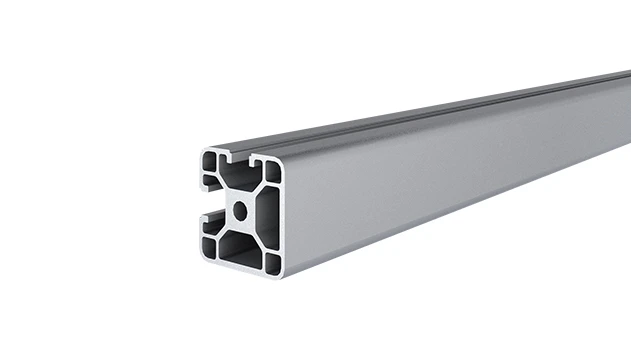
4040E EU Standard Aluminum Profile
4040E is a 4.00x4.00 CM fractional 40 series square extrusion T-slot profile with two side open T-slots, two side with closed face, each side with 4.00cm face. The profile has align-a-grooves to assist in aligning connecting profiles.
The Backbone of Modern Manufacturing: Aluminum Profiles Redefined
Walk into any modern factory, warehouse, or workshop today, and you'll likely spot a silent workhorse holding everything together: aluminum profiles. These unassuming metal structures—often sleek, modular, and surprisingly versatile—are the unsung heroes of efficient production lines, ergonomic workbenches, and agile material handling systems. From the assembly lines churning out smartphones to the workstations where mechanics repair engines, aluminum profiles form the skeleton that keeps operations running smoothly.
But not all aluminum profiles are created equal. Behind their simple appearance lies a world of engineering standards, material science, and precision manufacturing that can make or break a system's performance. In this crowded landscape, one profile has emerged as a gold standard for reliability, flexibility, and quality: the 4040E EU Standard Aluminum Profile. What sets it apart from global alternatives? Why do manufacturers across Europe—and increasingly worldwide—choose it for critical applications? Let's dive in.
First, let's clarify: aluminum profiles are not just "metal bars." They're aluminum extrusion profiles —products of a process where heated aluminum alloy is forced through a die to create specific cross-sectional shapes. This method allows for intricate designs, consistent dimensions, and tailored properties like strength, weight, and corrosion resistance. But the magic isn't just in the extrusion; it's in the standards that govern every step of production, from raw material selection to final finishing.
Standards Matter: Why EU and Global Benchmarks Diverge
To understand why the 4040E stands out, we need to start with the basics: standards. In manufacturing, standards are the rulebooks that ensure products meet safety, quality, and performance benchmarks. For aluminum profiles, two sets of standards dominate the global stage: EU standards (primarily governed by EN 755, the European norm for aluminum and aluminum alloys) and global standards (such as ISO 6892 for mechanical testing or ASTM B221 in the U.S.). While both aim to ensure quality, their priorities and requirements often differ—like two chefs following the same recipe but using different ingredients and techniques.
Global standards, by design, are more generalized. They set minimum thresholds for factors like tensile strength, dimensional tolerance, and corrosion resistance to ensure basic functionality across diverse markets. Think of them as a "one-size-fits-most" approach: they work for many applications but rarely excel in specialized or high-performance scenarios. EU standards, on the other hand, are often stricter, more detailed, and focused on long-term durability and sustainability. They're like a gourmet recipe that specifies not just "flour" but "unbleached, organic flour with 12% protein content"—every detail is intentional.
Let's break this down with a concrete example. Take dimensional accuracy: a critical factor for modular systems, where profiles must connect seamlessly with accessories like brackets, end caps, and connectors. Global standards might allow a tolerance of ±0.3mm for a 40mm-wide profile—meaning the actual width could be as small as 39.7mm or as large as 40.3mm. For basic structures, this might be acceptable, but for precision applications like automated conveyor systems or custom workbenches, even a 0.2mm discrepancy can lead to misalignments, jams, or premature wear. EU standards, under EN 755-9 (specifically for extruded profiles), often tighten this to ±0.1mm for critical dimensions. That's a 66% reduction in allowable error—small on paper, but game-changing in practice.
Key Takeaway: EU standards prioritize precision, durability, and sustainability over broad applicability. This focus on "excellence" rather than "adequacy" is why EU-compliant profiles like the 4040E EU standard aluminum profile are trusted in industries where failure is not an option—aerospace, medical device manufacturing, and high-tech electronics, to name a few.
| Feature | Global Standards (e.g., ISO/ASTM) | EU Standards (EN 755) |
|---|---|---|
| Dimensional Tolerance (Width) | ±0.3mm for 40mm profiles | ±0.1mm for 40mm profiles |
| Alloy Purity | Minimum 95% aluminum content | Minimum 99.5% aluminum content (6063 alloy) |
| Surface Treatment | Optional anodizing (5-10µm thickness) | Mandatory anodizing (10-15µm thickness) for outdoor/heavy-use |
| Load Capacity (Static) | Tested at 80% of yield strength | Tested at 90% of yield strength with fatigue resistance checks |
| Environmental Compliance | Voluntary RoHS compliance | Mandatory RoHS, REACH, and CE marking |
Another critical difference lies in material selection. Most global aluminum profiles rely on general-purpose alloys, which balance cost and basic strength. EU standards, however, often specify high-purity alloys like 6063-T5, known for its exceptional extrudability, corrosion resistance, and mechanical properties. This alloy isn't just stronger—it's more consistent. Imagine building a bookshelf with planks that vary in thickness versus using perfectly uniform boards; the latter will hold more weight, last longer, and look better over time. That's the difference 6063-T5 makes for aluminum profiles.

The 4040E EU Profile: A Masterclass in Precision Engineering
Now, let's zoom in on the star of the show: the 4040E EU Standard Aluminum Profile. At first glance, it's a simple 40mm x 40mm square tube with T-slots running along its length—features shared by countless other profiles. But look closer, and you'll notice the details that make it a standout: the crisp edges of its T-slots, the uniformity of its wall thickness, and the smooth, matte finish of its anodized surface. These aren't accidents; they're the result of meticulous manufacturing processes governed by EU standards.
Let's start with the basics: dimensions. The "4040" in its name refers to its cross-section: 40mm wide, 40mm tall. The "E" denotes its slot configuration—two T-slots per side, positioned symmetrically to maximize mounting flexibility. But EU standards take this a step further by dictating not just the outer dimensions but also the inner details. The T-slots, for example, have precise widths (typically 8mm) and depths (10mm) that ensure compatibility with aluminum profile accessories like bolts, brackets, and end caps. This compatibility is no small feat: in global standards, T-slot sizes can vary by ±0.5mm, forcing manufacturers to source custom accessories or risk loose connections. With the 4040E, a bracket from one supplier will fit a profile from another—saving time, reducing costs, and eliminating frustration.
Wall thickness is another area where the 4040E shines. While many global profiles skimp on thickness to cut costs (using 1.5mm walls for 40x40mm profiles), the 4040E typically uses 2.0mm walls (or thicker for heavy-duty variants). This might seem like a minor upgrade, but it dramatically boosts load capacity. Tests show that a 4040E profile with 2.0mm walls can support up to 200kg of evenly distributed weight over a 1-meter span—30% more than a 1.5mm-walled global counterpart. For applications like material racks or overhead conveyor supports, this extra strength isn't just convenient; it's a safety requirement.
Then there's the surface treatment. Under EU standards, the 4040E undergoes anodization—a process where the aluminum surface is electrochemically oxidized to form a hard, protective layer of aluminum oxide. This layer isn't just for looks; it's 30x more corrosion-resistant than raw aluminum, making the profile suitable for humid environments (like food processing plants) or outdoor use (such as loading docks). Global profiles often skip anodization or use thinner coatings (5-8µm vs. the EU's 10-15µm), leaving them vulnerable to rust, staining, and wear. Run your finger along a 4040E profile, and you'll feel the difference: a smooth, scratch-resistant finish that retains its appearance even after years of heavy use.
Real-World Impact: A German automotive parts manufacturer recently switched from global standard profiles to 4040E EU profiles for their assembly line workbenches. Within six months, they reported a 40% reduction in bench repairs, a 25% decrease in accessory replacement costs, and fewer worker complaints about wobbly surfaces. "It's like upgrading from a wooden ladder to a steel scaffold," one plant manager noted. "You don't realize how much you were compromising until you experience the difference."
Perhaps the most underrated aspect of the 4040E is its commitment to sustainability—a core pillar of EU manufacturing standards. Unlike many global profiles, which may contain trace amounts of harmful substances like lead or cadmium, the 4040E is fully compliant with EU REACH regulations, which restrict the use of 211 hazardous chemicals. It's also 100% recyclable, with most manufacturers using recycled aluminum (up to 70% in some cases) without sacrificing quality. This isn't just good for the planet; it's good for business. As more companies adopt ESG (Environmental, Social, Governance) goals, using sustainable materials like the 4040E has become a competitive advantage in winning contracts and building brand trust.
Beyond the Factory Floor: Where the 4040E Truly Shines
The 4040E's appeal isn't limited to its technical specs; it's about how those specs translate to real-world applications. Let's explore three areas where this profile has redefined what's possible:
1. Workbenches: Ergonomics Meets Durability
A workbench is more than just a table—it's where employees spend 8+ hours a day, where precision tasks are performed, and where tools and materials are organized. A poorly designed workbench leads to fatigue, errors, and even injuries. The 4040E transforms this space by enabling fully customizable, ergonomic workstations that adapt to human needs, not the other way around.
Thanks to its modular design, a 4040E workbench can be adjusted for height (using telescoping legs), fitted with accessories like tool rails or monitor mounts (via T-slots), and even modified on the fly to accommodate new tasks. For example, a electronics assembly workstation might start with a basic flat surface, then add a shelf for components, a LED light bar, and a cable management tray—all without drilling holes or welding. This flexibility is a game-changer for industries with shifting production needs, like contract manufacturing or R&D labs.
Durability is equally important. A workbench in a automotive shop might see daily impacts from heavy tools, spills of oil or cleaning solvents, and constant vibration from nearby machinery. The 4040E's thick walls and anodized surface stand up to this abuse, maintaining structural integrity and appearance for years. Contrast this with a global standard workbench, which might start to wobble after six months or show rust spots from chemical exposure—forcing expensive replacements.
2. Lean Systems: Agility for the Modern Factory
In today's fast-paced manufacturing world, agility is key. Companies need to reconfigure production lines, scale up operations, or pivot to new products at a moment's notice. This is where lean system principles—focused on minimizing waste, maximizing efficiency, and continuous improvement—come into play. And the 4040E is the perfect partner for lean initiatives.
Lean systems thrive on modularity, and the 4040E delivers in spades. Unlike fixed steel structures, which require cutting, welding, or specialized tools to modify, 4040E-based systems can be disassembled, reconfigured, and reused in minutes. Need to add a new conveyor lane to handle increased demand? Unbolt the existing sections, add new 4040E profiles and roller tracks, and you're up and running. Want to repurpose a material rack for a new product line? Swap out the shelves, adjust the height, and it's good to go. This "build, adapt, repeat" cycle reduces downtime, cuts capital costs, and aligns perfectly with lean's "eliminate waste" mantra.
A case in point: a Dutch electronics manufacturer used 4040E profiles to build a flexible assembly line for smartwatches. When a new model was introduced with a different battery size, they reconfigured the line in a single weekend by adjusting the 4040E-based component feeders and testing stations. A similar reconfiguration with global standard profiles would have taken a week and required new parts—costing the company thousands in lost production.
3. Material Handling: Smooth, Safe, and Reliable
Moving materials efficiently is the lifeblood of any warehouse or factory. From turnover trolleys carrying parts to flow racks feeding assembly lines, the systems that transport goods must be reliable, safe, and easy to maintain. The 4040E excels here, too, thanks to its compatibility with specialized accessories like roller tracks, casters, and guide rails.
Consider a flow rack built with 4040E profiles. The T-slots allow for precise mounting of roller tracks, ensuring that boxes or bins glide smoothly from the top shelf to the picking station—no jams, no sticking, no manual pushing. The profile's rigidity prevents sagging, even when loaded with heavy items, keeping the rack level and the flow consistent. Global standard profiles, with their looser tolerances, often result in uneven roller alignment, leading to items getting stuck or tipping over. Over time, this not only slows down operations but also increases the risk of workplace accidents.
Casters are another area where the 4040E makes a difference. When paired with high-quality caster wheels (rated for heavy loads), 4040E-based trolleys glide effortlessly across factory floors, even when fully loaded. The profile's square cross-section ensures stable mounting, reducing wobble and noise. In contrast, global profiles with irregular shapes or weak mounting points can cause casters to loosen over time, leading to wobbly trolleys that are hard to maneuver and prone to tipping.
The Perfect Partners: Aluminum Profile Accessories for 4040E
A profile is only as good as the accessories that bring it to life. The 4040E's true versatility shines when paired with EU-standard aluminum profile accessories —components designed to work seamlessly with its T-slots, dimensions, and load capacities. Let's explore a few must-have accessories and how they enhance the 4040E's functionality:
T-Slot Nuts and Bolts: The Invisible Connectors
At the heart of any modular system are the fasteners that hold it together. For the 4040E, T-slot nuts and bolts are the gold standard. These small, cleverly designed nuts slide into the profile's T-slots and rotate to lock in place, creating a secure connection without drilling holes. EU-standard T-slot nuts are precision-machined to fit the 4040E's 8mm slots perfectly, ensuring a tight grip that won't loosen under vibration. Global alternatives, with their variable slot sizes, often require oversized or undersized nuts, leading to stripped threads or wobbly joints.
End Caps: Protection and Polished Looks
Ever run your hand along the end of an aluminum profile and gotten a sharp edge? Not with 4040E end caps. These simple plastic or metal covers snap onto the profile's ends, smoothing rough edges, preventing dust and debris from entering the T-slots, and giving the system a clean, professional look. EU-standard end caps are designed to fit the 4040E's exact dimensions, so they stay in place even with frequent handling. Global end caps, which often use a one-size-fits-all approach, can fall off or leave gaps—compromising both safety and aesthetics.
Angle Brackets: Strength in Every Corner
When building frames, shelves, or workbenches, angle brackets are essential for reinforcing corners and joints. EU-standard angle brackets for the 4040E are made from high-grade aluminum or steel, with pre-drilled holes that align perfectly with the profile's T-slots. This alignment ensures that the bracket distributes weight evenly across the profile, reducing stress and preventing bending. Global brackets, which may not align with T-slot positions, often create weak points that fail under load—leading to collapsed shelves or unstable workstations.
Why Lean Systems Can't Afford to Compromise on Profiles
Lean manufacturing isn't just a buzzword; it's a philosophy that demands excellence in every detail. From reducing inventory waste to optimizing workflow, every component of a lean system must contribute to efficiency and reliability. The 4040E EU Standard Aluminum Profile does exactly that, and its impact on lean metrics—like overall equipment effectiveness (OEE), lead time, and defect rates—can't be overstated.
Consider OEE, a key lean metric that measures how much of a machine's available time is truly productive. A low OEE often stems from unplanned downtime—equipment breakdowns, jams, or maintenance issues. With 4040E-based systems, downtime drops significantly because the profiles and accessories are more durable, better aligned, and easier to maintain. A study by the European Lean Institute found that manufacturers using EU-standard aluminum profiles reported 15% higher OEE than those using global alternatives, primarily due to fewer system failures and faster repairs.
Lead time—the time it takes to produce a product from start to finish—is another area where the 4040E excels. Lean systems aim to shorten lead times by eliminating bottlenecks, and 4040E-based workstations and conveyor systems reduce bottlenecks by ensuring smooth, consistent operations. For example, a 4040E flow rack with properly aligned roller tracks ensures that materials reach assembly stations exactly when needed, preventing delays caused by stuck or misplaced parts. This reliability cuts lead times by as much as 10% in some cases, giving companies a competitive edge in fast-moving markets.
Defect rates are also lower with 4040E systems. When workbenches are stable, conveyor tracks are aligned, and tools are held securely, workers can focus on precision rather than fighting with the equipment. A Japanese automotive supplier reported a 25% reduction in assembly defects after switching to 4040E workstations, citing the profiles' stability and ergonomic adjustability as key factors. Fewer defects mean less rework, lower costs, and happier customers—all hallmarks of a successful lean system.
The Clear Choice for Quality-Minded Manufacturers
In a world where "good enough" often passes for quality, the 4040E EU Standard Aluminum Profile stands as a testament to what happens when standards are raised. Its precision dimensions, high-quality alloy, durable finish, and compatibility with top-tier accessories make it more than just a profile—it's a foundation for excellence. Whether you're building a single workbench or an entire factory system, the 4040E delivers the reliability, flexibility, and performance that modern manufacturing demands.
Global standards have their place, offering affordability and availability for basic applications. But for companies that prioritize quality, safety, and long-term value—those committed to lean principles, employee satisfaction, and sustainable growth—the 4040E is the clear choice. It's not just a metal profile; it's an investment in smoother operations, fewer headaches, and a competitive edge that lasts.
So the next time you walk through a factory and spot those sleek aluminum structures, take a closer look. Chances are, if they're built with 4040E EU Standard Aluminum Profiles, you're looking at a system that's built to last—one that's redefining what's possible in modern manufacturing.