- Company Articles
- Industry articles
- Industry standards
- Expansion Joints for 2040 EU Standard Aluminum Profile in Temperature-Fluctuating Environments

Expansion Joints for 2040 EU Standard Aluminum Profile in Temperature-Fluctuating Environments
Related Product
2040 EU Standard Aluminum Profile
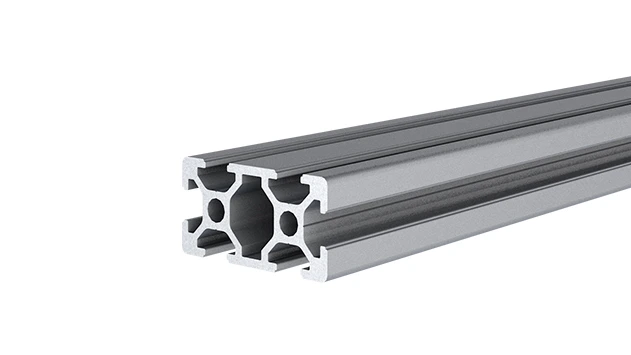
2040 is a 2.00 x 4.00CM fractional 20 series square extrusion T-slot profile with four open T-slots, two side with 2.00cm face, the other side with 4.00cm face. The profile has align-a-grooves to assist in aligning connecting profiles.
Walk into any modern manufacturing facility, warehouse, or assembly plant, and you'll likely spot sleek, silver structures lining the floors: workbenches where technicians assemble electronics, conveyor systems ferrying components between stations, or material racks organizing inventory. Chances are, many of these structures are built using aluminum extrusion profiles—lightweight, durable, and infinitely adaptable. Among the most popular choices is the 2040 EU standard aluminum profile, a workhorse in industrial design. But here's a quiet challenge that plant managers and engineers often overlook: temperature. In regions where summers bake the facility to 35°C (95°F) and winters drop to 5°C (41°F), or even more extreme climates, that 2040 profile isn't just sitting still. It's expanding. Contracting. Moving. And if left unchecked, those subtle shifts can turn into big problems: misaligned conveyors, cracked workbench surfaces, or loose joints that compromise safety and efficiency. Today, we're diving into how to solve this hidden issue with a critical but often underappreciated component: expansion joints, a key aluminum profile accessory that keeps your aluminum extrusion profile systems running smoothly—no matter how much the thermometer fluctuates.
Understanding the 2040 EU Standard Aluminum Profile: A Backbone of Modern Industry
Before we tackle temperature and expansion, let's get to know our star player: the 2040 EU standard aluminum profile. If you're in manufacturing, you've probably seen it—its name gives away the dimensions: 20mm in width and 40mm in height, with a T-slot design that makes it easy to attach accessories like brackets, panels, or shelves. What makes it "EU standard"? It adheres to strict European norms for dimensions, material quality (typically 6063-T5 aluminum alloy), and slot geometry, ensuring compatibility with a wide range of aluminum profile accessories from different suppliers. This standardization is why it's a favorite for lean system setups: you can mix and match components to build custom workbenches, flow racks, or turnover trolleys without worrying about fit issues.
But why 2040 specifically? Its versatility. At 20x40mm, it strikes a balance between strength and weight. It's sturdy enough to support heavy tools on a workbench but light enough to build mobile trolleys. Its T-slots run along all four sides, allowing for 360° attachment of accessories—perfect for adding side rails to a conveyor or mounting a monitor arm on a workstation. In lean manufacturing, where adaptability and efficiency are king, the 2040 profile is the Swiss Army knife of structural components. It's used in everything from assembly lines for automotive parts to lab benches in pharmaceutical facilities, and even in retail for custom display racks. Its popularity is a testament to its reliability—until temperature gets in the way.
The Science of Thermal Movement: Why Aluminum Profiles Can't "Stay Still"
Here's a basic physics lesson we often take for granted: most materials expand when heated and contract when cooled. Aluminum is no exception. In fact, it's more responsive to temperature changes than many other industrial materials like steel or stainless steel. To put numbers to it, aluminum has a coefficient of thermal expansion (CTE) of about 23.1 x 10⁻⁶ per °C. What does that mean in plain English? For every 1°C increase in temperature, a 1-meter length of aluminum will expand by roughly 0.023 millimeters. Conversely, a 1°C decrease will make it shrink by the same amount.
Let's apply that to a real-world scenario. Imagine a 5-meter-long 2040 EU standard aluminum profile used as a support beam for a conveyor system in a factory. On a cold winter morning, the facility is at 10°C. By midday, the sun streams through the windows, and the temperature inside climbs to 30°C—a 20°C increase. Using the CTE, that 5-meter beam will expand by: 5m (5000mm) x 23.1e-6/°C x 20°C = 5000 x 0.0000231 x 20 = 2.31mm. That's over 2 millimeters of growth in just a few hours. Now, if that beam is part of a rigid structure with no room to move—say, bolted tightly between two concrete walls—it won't just stretch freely. The ends will push against the walls, creating internal stress. Over time, that stress can warp the profile, loosen the bolts holding it in place, or even crack the concrete anchors.
The problem gets worse with longer spans. A 10-meter profile in the same 20°C temperature swing would expand by 4.62mm. Multiply that across an entire production line with dozens of connected profiles, and you're looking at cumulative movement that can misalign conveyor belts, create gaps between workbench sections, or cause roller tracks to bind. And it's not just length—aluminum profiles expand in width and height too, though the effect is less dramatic. For a 2040 profile, a 20°C swing would widen the 20mm width by about 0.009mm (negligible) but could affect how tightly accessories like brackets or panels fit into the T-slots. Over months or years of repeated expansion and contraction, even small shifts add up, turning a well-designed lean system into a maintenance headache.

The Hidden Costs of Ignoring Thermal Movement: Risks to Your Lean System
Lean manufacturing is all about eliminating waste—whether it's time, materials, or downtime. But thermal movement in 2040 EU standard aluminum profile systems introduces a silent form of waste that's easy to miss until it's too late. Let's break down the risks:
1. Downtime and Repairs: A conveyor system with misaligned 2040 profile rails might start jamming as products get stuck in gaps created by contraction. A workbench with warped surfaces could force technicians to slow down, adjusting parts to fit. Each minute of downtime adds up; according to industry estimates, unplanned downtime in manufacturing costs an average of $22,000 per minute. For a small to mid-sized plant, that's $1.32 million per hour—all because of a few millimeters of movement.
2. Reduced Lifespan of Equipment: Aluminum extrusion profiles are built to last decades, but repeated thermal stress shortens their lifespan. Cracks in the profile or its T-slots, stripped threads from loose bolts, or bent accessories (like hinges or clamps) mean you'll be replacing components years earlier than expected. And since 2040 profiles are often part of interconnected systems, replacing one damaged section can require disassembling adjacent structures, compounding the cost.
3. Safety Hazards: Loose or damaged profiles aren't just inefficient—they're dangerous. A material rack with warped 2040 uprights might become unstable, risking a collapse that injures workers or damages inventory. A conveyor with misaligned rails could derail, sending products crashing to the floor. In worst-case scenarios, sharp edges from cracked profiles could cut operators. OSHA reports that "struck-by" hazards (including falling objects from unstable racks) are among the top causes of workplace injuries in manufacturing—easily preventable with proper thermal movement management.
4. Compromised Product Quality: For precision industries like electronics assembly, even tiny misalignments matter. A workbench built with 2040 profiles that shifts by 1mm could throw off calibration for delicate tasks like soldering or component placement, leading to defective products and higher scrap rates. In pharmaceuticals, where cleanliness and precision are critical, gaps between profile sections might trap dust or debris, violating regulatory standards.
Expansion Joints: The Unsung Heroes of Aluminum Profile Accessories
So, what's the solution? Enter expansion joints—a humble but powerful aluminum profile accessory designed to let your 2040 EU standard aluminum profile move without causing chaos. Think of them as the "shock absorbers" of your industrial structure. Instead of fighting thermal movement, they embrace it, providing a controlled way for the profile to expand or contract without stress.
At their core, expansion joints are mechanical devices installed between two sections of aluminum extrusion profile (or between a profile and a fixed structure). They're engineered with gaps, sliding components, or flexible materials that absorb movement. For example, a simple slip-type expansion joint might have a male end that slides into a female end, with a gap that closes as the profile expands and opens as it contracts. A hinged joint might pivot slightly to accommodate angular movement, while a modular composite joint could use rubber or plastic inserts to flex with temperature changes.
What makes expansion joints so valuable for 2040 EU standard aluminum profile systems? They're designed to work within the profile's T-slot system, so they integrate seamlessly with existing aluminum profile accessories. No need for custom machining or welding—most expansion joints bolt directly into the T-slots using standard screws or T-nuts. They're also lightweight (matching the aluminum profile's weight advantages) and corrosion-resistant, making them suitable for both indoor and covered outdoor environments.
But not all expansion joints are created equal. The right choice depends on factors like the length of your 2040 profile spans, the typical temperature range in your facility, the load the system carries (e.g., a workbench holding 50kg vs. a conveyor moving 500kg), and whether movement is linear (along the length), angular (twisting), or both. Let's take a closer look at the most common types of expansion joints for 2040 EU standard aluminum profiles, and how to choose the best one for your needs.
| Expansion Joint Type | Material | Max Temperature Range | Absorbed Linear Movement | Max Load Capacity | Best For |
|---|---|---|---|---|---|
| Slip-Type Aluminum Expansion Joint | 6061 Aluminum Alloy | -20°C to 80°C | 0-10mm | 300kg per joint | Long, straight spans (e.g., conveyor rails, material racks) |
| Hinged Stainless Steel Expansion Joint | 304 Stainless Steel | -40°C to 120°C | 0-8mm (linear); ±5° (angular) | 500kg per joint | Outdoor or high-moisture areas (e.g., loading docks, washdown zones) |
| Modular Composite Expansion Joint | Glass-Filled Nylon + Aluminum | -30°C to 70°C | 0-6mm | 150kg per joint | Light-duty systems (e.g., workbench extensions, small parts conveyors) |
| Spring-Loaded Expansion Joint | Steel Spring + Aluminum Housing | -10°C to 60°C | 0-12mm (with constant tension) | 200kg per joint | Systems with frequent, rapid temperature swings (e.g., climate-controlled labs) |
Installing Expansion Joints: Best Practices for Long-Term Performance
Choosing the right expansion joint is half the battle; installing it correctly is the other half. Even the best aluminum profile accessory will fail if it's not mounted properly. Here's a step-by-step guide to installing expansion joints on 2040 EU standard aluminum profile systems:
Step 1: Calculate Required Movement Before installing, estimate how much your 2040 profile will expand and contract. Use the formula: Movement (mm) = Length of Profile (mm) x CTE of Aluminum (23.1e-6/°C) x Max Temperature Swing (°C). For example, a 6-meter (6000mm) profile in a facility with a 30°C swing (from 0°C to 30°C) will move: 6000 x 23.1e-6 x 30 = 4.158mm. Choose an expansion joint that can absorb at least 1.5x this amount (to account for unexpected temperature spikes), so 6-7mm capacity in this case.
Step 2: Position Joints Strategically Don't wait until the end of a long span to install a single joint—spread them out. For spans over 3 meters, install one joint every 3-4 meters. For example, a 12-meter conveyor rail should have 3-4 slip-type joints evenly spaced, not just one at the midpoint. This distributes movement stress and prevents excessive gap formation in one area.
Step 3: Leave Initial Gaps When installing, the joint should start with a "cold gap" (if installing in winter) or "hot gap" (if installing in summer) to account for future movement. For a slip-type joint with 10mm total capacity, if installing on a 20°C day and your winter low is 5°C (15°C cooler), the profile will contract by: Length x CTE x 15°C. If the span is 4 meters (4000mm), contraction = 4000 x 23.1e-6 x 15 = 1.386mm. So set the initial gap at 1.386mm + 2mm (buffer) = ~3.5mm. This ensures the joint has room to expand in summer without bottoming out.
Step 4: Avoid Over-Tightening When bolting the joint to the 2040 profile, use a torque wrench and follow the manufacturer's specs (typically 4-6 Nm for M5 screws in aluminum). Over-tightening crushes the T-slot or strips the threads, preventing the joint from sliding freely. If using lock washers, opt for split washers or thread-locking fluid (like Loctite) instead of nylon-insert nuts, which can bind during movement.
Step 5: Test Movement After installation, simulate temperature changes by heating the profile with a heat gun (gently!) or cooling it with a cold pack (avoiding condensation). Check that the joint slides or flexes smoothly without sticking. If it binds, check for debris in the joint, misalignment, or over-tightened bolts.
Case Study: How a Automotive Plant Cut Downtime by 40% with Expansion Joints
A mid-sized automotive parts manufacturer in Germany was struggling with frequent conveyor jams on their 2040 EU standard aluminum profile-based assembly line. The plant, located in a region with hot summers (up to 38°C) and cold winters (down to -5°C), saw jams spike in spring and fall, when daily temperatures swung by 20°C or more. Maintenance teams were spending 2-3 hours per week adjusting the conveyor rails, and unplanned downtime cost the plant ~€15,000 monthly.
After consulting with an aluminum profile accessories supplier, they installed slip-type aluminum expansion joints every 3.5 meters along the 22-meter conveyor line. The joints, with a 10mm movement capacity, were positioned with initial gaps calculated for their local temperature extremes. Within two months, conveyor jams dropped by 90%, and maintenance time fell to just 30 minutes per month. The plant recouped the cost of the joints (€2,800) in under two months and extended the expected lifespan of their 2040 profile system from 5 years to an estimated 12 years.
Maintaining Your Expansion Joints: Keeping Them Working for Years
Installing expansion joints isn't a "set it and forget it" solution—like any aluminum profile accessory, they need regular care to perform their best. Here's a quick maintenance checklist to keep your 2040 EU standard aluminum profile joints in top shape:
Monthly Inspections: Check for debris (dust, grease, metal shavings) in the joint gaps—these can cause binding. Wipe with a dry cloth or use compressed air to clean. Look for signs of corrosion (white powdery spots on aluminum joints) or rust (on steel components), especially in humid environments. Treat with a mild aluminum cleaner or anti-corrosion spray if needed.
Quarterly Lubrication: Slip-type joints with metal-on-metal sliding surfaces need light lubrication to prevent friction. Use a dry PTFE spray (not oil-based lubricants, which attract dust) on the sliding parts. Apply a thin coat and work the joint back and forth to distribute the lubricant.
Annual Gap Adjustment: Over time, initial gaps may shift due to wear or changes in your facility's temperature patterns (e.g., a new HVAC system that reduces temperature swings). Recalculate movement and adjust gaps if needed—this is especially critical after extreme weather events (e.g., an unusually hot summer or cold winter).
replace Worn Components: If you notice cracks in composite joints, bent metal parts, or excessive play (more than 1mm of looseness when not moving), replace the joint. Most aluminum profile accessories suppliers offer replacement parts (e.g., sliding inserts for slip joints) to avoid replacing the entire joint.
Conclusion: Building Resilient Systems with the Right Aluminum Profile Accessories
The 2040 EU standard aluminum profile is a cornerstone of modern industrial design, enabling the flexible, efficient lean systems that drive today's manufacturing. But its performance—like any material—depends on how well we account for the forces acting on it. Temperature fluctuations may seem small, but their impact on aluminum extrusion profiles is real, with consequences ranging from downtime to safety risks.
Expansion joints, as a key aluminum profile accessory, offer a simple, cost-effective solution. By absorbing thermal movement, they protect your 2040 profile systems, extend their lifespan, and keep your operations running smoothly—no matter how much the mercury rises or falls. The key is to choose the right joint type, install it strategically, and maintain it regularly.
So, the next time you're designing a workbench, conveyor, or material rack with 2040 EU standard aluminum profiles, don't just focus on the visible components. Remember the quiet hero working behind the scenes: the expansion joint. It may not be the flashiest part of your system, but it's the one that ensures your lean system stays lean—efficient, reliable, and ready to adapt, even when the temperature isn't.