- Company Articles
- Industry articles
- Industry standards
- External Straight Aluminum Joints: Safety Standards for Industrial Use

External Straight Aluminum Joints: Safety Standards for Industrial Use
Related Product
External Straight Aluminum Joint
Aluminum pipe joint outside connection used for two pcs 28pcs aluminum pipe connection in straight angle,it connects two pcs pipe from outside.
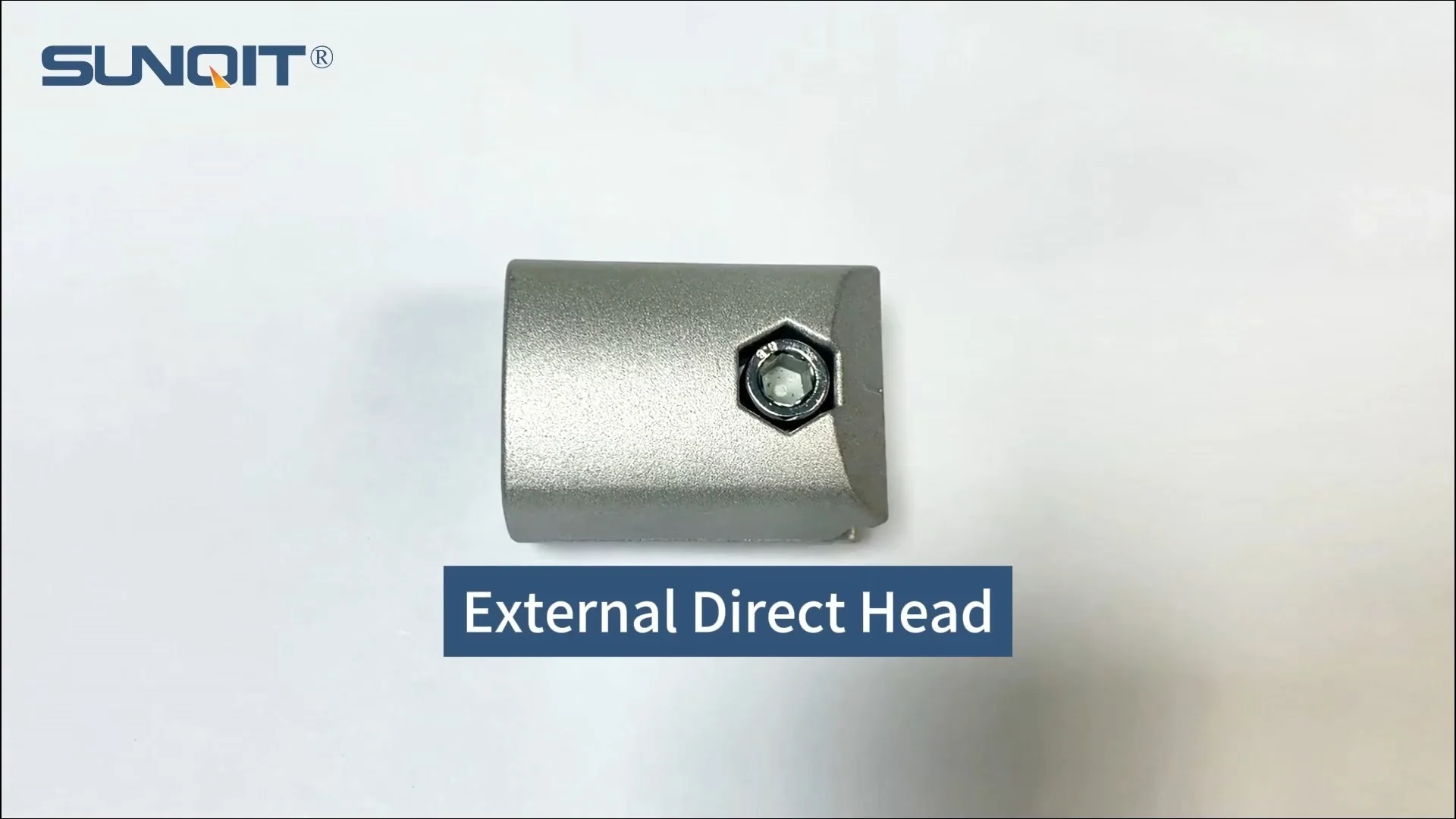
Ensuring reliability, durability, and worker protection in every connection
Introduction: The Unsung Heroes of Industrial Stability
Walk into any manufacturing plant, warehouse, or assembly line, and you'll likely spot them—quietly holding everything together, yet rarely getting the attention they deserve. External straight aluminum joints are the backbone of modern industrial setups, the invisible connectors that turn lengths of aluminum lean pipe and aluminum profile into sturdy workbenches, material racks, and conveyor systems. These unassuming components might not look like much, but their role in keeping operations running smoothly (and safely) is non-negotiable.
At first glance, a joint is just a small piece of metal. But in reality, it's a precision-engineered link that bears weight, absorbs vibration, and maintains structural integrity day in and day out. When paired with high-quality aluminum pipe accessories, these joints form systems that can withstand the chaos of industrial environments—from heavy machinery vibrations to constant loading and unloading. But here's the catch: not all joints are created equal. And when safety is on the line, cutting corners on joint quality isn't just risky—it's reckless.
In this article, we're diving deep into the world of external straight aluminum joints, focusing on the safety standards that should guide every decision—from material selection to installation and maintenance. Whether you're a plant manager upgrading your facility, a safety officer auditing workflows, or a small business owner building your first workbench, understanding these standards isn't just about compliance. It's about protecting your team, your equipment, and your bottom line.
The Stakes: Why Safety Can't Be an Afterthought in Industrial Joints
Let's start with the obvious: industrial workplaces are full of hazards. Heavy loads, moving parts, and tight deadlines create an environment where even small failures can have big consequences. A single faulty joint might seem trivial, but consider this: if the external straight aluminum joint holding up a workbench shelf fails, a 50-pound box of tools could crash down onto a worker's foot. If a joint in a conveyor system gives way, a production line could grind to a halt, costing thousands in downtime. And in the worst cases, a structural collapse due to substandard joints could lead to serious injury or even loss of life.
The numbers back this up. According to the Occupational Safety and Health Administration (OSHA), over 20% of workplace injuries in manufacturing involve "struck-by" or "caught-between" incidents—many of which trace back to unstable structures. In 2023 alone, OSHA reported over 1,200 citations related to inadequate structural supports in industrial settings, with fines averaging $14,500 per violation. Beyond the legal costs, there's the human toll: lost workdays, medical bills, and the emotional impact of seeing a colleague injured because a joint couldn't hold.
But it's not just about avoiding disaster. Safe joints also boost efficiency. When workers trust that the structures around them are stable, they move with confidence—no second-guessing whether a shelf will hold or a workbench will wobble. This peace of mind translates to faster, more focused work. On the flip side, teams that worry about unstable joints tend to slow down, double-checking loads and avoiding necessary tasks—costing time and morale.

Unpacking the Safety Standards: What Makes a Joint "Safe"?
Safety standards for external straight aluminum joints aren't arbitrary. They're the result of decades of research, testing, and hard-learned lessons from industrial accidents. These standards cover everything from the aluminum alloy used in the joint to how tightly it's fastened during installation. Let's break down the key pillars that define a safe, reliable joint.
1. Material Integrity: The Foundation of Strength
It all starts with the metal itself. External straight aluminum joints are typically made from aluminum alloys, and not all alloys are up to the task. The most common choices are 6061 and 6063 aluminum—both popular in industrial settings, but with distinct differences. 6061 aluminum, for example, contains magnesium and silicon, giving it excellent tensile strength (up to 45,000 psi) and weldability. This makes it ideal for load-bearing joints in workbenches and material racks. 6063 aluminum, while lighter and more malleable, has lower tensile strength (around 30,000 psi), making it better suited for non-critical applications like light-duty shelving.
But alloy type is just the start. Safety standards also mandate strict controls on material purity. Even the best alloy can fail if it's contaminated with impurities like iron or copper, which weaken the metal and cause brittleness. Reputable manufacturers test every batch of aluminum for composition, ensuring it meets ASTM International standards (specifically ASTM B221 for aluminum extrusions). This testing isn't optional—without it, there's no way to guarantee the joint will perform as expected under stress.
2. Load Capacity: Knowing What It Can (and Can't) Handle
Every joint has a breaking point, and safety standards demand that we know exactly where that point is. Load capacity testing is rigorous, involving both static and dynamic loads. Static load testing measures how much weight a joint can hold when the load is stationary—think of a full shelf of parts sitting on a workbench. Dynamic load testing, on the other hand, simulates real-world conditions where loads shift or move, like a conveyor belt carrying boxes that start and stop suddenly.
Certified joints come with clear load ratings, usually listed in pounds or kilograms. For example, a standard external straight aluminum joint might be rated for 500 lbs of static load and 300 lbs of dynamic load. But here's the catch: these ratings assume proper installation and use with compatible aluminum lean pipe and aluminum profile. Mixing a 500-lb joint with a thin-walled aluminum pipe that can only handle 300 lbs is a recipe for failure. Safety standards emphasize that the entire system—joints, pipes, and accessories—must be rated for the intended load, not just individual components.
3. Installation Protocols: Tightening, Alignment, and Precision
Even the strongest joint will fail if installed incorrectly. That's why safety standards include detailed guidelines for installation—from the tools used to the torque applied. Let's start with torque: the amount of force used to tighten a bolt or screw. Too little torque, and the joint will loosen over time, especially under vibration. Too much, and you risk stripping the threads or deforming the aluminum, weakening the joint permanently.
OSHA and ISO standards recommend using calibrated torque wrenches for all joint installations, with torque values specified by the manufacturer. For example, a 1/4-inch bolt in an external straight aluminum joint might require 12-15 ft-lbs of torque—no more, no less. Alignment is equally critical. Joints that are even slightly misaligned create uneven stress distribution, causing some parts of the joint to bear more load than others. Over time, this leads to fatigue cracks and eventual failure. Installers are trained to use alignment tools (like laser levels or straightedges) to ensure pipes and joints are perfectly straight before tightening.
Another common installation mistake? Skipping the washers. Many aluminum pipe accessories, including external straight joints, come with flat or lock washers designed to distribute pressure and prevent loosening. Skipping these small but crucial pieces can lead to bolts digging into the aluminum, weakening the connection. Safety standards make it clear: all accessories must be used as directed by the manufacturer.
4. Corrosion Resistance: Fighting the Elements
Industrial environments are tough on metal. Moisture, chemicals, and even humidity can cause aluminum to corrode, eating away at the joint's strength. That's why safety standards require joints to have robust corrosion resistance. The most common method is anodization—a process where the aluminum is dipped in an electrolyte solution and exposed to an electric current, creating a hard, protective oxide layer on the surface. Anodized joints can withstand years of exposure to water, oils, and mild chemicals without rusting or pitting.
For harsher environments (like food processing plants with frequent washdowns or coastal facilities with salt air), some joints are coated with specialized finishes, such as powder coating or chromate conversion coatings. These add an extra layer of protection, ensuring the joint remains strong even in extreme conditions. Safety standards mandate that corrosion resistance be tested under real-world conditions—for example, exposing joints to salt spray for 500 hours and checking for signs of degradation.
5. Compliance and Certifications: Proof of Safety
Talk is cheap—anyone can claim their joints are "safe." That's why safety standards rely on third-party certifications to verify compliance. The most widely recognized is ISO 9001, which sets criteria for quality management systems. Manufacturers with ISO 9001 certification have proven that their production processes are consistent, controlled, and focused on meeting customer and regulatory requirements. For external straight aluminum joints, this means rigorous testing at every stage—from raw material inspection to final product testing.
OSHA also plays a role, with guidelines that reference industry standards like ANSI/ASME B56.1 (for conveyors) and ANSI/RIA R15.06 (for industrial robots). While OSHA doesn't certify products directly, it enforces compliance with these standards through workplace inspections. A joint that meets ISO 9001 and aligns with OSHA-referenced standards isn't just "safe" in theory—it's safe in practice.
| Standard Category | ISO 9001 Requirements | OSHA Guidelines | Industry Best Practices |
|---|---|---|---|
| Material Quality | Aluminum alloy composition tested to ASTM B221 standards | All structural components must be "capable of supporting intended loads" | Use 6061 alloy for load-bearing joints; 6063 for light-duty use |
| Load Capacity | Static and dynamic load testing with 3:1 safety factor | Load ratings must be clearly marked on products | De-rate capacity by 20% for dynamic (moving) loads |
| Installation | Torque specifications and alignment procedures documented | Fasteners must be "properly tightened to manufacturer specs" | Use calibrated torque wrenches; include washers with all bolts |
| Corrosion Resistance | Anodization thickness ≥ 10 microns; 500-hour salt spray test pass | Protective coatings must "prevent degradation in workplace environment" | Use powder coating for high-moisture environments |

Real-World Applications: Where Safe Joints Make a Difference
Now that we understand the standards, let's look at how external straight aluminum joints perform in the field. These joints aren't just abstract components—they're critical to everyday industrial processes. Here are three key applications where safety standards translate to real-world reliability.
1. Workbenches: The Heart of Assembly Lines
Walk into any electronics or automotive assembly plant, and you'll find workbenches everywhere. These are where the magic happens—workers assembling circuit boards, installing parts, and testing products. A typical workbench might hold tools, components, and even small machinery, with loads ranging from 100 to 500 pounds. External straight aluminum joints are the unsung heroes here, connecting the aluminum profile legs, shelves, and cross-braces that make the bench stable.
Safety standards ensure that these joints can handle not just the static weight of tools and parts, but also the dynamic forces of daily use. When a worker leans on the bench to reach a component, or slams a drawer shut, the joints absorb that shock without flexing or loosening. Anodized coatings protect against spills—oil from tools, cleaning solutions, or even coffee—ensuring the joints don't corrode over time. And because the joints are compatible with standard aluminum pipe accessories, workbenches can be reconfigured as needs change, without sacrificing safety.
2. Material Racks: Storing Heavy Loads Safely
Warehouses and distribution centers rely on material racks to store everything from raw materials to finished products. These racks can tower 20 feet high, holding pallets that weigh 2,000 pounds or more. While the vertical uprights get most of the attention, the external straight aluminum joints that connect the horizontal beams to the uprights are just as critical. A single weak joint in a rack can compromise the entire structure, leading to a catastrophic collapse.
Safety standards for rack joints are strict. Load capacity testing includes "proof loading"—applying 125% of the rated load for 24 hours to ensure no permanent deformation. Joints must also be designed to prevent "racking"—the lateral shifting that occurs when a rack is loaded unevenly. This is why many rack joints include diagonal bracing or locking mechanisms, ensuring the structure stays square even under stress. And because warehouses are often humid, corrosion resistance is a must—anodized joints prevent rust from weakening the connections over time.
3. Conveyor Systems: Keeping Production Moving
Conveyors are the circulatory system of manufacturing plants, moving parts and products between workstations. The rollers, belts, and frames that make up a conveyor rely on external straight aluminum joints to stay aligned and stable. A misaligned joint can cause a belt to slip, a roller to jam, or even a section of the conveyor to sag—disrupting production and creating a hazard for workers.
Safety standards for conveyor joints focus on precision and durability. Joints must maintain alignment within 0.5 degrees to ensure smooth roller rotation. They must also withstand constant vibration from moving parts, which means tight torque specifications and lock washers to prevent loosening. In food-grade facilities, where conveyors are washed daily, joints may also need to be FDA-compliant, with smooth, crevice-free designs that prevent bacteria buildup. All of these requirements ensure that the conveyor runs reliably, keeping production on track and workers safe.

Maintenance: Keeping Joints Safe for the Long Haul
Even the best external straight aluminum joints won't stay safe forever without proper maintenance. Think of it like a car: a well-built engine still needs oil changes and tune-ups to run smoothly. The same goes for industrial joints—regular care ensures they keep performing at their best, year after year.
- Weekly Visual Inspections: Walk through your facility and check joints for obvious signs of wear: cracks, dents, or corrosion. Pay extra attention to joints in high-stress areas, like the corners of workbenches or the base of material racks. If you spot a crack, stop using the structure immediately—even a small crack can grow under load.
- Monthly Torque Checks: Vibration from machinery or daily use can loosen bolts over time. Once a month, use a torque wrench to re-tighten all joint fasteners to the manufacturer's specifications. Keep a log of these checks—this helps track patterns (e.g., a joint that consistently loosens may need a lock washer or a larger bolt).
- Quarterly Load Testing: For critical structures (like heavy-duty racks or workbenches), perform a simple load test every three months. Place a known weight (slightly above the typical daily load) on the structure and check for deflection or movement. If the structure sags or shifts, inspect the joints for damage or misalignment.
- Annual Deep Cleaning: Dirt, grease, and chemicals can hide signs of wear and accelerate corrosion. Once a year, thoroughly clean all joints with a mild detergent and a soft brush (avoid abrasive pads, which can scratch anodized coatings). After cleaning, dry the joints completely to prevent water spots.
- replace When Needed: No joint lasts forever. If a joint is cracked, corroded, or no longer holds torque, replace it immediately. Don't try to "fix" it with tape, glue, or makeshift repairs—these are temporary solutions that often make the problem worse. Always use replacement joints from the same manufacturer to ensure compatibility with your aluminum lean pipe and aluminum profile.
Maintenance isn't just about avoiding failure—it's about extending the life of your industrial structures. A facility that invests 30 minutes a week in joint inspections will save thousands in repair costs and downtime over the years. And perhaps most importantly, it will keep workers safe, ensuring that everyone goes home unharmed at the end of the day.
Case Studies: Lessons from the Field
Theory is one thing, but real-world examples bring safety standards to life. Let's look at two case studies—one where following safety standards paid off, and another where cutting corners led to disaster.
Success Story: Acme Manufacturing Cuts Injuries by 40% with Certified Joints
Acme Manufacturing, a mid-sized automotive parts supplier in Ohio, was struggling with workplace injuries in 2022. Over six months, they reported three incidents involving falling objects—all traced back to unstable shelving units held together with generic steel joints. The company's safety officer, Maria Gonzalez, knew something had to change.
After researching options, Maria recommended upgrading to aluminum lean pipe structures with external straight aluminum joints certified to ISO 9001 standards. The new joints were made from 6061 aluminum, anodized for corrosion resistance, and rated for 600 lbs of static load—well above the 400 lbs typically stored on Acme's shelves. Installation teams followed the manufacturer's torque specs and used alignment tools to ensure every joint was straight and tight.
The results were dramatic. Over the next year, Acme saw zero shelving-related injuries. Workers reported feeling more confident loading and unloading shelves, and productivity increased by 15% as teams spent less time double-checking unstable structures. "It wasn't just about avoiding fines," Maria says. "It was about showing our employees we care about their safety. The new joints gave us that peace of mind."
Cautionary Tale: A Small Workshop Learns the Cost of Cheap Joints
Contrast Acme's story with that of a small electronics repair shop in Texas. In 2023, the shop owner, Dave, needed to build new workbenches to handle growing demand. To save money, he bought generic aluminum pipe accessories and external straight joints from an online retailer with no certification information. The joints were made from unmarked aluminum (likely a low-grade alloy) and came with no torque specs or installation instructions.
Dave assembled the workbenches himself, tightening the joints "as tight as I could" with a regular wrench. At first, everything seemed fine. But after three months of use, one of the workbenches began to wobble. Dave tightened the joints again, but the wobble returned. Then, one afternoon, a technician placed a 75-pound oscilloscope on the bench. The joint connecting the shelf to the leg snapped, and the scope crashed to the floor, damaging the equipment and narrowly missing the technician's hand.
The cost of the accident? $3,000 to replace the oscilloscope, two days of downtime while new workbenches were ordered, and a $7,000 OSHA fine after an inspection revealed the uncertified joints. "I thought I was saving $200 by buying cheap joints," Dave says. "Instead, it cost me over $10,000 and got someone hurt. I'll never cut corners on safety again."
Conclusion: Safety Starts with the Right Joint
External straight aluminum joints might not be the most glamorous part of an industrial setup, but they're among the most important. They're the difference between a workplace that runs smoothly and one plagued by accidents, downtime, and stress. By prioritizing safety standards—from material quality and load capacity to installation and maintenance—you're not just following rules; you're investing in your team, your productivity, and your reputation.
So the next time you're specifying joints for a workbench, material rack, or conveyor system, remember: it's not just about the price tag. It's about the certification stamp, the torque specs, and the peace of mind that comes from knowing the joint will hold when it matters most. After all, in industrial settings, safety isn't a feature—it's the foundation on which everything else is built.
Whether you're a plant manager, a safety officer, or a small business owner, choose joints that meet ISO 9001, align with OSHA guidelines, and are backed by a reputable manufacturer. Your team deserves nothing less.