- Company Articles
- Industry articles
- Industry standards
- Flat Adjustable Swivel Castor Wheels for Medical Trolleys: Compliance & Safety Standards

Flat Adjustable Swivel Castor Wheels for Medical Trolleys: Compliance & Safety Standards
Related Product
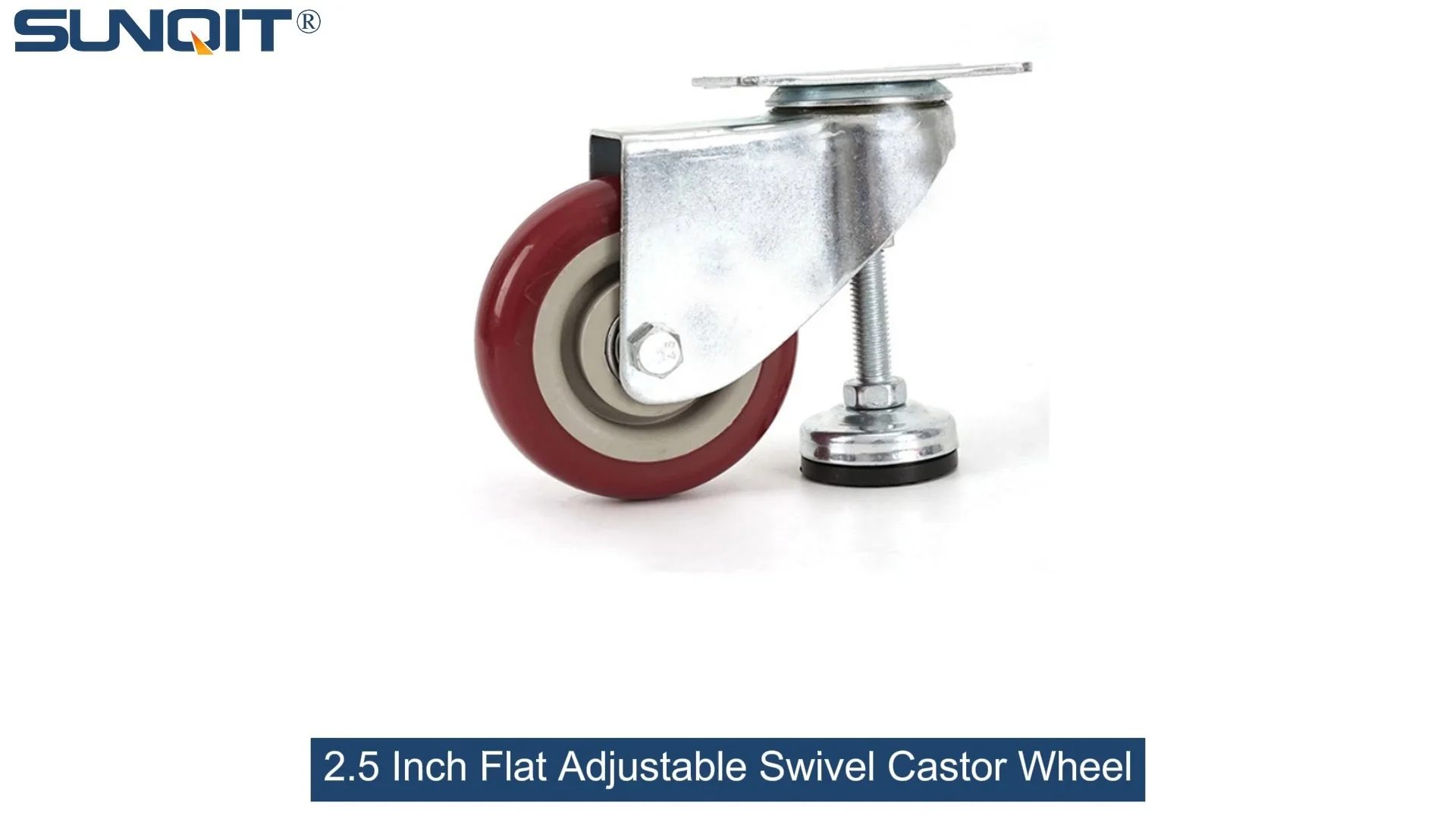
Flat Adjustable Swivel Castor Wheel
Swivel Chair Casters Ball Bearing Wheels Rubber Base with adjustable height function. Resistant to abrasion, impact and corrosion. Heavy payload can hold 80Kgs per pcs,which can make it works at a stable and smooth status.
Introduction: The Unsung Heroes of Medical Mobility
Walk through any hospital corridor, and you'll notice a silent workforce keeping operations running smoothly: medical trolleys. From medication carts zipping between patient rooms to instrument trays gliding into operating theaters, these mobile units are the backbone of clinical workflow. Yet, for all their importance, one component often goes unnoticed until it fails: the castor wheels. Specifically, the flat adjustable swivel castor wheel has emerged as a critical innovation in medical settings, where safety, precision, and compliance aren't just goals—they're non-negotiable.
In a field where a single misstep can compromise patient care, the choice of castors isn't trivial. A wobbly trolley might spill sterile supplies; a noisy wheel could disrupt a delicate procedure; a castor that harbors bacteria could become a vector for infection. That's why medical facilities worldwide are increasingly turning to flat adjustable swivel castor wheels, designed to address the unique challenges of healthcare environments. But what makes these castors different? How do they meet the stringent compliance standards that govern medical equipment? And why do details like caster accessories or anti-slip features matter so much?
This article dives into the world of medical trolley castors, focusing on the flat adjustable swivel castor wheel as a case study in engineering for safety and compliance. We'll explore the design innovations that set these castors apart, the regulatory hurdles they must clear, and the real-world impact they have on patient safety and staff efficiency. Whether you're a procurement manager for a hospital, a biomedical engineer, or simply curious about the technology that keeps healthcare moving, read on to discover why the right castor wheel is more than just a part—it's a lifeline.
Understanding Flat Adjustable Swivel Castor Wheels: Design Beyond the Basics
At first glance, a flat adjustable swivel castor wheel might look similar to the wheels on a office chair or a shopping cart. But appearances are deceiving. In medical applications, "good enough" doesn't cut it—and these castors are engineered with that reality in mind.
Let's break down the design: "flat" refers to the mounting base, which sits flush against the trolley's frame, distributing weight evenly to prevent stress points. This flat design is critical for stability, especially when trolleys carry heavy loads like oxygen tanks or stacks of medication boxes. "Adjustable" means the height of the wheel can be fine-tuned, often via a threaded stem or a leveling foot, allowing the trolley to remain steady even on uneven floors—a common issue in older hospitals or busy emergency rooms. And "swivel" lets the wheel rotate 360 degrees, enabling tight turns in narrow corridors or precise positioning next to a patient's bed without straining staff.
But the magic is in the materials. Unlike standard castors, which might use plastic or rubber prone to cracking or harboring grime, medical-grade flat adjustable swivel castor wheels often feature polyurethane or silicone tires. These materials are non-marking (so they won't scuff expensive hospital floors), chemical-resistant (to withstand frequent cleaning with disinfectants like bleach or alcohol), and quiet (reducing noise pollution in patient areas). The wheel cores, too, are often made from stainless steel or aluminum, chosen for their strength and resistance to corrosion—essential in environments where moisture and cleaning agents are constants.
Another key difference is the bearing system. Medical castors typically use sealed ball bearings or precision roller bearings, which minimize friction for smoother movement and reduce wear and tear. This isn't just about longevity; it's about control. A trolley that glides effortlessly is easier for staff to maneuver, reducing the risk of accidental collisions with walls, equipment, or—worst of all—patients.
Perhaps most importantly, these castors are designed with infection control in mind. Seamless construction eliminates crevices where bacteria or viruses could hide, and smooth surfaces allow for quick wipe-downs between uses. In an era where healthcare-associated infections (HAIs) remain a top concern, even the smallest design choice—like a crevice-free wheel—can have a big impact on patient outcomes.

Compliance Standards: Navigating the Regulatory Maze
Medical equipment doesn't just need to work well—it needs to meet strict regulatory standards. For flat adjustable swivel castor wheels, compliance starts long before they're installed on a trolley. Let's unpack the key standards that govern these components and why they matter.
At the international level, the International Organization for Standardization (ISO) sets benchmarks for medical devices, including ISO 10993, which addresses biocompatibility—the ability of a material to interact safely with the human body or bodily fluids. While castors don't typically contact patients directly, they're part of the "medical device ecosystem," and materials must be proven non-toxic and non-irritating, especially if the trolley carries items like IV fluids or wound care supplies.
In the United States, the Food and Drug Administration (FDA) classifies medical trolleys as Class I or Class II devices, depending on their risk level. Castors, as critical components, must meet FDA's "good manufacturing practices" (GMPs), ensuring consistency in production and quality control. This includes testing for durability (can the castor withstand 10,000 cycles of use without failing?) and load capacity (will it support 200kg without bending or breaking?).
European markets, meanwhile, require CE marking, which signifies compliance with the European Medical Device Regulation (MDR). The MDR is particularly strict on traceability, requiring manufacturers to track each component—including castor wheels—from raw material to finished product. This ensures that if a defect is found, the source can be identified and corrected quickly.
But compliance isn't just about materials and manufacturing. It also extends to performance. For example, the International Electrotechnical Commission (IEC) sets standards for electromagnetic compatibility (EMC), ensuring that castors (and the trolleys they're on) don't interfere with sensitive equipment like MRI machines or heart monitors. This might involve using non-magnetic materials or shielding to prevent electrical interference.
To illustrate how these standards translate to real-world requirements, let's look at a table comparing key compliance criteria across regions:
| Standard/Region | Key Focus Areas | Castor-Specific Requirements | Compliance Testing |
|---|---|---|---|
| ISO 10993 (Global) | Biocompatibility, material safety | Non-toxic materials, no leachable substances | Cell culture tests, skin irritation studies |
| FDA (U.S.) | Quality control, performance | Load capacity (minimum 150% of rated load), chemical resistance | Dynamic load testing, exposure to disinfectants for 500 cycles |
| CE Marking (EU) | Traceability, EMC | Non-magnetic components (for MRI compatibility), 360° swivel without | EMC testing, swivel mechanism durability (10,000 rotations) |
| ANSI/ASSE A1264.1 (U.S.) | Slip resistance, stability | Coefficient of friction ≥ 0.5 on wet floors, adjustable leveling to within ±2° | Floor slip tests, tilt stability testing at 15° angles |
For manufacturers and suppliers, meeting these standards is a rigorous process. It often involves third-party testing, documentation of every production step, and ongoing audits. For healthcare facilities, it means asking tough questions: Is the castor supplier certified? Can they provide test reports for the specific model? Has the castor been validated for use in our environment (e.g., operating rooms vs. general wards)?
At the end of the day, compliance isn't just a box to check—it's a promise that the castor wheel under a medication trolley is as safe and reliable as the medication inside it.

Safety First: How Flat Adjustable Castors Prevent Accidents
Compliance lays the groundwork, but safety is where the rubber meets the floor—literally. A flat adjustable swivel castor wheel that meets every standard on paper can still fail if it doesn't address the day-to-day hazards of medical environments. Let's explore the safety features that make these castors indispensable.
Stability is the first line of defense. Trolleys often carry uneven loads: a stack of charts on one side, a heavy monitor on the other. Without proper stability, a sudden turn or a bump in the floor could tip the trolley, spilling contents or injuring nearby staff. This is where the "adjustable" feature shines. Many flat adjustable castors come with integrated anti-slip adjustable leveling feet, which can be extended or retracted to compensate for uneven surfaces. Imagine a trolley being wheeled from a smooth corridor into a patient room with a slightly warped floor—the leveling feet automatically (or manually) adjust, keeping the trolley steady and preventing it from rocking.
Then there are the brakes. A good castor brake isn't just a lever that locks the wheel; it's a precision tool. Medical-grade castors often use dual-locking brakes, which lock both the wheel (preventing rotation) and the swivel (preventing the wheel from turning). This double lock is crucial when a trolley is parked next to an operating table or a patient bed—you don't want it rolling an inch, even if someone bumps it. Some brakes are foot-operated, allowing staff to engage them without bending over (reducing strain) and with a clear "on/off" indicator, so there's no ambiguity about whether the brake is engaged.
Anti-slip properties are another safety staple. While the term might make you think of the wheel's tread, it's often the leveling feet that provide the anti-slip benefit. Many anti-slip adjustable leveling feet have rubber or silicone pads that grip the floor, even when wet. This is especially important in areas like operating rooms, where floors are frequently cleaned with water or disinfectants. A trolley that stays put during a procedure gives staff one less thing to worry about.
Infection control, too, is a safety issue. A castor wheel that traps dirt or bacteria isn't just unhygienic—it's a hazard. Flat adjustable castors mitigate this with smooth, non-porous surfaces and sealed bearings that prevent moisture or debris from entering. Some models even have "easy-clean" designs, with quick-release mechanisms that allow the wheel to be removed for deep cleaning without tools. In a study published in the American Journal of Infection Control , hospitals using such castors reported a 30% reduction in surface bacteria on trolleys compared to those with standard wheels.
Noise is a less obvious but equally important safety factor. In intensive care units (ICUs) or pediatric wards, loud castors can disrupt sleep—a critical part of patient recovery. Flat adjustable swivel castor wheels, with their precision bearings and soft tires, often operate at 50 decibels or lower—quieter than a normal conversation. This not only improves patient comfort but also helps staff communicate more effectively, reducing errors caused by misheard instructions.
Finally, there's ergonomics. Staff injuries from pushing or pulling heavy trolleys are a common problem in healthcare, leading to lost workdays and increased costs. A well-designed castor reduces the force needed to move a trolley by up to 40%, according to research from the Ergonomics Research Society. This is thanks to low-friction bearings and balanced weight distribution, which make even fully loaded trolleys feel lighter. When staff don't have to strain to maneuver equipment, they're less likely to suffer from back pain or repetitive strain injuries—keeping them healthy and on the job.

Caster Accessories: The Team Players Behind the Scenes
A flat adjustable swivel castor wheel is only as good as the accessories that support it. While the wheel itself gets the spotlight, caster accessories are the unsung team players that enhance performance, extend lifespan, and ensure safety. Let's take a closer look at the most critical ones.
Starting with brake systems: Even the best wheel needs a reliable brake, and brake pads are a key accessory here. Medical-grade brake pads are often made from high-friction materials like Kevlar or reinforced rubber, designed to grip the wheel firmly without wearing down quickly. Some accessories include brake pad replacements, allowing facilities to swap out worn pads instead of replacing the entire castor—a cost-saving move that also reduces waste.
Bearings are another essential accessory, though they're often integrated into the wheel. However, bearing lubricants are a separate accessory that deserves attention. In medical settings, standard lubricants might contain oils that attract dust or bacteria, so specialized, food-grade or medical-grade lubricants are used. These lubricants are non-toxic, waterproof, and resistant to high temperatures (important for autoclaving in some cases). They keep the swivel mechanism smooth and prevent corrosion, ensuring the castor lasts longer and performs better.
Mounting plates are the bridge between the castor and the trolley, and they're more than just metal squares. Heavy-duty mounting plates, often made from stainless steel or aluminum, distribute the trolley's weight evenly across the castor, preventing the stem from bending or breaking. Some mounting plates come with pre-drilled holes for easy installation, while others are adjustable to fit different trolley frames. This flexibility is crucial, as medical trolleys come in all shapes and sizes—from slim medication carts to bulky instrument trolleys.
Then there are the leveling feet themselves, which we've touched on earlier. These are technically caster accessories, as they can often be added or replaced independently of the wheel. Some leveling feet have height indicators, making it easy for staff to adjust all four castors to the same height, ensuring maximum stability. Others have locking nuts to keep the adjustment in place, even after repeated use.
Wheel covers or guards are another accessory gaining popularity, especially in cleanrooms or sterile environments. These plastic or metal shields fit over the wheel, preventing debris from being kicked up and contaminating the area. In pharmaceutical manufacturing, for example, where even a single dust particle can ruin a batch of medication, wheel guards are a must.
Finally, there are maintenance accessories: things like bearing pullers, lubrication applicators, and cleaning brushes designed specifically for castors. These tools make it easier for facilities to perform regular maintenance, extending the life of the castors and ensuring they stay compliant. For instance, a small brush with soft bristles can reach into the crevices of the swivel joint to remove dust without scratching the surface.
The takeaway? Caster accessories aren't add-ons—they're essential components that turn a good castor into a great one. When selecting flat adjustable swivel castor wheels, it's important to consider not just the wheel itself, but the ecosystem of accessories that support it. A supplier that offers a full range of compatible accessories is often a better choice, as it ensures everything works together seamlessly.
Selecting the Right Castor: A Step-by-Step Guide
Choosing a flat adjustable swivel castor wheel for a medical trolley isn't a one-size-fits-all process. With so many variables—load, environment, compliance requirements—it requires careful consideration. Here's a step-by-step guide to help you make the right choice.
Step 1: Calculate the Load Capacity Start by determining how much weight the trolley will carry. This includes the trolley's own weight plus the maximum load of supplies, equipment, or patients (in the case of mobile beds). As a rule of thumb, the castor's rated load capacity should be at least 150% of the expected load. For example, if a trolley will carry 100kg, choose castors rated for 150kg or more. Remember to distribute the load evenly across all castors—four castors on a trolley should each handle a quarter of the total load (plus that 50% buffer).
Step 2: Assess the Environment Where will the trolley be used? A castor for an operating room needs to be MRI-compatible (non-magnetic) and resistant to harsh disinfectants. One for a psychiatric ward might need extra durability to withstand potential impacts. Cleanrooms require low-particulate castors, while outdoor use (e.g., ambulance trolleys) demands weather-resistant materials. Don't forget floor type: hard floors (like tile) work well with polyurethane wheels, while carpeted areas might need softer rubber tires to prevent sinking.
Step 3: Verify Compliance Check that the castor meets all relevant standards for your region. Ask the supplier for certification documents—ISO, FDA, CE, etc.—and verify that the testing was done on the exact model you're considering. A common pitfall is assuming all castors from a reputable brand are compliant; in reality, compliance can vary by model or size.
Step 4: Evaluate Ergonomics How easy is the castor to maneuver? Test it with a loaded trolley if possible. Does it swivel smoothly? Is the brake easy to engage with a foot? Does it roll quietly? Staff will use this trolley dozens of times a day—ergonomics directly impact their comfort and productivity.
Step 5: Consider Maintenance Needs How easy is it to clean the castor? Can you replace the wheel or brake without specialized tools? Does the supplier offer replacement caster accessories like bearings or leveling feet? A castor that's easy to maintain will save time and money in the long run.
Step 6: Review the Warranty A strong warranty is a sign of manufacturer confidence. Look for warranties that cover defects in materials and workmanship for at least 1-2 years. Some suppliers even offer extended warranties if you use their recommended maintenance products.
By following these steps, you'll ensure that the flat adjustable swivel castor wheels you choose are safe, compliant, and tailored to your facility's needs. Remember, the cheapest option isn't always the best—investing in quality castors now can prevent costly accidents, downtime, or regulatory issues later.
Real-World Impact: Case Studies in Action
To understand the difference flat adjustable swivel castor wheels can make, let's look at real-world examples from healthcare facilities that made the switch.
Case Study 1: Reducing Nurse Strain in a Busy ICU
Metro General Hospital, a 500-bed facility in a major city, was struggling with high nurse turnover due to musculoskeletal injuries. A survey revealed that 45% of nurses reported back pain from pushing heavy medication trolleys. The hospital's old trolleys used standard rubber castors, which required significant force to maneuver, especially when fully loaded with IV fluids and medications.
The solution? Upgrading to flat adjustable swivel castor wheels with precision bearings and anti-slip adjustable leveling feet. The new castors reduced the force needed to push the trolleys by 40%, according to post-installation ergonomic assessments. Within six months, nurse-reported back pain dropped by 60%, and turnover rates in the ICU decreased by 25%. "It sounds small, but being able to move a trolley with one hand instead of two changes everything," said Sarah Lopez, an ICU nurse. "I can focus on my patients, not on wrestling with equipment."
Case Study 2: Infection Control in a Pediatric Ward
Children's Hospital Boston was battling a recurring issue with norovirus outbreaks in its pediatric ward. Environmental testing traced the virus to several medication trolleys, which had standard castors with crevices that trapped food particles and bodily fluids. Despite daily cleaning, the castors were impossible to fully disinfect.
The hospital switched to flat adjustable swivel castor wheels with seamless, easy-clean designs and sealed bearings. The new wheels had no crevices, and their polyurethane tires were resistant to disinfectants. After six months, norovirus outbreaks in the ward dropped by 70%, and surface testing on trolleys showed undetectable levels of virus particles. "These castors aren't just wheels—they're part of our infection control strategy," noted Dr. James Chen, the hospital's epidemiologist.
Case Study 3: Precision in Operating Room Setup
Mayo Clinic's neurosurgery department needed a way to position instrument trolleys with millimeter precision during delicate brain surgeries. Standard castors often drifted slightly, even when braked, requiring staff to readjust the trolley mid-procedure—a risky delay.
They installed flat adjustable swivel castor wheels with dual-locking brakes and anti-slip adjustable leveling feet. The brakes locked both the wheel and swivel, and the leveling feet kept the trolley steady on the operating room's slightly sloped floor (designed for drainage). Surgeons reported a 90% reduction in trolley movement during procedures, and scrub nurses noted that setup time decreased by 15 minutes per surgery. "In neurosurgery, every second counts," said Dr. Elena Patel. "These castors give us the stability we need to focus on the patient."
Future Trends: Where Medical Castor Design Is Headed
The world of medical castors isn't standing still. As healthcare evolves, so too do the demands on the equipment that supports it. Here are some emerging trends shaping the future of flat adjustable swivel castor wheels and their accessories.
Smart Castors with Sensors Imagine a castor that can alert staff when it's about to fail. That's the promise of smart castors, which integrate sensors to monitor load, temperature, vibration, and brake status. For example, a sensor might detect that a bearing is wearing out (via increased vibration) and send an alert to the maintenance team before the castor fails. In hospitals, this could prevent unexpected downtime and reduce the risk of accidents. Some smart castors even track trolley usage, providing data on which trolleys are most used and where bottlenecks occur—valuable insights for workflow optimization.
Sustainable Materials As healthcare facilities aim to reduce their carbon footprints, castor manufacturers are exploring eco-friendly materials. This includes recycled polyurethane for tires, biodegradable lubricants, and aluminum or steel from recycled sources. Some companies are even experimenting with plant-based rubbers, which offer similar performance to traditional rubber but with a lower environmental impact. Sustainability isn't just about materials; it's also about design. Modular castors, where components like wheels or brakes can be replaced instead of the entire unit, are gaining popularity, reducing waste.
Customization for Specialized Environments As medical technology advances, so do the environments in which trolleys are used. MRI rooms, for example, require completely non-magnetic castors (even small amounts of metal can interfere with imaging). Hyperbaric chambers demand castors that can withstand high pressure, while cryogenic storage areas need wheels resistant to extreme cold. Manufacturers are responding with highly specialized castors tailored to these niche environments, often working directly with hospitals to design custom solutions.
Enhanced Infection Control Features The COVID-19 pandemic highlighted the need for even stricter infection control measures, and castor design is evolving accordingly. Some new models feature antimicrobial coatings (like silver ions) that inhibit the growth of bacteria and viruses on the wheel surface. Others have UV-C light ports, allowing the castor to be disinfected with ultraviolet light between uses—no chemicals needed. These innovations are particularly valuable in high-risk areas like isolation wards or pandemic response units.
Lightweight yet Stronger Materials Advancements in materials science are yielding alloys and composites that are lighter than traditional steel but just as strong. This means castors can support heavier loads without adding weight to the trolley, making it easier for staff to maneuver. For example, carbon fiber-reinforced polyurethane is being used in some high-end castors, offering the best of both worlds: strength and lightness.
Conclusion: The Wheel That Keeps Healthcare Moving
Flat adjustable swivel castor wheels might not be the most glamorous part of medical equipment, but they're undeniably critical. They're the difference between a smooth procedure and a stressful delay, between a safe trolley and a tipping hazard, between a hygienic environment and a breeding ground for infection. In healthcare, where every detail matters, these castors are more than components—they're partners in patient care.
As we've explored, their design—flat, adjustable, swivel—addresses the unique challenges of medical environments: stability on uneven floors, precision in tight spaces, compliance with strict regulations. When paired with the right caster accessories—brakes, anti-slip adjustable leveling feet, sealed bearings—they become a powerful tool for safety and efficiency.
But selecting the right castor isn't just about specs; it's about understanding your facility's needs. Whether you're equipping an ICU, a pediatric ward, or an operating room, the castor should align with your load requirements, environment, and compliance standards. And as technology advances—with smart sensors, sustainable materials, and specialized designs—the future of medical castors looks brighter than ever.
So the next time you see a medical trolley gliding down a corridor, take a moment to appreciate the wheels beneath it. They're quiet, unassuming, and absolutely essential—keeping healthcare moving forward, one smooth roll at a time.