- Company Articles
- Industry articles
- Industry standards
- Flat Rigid Castor Wheels in Medical Warehousing: Compliance with Cleanroom Standards

Flat Rigid Castor Wheels in Medical Warehousing: Compliance with Cleanroom Standards
Related Product
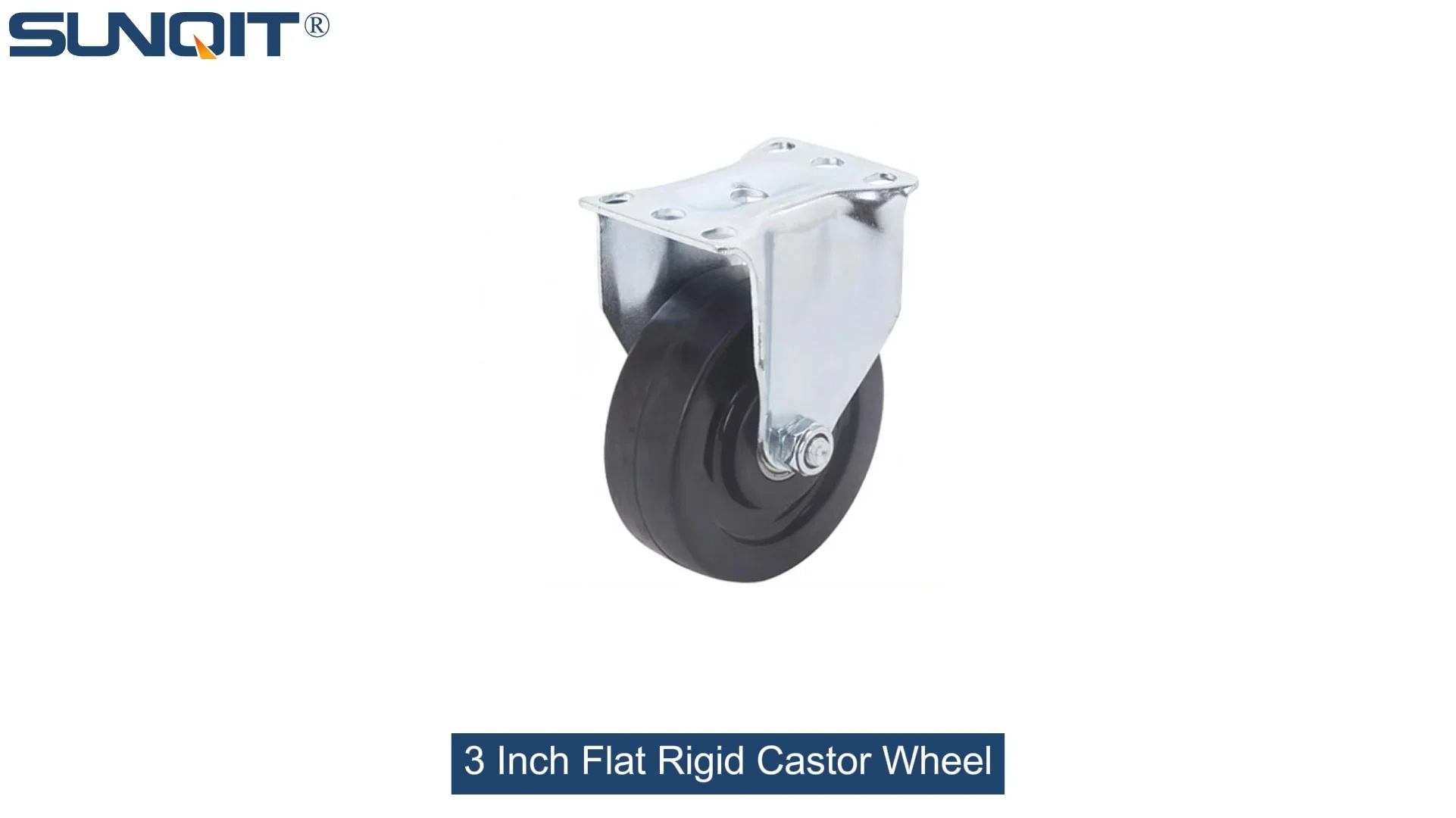
Flat Rigid Castor Wheel
Chair Casters Ball Bearing Wheels Rubber Base. Resistant to abrasion, impact and corrosion. Heavy payload can hold 70Kgs per pcs,which can make it works at a stable and smooth status.
The Critical Role of Equipment Mobility in Medical Warehousing
In the high-stakes world of medical warehousing, where pharmaceuticals, surgical instruments, and sensitive medical devices are stored and transported, even the smallest detail can impact patient safety. Imagine a scenario where a trolley wheel sheds microscopic particles onto a batch of sterile syringes, or where bacteria hidden in a caster's crevice contaminates a shipment of vaccines. These aren't just hypothetical risks—they're daily concerns for facilities striving to meet the strictest cleanroom standards. Among the unsung heroes of contamination control? The humble caster wheel . Specifically, flat rigid castor wheels have emerged as a cornerstone of compliant medical warehousing, offering a unique blend of stability, durability, and cleanability that aligns with the rigorous demands of ISO 14644, FDA, and GMP guidelines.
Medical warehouses aren't just storage spaces; they're dynamic ecosystems where efficiency and sterility walk hand in hand. Trolleys glide between temperature-controlled zones, workbench setups adapt to evolving workflows, and material racks organize inventory with pinpoint precision. Every piece of mobile equipment relies on its castor wheels to perform without introducing variables that could compromise product integrity. For cleanroom environments—where air is filtered to remove 99.97% of particles as small as 0.3 microns—wheels that minimize particle generation, resist chemical corrosion, and simplify sanitization aren't just preferred; they're mandatory.
Cleanroom Standards: The Barriers to Entry for Medical Equipment
ISO 14644 and Beyond: Defining "Clean"
Cleanroom compliance starts with metrics. ISO 14644-1 classifies cleanrooms from ISO 1 (the cleanest) to ISO 9 (ambient air), with ISO 7 and ISO 8 being common in medical warehousing. For an ISO 7 facility, the air must contain no more than 352,000 particles (≥0.5μm) per cubic meter—compare that to outdoor air, which can contain millions. To achieve this, every surface, from walls to equipment, must be designed to avoid particle shedding, harboring moisture, or trapping bacteria. This is where flat rigid castor wheels shine: their design inherently addresses these risks.
Material Matters: Why Not All Wheels Are Created Equal
Traditional castor wheels, with their deep treads, plastic components, or exposed bearings, often fall short in cleanrooms. Deep treads can trap dust and debris, while porous materials may absorb cleaning agents or harbor mold. Flat rigid castor wheels, by contrast, are engineered with materials that prioritize compatibility. Stainless steel, for example, resists corrosion from harsh disinfectants like hydrogen peroxide vapor. Polyurethane (PU) blends, formulated for medical use, offer non-marking, non-shedding surfaces that stand up to frequent wipe-downs. Even the choice of lubricant matters—food-grade, silicone-based greases prevent oil leakage that could contaminate products.

Flat Rigid Castor Wheels: Design Features That Drive Compliance
Rigid vs. Swivel: Stability in a World of Motion
At first glance, swivel castors might seem more versatile, allowing for 360° movement. But in cleanrooms, where sudden turns or uneven weight distribution can jostle sensitive cargo, rigidity is a virtue. Flat rigid castor wheels lock into a fixed direction, reducing the risk of tipping and ensuring predictable movement along pre-defined paths. This stability is especially critical when transporting heavy loads—think pallets of IV fluids or stacks of sterile gown boxes—where even a minor wobble could lead to spills or damage. The flat tread design further enhances this stability, distributing weight evenly to minimize indentation on floor surfaces (a common issue with narrow-tread wheels that can leave marks or trap debris).
Seamless Surfaces: No Hiding Places for Contaminants
One of the biggest challenges with standard castors is their tendency to become "microbial hideouts." Crevices between the wheel and fork, gaps in bearing housings, or threads in brake mechanisms can trap moisture, dust, and bacteria—all of which are enemy number one in cleanrooms. Flat rigid castor wheels address this with intentional design choices: sealed precision bearings eliminate the need for exposed lubrication points, while one-piece wheel construction reduces seams. Even caster accessories like brakes are reimagined—foot-operated locks with smooth, recess-free surfaces that can be sanitized with spray disinfectants or UV light without leaving residues.
Consider the difference between a traditional swivel castor with a spring-loaded brake and a flat rigid castor with an enclosed, stainless-steel brake mechanism. The former might have a small gap where the brake pad meets the wheel—a perfect spot for bacteria to colonize. The latter? A continuous, wipeable surface that leaves nowhere for contaminants to linger. For facilities conducting daily environmental monitoring (EM) tests, this isn't just a convenience; it's a way to consistently pass particle count and bioburden audits.

Integration with Lean Systems: Efficiency Without Compromise
Medical warehousing isn't just about compliance—it's about optimizing workflows to get life-saving products to patients faster. This is where lean system principles come into play: eliminating waste, streamlining processes, and adapting to changing demands. Flat rigid castor wheels are a natural fit for lean environments, as they balance mobility with control, reducing the risk of errors that can slow down operations.
For example, consider a facility using lean pipe systems to build modular material racks. By mounting these racks on flat rigid castors, teams can reconfigure storage layouts in minutes, adapting to seasonal spikes in demand (like flu vaccine season) or new product launches. The wheels' rigidity ensures that even fully loaded racks move in straight lines, preventing collisions with walls or other equipment—common sources of downtime in busy warehouses. Similarly, mobile workbench setups, equipped with flat rigid castors, can be positioned precisely at assembly stations, reducing the need for staff to bend or stretch, and minimizing the risk of accidental product drops.
Lean systems thrive on data, and flat rigid castor wheels deliver here too. Their predictable movement patterns make it easier to map workflows using tools like value stream mapping (VSM), identifying bottlenecks and optimizing routes. For instance, a trolley with swivel wheels might veer off course, adding seconds to each trip; over a 12-hour shift, those seconds add up to hours of lost productivity. Flat rigid wheels, by contrast, maintain consistent paths, ensuring that every movement adds value, not waste.

Key Features to Look for in Compliant Flat Rigid Castor Wheels
| Feature | Why It Matters for Cleanrooms | Example Materials/Designs |
|---|---|---|
| Smooth, Seamless Tread | Minimizes particle shedding and prevents debris trapping | Polyurethane (PU) with rounded edges, stainless steel with polished finish |
| Sealed Bearings | Eliminates lubricant leakage and hides no bacteria-harboring gaps | Double-sealed ball bearings with food-grade silicone grease |
| Chemical Resistance | Withstands frequent exposure to disinfectants (e.g., bleach, alcohol) | Polypropylene hubs, Viton® seals |
| Non-Marking Tread | Prevents scuffs on cleanroom floors, reducing cleaning time | Non-marking PU or rubber compounds |
| Load Capacity | Supports heavy loads without deforming, which can cause uneven movement | Steel-reinforced cores rated for 500-1000 lbs per wheel |
| Easy-to-Clean Brake Mechanisms | Ensures brakes don't become contamination hotspots | Enclosed, foot-operated brakes with stainless steel components |
When selecting flat rigid castor wheels, it's also critical to consider compatibility with other cleanroom equipment. For instance, in environments where electrostatic discharge (ESD) could damage sensitive electronics (like diagnostic kits), wheels with ESD-safe treads or conductive cores can be paired with esd workstation setups, ensuring that static charges are safely grounded. Similarly, for facilities using aluminum profile systems to build custom trolleys, castors with mounting plates designed to fit these profiles simplify installation and reduce the risk of loose connections—another potential source of particle generation.
Case Study: How a Pharmaceutical Warehouse Reduced Contamination Incidents by 75% with Flat Rigid Castors
The Challenge
A mid-sized pharmaceutical warehouse in the Midwest was struggling with recurring particle count violations in its ISO 8 cleanroom. Despite rigorous cleaning protocols, environmental monitoring tests consistently flagged elevated levels of ≥5μm particles near material handling areas. Root cause analysis pointed to the facility's existing swivel castor wheels, which had deep treads and exposed bearings that trapped dust and shed rubber particles during use. Additionally, staff reported frequent trolley collisions, leading to product damage and workflow delays.
The Solution
The facility partnered with a caster wheel supplier specializing in cleanroom solutions, upgrading 30+ trolleys and mobile workbench units to flat rigid castors with the following features: stainless steel frames, seamless PU treads, sealed bearings, and enclosed brakes. The wheels were paired with caster accessories like non-slip brake pedals and corrosion-resistant mounting hardware.
The Results
Within 90 days, particle counts dropped by 75%, with no further violations. Sanitization time for equipment decreased by 40%, as staff no longer needed to disassemble wheels for deep cleaning. Trolley collisions fell by 90%, reducing product damage costs by an estimated $25,000 annually. The facility also reported improved staff morale, as the stable, predictable movement of equipment reduced physical strain and fatigue.
Maintenance: Keeping Flat Rigid Castors Compliant Over Time
Even the most well-designed castor wheels require proactive maintenance to stay compliant. In medical warehousing, a "set it and forget it" approach to wheels can lead to premature wear, increased particle shedding, or brake failure—all of which put sterility at risk. Here's how to keep flat rigid castors in peak condition:
1. Regular Inspection and Cleaning
Daily wipe-downs with approved disinfectants (check compatibility with wheel materials!) remove surface contaminants. Weekly inspections should focus on tread wear, bearing smoothness, and brake functionality. Look for cracks in the tread, rust on metal components, or signs of lubricant leakage—all red flags that a wheel may need repair or replacement.
2. Lubrication (When Necessary)
While sealed bearings reduce the need for lubrication, some models may require occasional maintenance. Always use food-grade, silicone-based lubricants approved for cleanrooms, and apply sparingly to avoid over-spill that could attract dust.
3. Replacement Schedules
Even the most durable wheels wear out. Establish a replacement schedule based on usage (e.g., high-traffic trolleys every 12 months, low-use workbench wheels every 24 months). Track wear with a simple checklist, noting tread thickness and bearing performance, to avoid unexpected failures.
Conclusion: Flat Rigid Castor Wheels—Small Parts, Big Impact on Patient Safety
In the grand scheme of medical warehousing, castor wheels might seem compared to multi-million-dollar HVAC systems or automated storage robots. But as we've explored, they're integral to maintaining the delicate balance between mobility, efficiency, and sterility. Flat rigid castor wheels, with their focus on cleanable design, stability, and compatibility with lean system principles, are more than just components—they're partners in patient safety.
For facility managers, the message is clear: when selecting equipment for cleanroom environments, don't overlook the wheels. Prioritize features like seamless surfaces, sealed bearings, and chemical resistance. Invest in quality caster wheel solutions and pair them with regular maintenance. And remember: every choice, from the tread material to the brake design, is a step toward ensuring that the products leaving your warehouse are as safe as the patients who will rely on them.
In the end, compliant medical warehousing isn't about meeting standards—it's about honoring the trust that healthcare providers and patients place in your facility. With flat rigid castor wheels, that trust is well-earned.