- Company Articles
- Industry articles
- Industry standards
- Flexible Production Cell Design with 2040 EU Standard Aluminum Profile

Flexible Production Cell Design with 2040 EU Standard Aluminum Profile
Related Product
2040 EU Standard Aluminum Profile
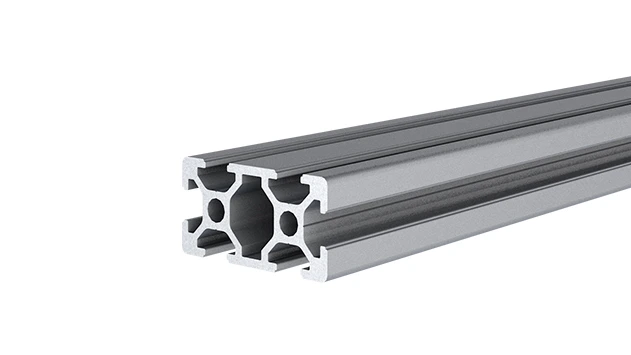
2040 is a 2.00 x 4.00CM fractional 20 series square extrusion T-slot profile with four open T-slots, two side with 2.00cm face, the other side with 4.00cm face. The profile has align-a-grooves to assist in aligning connecting profiles.
In today's manufacturing landscape, where customer demands shift overnight and production runs shrink from thousands to dozens, rigidity is the enemy of success. Factories that once thrived on mass-producing identical products now struggle to keep up with the need for customization, quick turnarounds, and adaptability. Enter the flexible production cell—a modular, reconfigurable workspace designed to pivot with changing needs. At the heart of this revolution lies a humble yet powerful component: the 2040 EU Standard Aluminum Profile. More than just a length of metal, it's the backbone that turns static production lines into dynamic, responsive ecosystems. Let's dive into how this unassuming profile, paired with the right aluminum profile accessories, is reshaping how we build, work, and innovate on the factory floor.
The Problem with Static Production Lines: Why Flexibility Matters Now More Than Ever
Traditional manufacturing setups are built for stability. Heavy steel frames bolted to the floor, fixed conveyor belts, and one-size-fits-all workbenches made sense when production runs lasted months and product designs rarely changed. But today? A small electronics manufacturer might need to switch from assembling smartwatches to fitness trackers in a week. A automotive parts supplier could go from producing 500 units of a single component to 50 units of five different variants in a month. In these scenarios, static lines become bottlenecks—costing time, money, and opportunities.
The costs of inflexibility are tangible. Reconfiguring a steel-framed production line can take weeks, requiring welders, heavy machinery, and downtime. Customizing workbenches for new tasks often means buying entirely new furniture. And when demand drops or a product is phased out, those fixed structures become expensive, immovable relics. It's no wonder manufacturers are searching for solutions that let them "build, use, adapt, repeat" without breaking the bank or halting operations.
2040 EU Standard Aluminum Profile: The Unsung Hero of Flexible Design
If flexible production cells are the future, then 2040 EU Standard Aluminum Profile is the foundation upon which that future is built. Let's start with the basics: what is 2040 aluminum profile? In simple terms, it's an extruded aluminum rail with a specific cross-section: 20mm in width and 40mm in height (hence "2040"). But those numbers barely scratch the surface of its potential. What makes this profile special is its combination of strength, lightweight design, and—most importantly—its T-slot architecture.
Unlike solid steel bars or generic aluminum tubing, 2040 EU Standard Aluminum Profile features precision-engineered T-slots running along its length. These slots act as universal connection points, allowing you to attach everything from brackets and panels to conveyor tracks and lighting—no welding, drilling, or special tools required. It's like building with a set of high-tech Legos, where each piece snaps into place and can be rearranged whenever needed. And because it's aluminum, it's 30% lighter than steel but just as strong, making it easy to move and reconfigure without heavy equipment.
Durability is another standout feature. Aluminum naturally resists corrosion, so even in factories with humidity or exposure to coolants, the profile won't rust or degrade. It's also heat-resistant, maintaining its structural integrity in temperature fluctuations common in manufacturing environments. For manufacturers in sectors like food processing or pharmaceuticals, where cleanliness is critical, anodized versions of 2040 profile offer easy-to-clean surfaces that meet strict hygiene standards.
T-Slot Design: The Secret to "Plug-and-Play" Manufacturing
The T-slot isn't just a design quirk—it's the reason 2040 profile enables such flexibility. Imagine you're building a workbench: instead of measuring, drilling holes, and screwing pieces together (only to find you got the height wrong), you can slide a T-nut into the slot, tighten a bolt, and attach a leg bracket in seconds. Need to raise the workbench by 10cm? Loosen the bolts, adjust the brackets, and retighten. It's that simple. This design also means components can be added later—say, a tool rail above the workbench or a shelf below—without modifying the original structure. The T-slot turns "permanent" into "temporary by choice."

Aluminum Profile Accessories: Turning Profiles into Production Powerhouses
A 2040 aluminum profile alone is just a rail. But pair it with the right aluminum profile accessories, and it becomes a versatile building system capable of creating almost any structure you can imagine. These accessories are the glue that holds flexible production cells together, and they're designed to work seamlessly with the T-slot system. Let's break down the essentials:
Connectors: The Cornerstones of Stability – When you're building a frame, whether for a workbench, a material rack, or a conveyor support, connectors ensure everything stays square and sturdy. The 90° aluminum profile connector is a workhorse here, joining two profiles at a right angle with minimal effort. Slide it into the T-slot, tighten the grub screws, and you've got a joint that can support hundreds of pounds. For angled frames—say, a sloped conveyor or a tilted work surface—45° aluminum profile connectors do the job. And for complex structures, three-way or four-way connectors let you branch profiles in multiple directions, like the limbs of a tree.
End Caps and Gussets: Finishing Touches with a Purpose – End caps might seem like minor details, but they're critical for safety and longevity. A 2040 aluminum profile end cap snaps onto the open end of the rail, covering sharp edges and preventing dust, debris, or small tools from getting stuck in the T-slot. Gussets, on the other hand, add reinforcement. These triangular plates fit into corners, distributing weight and reducing stress on joints—perfect for heavy-duty applications like supporting a loaded conveyor or a workbench with heavy machinery.
Fasteners and T-Nuts: The Invisible Workhorses – T-nuts are the unsung heroes of the T-slot system. These small, threaded inserts slide into the T-slot and lock in place when a bolt is tightened, creating a secure mounting point anywhere along the profile. Paired with hex bolts, they let you attach accessories without drilling—so you can mount a monitor arm to a workbench frame today and move it to a different position tomorrow.
The beauty of these accessories is their universality. Most aluminum profile suppliers design their accessories to fit EU standard profiles, so you're not locked into a single brand. Mix and match connectors from one supplier with end caps from another, and the system still works. This interoperability keeps costs low and ensures you can always find the parts you need, even as your design evolves.
Designing Your Flexible Production Cell: From Workbench to Conveyor, Step by Step
Now that we understand the "what" and "why" of 2040 aluminum profile and its accessories, let's talk about the "how." Building a flexible production cell isn't about throwing parts together—it's about designing a workspace that adapts to your workflow. Let's walk through the key components, starting with the most essential: the workbench.
Workbenches: Ergonomics and Efficiency in Every Adjustment
The workbench is where the magic happens—the place where operators assemble, test, or package products. A poorly designed workbench leads to fatigue, errors, and lost productivity. With 2040 aluminum profile, you can build a workbench that's tailored to your team's needs, not the other way around.
Start with height. Not every operator is the same height, and tasks like assembling small electronics vs. heavy machinery require different working heights. Using adjustable leg brackets (connected via 90° aluminum profile connectors), you can set the bench height anywhere from 70cm to 100cm, and even add hand cranks for quick adjustments. Add a shelf below for tools or materials, using three-way aluminum profile connectors to branch the frame, and a pegboard above for hanging frequently used items—all without a single drill hole.
Surface options matter too. For electronics assembly, an ESD (electrostatic discharge) mat prevents static damage to components. For heavy-duty tasks, a steel or aluminum honeycomb panel adds durability. The T-slot profile makes it easy to attach these surfaces: simply use T-nuts and bolts to secure the panel to the frame, and if you need to replace it later (say, switching from ESD to a heat-resistant surface for soldering), just loosen the bolts and swap it out.
Material Flow: Conveyors That Keep Pace with Change
A production cell isn't just about workbenches—it's about moving materials smoothly from one station to the next. Conveyors are critical here, but traditional belt or chain conveyors are hard to adjust. Enter roller tracks and conveyors built with 2040 aluminum profile.
Aluminum roller tracks, like the 40 steel roller track or 38 aluminum roller track, can be mounted directly to 2040 profile frames using specialized brackets. Because the profile's T-slot allows for easy positioning, you can angle the track to let gravity move parts, or add motorized rollers for power-assisted flow. Need to extend the conveyor by a meter? Just add another section of track and connect it with roller track placon mount connectors—no welding, no heavy lifting.
What if your workflow changes? Maybe you need to move materials from a horizontal to a vertical direction. With swivel roller balls (like the 1 inch stainless steel swivel roller balls), you can create a "transfer table" where parts glide smoothly from one conveyor to another, even at 90° angles. And because the roller balls mount to the T-slot profile, you can reposition them whenever your layout changes.
Material Racks: Organized Storage That Grows with Inventory
No production cell is complete without storage for raw materials, tools, and finished goods. Material racks built with 2040 aluminum profile are lightweight enough to move (with casters) but sturdy enough to hold heavy boxes. Using 45° aluminum profile connectors, you can build multi-tiered racks with adjustable shelf heights—so a shelf for small components can be spaced 15cm apart, while a shelf for larger boxes can be 30cm apart. Add dividers using aluminum guide rails to separate different parts, and label holders attached to the T-slot for easy identification.
Aluminum vs. Steel vs. Wood: Why 2040 Profile Wins the Cost-Benefit Race
You might be thinking: "Why not just use steel? It's stronger, right?" Or "Wood is cheaper—why overcomplicate things?" Let's break down the costs, both upfront and long-term, to see why 2040 aluminum profile is the smarter investment.
| Feature | 2040 Aluminum Profile | Steel Tubing | Wood |
|---|---|---|---|
| Initial Cost | Moderate (higher than wood, lower than steel per kg) | High (heavy, requires specialized tools) | Low (but limited lifespan) |
| Assembly Time | Fast (tool-free with T-slot accessories) | Slow (requires welding, drilling, painting) | Moderate (cuts and fasteners, but not reconfigurable) |
| Reconfigurability | Excellent (components can be reused indefinitely) | Poor (welded joints are permanent; modifications require cutting/welding) | Very Poor (nails/screws damage wood; not reusable) |
| Durability | High (corrosion-resistant, no rust, withstands impacts) | High (but rusts without paint; heavy, prone to dents) | Low (scratches, warps, rots with moisture) |
| Long-Term Value | Excellent (reusable for decades; adapts to new needs) | Low (fixed design becomes obsolete; high replacement cost) | Very Low (needs replacement every 1-3 years) |
The numbers speak for themselves. While wood might save money upfront, it needs to be replaced every few years. Steel is durable but locks you into a single design, making it costly to adapt. Aluminum profile, with its reusability and flexibility, pays for itself within the first year of use—especially if your production needs change regularly.
Real-World Results: How Manufacturers Are Using 2040 Profile to Stay Ahead
Talk is cheap—let's look at how real manufacturers are benefiting from 2040 EU Standard Aluminum Profile. Take a mid-sized medical device company in Germany, for example. They used to build custom steel workbenches for each new product line, a process that took 2-3 weeks and cost €5,000 per bench. After switching to 2040 aluminum profile, they can now assemble a new workbench in a day using pre-cut profiles and 90° aluminum profile connectors, at a cost of €1,500. When a product line ends, they disassemble the benches and reuse the profiles to build new ones—saving €3,500 per bench and cutting lead time by 90%.
Another example: a U.S.-based electronics manufacturer that produces small batches of custom circuit boards. Their production runs can be as short as 10 units, and they often need to reconfigure their assembly line between orders. With steel conveyors, reconfiguration took 2 days and required a team of 3 workers. Now, using 2040 profile and aluminum roller tracks, two workers can reconfigure the line in 4 hours—reducing downtime by 83% and freeing up staff for other tasks.
Conclusion: Building for the Future, One Profile at a Time
Flexible production cells aren't a trend—they're a necessity for manufacturers looking to thrive in a world of constant change. And at the center of that flexibility is the 2040 EU Standard Aluminum Profile. Its T-slot design, paired with versatile aluminum profile accessories like 90° and 45° connectors, transforms how we build, work, and adapt. Whether you're designing a workbench that adjusts to your team's height, a conveyor that reconfigures in hours, or a material rack that grows with your inventory, this profile turns "what if" into "what's next."
The message is clear: in manufacturing, the ability to adapt is the key to survival. And with 2040 aluminum profile, adaptation isn't just possible—it's easy, affordable, and even enjoyable. So the next time you look at your production floor, ask yourself: Is this setup working for me , or am I working around it? If the answer is the latter, it might be time to pick up a 2040 profile and start building a future that bends, not breaks.