- Company Articles
- Industry articles
- Industry standards
- Flexible Production Lines: 2060 EU Standard Aluminum Profile Integration

Flexible Production Lines: 2060 EU Standard Aluminum Profile Integration
Related Product
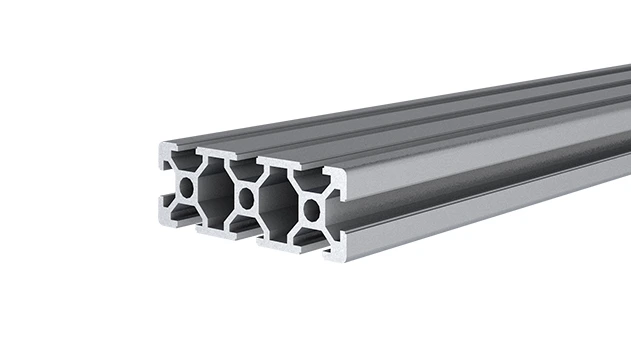
2060 EU Standard Aluminum Profile
2060 is a 2.00 x 4.00CM fractional 20 series square extrusion T-slot profile with four open T-slots, two side with 2.00cm face, the other side with 6.00cm face. The profile has align-a-grooves to assist in aligning connecting profiles.
Walk into any modern factory today, and you'll likely notice a shift. Gone are the days of massive, immovable steel structures dominating the floor—replaced instead by sleek, modular setups that seem to adapt as easily as the products rolling through them. This transformation isn't just about aesthetics; it's about survival. In an era where customer demands change overnight, where batch sizes shrink, and customization becomes the norm, rigid production lines are relics of a bygone industrial age. The future belongs to flexibility—and at the heart of that future lies the 2060 EU standard aluminum profile.
The Shift to Flexible Manufacturing: Why Rigidity No Longer Works
Let's start with a scenario we've all heard (or lived through): A manufacturer invests millions in a production line tailored to a single product. Six months later, consumer trends shift, and suddenly that line is churning out goods no one wants. Retooling takes months, costs a fortune, and by the time it's done, the market has moved again. Sound familiar? This is the reality of manufacturing in 2025—and it's why flexibility has become the industry's most prized asset.
Flexible production lines aren't just "nice to have"; they're essential for staying competitive. They let factories switch between products in hours, not weeks. They adapt to smaller batches without sacrificing efficiency. They grow with your business, scaling up or reconfiguring as needs change. And at the center of this revolution are aluminum profiles—specifically, the 2060 EU standard aluminum profile. But what makes this particular profile so special? Let's dive in.
Understanding 2060 EU Standard Aluminum Profiles: More Than Just Metal
At first glance, a 2060 aluminum profile might look like any other metal bar. But take a closer look, and you'll see why it's become the backbone of flexible manufacturing. Let's break it down: the "2060" refers to its dimensions—20 millimeters in width, 60 millimeters in height. That might seem arbitrary, but those numbers are the result of years of engineering to balance strength, weight, and versatility.
Unlike generic aluminum extrusions, the 2060 EU standard profile is built to strict European union specifications. That means consistent quality, precise tolerances, and compliance with safety and environmental standards. For manufacturers, that translates to reliability—no worrying about variations in strength or fit when ordering from different suppliers. It also means peace of mind: these profiles are tested to withstand the rigors of factory life, from heavy loads to constant vibration.
But the real magic is in the design. Like many modern aluminum profiles, the 2060 features a T-slot structure—longitudinal grooves running along its length that allow accessories to attach without welding, drilling, or specialized tools. Imagine building with a set of high-tech Legos: you snap components into place, tighten a bolt, and you're done. Need to rearrange? Loosen the bolt, move the part, and reattach. It's that simple. This T-slot system is what turns a static metal bar into a building block for endless configurations.
Aluminum Profile Accessories: The Glue That Holds Flexible Lines Together
From Connectors to End Caps: The Little Parts That Make a Big Difference
You could have the best aluminum profile in the world, but without the right accessories, it's just a fancy metal stick. Aluminum profile accessories are the unsung heroes of modular design, turning individual profiles into fully functional production systems. Let's talk about the essentials.
First up: connectors. These small, often unassuming pieces are what let you join profiles at angles—90 degrees, 45 degrees, even 135 degrees. The 2060 profile works with a range of connector types, from simple corner brackets to internal rotary joints that allow parts to pivot. For example, the internal straight aluminum joint is perfect for creating long, straight runs, while the 90° aluminum crossing joint lets you build multi-level structures without overlapping profiles. And because they're designed for the T-slot system, installing them is as easy as sliding them into place and securing with a hex key.
Then there are the brackets and mounts. These are the workhorses that hold everything from workbenches to conveyor tracks. Take the roller track placon mount for aluminum profile flat, for instance—it's a small bracket that attaches a roller track directly to a 2060 profile, no welding required. Need to adjust the height? Swap out the mount for a "high" version, and you're set. Even end caps play a role: they protect workers from sharp edges, give the setup a clean look, and prevent dust and debris from clogging the T-slots.
What makes these accessories so powerful is their universality. A bracket designed for a 2060 profile will work with any other 2060 profile, regardless of the supplier. That means you're not locked into a single brand—you can mix and match to find the best parts for your needs. It also means spare parts are easy to source, reducing downtime when something needs replacing.
Building Blocks of Flexible Lines: Workbenches and Roller Tracks
From Stationary to Mobile: How Aluminum Profiles Redefine Workspaces
Now that we understand the profiles and accessories, let's look at how they come together to build the core of a flexible production line: workbenches and roller tracks. These are the surfaces and pathways where the magic happens—where workers assemble products, where materials flow, and where bottlenecks can make or break efficiency.
Take workbenches, for example. Traditional workbenches are often heavy, fixed to the floor, and built for a single task. A 2060 profile workbench? It's a different beast. Let's say you need a bench for electronics assembly—you start with a frame of 2060 profiles, add an aluminum honeycomb panel top for a flat, sturdy surface, and attach a tool rail along the back using T-slot brackets. Need to lower the height for shorter workers? Swap out the leg profiles for shorter ones. Want to add casters for mobility? Just bolt on a set of flat swivel castor wheels, and suddenly your bench can move to where the work is, not the other way around.
One popular configuration is the "Workbench E (single deck-without caster)" from many suppliers—a basic, no-frills setup that can be customized with accessories as needed. But the beauty is that it never has to stay "basic." Add a shelf for storage, a light bar for better visibility, or even an ESD (electrostatic discharge) mat for sensitive electronics work. When the product line changes, take it apart, reconfigure the frame, and you've got a brand-new workbench for the next task.
Then there are roller tracks—the pathways that move materials from one station to the next. In rigid lines, these are often fixed conveyors that can't be adjusted. With 2060 profiles, roller tracks become modular. Let's say you need a track to move boxes from a packing station to shipping. You mount aluminum roller track (like the 38 aluminum roller track yellow with side guide) to 2060 profiles using placon mounts, adjust the angle for gravity feeding, and you're done. Need to add a curve? Use a 90° aluminum profile connector to bend the track. Suddenly, what was a straight line becomes a custom path that fits your factory's layout.
And because roller tracks are lightweight (thanks to aluminum), they're easy to reposition. A team of two workers can disassemble a 20-foot track, move it across the floor, and reassemble it in under an hour. Compare that to traditional steel conveyors, which might require a crane and a day of work. That's the difference flexibility makes.
Lean System Integration: Streamlining Production with Aluminum Solutions
If flexibility is the goal, then lean manufacturing is the playbook. Lean systems focus on eliminating waste—whether it's time, materials, or unnecessary movement. And 2060 EU standard aluminum profiles are the perfect tools to execute that playbook. Here's how:
First, they reduce setup time. In a lean environment, changeovers are critical—every minute spent retooling is a minute not making products. With aluminum profiles, setting up a new line or reconfiguring an existing one takes a fraction of the time. No welding, no cutting, no waiting for specialized contractors. A team can reconfigure a work cell during a lunch break, meaning production downtime is measured in minutes, not days.
Second, they minimize movement. Lean principles emphasize keeping tools and materials as close to the point of use as possible. With modular workbenches and roller tracks, you can design cells where everything a worker needs is within arm's reach. Need to add a material rack next to a workbench? Use 2060 profiles and aluminum profile accessories to build one that fits exactly the space available, holding just the right amount of inventory to prevent overstock (another lean no-no).
Third, they support continuous improvement. Lean isn't a one-time project; it's an ongoing process of tweaking and optimizing. Aluminum profiles make that easy. Maybe you notice workers bending down too much to reach parts—raise the roller track by a few inches using taller brackets. Maybe a workbench is too wide—shorten it by removing a section of 2060 profile. These small adjustments add up to big gains in efficiency over time.
To illustrate, let's compare traditional and aluminum-based lean setups:
| Aspect | Traditional Lean Setup (Steel/Wood) | Aluminum Profile Lean Setup (2060 EU Standard) |
|---|---|---|
| Changeover Time | 1-3 days (requires welding/cutting) | 1-3 hours (tool-free assembly) |
| Weight | Heavy (difficult to move) | Lightweight (easily repositioned) |
| Customization | Limited (built for one task) | Unlimited (mix accessories for any task) |
| Cost Over Time | High (frequent replacement/retrofitting) | Low (reusable components, minimal waste) |
| Safety | Risk of sharp edges, heavy lifting injuries | Smooth edges, lightweight design reduces strain |
The difference is clear: aluminum profiles turn lean from a theory into a practical, everyday reality. They let factories adapt not just once, but continuously, staying ahead of waste and inefficiency.
Real-World Applications: How Factories Are Using 2060 Profiles Today
Let's ground this in a hypothetical but realistic example. Imagine a small electronics manufacturer that produces both smart home devices and medical monitors. Their product mix changes monthly—one month, they're making 500 smart thermostats; the next, 200 specialized monitors for hospitals. With a traditional setup, they'd need separate lines for each product, tying up space and capital. With 2060 profiles, they do it all with one flexible line.
Here's how it works: They start with a base frame of 2060 profiles, with modular workbenches spaced along the line. For the smart thermostats, they equip the benches with ESD mats (critical for electronics) and mount small parts bins using aluminum profile brackets. The roller tracks are set to carry lightweight plastic trays, using 38 aluminum roller track white with wheel flange to keep trays from slipping.
When the order switches to medical monitors—larger, heavier, and requiring more specialized tools—they reconfigure. They swap out the ESD mats for sturdier aluminum panels, add height extensions to the workbenches using 2060 extension profiles, and replace the lightweight roller tracks with 40 steel roller track black ESD wheels to handle the heavier loads. The whole process takes a day, and they're ready to go. No new equipment, no downtime beyond the reconfiguration itself.
Another example: a automotive parts supplier that used to rely on fixed steel racks for storing components. These racks took up valuable floor space and made it hard to access parts quickly. They switched to a system of 2060 profile material racks—specifically, a "Material Rack B (3 row and 3 floor)" configuration. The racks are lightweight enough to move with a pallet jack, so they can be positioned right next to the assembly line when needed. The shelves are adjustable, so they can hold everything from small bolts to large brackets. And because they're built with aluminum, they won't rust, even in the factory's humid environment.
Future Trends: Why 2060 Profiles Are Here to Stay
So, will 2060 EU standard aluminum profiles remain relevant as manufacturing evolves? The short answer: absolutely. Here's why:
First, sustainability. Aluminum is 100% recyclable, and recycling it uses just 5% of the energy needed to produce new aluminum. As factories face increasing pressure to reduce their carbon footprint, aluminum profiles offer a greener alternative to steel (which is also recyclable but more energy-intensive to process) or plastic (which degrades over time).
Second, Industry 4.0 integration. The next wave of manufacturing—smart factories with IoT sensors, AI-driven analytics, and automated systems—needs flexible infrastructure. 2060 profiles are ideal for mounting sensors, cameras, and small robots. Their T-slot design makes it easy to add or move electronic components as the smart system evolves.
Third, the rise of on-demand manufacturing. As 3D printing and local production grow, factories will need to be even more agile—able to switch between products in hours, not days. 2060 profiles' modularity fits perfectly with this model, allowing for micro-factories that can produce small batches economically.
Conclusion: Investing in Flexibility for Tomorrow's Factories
At the end of the day, manufacturing is about solving problems—problems of speed, cost, quality, and adaptability. The 2060 EU standard aluminum profile isn't just a piece of metal; it's a problem-solving tool. It lets factories do more with less, adapt without breaking the bank, and stay competitive in a world that won't stop changing.
Whether you're a small workshop just starting out or a large manufacturer looking to upgrade, the message is clear: flexibility isn't optional anymore. It's the foundation of modern manufacturing. And with 2060 profiles, aluminum profile accessories, and the modular systems they enable, that flexibility is within reach. The future of production lines isn't rigid—it's aluminum, it's modular, and it's ready to grow with you.