- Company Articles
- Industry articles
- Industry standards
- Flexible Production Lines: Integrating 2040 EU Standard Aluminum Profile

Flexible Production Lines: Integrating 2040 EU Standard Aluminum Profile
Related Product
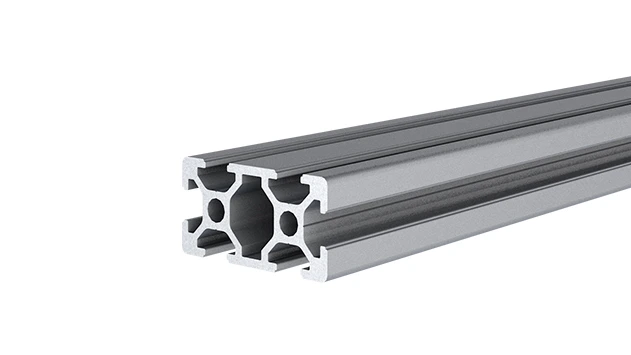
2040 EU Standard Aluminum Profile
2040 is a 2.00 x 4.00CM fractional 20 series square extrusion T-slot profile with four open T-slots, two side with 2.00cm face, the other side with 4.00cm face. The profile has align-a-grooves to assist in aligning connecting profiles.
On a typical Tuesday morning at a bustling electronics assembly plant, Maria, the production manager, stood staring at the schedule board with a sinking feeling. A last-minute order for a new smartphone model had just come in, and her team's current setup—rows of heavy steel workbenches bolted to the floor, flow racks welded into fixed configurations—wasn't going to cut it. "We need to reconfigure Line 3 by Friday," she told her lead technician, Jake. His response? A weary sigh. "That'll take at least two days, Maria. We'll have to cut the old steel frames, re-weld the racks, and hope nothing breaks in the process."
Sound familiar? For too many manufacturers, this is the norm: rigidity where adaptability is needed most. But what if there was a way to turn that two-day overhaul into a two-hour task? Enter the 2040 EU standard aluminum profile—a quiet revolution in how factories build, adapt, and thrive. This isn't just about metal and bolts. It's about reimagining what a production line can be: responsive, human-centered, and ready for whatever the market throws next.
What Makes 2040 EU Standard Aluminum Profile Different?
Let's start with the basics. The 2040 EU standard aluminum profile is a precision-engineered extrusion, measuring 20mm in width and 40mm in height, made from high-grade aluminum alloy. But numbers alone don't tell the story. What sets it apart is its design philosophy : flexibility built into every millimeter. Unlike traditional steel or even older aluminum profiles, the 2040 variant features a T-slot structure—longitudinal grooves running along its length—that act like a universal connector system. Think of it as a Lego set for grown-ups, but for factories.
"EU standard" isn't just a label, either. It's a promise of consistency. When Maria's team ordered their first batch of 2040 profiles, they knew every piece would fit with every accessory—no mismatched holes, no shoddy tolerances. That's critical in manufacturing, where a 1mm gap can throw off an entire assembly line. And because it's aluminum, it's lightweight (about 1/3 the weight of steel) but surprisingly strong, able to support heavy loads without bending or warping. Corrosion-resistant, scratch-proof, and designed to last decades, it's the kind of material that outlives the products it helps build.
The Power of "Click-and-Go" Customization
Here's where the magic happens: aluminum profile accessories. Walk into Maria's plant today, and you'll see bins of small, unassuming parts—2020 aluminum profile end caps, 90° aluminum profile connectors, T-slot rubber seal covers—that transform the 2040 profile from a simple tube into a blank canvas. These accessories snap, bolt, or slide into the T-slots, letting teams build anything without welding, cutting, or specialized tools.
Take a basic workbench, for example. With traditional steel, building one meant hiring a welder to fuse frames, drilling holes for shelves (and hoping they lined up), and accepting that once it was built, it was done —no adjusting height for taller workers, no adding a tool rail later, no swapping out a damaged tabletop without rebuilding the whole thing. With 2040 profiles? Maria's team built a custom workbench in under an hour. They slid aluminum guide rails into the T-slots for tool storage, bolted on a lightweight aluminum honeycomb panel for the tabletop, and added adjustable feet to level it on their uneven factory floor. Last month, when a new operator joined who needed the bench 3 inches higher? They loosened four bolts, adjusted the legs, and tightened them back up. Total time: 10 minutes.
It's not just workbenches, either. Need a flow rack to move components from station to station? Snap on roller tracks (another essential accessory) and swivel roller balls, and suddenly you've got a gravity-fed system that glides parts along smoothly. Want to extend a conveyor line to reach a new assembly station? Add a few 2040 sections, connect them with duplex aluminum pipe joints, and you're done. No heavy lifting, no downtime, no stress.

Real-World Impact: From Rigidity to Resilience
To understand the difference, let's compare traditional setups with 2040-equipped lines. The table below tells the story in numbers—but the real impact is in how it changes daily life on the factory floor.
| Feature | Traditional Steel Structures | 2040 EU Standard Aluminum Profile |
|---|---|---|
| Reconfiguration Time | 48+ hours (requires welding, cutting, and heavy tools) | 1–2 hours (tools needed: hex key and rubber mallet) |
| Weight | Heavy (50–100kg per section; requires forklifts to move) | Lightweight (10–15kg per section; two workers can carry it) |
| Customization | Limited (fixed designs; modifications mean rebuilding) | Unlimited (add/remove shelves, rails, or panels in minutes) |
| Durability | Prone to rust, dents, and paint chipping; needs frequent maintenance | Corrosion-resistant, scratch-proof; lasts 10+ years with minimal upkeep |
| Worker Experience | Physical strain (lifting heavy parts), frustration (delays from reconfigurations) | Ergonomic (adjustable heights, easy movement), empowerment (teams control their space) |
Case Study: Maria's Electronics Plant
"Before 2040 profiles, we'd dread product launches," Maria recalls. "We'd spend weeks planning reconfigurations, then cross our fingers that the welders finished on time. Once, we had to delay a shipment because a steel flow rack collapsed under the weight of new components—it was welded so poorly, the joints snapped."
Today, Maria's team handles 3–4 line changes monthly, each in under 2 hours. Last quarter, they launched a new smartwatch line, and instead of shutting down Line 3 for days, they built a temporary sub-line using 2040 profiles and roller track conveyors. "We set it up in the corner, ran prototypes through, then disassembled it and reused the parts when we scaled up," she says. "Zero waste, zero downtime."
"The best part? My operators love it. Juan, who's been on the line for 15 years, came to me last week and said, 'I can finally adjust my workbench to where my back doesn't ache.' That's not just productivity—that's dignity."
The numbers back it up: 90% faster reconfigurations, 40% fewer tool-related injuries, and a 25% jump in on-time deliveries. "We're not just building better products," Maria says. "We're building a better workplace."
Beyond the Factory: Why Flexibility Matters Everywhere
Flexible production lines aren't just for big factories. Small workshops, labs, even warehouses are adopting 2040 profiles because adaptability isn't a luxury—it's survival. A local furniture maker uses them to build adjustable workbenches that switch from cutting to sanding to assembly. A university lab built custom shelving for delicate equipment, then reconfigured it six months later when they got new microscopes. A third-party logistics firm uses flow racks with swivel roller balls to sort packages by destination, changing the layout daily based on delivery routes.
It's also eco-friendly. Traditional steel setups often end up in landfills when they're no longer needed. 2040 profiles and their accessories? They're 100% recyclable, and because they're modular, they get reused. Maria estimates her plant has saved over 10 tons of steel waste in two years by repurposing old profiles into new structures. "Sustainability isn't about grand gestures," she says. "It's about choosing materials that don't become trash."
The Future of Manufacturing Isn't Big—It's Flexible
Walk through any modern factory, and you'll hear the same buzzwords: "agility," "lean manufacturing," "Industry 4.0." But buzzwords don't build products—people do. And people work best when their tools adapt to them , not the other way around. 2040 EU standard aluminum profiles don't just enable flexible production lines; they enable flexible thinking. When teams aren't stuck fighting rigid structures, they're free to innovate—finding faster ways to assemble, smarter ways to organize, and better ways to support each other.
For Maria, the shift wasn't just about metal and bolts. It was about trust—trust that her team could handle change, trust that her tools wouldn't let her down, and trust that her factory could grow without growing chaotic. "We used to see reconfigurations as a problem," she says. "Now? We see them as opportunities. A new product? Let's build a line for it. A seasonal spike? Let's add a station. The 2040 profiles don't just make it possible—they make it exciting."
So the next time you walk into a factory, look beyond the machines. Look at the workbenches, the flow racks, the conveyors. If they're rigid, heavy, and outdated, chances are the people using them are, too. But if they're light, modular, and built with 2040 aluminum profiles? You're looking at the future—one where production lines bend, adapt, and thrive, just like the teams that run them.