- Company Articles
- Industry articles
- Industry standards
- Flexible Production Lines: Role of 3030b EU Standard Aluminum Profile

Flexible Production Lines: Role of 3030b EU Standard Aluminum Profile
Related Product
3030B EU Standard Aluminum Profile
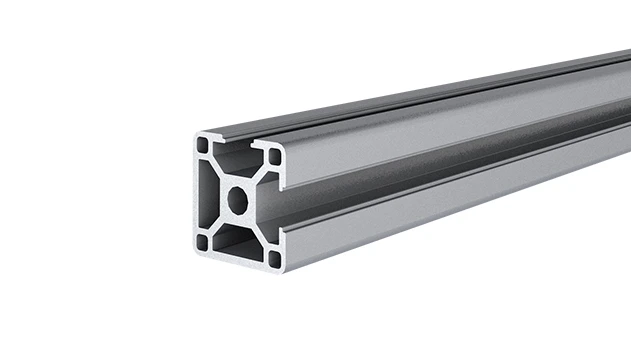
3030 is a 3.00 x 3.00CM fractional 30 series square extrusion T-slot profile with two side open T-slots, each side with 3.00cm face, 2 side with open slot, 2 side with closed face. The profile has align-a-grooves to assist in aligning connecting profiles.
Walk into any modern manufacturing facility today, and you'll notice something different from the factories of 20 years ago: lines that don't look "fixed." Workbenches that adjust in hours, not days. Material racks that reconfigure as product sizes change. Trolleys that glide smoothly between stations, loaded with exactly what's needed, exactly when. This isn't magic—it's the power of flexible production lines, and at the heart of this revolution lies a humble yet mighty component: the 3030B EU Standard Aluminum Profile. In this article, we'll dive into why this specific profile has become the backbone of agile manufacturing, how it works with aluminum profile accessories to build lean systems, and why it's more than just a piece of metal—it's a strategic tool for staying competitive in a fast-changing world.
The Shift to Flexible Production: Why Rigidity No Longer Works
Let's start with the obvious: manufacturing isn't what it used to be. A decade ago, a factory might produce the same product for years, with production lines built to last decades. Today? Customer demands shift overnight. New regulations pop up. Supply chains get disrupted. If your production line can't pivot quickly, you're left behind. Take, for example, a small electronics manufacturer I visited last year. They'd just landed a contract for a new smartphone model, but their old steel workbenches were too low for the taller components, and their material racks couldn't fit the larger circuit board boxes. Reconfiguring those steel setups would've taken two weeks—time they didn't have. Sound familiar? This is the reality for manufacturers worldwide: rigidity equals risk.
Flexible production lines solve this by prioritizing adaptability. They're designed to be reconfigured, extended, or repurposed with minimal downtime. But here's the catch: flexibility doesn't mean sacrificing strength or efficiency. You need a system that's sturdy enough to handle daily use, lightweight enough to move without heavy machinery, and versatile enough to fit any task. Enter the 3030B EU Standard Aluminum Profile. It's not the only solution, but ask any plant manager who's made the switch, and they'll tell you—it's the most reliable one.
What Exactly Is 3030B EU Standard Aluminum Profile?
Before we get into why it's a game-changer, let's clarify what we're talking about. The "3030B" in its name isn't random. The first two numbers (30) refer to the width and height—30mm by 30mm. The "B" denotes a specific design variant within EU standard profiles, typically with a T-slot configuration (those grooves running along the sides) that makes it easy to attach accessories. Made from high-grade aluminum alloy (usually 6063-T5, if you're into specs), it's lightweight but surprisingly strong—think of it as the Goldilocks of profiles: not too flimsy, not too heavy, just right for most manufacturing tasks.
The "EU Standard" part matters, too. Unlike generic aluminum profiles, 3030B is manufactured to strict European standards for quality, safety, and consistency. That means every piece you buy—whether from a supplier in Germany, Poland, or China—will have the same slot dimensions, the same wall thickness, and the same load-bearing capacity. No more guessing if a bracket from one batch will fit a profile from another. For manufacturers, this consistency is gold. It eliminates the "will this work?" stress and lets you focus on building, not troubleshooting.
Visually, it's simple: a square or rectangular tube with T-shaped slots along its length (usually one slot per side, though some variants have more). Those slots are the secret sauce. They let you slide in bolts, brackets, or accessories without drilling new holes or welding. Need to add a shelf to a workbench? Screw a bracket into the slot. Want to attach a lamp or a tool holder? Slide in a T-nut and tighten. It's like building with high-tech Legos—only these Legos can hold hundreds of kilograms.

The Core Advantages: Why 3030B Stands Out
1. Modularity: Build, Break, Rebuild—No Welding Required
Imagine you need to adjust a workbench height from 80cm to 90cm. With a steel workbench, that might mean cutting new legs, welding them on, and repainting—hours of work, if not days. With 3030B, it's a 20-minute job. Loosen the brackets holding the legs, slide them up, retighten, and you're done. Why? Because 3030B is modular by design. It works with a range of aluminum profile accessories—connectors, hinges, end caps—that let you assemble structures without permanent joins. Welding? A thing of the past. Drilling? Rarely needed. This modularity is why manufacturers love it: when a new project comes in, you don't buy new equipment—you reconfigure what you already have.
2. Strength-to-Weight Ratio: Tough Enough for the Floor, Light Enough for the Ceiling
Aluminum gets a bad rap sometimes for being "flimsy," but 3030B is anything but. Thanks to its alloy composition (6063-T5), it has a tensile strength of around 180 MPa—strong enough to support a 200kg load on a 1-meter span. That's more than enough for most workbenches, material racks, or even light conveyor systems. And here's the kicker: it's only about 2.7kg per meter (depending on wall thickness). Compare that to steel, which is around 7.8kg per meter for the same size. Lighter weight means easier handling—no need for forklifts to move a section of flow rack. It also reduces wear and tear on casters and floors, lowering maintenance costs over time.
3. Compatibility: Works with Your Existing Lean System
Most manufacturers don't start from scratch—they have existing lean systems in place: 5S protocols, kanban boards, visual management tools. 3030B plays well with all of them. Need a shadow board for tools? Attach pegboards to 3030B frames. Want to add a kanban card holder to a flow rack? Use a simple bracket. Even better, it's compatible with other standard profiles (like 2020 or 4040) if you need to mix sizes. This compatibility means you can upgrade incrementally—no need to replace your entire setup at once. Start with the workbenches, then the flow racks, then the trolleys. It's a low-risk, high-reward transition.
4. Corrosion Resistance: Built to Last in Harsh Environments
Factories are tough places. Oils, coolants, humidity—all of these can eat away at metal over time. Steel rusts; plastic warps. Aluminum? It forms a natural oxide layer that resists corrosion. 3030B takes this a step further: many suppliers offer anodized finishes, which thicken that oxide layer, making it even more durable. I visited a food packaging plant last month where 3030B workbenches had been in use for five years—no rust, no pitting, just a slight dulling of the finish. For manufacturers in automotive, electronics, or food processing—industries where cleanliness and longevity matter—this is a huge plus.
Applications in Action: Building Lean Systems with 3030B
Enough theory—let's look at how 3030B is used on the factory floor. From workbenches to flow racks, it's the foundation of some of the most critical lean system components.
Workbenches: Ergonomic, Adjustable, and Built for the Task
The workbench is where the magic happens—where operators assemble, test, or package products. A bad workbench leads to fatigue, errors, and slowdowns. A good one? It adapts to the operator, not the other way around. 3030B workbenches (like the "Workbench E" mentioned in some supplier catalogs) are designed with this in mind. They're height-adjustable (thanks to those modular legs), so a 5'2" operator and a 6' tall operator can use the same bench comfortably. Add a pegboard for tools, a shelf for manuals, or a LED light bar—all attached via T-slot accessories. And because 3030B is lightweight, you can even add casters (another aluminum profile accessory) to make the bench mobile, so it can follow the workflow instead of being stuck in one spot.
Case Study: A Furniture Manufacturer's Workbench Makeover
Before: A mid-sized furniture company used fixed wooden workbenches. When they started making taller bookshelves, operators had to hunch over, leading to back pain and slower assembly times. Replacing the wooden benches would've cost $20,000 and taken a week of downtime.
After: They switched to 3030B aluminum workbenches. Using existing accessories, they raised the bench tops by 15cm in 2 hours per bench. Total cost? $3,000 for materials. Result: Operator complaints dropped by 80%, and assembly speed increased by 15%.
Flow Racks: Keeping Materials Moving Smoothly
In lean manufacturing, "flow" is everything. Materials should move from storage to assembly with minimal effort—no lifting, no searching, no delays. Flow racks (or "material racks" as some call them) are designed for this, and 3030B is perfect for building them. Here's how: the frame is made from 3030B profiles, and roller tracks (often plastic or aluminum) are attached via brackets. The tracks slope slightly, so bins or boxes slide down as the front one is removed—first-in, first-out (FIFO) at its finest. Need to change the rack's height to fit taller bins? Adjust the 3030B uprights. Want to add a second level? Attach more crossbars. Even better, 3030B's compatibility with swivel roller balls (like the 1-inch stainless steel ones) means you can build racks that handle irregularly shaped items without jamming.
Turnover Trolleys: Mobile Storage That Keeps Up with Demand
Ever seen a trolley loaded with parts get stuck because it's too heavy? Not with 3030B. Turnover trolleys built with this profile are lightweight but sturdy, with casters that glide even when fully loaded. They're also customizable: add dividers for small parts, fold-down sides for easy loading, or even a handle made from—you guessed it—3030B. One auto parts supplier I worked with uses these trolleys to move engine components between stations. When a new engine model came in, they added extra dividers and adjusted the shelf heights in under an hour. No new trolleys, no downtime—just 3030B doing what it does best.
Aluminum Profile Accessories: The Unsung Heroes of Flexibility
If 3030B is the backbone of flexible systems, aluminum profile accessories are the joints, muscles, and nerves. They're the small parts that turn a simple tube into a workbench, a flow rack, or a lean system. Let's highlight a few key ones:
- Connectors: These join profiles at angles—90°, 45°, even 135°. The "internal rotary aluminum joint" is a favorite: it lets you pivot sections (like a workbench shelf) without disassembling everything.
- End Caps: Simple but essential. They cover the ends of profiles to prevent sharp edges and keep out dust. The 3030 EU standard end cap (like the 3030 aluminum profile end cap) snaps right into place.
- Brackets and Gussets: These reinforce joints, adding strength where needed. The "gusset alp 3030" is designed specifically for 30mm profiles, ensuring a snug fit.
- Wheels and Casters: Attach these to the bottom of frames, and suddenly your static workbench becomes a mobile workstation. Look for "caster accessories" like brake levers for stability when in use.
The beauty of these accessories? They're standardized. A 3030B profile from one supplier will work with accessories from another, thanks to EU standards. This means you're never locked into a single vendor—you can mix and match to get the best price or fastest delivery.
How 3030B Compares to Other Profiles and Materials
You might be thinking, "Why 3030B specifically? There are other aluminum profiles, like 2020 or 4040." Fair question. Let's break it down with a quick comparison:
| Profile Type | Dimensions (mm) | Max Load Capacity (kg/m) | Best For | When to Choose It Over 3030B |
|---|---|---|---|---|
| 2020 EU Standard | 20x20 | 80-100 | Small shelves, lightweight frames | You need something very compact (e.g., electronics assembly) |
| 3030B EU Standard | 30x30 | 150-200 | Workbenches, flow racks, trolleys | Most general manufacturing tasks—balance of size, strength, and weight |
| 4040 EU Standard | 40x40 | 250-300 | Heavy-duty racks, conveyor frames | You need to support very heavy loads (e.g., automotive engines) |
So, 3030B hits the sweet spot for most manufacturers. It's not too small (like 2020) to limit load capacity, and not too large (like 4040) to add unnecessary weight or cost. And when compared to steel? Steel might be stronger, but it's heavier, harder to modify, and prone to rust. Plastic is lighter but can't handle the heat or weight of industrial use. 3030B balances strength, weight, cost, and flexibility in a way no other material does.
Future-Proofing Your Factory: 3030B in Smart Manufacturing
The next frontier for manufacturing is "smart" systems—factories with sensors, IoT devices, and data analytics that optimize production in real time. Guess what? 3030B is ready for this, too. Its T-slot design makes it easy to mount sensors (for tracking inventory levels on flow racks), cameras (for quality control on workbenches), or even small screens (for displaying work instructions). One electronics plant I toured uses 3030B frames with built-in RFID readers to track bins as they move through the line—all powered by accessories that snap into the T-slots. No drilling, no wiring mess—just plug-and-play smart manufacturing.
Sustainability is another trend, and 3030B delivers here as well. Aluminum is 100% recyclable, and because 3030B systems are modular, they're rarely thrown away—they're reconfigured instead. This reduces waste and lowers your carbon footprint. Plus, aluminum production is becoming greener, with more suppliers using renewable energy to smelt the metal. Choosing 3030B isn't just good for flexibility—it's good for the planet.
Conclusion: 3030B—More Than a Profile, a Strategic Tool
At the end of the day, flexible production lines aren't a luxury—they're a necessity. And 3030B EU Standard Aluminum Profile is the key to unlocking that flexibility. It's modular, strong, compatible with aluminum profile accessories, and ready for the smart factories of tomorrow. Whether you're building workbenches, flow racks, or entire lean systems, it's the material that grows with your business, adapts to your challenges, and keeps you competitive in a world that waits for no one.
So, the next time you walk through your factory and see a workbench that needs adjusting, a flow rack that's too short, or a trolley that's stuck in the past, remember: the solution might be simpler than you think. It might just be a 30mm by 30mm aluminum profile, waiting to transform your production line from rigid to remarkable.