- Company Articles
- Industry articles
- Industry standards
- Flexible Workstations: 4040r EU Standard Aluminum Profile Configurations

Flexible Workstations: 4040r EU Standard Aluminum Profile Configurations
Related Product
4040R EU Standard Aluminum Profile
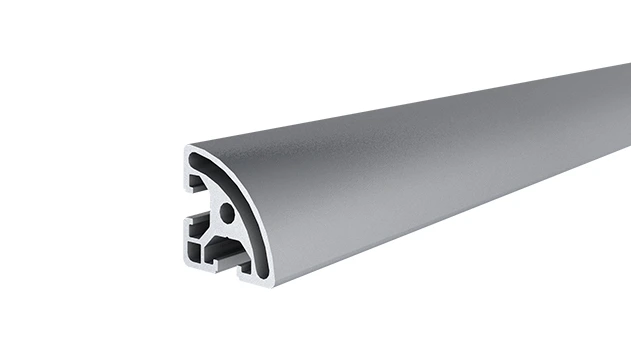
4040R is a 4.00x4.00 CM fractional 40 series square extrusion T-slot profile with two side open T-slots, each side with 4.00cm face,the other side is round face. The profile has align-a-grooves to assist in aligning connecting profiles.
How modular design is transforming manufacturing floors, one profile at a time
The Problem with "One-Size-Fits-All" Workstations
Walk into almost any manufacturing or assembly facility, and you'll likely spot the same challenge: workstations that feel like relics of a bygone era. Heavy, welded steel frames bolted to the floor. Shelves fixed at awkward heights. Conveyor tracks that can't be adjusted without calling in a contractor. These setups might have worked when production lines ran the same way for decades, but today's factories move faster. Product cycles shrink, custom orders surge, and teams need spaces that adapt as quickly as their to-do lists.
Imagine a small electronics manufacturer ramping up for a new product launch. Their old workbench, built for assembling smartphones, is suddenly tasked with fitting larger tablets. The shelves are too short, the lighting is misaligned, and the static-sensitive components keep hitting the metal edges. By the time they cobble together a workaround, deadlines are missed, and frustration runs high. This isn't just inefficiency—it's a barrier to innovation.
Enter the 4040r EU standard aluminum profile. It's not just a piece of metal; it's a solution to this rigidity. Lightweight yet surprisingly strong, modular by design, and built to evolve with your needs, this profile is quietly revolutionizing how teams build, adapt, and optimize their workspaces. Let's dive into why it's become the backbone of flexible workstations—and how you can leverage it to turn your floor from a fixed layout into a dynamic, responsive environment.
What Makes 4040r Aluminum Profile Special?
First, let's break down the basics. The "4040r" in its name tells you two key things: its dimensions (40mm by 40mm) and its design quirk ("r" for rounded edges). Unlike sharp-cornered profiles, those rounded edges aren't just for aesthetics—they reduce the risk of scratches on components, minimize workplace injuries, and even make cleaning easier (no hard-to-reach crevices for dust to hide). But the real magic is in how it's engineered to work with aluminum profile accessories —connectors, brackets, and fasteners that turn individual profiles into almost anything you can imagine.
Compliance with EU standards is another cornerstone. This isn't just a marketing buzzword; it means rigorous testing for strength, durability, and safety. The 4040r profile can handle loads up to 200kg per linear meter (depending on configuration), making it sturdy enough for heavy tools, but light enough that two people can reconfigure a workstation in an afternoon. Compare that to steel, which often requires forklifts or power tools to move—if it can be moved at all.
But perhaps its biggest selling point is modularity. Traditional workstations are built as single units; if you need a new shelf, you weld it on. With 4040r, you simply slide a connector into the T-slot (that groove running along the profile's length), tighten a bolt, and you're done. No welding, no drilling, no permanent changes. It's like building with high-tech Legos—only these blocks support your livelihood.

Beyond the Basics: Key Benefits of 4040r Configurations
Flexibility is the headline, but the 4040r profile brings a host of other advantages to the table. Let's unpack the ones that matter most to teams on the ground:
Cost-Effective in the Long Run
It's true: aluminum profiles can cost more upfront than basic steel. But think about the lifecycle. A welded steel workstation might last 10 years, but if your needs change in year 3, you'll either live with inefficiency or pay to replace it. With 4040r, you reconfigure instead of replace. Need to add a shelf? Buy a few profiles and connectors. Shift to a new product line? Disassemble the old setup and rebuild it in hours. Over time, those savings add up—often paying for the initial investment within 18–24 months.
Sustainability That Counts
Aluminum is 100% recyclable, and the 4040r profile is often made from recycled materials itself. When a workstation reaches the end of its useful life, you're not sending a hunk of steel to the landfill—you're melting down the profiles to make new ones. Plus, modular designs reduce waste during setup: no cutting excess metal, no leftover scraps. For companies prioritizing green initiatives, this isn't just a bonus; it's a selling point to customers and regulators alike.
Safety Built In
Sharp edges, unstable shelves, and heavy, immovable structures are accident waiting to happen. The 4040r's rounded edges reduce cuts and scrapes. Its lightweight nature means less strain on workers moving components. And because it's assembled with precision-fit accessories (like 90° aluminum profile connectors and gusset alp 4040 brackets), there's no wobble—critical when handling fragile or heavy items. Even the end caps (yes, 4040 aluminum profile end caps are a thing) play a role, covering exposed T-slots to prevent tools or fingers from getting caught.
Building Blocks: 4040r and Its Essential Accessories
A profile alone is just a stick. It's the accessories that turn it into a workstation. Let's meet the unsung heroes that make 4040r setups so versatile:
Connectors: The Glue of Modularity
At the heart of any 4040r build are the connectors. These small, often overlooked pieces let you join profiles at any angle—90°, 45°, even 135°—without welding. The 90° aluminum profile connector is the workhorse here, perfect for building square frames for workbenches or shelves. For more complex joints, like the corner of a triangular material rack, the 135° aluminum profile connector steps in. What's impressive is how secure they feel: a simple hex key tightens the connector into the T-slot, creating a bond strong enough to support heavy loads but easy to loosen when it's time to reconfigure.
Brackets: Adding Strength Where It Matters
Even the sturdiest frames need reinforcement, especially for cantilevered shelves or overhanging components. That's where gusset brackets come in. The gusset alp 4040 is a small, triangular plate that bolts onto the inside corner of two profiles, distributing weight and preventing flexing. Think of it like adding a truss to a bridge—small, but critical for stability. We once worked with a automotive parts supplier that used gussets to reinforce a workstation holding 50kg toolboxes; three years later, that setup still hasn't budged.
End Caps: The Finishing Touch
It's the little things that make a workspace feel intentional, and 4040 aluminum profile end caps are a prime example. These plastic or rubber caps snap into the ends of profiles, covering sharp edges and keeping dust out of T-slots. In cleanrooms or labs, they're non-negotiable for maintaining sterility. In busy shops, they prevent small parts (like screws or washers) from rolling into the slots and getting lost. Plus, they come in colors—yellow, blue, gray—so teams can color-code workstations by department or function. Simple, but surprisingly effective for organization.
Pro Tip: Always buy accessories from the same supplier as your profiles. While generic parts might fit, EU-standard profiles have precise tolerances, and mismatched connectors can lead to wobbly joints or stripped T-slots. It's worth the small extra cost for peace of mind.
From Idea to Workspace: Common 4040r Configurations
The beauty of 4040r is that it's a blank canvas. But to spark your creativity, let's look at three configurations we see most often—and how they solve real-world problems.
1. The Adaptable Workbench
Workbenches are the workhorses of any facility, and the 4040r version is a game-changer. Start with a simple frame: four vertical 4040r legs connected by horizontal rails. Add a wooden or aluminum top (we prefer anti-static laminate for electronics work). Then customize: adjustable shelves using T-slot brackets, overhead lighting rails, tool hooks, and even integrated roller track for feeding materials from one end to the other. One client, a medical device manufacturer, built a bench that raises and lowers with gas struts—letting workers alternate between sitting and standing without sacrificing stability.
2. Mobile Material Racks
Why keep materials stuck in one corner when they can come to you? A mobile rack built with 4040r profiles and locking casters turns static storage into a dynamic resource. Add roller track shelves, and suddenly bins of components glide smoothly to the workstation. We helped a bakery design one for transporting dough trays—light enough for one person to move, sturdy enough to hold 300kg, and easy to clean (aluminum doesn't absorb flour like wood). When they switched to seasonal cookie tins, they simply repositioned the shelves—no tools required.
3. Lean Production Cells
For teams embracing lean system principles, 4040r is a dream. Build U-shaped work cells where every tool, part, and instruction is within arm's reach. Use profiles to frame whiteboards for standard work guides, mount digital displays for real-time metrics, and add retractable conveyor sections that tuck away when not in use. A furniture manufacturer we worked with cut waste by 40% after reconfiguring their line into 4040r cells—workers no longer walked 20 steps for screws; the screws came to them.
Curious about how these configurations stack up? Here's a quick breakdown of their key specs:
| Configuration | Core Components | Primary Use | Max Load Capacity |
|---|---|---|---|
| Single-Deck Workbench | 4040r profiles, 90° connectors, gusset brackets, wooden top | Assembly, inspection, packing | 500kg (evenly distributed) |
| Mobile Material Rack (3-Tier) | 4040r profiles, roller track, locking casters, end caps | Storage, material transport | 300kg per shelf |
| Lean Production Cell | 4040r profiles, adjustable shelves, roller track, whiteboard mounts | Continuous flow assembly | Variable (customizable) |
Real-World Impact: Stories from the Floor
Numbers tell part of the story, but it's the teams using these workstations that bring the value to life. Let's hear from a few:
Case 1: A Small Electronics Shop's Big Leap
Precision Circuits, a 15-person team building custom circuit boards, was drowning in inefficiency. Their old workbenches were a hodgepodge of secondhand steel tables and DIY plywood shelves. "We'd spend 20 minutes moving a scope from one bench to another because there was no room," says Maria, their production lead. "And when we got a rush order for larger boards, we had to work on the floor—literally."
They invested in two 4040r workstations with adjustable heights, overhead tool rails, and roller track for moving PCBs. The transformation was immediate. Setup time for new orders dropped from 2 hours to 20 minutes. Scrap rates fell because components weren't getting jostled on uneven surfaces. "Best part?" Maria laughs. "Last month, we added a third bench in a morning—just me and Juan, with a hex key. No contractors, no downtime."
Case 2: A Warehouse's Fight Against Seasonal Chaos
GreenThumb Logistics handles shipping for garden supply companies—meaning their peak season hits hard in spring. For years, they struggled with fixed shelving that couldn't keep up. "In March, we'd have pallets of seed packets stacked in the aisles because the shelves were too tall," says warehouse manager Raj. "In winter, half the space sat empty."
They replaced static racks with 4040r mobile units, adding and removing shelves as needed. Now, in spring, they configure racks for small seed packets; in winter, they expand them for bulk soil bags. "We used to rent extra warehouse space for $5,000 a month during peak season," Raj says. "This year, we skipped the rental—and still had room to spare."
Building Your Own: Tips for Getting Started
Ready to dive in? Here's how to avoid common pitfalls and build a workstation that grows with you:
Start with a Sketch (Yes, Even a Bad One)
You don't need CAD software—just a pencil and paper. Draw your ideal setup: where will the shelves go? Do you need a roller track? How tall should the bench be? Measure your tallest worker and your shortest; adjustable heights matter. Don't forget power: leave space for cable management (T-slots are great for routing wires!).
Test Before You Buy in Bulk
Order a small "test kit" first: a few 4040r profiles, connectors, and brackets. Build a mini-version of your workstation to see how it feels. Does the height work? Are the shelves stable? This saves you from investing in 20 profiles only to realize you need a different configuration.
Think About the "What Ifs"
What if you add a new team member? What if your product line expands? Leave extra T-slots empty for future accessories. Choose casters with locks if you might need mobility later. And opt for corrosion-resistant aluminum if you work in a humid or dusty environment.
The Future of Workstations: Beyond 4040r
The 4040r profile is just the beginning. As manufacturers push for smarter, more connected factories, we're seeing profiles integrate with IoT sensors (monitoring weight loads in real time), 3D-printed custom brackets, and even magnetic accessories for tool storage. But at its core, the philosophy remains the same: workspaces should serve people, not the other way around.
So whether you're a startup building your first production line or a legacy company ready to modernize, remember this: flexibility isn't a luxury—it's a necessity. And with the 4040r EU standard aluminum profile, that flexibility is within reach. No more welding, no more waiting, no more settling for "good enough." Your workstation should adapt as quickly as you do. Now go build something that grows with you.