- Company Articles
- Industry articles
- Industry standards
- Flexible Workstations: Integrating 2020 EU Standard Aluminum Profile for Medical Devices

Flexible Workstations: Integrating 2020 EU Standard Aluminum Profile for Medical Devices
Related Product
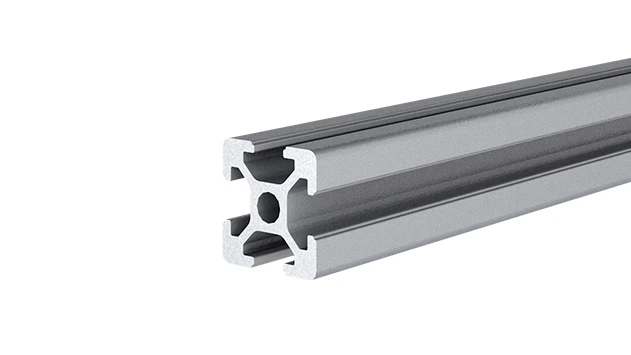
2020 EU Standard Aluminum Profile
2020 is a 2.00 x 2.00CM fractional 20 series square extrusion T-slot profile with four open T-slots, one on each 2.00 face. The profile has align-a-grooves to assist in aligning connecting profiles.
In the world of medical device manufacturing, precision isn't just a goal—it's a responsibility. Every component, every assembly step, and every tool used carries the weight of patient safety. But behind the scenes of these life-saving devices lies a critical, often overlooked factor: the workstations where technicians spend hours crafting, testing, and perfecting these tools. Today, we're exploring how one innovation—2020 EU Standard Aluminum Profile—is transforming these workspaces into hubs of flexibility, compliance, and care, all while keeping the human touch at the center of production.
The Hidden Challenge in Medical Device Manufacturing
Walk into any medical device facility, and you'll likely see rows of workbenches, each cluttered with tools, components, and checklists. What you might not see is the silent struggle happening behind the scenes: fixed, rigid workstations that can't keep up with the industry's demands. Medical technology evolves at a breakneck pace—new devices, updated regulations, and shifting production needs require workspaces that can adapt just as quickly. A workstation built for assembling syringes last year might not work for today's miniaturized pacemakers, and reconfiguring it often means downtime, extra costs, or even compromising on safety.
Then there's the human element. Technicians in this field aren't just workers—they're craftspeople. They spend 8+ hours a day hunched over delicate parts, their hands steadying tools that measure in millimeters. An uncomfortable workstation, one that's too high, too low, or lacks proper storage, doesn't just slow them down; it increases fatigue, which in turn raises the risk of errors. And in an industry where a single mistake could have life-altering consequences, that's a risk no one can afford.
Here's the truth: A workstation isn't just a table. It's a partner in precision. It should support the people behind the products, adapt to their needs, and grow with the industry. That's where flexible workstations, built around 2020 EU Standard Aluminum Profile, come into play.
Why 2020 EU Standard Aluminum Profile? The Foundation of Flexibility
At first glance, aluminum profiles might seem like simple metal tubes—but they're far more than that. The 2020 EU Standard Aluminum Profile, in particular, is a game-changer for medical device manufacturing. Let's break down why:
- Modularity by Design: These profiles are built with T-slots—longitudinal grooves that let you attach accessories (think shelves, tool holders, or lighting) with just a few screws. No welding, no drilling, no waiting for a technician to rework the entire setup. A team can reconfigure a workstation in hours, not days, to switch from assembling diagnostic kits to packaging surgical tools.
- Compliance Built-In: The "EU Standard" label isn't just a marketing term. These profiles meet strict European regulations for material safety, durability, and load-bearing capacity—critical for medical facilities that must adhere to ISO 13485 and FDA guidelines. You won't have to worry about off-brand materials leaching chemicals or failing under the weight of heavy equipment.
- Size Matters: The 20x20mm dimensions strike the perfect balance between strength and versatility. They're sturdy enough to support workbenches and material racks but lightweight enough to make reconfiguration easy. For medical devices, which often involve small, intricate parts, this means workstations can be tailored to the task without wasting space or sacrificing stability.
But the real magic? How these profiles work with other components to create a complete, human-centered system. Let's dive into the pieces that turn a simple aluminum frame into a workstation that feels like it was designed with the technician in mind.

Building the Workstation: Aluminum Profile Accessories and the Art of Customization
You can't talk about 2020 EU Standard Aluminum Profile without mentioning its sidekicks: aluminum profile accessories. These small, often overlooked parts—brackets, hinges, corner connectors, and panel mounts—are what make true customization possible. They're the reason a workstation can go from a flat assembly surface to a multi-tiered, ergonomic hub in minutes.
Take, for example, height-adjustable feet. A technician who's 5'2" shouldn't have to strain to reach a shelf designed for someone 6' tall. With adjustable feet and leg brackets, the same workstation can be raised or lowered by 6-12 inches, reducing back pain and improving posture. Or consider tool rails: using simple clips and holders, technicians can keep their most-used tools (tweezers, calipers, screwdrivers) within arm's reach, cutting down on wasted movement and mental focus lost to searching for equipment.
Even small touches matter. Cable management clips, which attach to the T-slots, keep power cords and USB cables from tangling—no more tripping hazards or wasted time untangling wires. Panel mounts let you add pegboards for hanging supplies or whiteboards for jotting down quick notes. It's these details that turn a "functional" workstation into one that feels intentional, like someone stopped to ask, "What would make this easier?"
Protecting What Matters: ESD Workstations and Sensitive Electronics
Many medical devices—pacemakers, insulin pumps, neurostimulators—rely on tiny, delicate electronics. These components are vulnerable to electrostatic discharge (ESD), a sudden flow of electricity that can fry circuits and render a device useless. In a traditional workstation, static buildup from friction (like sliding a plastic tray across a table) is a silent threat. But with 2020 EU Standard Aluminum Profile, building an ESD-safe workstation isn't an afterthought—it's integrated into the design.
Aluminum is naturally conductive, which means it can be grounded to dissipate static electricity. Pair that with ESD-safe accessories—conductive mats, grounding wristbands that clip directly to the profile, and even ESD-rated casters—and you've created a workspace where sensitive components are protected from the moment they hit the table. For technicians, this means peace of mind: they can focus on assembling, not worrying if a static spark will ruin hours of work.
Case Study: A Day in the Life with an ESD Workstation
Maria, a senior technician at a cardiac device manufacturer, used to dread assembling pacemaker PCBs (printed circuit boards). Her old workstation had a wooden top that generated static, and she'd had two near-misses where components failed testing due to hidden ESD damage. "I'd hold my breath every time I reached for a resistor," she recalls. "One mistake, and that board was trash."
Last year, her facility switched to workstations built with 2020 EU Standard Aluminum Profile and ESD accessories. Now, her workspace has a grounded aluminum frame, a conductive mat, and a wristband that clips to the profile. "It sounds small, but it changed everything," she says. "I don't second-guess myself anymore. I can focus on making sure each solder joint is perfect, because I know the workstation has my back." In six months, ESD-related defects in her team dropped by 85%.
Lean System Principles: Less Waste, More Care
Medical device manufacturing is as much about efficiency as it is about precision. Waste—whether in time, materials, or movement—drains resources that could be better spent on innovation or improving patient outcomes. That's where lean system principles come in, and flexible workstations are their perfect partner.
Lean is all about streamlining processes to eliminate waste, and 2020 EU Standard Aluminum Profile workstations are built for this. For example, a "5S" approach (Sort, Set in Order, Shine, Standardize, Sustain) becomes actionable when you can rearrange tools and storage in minutes. A workstation that's cluttered with unused equipment can be stripped down to only what's needed; a team that's outgrown a single workbench can add an extension in an hour.
Material flow is another area where these workstations shine. Using roller tracks (another aluminum profile accessory), components can glide from one workstation to the next, reducing the need for technicians to walk back and forth to fetch supplies. This isn't just about speed—it's about reducing fatigue. When a technician doesn't have to carry heavy bins across the shop floor, they have more energy to focus on the work of assembling life-saving devices.
| Traditional Workstations | 2020 EU Aluminum Profile Workstations |
|---|---|
| Fixed design; reconfiguration requires tools/welders | Modular; reconfigured with basic tools in hours |
| Limited ESD protection; risk of component damage | Conductive frame + ESD accessories; static-safe by design |
| Wasteful use of space; hard to adapt to new tasks | Lean-friendly; tools/storage tailored to workflow |
| Generic ergonomics; one-size-fits-all approach | Adjustable height, angles, and storage; fits the technician |
| Uncertain compliance; off-brand materials may fail audits | EU-standard materials; meets ISO 13485/FDA requirements |
Beyond the Workbench: How Flexibility Impacts the Bottom Line (and Patient Lives)
At the end of the day, the benefits of 2020 EU Standard Aluminum Profile workstations boil down to one thing: they let people do their best work. When technicians have a workstation that adapts to them—instead of the other way around—they're more accurate, more efficient, and less stressed. And in medical manufacturing, that translates directly to better devices, faster production, and ultimately, healthier patients.
Consider the numbers: A study by the Medical Device Manufacturers Association found that facilities with flexible workstations reported 30% fewer production delays, 25% lower rework costs, and a 15% increase in technician satisfaction. For a small to mid-sized manufacturer, that could mean hundreds of thousands of dollars saved annually—funds that can go toward R&D for new life-saving devices.
But let's not lose sight of the human impact. When a workstation reduces fatigue, technicians go home with less back pain. When ESD protection prevents defects, teams avoid the frustration of redoing work. When lean principles cut waste, everyone from the assembly line to the C-suite feels pride in a job done efficiently and well. These aren't just "soft" benefits—they're the foundation of a culture where quality and care are prioritized.
The Future of Medical Manufacturing: Workstations That Grow With You
As medical technology advances—think AI-powered diagnostics, biodegradable implants, and personalized medicine—workstations will need to keep up. 2020 EU Standard Aluminum Profile isn't just a solution for today; it's an investment in tomorrow. Its modular design means you can add new accessories as needs change: 3D printer mounts for on-demand parts, integrated barcode scanners for traceability, or even ergonomic monitor arms for digital work instructions.
For new manufacturers just starting out, these workstations offer scalability. You don't have to buy a full setup upfront—start with a basic workbench and add shelves, roller tracks, or ESD features as your team and product line grow. For established facilities, they're a way to breathe new life into existing spaces without a complete overhaul.
Final thought: Medical device manufacturing is about more than building products. It's about building trust—trust that the device in a patient's body will work, trust that every component was assembled with care, and trust that the people behind the scenes have the tools they need to succeed. 2020 EU Standard Aluminum Profile workstations don't just build better workspaces—they build better outcomes. And in this industry, that's the only metric that truly matters.