- Company Articles
- Industry articles
- Industry News
- Free Flow Chain Conveyor Future Trends: Automation and Smart Manufacturing Integration

Free Flow Chain Conveyor Future Trends: Automation and Smart Manufacturing Integration
Related Product
Free Flow Chain Conveyor
The free flow conveyor system uses a free flow chain that can increase the speed of the tooling board that supports the products. This can improve the efficiency and quality of the production process, as well as reduce the wear and tear of the system.
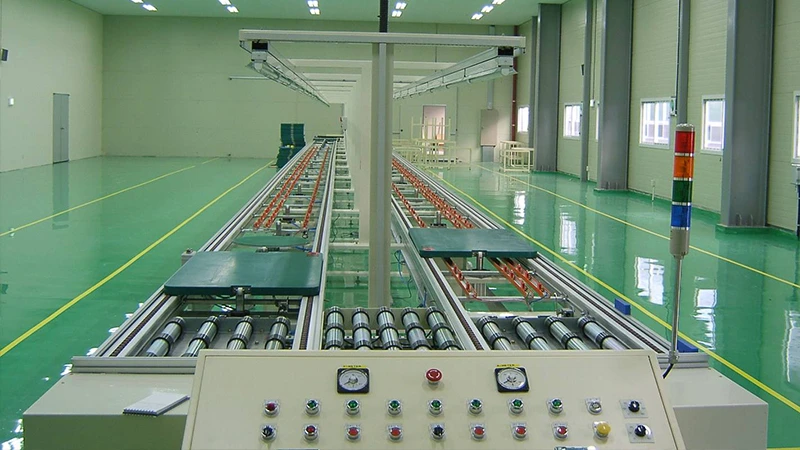
Walk into any modern manufacturing facility today, and you'll likely hear the soft hum of machinery, the rhythmic movement of products, and the quiet efficiency of a well-oiled operation. At the heart of this orchestration? Conveyors. Not just any conveyors, though—free flow chain conveyors have emerged as the unsung heroes of lean systems, quietly moving materials, components, and finished goods with precision. But as manufacturing evolves, so too must these workhorses. The future of free flow chain conveyors isn't just about moving things faster; it's about becoming smarter, more connected, and seamlessly integrated into the fabric of smart manufacturing. Let's dive into how automation and smart tech are reshaping these critical tools, and why businesses that embrace this shift will lead the next wave of industrial innovation.
1. The Backbone of Lean Systems: What Makes Free Flow Chain Conveyors Indispensable?
Before we look to the future, let's ground ourselves in the present. Free flow chain conveyors—often built with durable aluminum profiles and smooth roller tracks—are designed for one primary goal: to keep production flowing without unnecessary stops or bottlenecks. Unlike rigid, fixed-path conveyors of the past, these systems are flexible, modular, and adaptable to changing workflows. Think of them as the circulatory system of a factory: they ensure materials reach the right place, at the right time, with minimal waste.
Take a typical electronics assembly line, for example. Tiny components—resistors, capacitors, microchips—need to move from storage to assembly stations, then to testing, and finally to packaging. A free flow chain conveyor, with its lightweight aluminum profile frame and precision roller tracks, glides these components along without jostling or delays. This isn't just convenience; it's the cornerstone of lean systems. By reducing manual handling, cutting down on wait times, and standardizing material flow, these conveyors help businesses trim costs, boost productivity, and maintain consistent quality.
But here's the thing: as manufacturing demands grow more complex—with shorter product lifecycles, higher customization, and the need for real-time data—traditional conveyors are starting to show their limits. A conveyor that can only move parts from Point A to Point B is no longer enough. Today's manufacturers need conveyors that can "talk," adapt, and even make decisions. That's where automation and smart manufacturing step in.
2. Automation: From Manual to Autonomous—Why the Shift Is Non-Negotiable
If there's one trend defining modern manufacturing, it's automation. Labor shortages, rising operational costs, and the pressure to meet 24/7 production demands have made automated systems a necessity, not a luxury. For free flow chain conveyors, this means moving beyond basic motorized movement to fully autonomous operation. Let's break down the key shifts driving this change.
1.2.1 Sensor-Driven Intelligence: Conveyors That "See" and "React"
Imagine a conveyor that doesn't just move products—it monitors them. Today's advanced free flow systems are equipped with sensors that track everything from product dimensions and weight to speed and position. For example, optical sensors can detect if a component is misaligned on the roller track, triggering an automatic stop to prevent jams. Proximity sensors can count items as they pass, feeding real-time data to inventory management systems. This isn't just about preventing errors; it's about creating a feedback loop that makes the entire production line smarter.
Take a food packaging plant, where timing is critical to maintaining freshness. A free flow conveyor with integrated temperature sensors can alert operators if a batch of products is getting too warm mid-transit, allowing for immediate intervention. Or consider an automotive parts facility: RFID tags on components communicate with conveyor sensors, ensuring that each part is routed to the correct assembly station—no more mix-ups, no more wasted time. These small, sensor-driven adjustments add up to big gains in efficiency.
1.2.2 Self-Guided and Adaptive Routing
Gone are the days of fixed conveyor paths. The next generation of free flow chain conveyors uses smart routing algorithms to adapt to changing production needs. For example, if a workstation suddenly needs more raw materials, the conveyor can automatically prioritize that route, diverting components from less urgent tasks. This flexibility is especially valuable in high-mix, low-volume manufacturing, where production runs change frequently.
How does this work in practice? Think of a pharmaceutical plant producing multiple drug formulations. Each batch has unique processing requirements—some need refrigeration, others need special handling. A smart conveyor system, using data from ERP (Enterprise Resource Planning) software, can route each batch to the appropriate station without human intervention. Roller tracks adjust speed based on the product's weight, and aluminum profile guides reconfigure to accommodate different container sizes. It's like having a traffic controller embedded in the conveyor itself—one that never sleeps and always makes the optimal call.
3. Smart Manufacturing Integration: Conveyors as Data Hubs
If automation is the "muscle" of the future, smart manufacturing integration is the "brain." Smart manufacturing—powered by Industry 4.0 technologies like IoT (Internet of Things), AI (Artificial Intelligence), and cloud computing—turns standalone machines into connected ecosystems. For free flow chain conveyors, this means becoming active participants in data collection, analysis, and decision-making.
3.1 Predictive Maintenance: From "Fix It When It Breaks" to "Prevent It Before It Fails"
One of the costliest headaches in manufacturing is unplanned downtime. A single conveyor breakdown can halt an entire production line, costing thousands in lost output. But with smart manufacturing tools, free flow conveyors are becoming proactive about maintenance. Vibration sensors on roller tracks, for example, can detect early signs of wear in bearings or misalignment in aluminum profiles. Temperature sensors monitor motor health, flagging overheating before it leads to failure. All this data is sent to a cloud-based platform, where AI algorithms analyze trends and predict when parts might fail—giving maintenance teams time to schedule repairs during off-hours.
Consider a large distribution center using free flow conveyors to sort packages. In the past, a worn roller might go unnoticed until it jammed, causing a pileup. Today, sensors on each roller track continuously measure friction and rotation speed. If a roller starts to slow down, the system alerts technicians via a mobile app, who can replace it during a scheduled lull. The result? Downtime drops by 30-40%, and maintenance costs plummet—all because the conveyor is now "talking" about its health.
3.2 Real-Time Visibility: The End of "Where's My Product?"
In the age of e-commerce and just-in-time production, customers and managers alike demand to know: Where is my product right now? Smart free flow conveyors answer that question instantly. By integrating with MES (Manufacturing Execution Systems) and RFID or barcode scanners, every item on the conveyor is tracked from start to finish. A quick check on a dashboard shows exactly which roller track a component is on, how long it's been in transit, and when it will reach its destination.
This visibility isn't just for peace of mind—it's a game-changer for customer service and process optimization. For instance, a furniture manufacturer using free flow conveyors to assemble chairs can track each chair's progress in real time. If a customer calls asking about their order, the sales team can pull up the conveyor data and say, "Your chair is currently on the finishing line, and will ship by 5 PM today." Internally, managers can spot bottlenecks: if a particular workstation is consistently holding up the conveyor, they can reallocate staff or adjust workflows to keep things moving.
4. The Role of Materials: Aluminum Profiles and Roller Tracks in Future-Proofing Conveyors
While software and sensors get a lot of attention, the physical design of free flow chain conveyors is just as critical to their future success. Here, aluminum profiles and advanced roller tracks are leading the way in durability, flexibility, and sustainability.
Aluminum profiles, in particular, are revolutionizing conveyor design. Lightweight yet strong, they're easy to assemble, reconfigure, and recycle. Unlike traditional steel frames, which are heavy and hard to modify, aluminum profiles use modular connectors that let manufacturers adjust conveyor length, height, or direction in hours, not days. This is a boon for businesses with changing production needs—say, a clothing manufacturer that shifts from making t-shirts to jackets seasonally. The same conveyor frame can be adapted with new roller tracks and guides, avoiding the cost of buying a whole new system.
Roller tracks, too, are evolving. Modern tracks use high-performance plastics and stainless steel, reducing friction and noise while increasing lifespan. Some even feature "smart rollers" with built-in sensors, turning every inch of the track into a data collection point. For example, a roller track with embedded RFID readers can automatically scan product tags as they pass, updating inventory records without manual input. And with options like variable-speed rollers, conveyors can adjust their pace to match upstream or downstream processes—slowing down if a workstation is busy, speeding up when it's clear.
| Feature | Traditional Conveyors | Smart Free Flow Conveyors (Future) |
|---|---|---|
| Material Flexibility | Fixed steel frames; hard to modify | Modular aluminum profiles; reconfigurable in hours |
| Data Collection | Manual tracking; limited visibility | Sensor-driven (RFID, temperature, vibration); real-time data to cloud |
| Maintenance | Reactive (fix after breakdown) | Predictive (AI predicts failures; scheduled repairs) |
| Adaptability | Fixed speed and path | Adaptive routing; variable speed; self-adjusts to workflows |
| Downtime | High (unplanned breakdowns) | Low (predictive maintenance; self-diagnosis) |
5. Challenges on the Horizon: Overcoming Barriers to Adoption
For all their promise, the transition to smart free flow conveyors isn't without hurdles. One of the biggest is cost. Upgrading to sensor-equipped, AI-integrated systems requires upfront investment in hardware, software, and training. Small and medium-sized manufacturers, in particular, may hesitate to take on that expense, especially if their current conveyors "work well enough."
Another challenge is integration. Many factories still rely on legacy systems—old ERP software, outdated machinery—that don't easily communicate with new smart conveyors. Getting these systems to "talk" to each other can be complex, requiring custom APIs or middleware. Then there's the skills gap: operating and maintaining smart conveyors demands workers who understand both mechanical systems and data analytics. Finding or training such talent isn't always easy.
But these challenges are manageable. For cost concerns, many suppliers now offer "pay-as-you-go" or leasing models, letting businesses spread investment over time. Integration can be eased by starting small—retrofitting one conveyor line with sensors and expanding gradually. And training? Many manufacturers are partnering with technical schools or online platforms to upskill existing workers, turning machine operators into "conveyor data analysts" who can interpret sensor data and make informed decisions.
6. Real-World Impact: How Early Adopters Are Winning
To see the future in action, look no further than manufacturers already embracing smart free flow conveyors. Take Toyota, a pioneer in lean systems. The automaker has integrated IoT-enabled conveyors into its assembly plants, where sensors on roller tracks monitor the flow of parts and send alerts if a component is missing or defective. This has cut errors by 25% and reduced the time to assemble a car by nearly 10 minutes—adding up to thousands of extra vehicles produced each year.
Another example is Amazon's fulfillment centers. While not traditional manufacturing, these facilities rely heavily on free flow conveyors to sort packages. Amazon's latest systems use AI-powered routing and computer vision to scan, sort, and redirect packages in real time. Roller tracks adjust speed based on package size, and aluminum profile frames allow for quick reconfiguration during peak shopping seasons. The result? Packages that once took hours to process now move from warehouse to truck in under 30 minutes.
Even smaller businesses are reaping rewards. A family-owned electronics manufacturer in Germany recently upgraded its free flow conveyors with aluminum profiles and smart sensors. Within six months, they reduced material waste by 18%, cut maintenance costs by 22%, and increased output by 15%—all while using the same floor space. "We used to have two workers just monitoring the conveyor for jams," says the plant manager. "Now, the system alerts us before a problem happens, so those workers can focus on more skilled tasks."
7. The Road Ahead: What to Expect in the Next 5–10 Years
So, what does the future hold for free flow chain conveyors? Here's a glimpse of the innovations on the horizon:
- 5G Connectivity: Faster, more reliable data transfer will let conveyors communicate with other machines in real time, enabling split-second adjustments to production flows.
- Digital Twins: Virtual replicas of conveyor systems will allow manufacturers to test new workflows or predict bottlenecks in a digital space before implementing them physically.
- Sustainability Focus: Conveyors will use energy-efficient motors, recyclable aluminum profiles, and solar-powered sensors, aligning with global efforts to reduce carbon footprints.
- Human-Robot Collaboration: Cobots (collaborative robots) will work alongside conveyors, loading/unloading products or performing quality checks—with conveyors adjusting their speed to match the cobot's pace.
Perhaps most exciting is the potential for conveyors to become fully integrated into "lights-out" factories—facilities that operate 24/7 with minimal human intervention. In these settings, free flow conveyors will act as the central nervous system, coordinating with robots, AI systems, and supply chains to keep production running smoothly, even when the last worker has gone home for the day.
Conclusion: The Future Is Flowing—Are You Ready?
Free flow chain conveyors have come a long way from their humble beginnings as simple transport tools. Today, they're the backbone of lean systems, and tomorrow, they'll be the data-driven, autonomous engines of smart manufacturing. The shift to automation and integration isn't just about technology—it's about reimagining what manufacturing can be: faster, more flexible, and more responsive to customer needs.
For businesses, the message is clear: invest in smart conveyors now, or risk falling behind. Whether you're a small supplier or a global manufacturer, the benefits are undeniable—lower costs, higher efficiency, and a competitive edge in a rapidly changing market. And with modular aluminum profiles, advanced roller tracks, and AI-powered tools, the transition is more accessible than ever.
So, the next time you walk through a factory, listen closely. The hum of the conveyor isn't just noise—it's the sound of the future being built. And that future? It's flowing smarter than ever.