- Company Articles
- Industry articles
- Industry standards
- Free Flow Chain Conveyor in Pharmaceutical Packaging: Compliance Standards

Free Flow Chain Conveyor in Pharmaceutical Packaging: Compliance Standards
Related Product
Free Flow Chain Conveyor
The free flow conveyor system uses a free flow chain that can increase the speed of the tooling board that supports the products. This can improve the efficiency and quality of the production process, as well as reduce the wear and tear of the system.
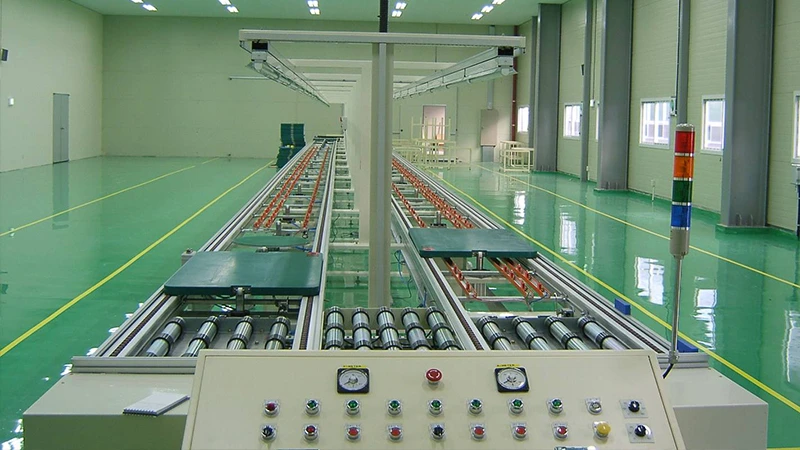
In the high-stakes world of pharmaceutical packaging, where precision isn't just a goal but a legal requirement, every piece of equipment plays a critical role in ensuring patient safety, regulatory adherence, and operational efficiency. Among these, the free flow chain conveyor stands out as a workhorse—quietly streamlining the movement of vials, blister packs, and cartons while upholding the strictest compliance standards. But what makes this conveyor system indispensable in pharmaceutical settings? How does it balance speed and flexibility with the non-negotiable demands of FDA regulations, GMP guidelines, and ESD protection? Let's dive into the details, exploring how free flow chain conveyors, paired with thoughtful material choices like stainless steel pipe series and aluminum profile, become the backbone of compliant packaging lines.
The Role of Free Flow Chain Conveyors in Pharma: Beyond Simple Movement
At first glance, a conveyor's job seems straightforward: move products from Point A to Point B. But in pharmaceutical packaging, "movement" is loaded with complexity. Vials must be transported without jostling to prevent breakage or contamination; blister packs need gentle handling to avoid seal damage; and cartons must align perfectly for labeling and serialization. This is where free flow chain conveyors shine. Unlike traditional roller or belt conveyors, their design—featuring low-friction chains and modular tracks—enables smooth, continuous motion with minimal product contact, reducing the risk of scratches, dents, or particulate generation.
Consider a typical packaging line for oral solid medications. After tablets are compressed and coated, they move to blister packaging machines, then to cartoning, and finally to case packing. Here, a free flow chain conveyor acts as the connective tissue, linking each station with precision. Its ability to handle variable speeds (slowing for inspection, accelerating for high-throughput zones) ensures that no step bottlenecks the line, while its open-frame construction makes it easy to clean—critical for avoiding cross-contamination between batches.
But what truly sets free flow chain conveyors apart is their adaptability. Pharmaceutical facilities often need to switch between product sizes or packaging formats to meet market demands, and rigid equipment can become a liability. Free flow systems, however, are built with modularity in mind. Using components like aluminum profile tracks and quick-connect joints, operators can reconfigure layouts in hours, not days, without compromising compliance. This flexibility is a game-changer for contract packagers or manufacturers with diverse product portfolios.
Compliance Standards: The Non-Negotiable Foundation
Pharmaceutical packaging isn't just about moving products—it's about proving, beyond doubt, that every step meets regulatory standards. The FDA's Current Good Manufacturing Practices (cGMP) and the EU's Annex 1 guidelines leave no room for ambiguity: equipment must be designed to prevent contamination, facilitate cleaning, and enable complete traceability. Free flow chain conveyors, when engineered correctly, check all these boxes—but only if every detail, from material selection to track design, is intentional.
FDA and cGMP Requirements: Material Integrity and Cleanability
The FDA's cGMP regulations (21 CFR Part 211) emphasize that "equipment shall be constructed so that surfaces that contact components, in-process materials, or drug products shall be inert, non-reactive, non-absorptive, and not add deleterious substances to the products." For conveyors, this translates to strict rules about materials. Stainless steel pipe series, for example, is a staple in these systems because it's non-porous, corrosion-resistant, and easy to sanitize with high-temperature washes or chemical disinfectants. Unlike painted steel or plastic, stainless steel doesn't chip or degrade over time, eliminating the risk of flaking particles contaminating products.
Cleanability is equally critical. Free flow chain conveyors are designed with smooth, crevice-free surfaces to prevent product residue buildup. Tracks are often sloped slightly to allow liquids (like cleaning agents) to drain, and chain links are sealed to avoid trapping debris. Even the smallest details matter: for instance, using aluminum profile accessories with rounded edges instead of sharp corners reduces the risk of bacterial harborages. In audits, regulators will inspect these features closely—because a single overlooked crevice could become a breeding ground for microbes, putting patients at risk.
ESD Protection: Safeguarding Sensitive Components
While many associate electrostatic discharge (ESD) with electronics manufacturing, it's a silent threat in pharmaceutical packaging too. Sensitive components like RFID tags, moisture-sensitive drug formulations, or even certain types of packaging films can be damaged by static electricity. Worse, static charges can attract airborne particles, leading to cross-contamination. This is where ESD workstation integration with free flow conveyors becomes essential.
Free flow conveyors in ESD-sensitive zones are often equipped with conductive materials, such as stainless steel tracks or ESD-safe plastic chain links, that dissipate static charges to ground. Similarly, ESD workstations positioned at inspection or packaging stations feature grounded surfaces, anti-static mats, and wrist straps to ensure operators don't transfer static to products. The key is continuity: the conveyor, workstation, and even the operator must form a single grounded system, leaving no "break" where static could accumulate. For example, a blister pack moving from a free flow conveyor to an ESD workstation must transition seamlessly—no gaps, no ungrounded surfaces—to maintain protection from start to finish.
Material Matters: Stainless Steel Pipe Series vs. Aluminum Profile
When designing a compliant free flow chain conveyor, material selection is a make-or-break decision. Two materials dominate the landscape: stainless steel pipe series and aluminum profile. Each has unique strengths, and choosing between them depends on the specific needs of the packaging line—whether it's resistance to harsh cleaning agents, weight constraints, or cost considerations. Let's break down their pros, cons, and compliance implications in a side-by-side comparison:
| Feature | Stainless Steel Pipe Series | Aluminum Profile |
|---|---|---|
| Corrosion Resistance | Excellent; withstands frequent exposure to acids, alkalis, and high-temperature washes (ideal for sterile environments). | Good; naturally forms a protective oxide layer but may corrode in highly acidic or saline environments without additional coating. |
| Cleanability | Superior; non-porous surface with minimal texture, making it easy to sanitize and inspect for residue. | Very good; smooth anodized surfaces resist staining, but aluminum's softer nature requires careful handling to avoid scratches that trap debris. |
| Weight | Heavier; requires sturdier support structures, which can limit flexibility in line reconfiguration. | Lightweight; easier to install, modify, and relocate—beneficial for dynamic production environments. |
| ESD Compatibility | Highly compatible; conductive grades (like 316L) can be grounded to dissipate static charges. | Compatible with ESD coatings; uncoated aluminum is conductive but may require additional grounding to meet ESD standards. |
| Cost | Higher upfront cost but lower long-term maintenance due to durability. | Lower initial cost but may require more frequent replacement in harsh environments. |
| Best For | Sterile drug products, high-acid formulations, or lines requiring daily chemical cleaning. | Non-sterile packaging, lightweight products, or facilities prioritizing quick reconfiguration. |
For most pharmaceutical applications, a hybrid approach works best: using stainless steel pipe series for critical contact surfaces (like conveyor tracks) and aluminum profile for support structures or non-contact components. This balances compliance, durability, and flexibility—ensuring the conveyor meets regulatory standards without sacrificing operational agility.
Integrating with Lean Systems: Efficiency Without Compromise
Pharmaceutical manufacturers don't just need compliant conveyors—they need compliant conveyors that drive efficiency. This is where lean system principles come into play. Lean, focused on eliminating waste (whether in time, materials, or space), aligns perfectly with the goals of pharmaceutical packaging: reducing costs, improving throughput, and minimizing errors. Free flow chain conveyors, with their modular design and adaptability, are natural partners in lean initiatives.
One of the biggest waste sources in packaging lines is "motion waste"—operators walking back and forth to retrieve materials or adjust equipment. Free flow conveyors eliminate this by bringing products directly to workstations, whether it's an ESD workstation for inspecting RFID tags or a labeling station for applying serialization codes. For example, a lean-configured line might use a free flow conveyor to feed blister packs to an inspection station, then carry rejected packs to a separate rework area—all without operator intervention. This not only speeds up production but also reduces the risk of human error, a key compliance benefit.
Another lean principle is "just-in-time" (JIT) production, which minimizes inventory by delivering materials exactly when needed. Free flow chain conveyors support JIT by enabling synchronized movement between upstream (e.g., tablet compression) and downstream (e.g., cartoning) processes. If a downstream machine pauses for maintenance, the conveyor can slow or stop upstream feeding, preventing product backups and reducing waste. Conversely, during peak demand, it can accelerate to keep pace with higher throughput—all while maintaining product integrity.
Modularity is perhaps the most powerful lean feature of free flow conveyors. Using aluminum profile tracks and quick-connect joints, manufacturers can reconfigure lines in hours to accommodate new products or batch sizes. For example, a line packaging 100-count bottles can be adapted to 50-count bottles by simply adjusting conveyor guides and adding a diverting track—no need for expensive custom machinery. This flexibility reduces lead times for new product launches, a critical advantage in a market where speed to market can make or break a drug's success.
Designing for Compliance: Key Considerations for Conveyor Systems
Building a compliant free flow chain conveyor isn't just about choosing the right materials—it's about designing every aspect with audits, inspections, and patient safety in mind. Here are the critical design elements that regulators and quality teams will scrutinize:
Traceability and Documentation
Regulators don't just care about how a conveyor works—they want to know when it was installed, who maintained it, and what parts were replaced. Free flow conveyor systems should come with comprehensive documentation, including material certificates (e.g., 316L stainless steel mill reports), calibration records for speed controls, and maintenance logs. Even components like aluminum profile accessories should be traceable to their manufacturer, with batch numbers and compliance certifications on file. In the event of a product recall, this documentation becomes invaluable, allowing teams to quickly identify whether the conveyor contributed to the issue.
Sanitation Accessibility
During cleaning validation studies, regulators will ask: "Can every surface of the conveyor be accessed and cleaned?" To pass, conveyors must be designed with features like removable tracks, open-frame supports, and tool-less fasteners that allow thorough cleaning. For example, some free flow conveyors use magnetic or clip-on guides instead of bolted ones, making disassembly for deep cleaning quick and easy. Similarly, chain tensioners should be accessible without removing major components—because if cleaning is difficult, operators will skip it, putting compliance at risk.
Validation Support
Before a new conveyor can be used in production, it must undergo validation to prove it meets performance and compliance standards. This includes testing for product damage (e.g., vial breakage rates), cleaning efficacy (e.g., residue sampling), and ESD protection (e.g., surface resistance measurements). Manufacturers of free flow conveyors should provide validation protocols and support, including data on conveyor speed consistency, noise levels (to avoid product vibration damage), and particle generation. For example, a conveyor used for sterile injectables might need to pass ISO 14644 Class 8 cleanroom certification, requiring low-emission materials and sealed motors to prevent particulate contamination.
Real-World Application: A Case Study in Compliance
To understand how these elements come together, let's look at a hypothetical (but realistic) case study. A mid-sized pharmaceutical company specializing in oncology drugs needed to upgrade its packaging line for a new oral chemotherapy medication. The drug was highly potent, requiring strict containment to protect operators, and its packaging included an RFID tag sensitive to ESD. The company's goals: meet FDA cGMP standards, reduce product waste, and integrate with existing lean workflows.
The solution? A free flow chain conveyor system built with 316L stainless steel pipe series tracks (for corrosion resistance to cleaning agents) and aluminum profile support structures (to keep the line lightweight and reconfigurable). The conveyor was equipped with ESD-safe chain links and grounded to an ESD workstation at the inspection station. Key design features included:
- Crevice-free tracks with sloped surfaces for easy cleaning, validated to remove 99.9% of drug residue after washing.
- Modular sections that could be disconnected for deep cleaning, reducing downtime during changeovers.
- Speed synchronization with upstream blister machines to prevent product backups and jams.
- Comprehensive documentation , including material certificates for stainless steel components and ESD test reports for the conveyor and workstation.
After installation, the line underwent FDA inspection and passed with zero findings. Product waste dropped by 15% due to gentler handling, and changeover times between batches decreased by 30% thanks to the modular design. Most importantly, the ESD workstation and conveyor system prevented RFID tag damage, ensuring accurate serialization—a critical requirement for the FDA's Drug Supply Chain Security Act (DSCSA).
Maintenance and Long-Term Compliance
A compliant conveyor isn't a "set it and forget it" solution—it requires ongoing maintenance to stay audit-ready. Regular tasks include inspecting chain tension (to prevent slippage and product misalignment), lubricating moving parts with FDA-approved lubricants (to avoid contamination), and testing ESD grounding continuity (to ensure static protection hasn't degraded). Even something as simple as replacing a worn caster wheel on a mobile conveyor section matters: a wobbly wheel could cause product jams, leading to delays or damage.
Preventive maintenance schedules should be documented and aligned with production downtime to avoid disrupting operations. For example, a conveyor used in three-shift production might undergo weekly inspections and monthly deep cleaning. During these checks, operators should look for signs of wear, such as scratches on stainless steel tracks or cracks in aluminum profile joints, and replace parts promptly. Regulators will review maintenance logs during audits, so consistency is key—missed inspections could raise red flags about a company's commitment to quality.
Future Trends: Innovations in Compliant Conveying
As pharmaceutical regulations evolve, so too will the technology powering free flow chain conveyors. Here are three trends shaping the future of compliant conveying:
Smart Sensors for Real-Time Monitoring
Imagine a conveyor that alerts operators to a potential jam before it happens, or detects a scratch in a stainless steel track that could harbor bacteria. Smart sensors embedded in free flow conveyors are making this possible. These sensors monitor variables like chain speed, vibration, and temperature, sending data to a central dashboard. For example, an increase in vibration might indicate a misaligned track, allowing maintenance teams to fix it before it causes product damage. In compliance terms, this "predictive maintenance" reduces the risk of unexpected failures during production—critical for avoiding batch rejections.
Sustainable Materials
With regulators and consumers pushing for eco-friendly practices, pharmaceutical companies are seeking conveyors made from recycled or recyclable materials. Aluminum profile, already lightweight and energy-efficient to produce, is becoming more popular in this context, as it's 100% recyclable. Similarly, manufacturers are developing bio-based lubricants for conveyor chains that meet FDA standards, reducing reliance on petroleum-based products. These innovations don't just benefit the planet—they also align with lean principles by reducing waste and lowering long-term costs.
Digital Twins for Virtual Validation
Validation is a time-consuming, costly process—but digital twins could change that. A digital twin is a virtual replica of a physical conveyor system, allowing engineers to test performance, cleaning protocols, and ESD protection in a simulated environment before building the real thing. For example, a digital twin could model how a new aluminum profile track design would handle vial transport, identifying potential jamming points without risking product. This speeds up validation timelines and reduces the need for physical prototypes, making it easier to adapt to new compliance requirements.
Conclusion: The Conveyor as a Compliance Partner
In pharmaceutical packaging, compliance isn't an add-on—it's the foundation of every operation. Free flow chain conveyors, when designed with care, become more than just equipment; they're active partners in upholding regulatory standards, protecting patients, and driving operational efficiency. By choosing the right materials (stainless steel pipe series for durability, aluminum profile for flexibility), integrating ESD workstation protection, and embracing lean principles, manufacturers can build packaging lines that are both audit-ready and future-proof.
As regulations grow stricter and consumer expectations rise, the role of the free flow chain conveyor will only become more critical. It's not just about moving products—it's about moving them with integrity, ensuring that every vial, blister, and carton that leaves the facility is safe, pure, and compliant. In the end, that's the true measure of success in pharmaceutical packaging: knowing that the equipment behind the scenes is working as hard as the team to protect patient health.