- Company Articles
- Industry articles
- Industry News
- Future of 3030 Aluminum Profile End Caps: Industry Predictions & Innovations

Future of 3030 Aluminum Profile End Caps: Industry Predictions & Innovations
Related Product
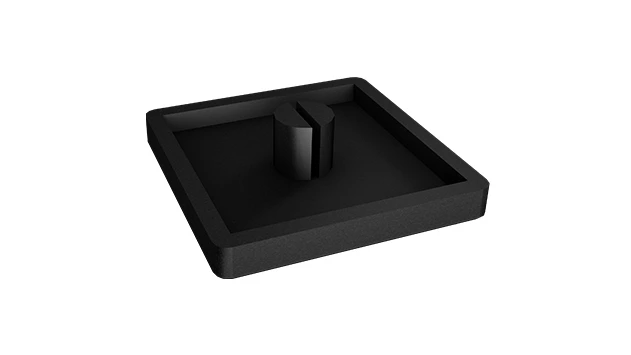
3030 Aluminum Profile End Cap
The aluminum profile end cap adds a finishing touch to your project and closes off profile ends to limit dust and debris buildup, also it can avaid some scratch for material and labor during the assemble work.
Walk into any modern manufacturing facility, and you'll likely spot rows of sleek workbenches, material racks, and assembly lines, their frames built from sturdy aluminum extrusion profiles. These profiles—lightweight, durable, and endlessly adaptable—are the backbone of today's factories, labs, and workshops. But look closer at those profiles, and you'll notice small, unassuming components capping their ends: 3030 aluminum profile end caps. These tiny parts might not grab headlines, but they're the quiet workhorses holding everything together, quite literally. They protect workers from sharp edges, keep debris out of hollow profiles, and even add a polished finish to otherwise industrial setups. As manufacturing evolves—driven by lean principles, sustainability goals, and Industry 4.0—so too are these humble end caps. In this article, we'll dive into the future of 3030 aluminum profile end caps, exploring emerging trends, material innovations, and how they're set to become even more critical in the next decade.
The Unsung Role of 3030 Aluminum Profile End Caps Today
Before we look ahead, let's ground ourselves in the present. 3030 aluminum profile end caps are small, usually plastic or metal components designed to fit snugly over the open ends of 30mm x 30mm aluminum extrusion profiles—the most common size for workbenches, shelving, and lightweight machinery frames. Right now, their job is straightforward but vital. First, safety : Aluminum extrusion profiles, while strong, have sharp, raw edges when cut. Without end caps, workers could easily nick their hands or snag gloves on these edges, leading to injuries or downtime. In fast-paced environments like automotive assembly lines or electronics manufacturing, where every second counts, even minor cuts can disrupt workflows. End caps eliminate that risk by smoothing out those edges.
Second, protection : Hollow aluminum profiles are magnets for dust, dirt, and small debris. Over time, that buildup can corrode the inside of the profile, weaken structural integrity, or even jam moving parts if the profiles are used in sliding mechanisms. 3030 end caps act as barriers, keeping contaminants out and extending the lifespan of the profiles. This is especially critical in cleanrooms or pharmaceutical labs, where even a speck of dust can ruin a batch of products.
Third, aesthetics : Let's face it—raw aluminum ends look unfinished. End caps, often colored to match or complement the profile (think silver, black, or even custom hues), give workbenches and racks a polished, professional look. For businesses that welcome clients into their facilities—like tech startups showing off their R&D labs or universities tours—this attention to detail matters. It signals pride in the workspace, which can boost both employee morale and client confidence.
Finally, structural support : While end caps aren't load-bearing in the traditional sense, they add rigidity to the ends of profiles. This is especially useful for profiles that are cut to length on-site, where uneven cuts might compromise the profile's stability. A well-fitted end cap reinforces the end, preventing bending or warping under stress—say, when a heavy tool is dropped on a workbench or a material rack is loaded to capacity.
Emerging Trends Shaping Aluminum Profile Accessories
To understand where 3030 end caps are headed, we need to zoom out and look at the broader trends in aluminum profile accessories. The aluminum extrusion industry is in the midst of a transformation, driven by three key forces: the rise of lean manufacturing, the push for sustainability, and the demand for smarter, more connected workspaces. Each of these trends is pushing suppliers—from global manufacturers to local lean system suppliers—to rethink even the smallest components, including end caps.
Take lean manufacturing, for example. Lean principles focus on eliminating waste, improving efficiency, and maximizing flexibility. Today's factories don't just need static workbenches; they need setups that can be reconfigured in hours, not days, to adapt to new products or production schedules. This means aluminum profiles and their accessories—including end caps—must be easy to install, remove, and reuse. A traditional end cap that requires screws or adhesives might work for a fixed setup, but in a lean environment, that's wasted time. Enter snap-on end caps: designed to lock into place with a simple push, no tools required. This might seem like a small change, but multiplied across hundreds of profiles in a factory, it adds up to significant time savings during reconfigurations.
Sustainability is another major driver. Manufacturers are under increasing pressure—from regulators, customers, and their own ESG goals—to reduce waste and carbon footprints. Aluminum extrusion profiles are already eco-friendly (aluminum is 100% recyclable, and recycling it uses 95% less energy than producing new aluminum), but the accessories that go with them have lagged behind. Traditional end caps are often made from virgin plastic, which is cheap but not always recyclable. In the next decade, we'll see a shift toward end caps made from recycled plastics, bioplastics, or even aluminum alloys—materials that align with the circular economy. Some suppliers are already experimenting with end caps made from 30% recycled ABS plastic, with plans to push that number higher as recycling technologies improve.
Then there's the rise of "smart factories," where data and connectivity drive decision-making. While end caps might seem too simple to "connect," forward-thinking designers are exploring ways to integrate them into the Internet of Things (IoT). Imagine an end cap embedded with a tiny RFID tag that tracks when a profile was installed, who manufactured it, or even its load capacity. For large facilities with hundreds of workbenches and racks, this could revolutionize inventory management and maintenance. A quick scan with a mobile device could tell a manager if a profile is due for inspection or if an end cap needs replacement—no more guesswork, no more missed maintenance checks.

Material Innovations: Beyond Basic Plastic
One of the most exciting areas of innovation in 3030 aluminum profile end caps is materials. For decades, most end caps have been made from basic thermoplastics like polypropylene (PP) or acrylonitrile butadiene styrene (ABS). These materials are cheap, lightweight, and easy to mold, but they have limitations: they can crack under extreme cold, warp in high heat, and degrade when exposed to chemicals or UV light. As manufacturing environments become more specialized—think aerospace facilities with strict temperature controls or chemical labs with harsh solvents—suppliers are developing end caps with advanced materials to meet these challenges.
Take high-temperature resistance, for example. In automotive paint shops or industrial bakeries, temperatures can exceed 100°C (212°F). Traditional plastic end caps would soften or warp here, losing their grip on the profile and exposing workers to risk. To solve this, manufacturers are turning to engineering plastics like polyphenylene sulfide (PPS) or polyether ether ketone (PEEK). These materials can withstand temperatures up to 200°C (392°F) without deforming, making them ideal for extreme environments. They're pricier than PP or ABS, but for industries where downtime is costly, the investment pays off.
Chemical resistance is another area of focus. In pharmaceutical or semiconductor manufacturing, profiles and end caps are often exposed to harsh cleaners, solvents, or acids. A standard plastic end cap might dissolve or become brittle over time, compromising its protective role. Enter fluoropolymers like PTFE (Teflon), which are inert to most chemicals. While PTFE end caps are expensive, they're indispensable in labs where even a small chemical reaction could contaminate products or endanger workers. For less extreme applications, suppliers are blending ABS with chemical-resistant additives, creating a middle-ground option that balances performance and cost.
Sustainability is also driving material innovation. As mentioned earlier, recycled plastics are gaining traction, but some suppliers are going a step further with bioplastics. Made from renewable resources like corn starch or sugarcane, bioplastics are biodegradable or compostable, reducing the environmental impact when end caps reach the end of their lifespan. For example, a lean system supplier in Europe recently launched a line of end caps made from PLA (polylactic acid), a bioplastic derived from corn. These end caps aren't yet suitable for heavy-duty use—PLA is stiffer and less impact-resistant than ABS—but they work well in low-stress applications like office partitions or lightweight shelving. As bioplastic technology improves, we'll likely see more durable options hit the market.
Aluminum end caps are also making a comeback, but with a modern twist. Traditional aluminum end caps were heavy and prone to corrosion, but new alloys—like aluminum-magnesium-silicon (6061-T6)—offer the best of both worlds: strength, lightness, and resistance to rust. These end caps are ideal for outdoor applications, like factory loading docks or construction site workbenches, where exposure to rain, snow, or salt could degrade plastic caps. They're also popular in high-security settings, where tamper resistance is key—unlike plastic, aluminum end caps can't be easily pried off or broken.

Design Evolution: From "Cap" to "System Component"
If materials are the "what" of future end caps, design is the "how." For years, end caps were treated as afterthoughts—simple, one-size-fits-all components designed to do one job: cover the end of a profile. But as manufacturing becomes more complex, end caps are evolving into multi-functional system components, with designs that solve specific problems for workers and facility managers.
One of the most promising design trends is modularity. Today's factories need accessories that can adapt to different profiles, environments, and uses. Instead of selling a dozen different end caps for different profile sizes or applications, suppliers are developing modular end caps that can be adjusted or customized on-site. For example, a single base end cap might come with interchangeable inserts: a rubber insert for non-slip applications (like a workbench where tools might slide), a foam insert for noise dampening (in busy assembly lines), or a hard plastic insert for heavy-duty use. This not only reduces inventory costs for suppliers and buyers but also makes it easier for facilities to repurpose end caps as needs change.
Ergonomics is another design driver. Factories are increasingly focused on worker comfort and safety, and even small changes can make a big difference. Traditional end caps are flat or slightly domed, but new designs are incorporating curved edges or textured surfaces to reduce hand fatigue. Imagine a workbench where the end caps have a soft, rubberized grip—this would make it easier for workers to push or pull the bench during reconfigurations, reducing strain on their hands and wrists. Some designers are even adding small notches or grooves to end caps, creating built-in tool holders for screwdrivers, pens, or tape measures—turning a passive component into an active helper on the factory floor.
Integration with other accessories is also key. Aluminum profiles rarely stand alone; they're paired with brackets, shelves, lights, and cable management systems. Future end caps will be designed to work seamlessly with these accessories, eliminating the need for extra adapters or modifications. For example, an end cap might include a built-in channel for routing cables, allowing wires from workbench lights or power tools to pass through the profile without drilling holes or using zip ties. Or it might have a recessed area that fits perfectly with a specific type of shelf bracket, ensuring a secure, wobble-free connection.
Perhaps the most innovative design trend is the move toward "smart" end caps. As mentioned earlier, RFID tags are just the beginning. Some suppliers are experimenting with end caps embedded with sensors that monitor temperature, humidity, or vibration. In a food processing facility, for example, a sensor-equipped end cap on a material rack could alert managers if temperatures rise above a safe threshold, preventing spoilage. In a high-precision manufacturing setup, vibration sensors could detect if a workbench is being jostled, ensuring sensitive equipment stays calibrated. These smart end caps would wirelessly transmit data to a central dashboard, giving facility managers real-time insights into their operations—all from a component that once did nothing more than cover a profile end.
The Role of Lean System Suppliers in Driving Innovation
None of these innovations happen in a vacuum. Behind every new end cap design or material breakthrough is a network of suppliers, from raw material producers to local lean system suppliers. These suppliers are the bridge between manufacturers and the components they need, and their role in shaping the future of 3030 end caps can't be overstated.
Lean system suppliers, in particular, are uniquely positioned to drive innovation. Unlike general aluminum extrusion suppliers, they work closely with manufacturers to design custom solutions—workbenches, material flow systems, assembly lines—that align with lean principles. This hands-on experience gives them insight into the pain points workers and managers face daily. For example, a lean system supplier working with an electronics manufacturer might notice that workers spend too much time adjusting end caps that loosen during assembly. That feedback could lead to the development of a new snap-on design with a locking mechanism, reducing downtime and frustration.
Suppliers are also investing in co-creation with their clients. Instead of simply selling off-the-shelf end caps, they're partnering with manufacturers to design custom components tailored to specific workflows. A medical device maker, for instance, might need end caps that are easy to clean and compatible with autoclave sterilization. A lean system supplier could collaborate with them to develop a smooth, crevice-free end cap made from medical-grade plastic, ensuring compliance with strict healthcare regulations. This collaborative approach not only results in better products but also builds long-term relationships between suppliers and clients.
Globalization is another factor. Many lean system suppliers operate internationally, giving them access to the latest materials and manufacturing techniques from around the world. A supplier based in Asia might partner with a European material science firm to test a new bioplastic, then bring that innovation to clients in North America. This cross-pollination of ideas accelerates the pace of innovation, ensuring that the best designs and materials spread quickly across the industry.
Sustainability: The Green Imperative for End Caps
Sustainability isn't just a trend; it's a business imperative. Governments around the world are cracking down on plastic waste, with regulations like the EU's Single-Use Plastics Directive and California's ban on non-recyclable plastics. Meanwhile, consumers and investors are pressuring companies to reduce their environmental footprints. For aluminum profile manufacturers and suppliers, this means rethinking every aspect of their products—including end caps—through a sustainability lens.
Recyclability is the starting point. Traditional plastic end caps are often made from mixed materials or contain additives that make them hard to recycle. In the future, end caps will be designed for circularity—meaning they can be easily recycled at the end of their lifespan, with their materials reused to make new end caps or other products. This might involve using mono-materials (a single type of plastic) instead of blends, or avoiding additives like flame retardants that contaminate recycling streams. Some suppliers are even adding QR codes to end caps, allowing recyclers to quickly identify the material and process it correctly.
Reducing material use is another focus. Lightweighting—designing end caps with less material without sacrificing performance—cuts down on raw material consumption and reduces shipping emissions. For example, a traditional end cap might have a solid core, but a new design could use a honeycomb structure or thin-walled construction, reducing weight by 30% while maintaining strength. Computer-aided design (CAD) and finite element analysis (FEA) are making this possible, allowing engineers to simulate how different designs perform under stress and optimize accordingly.
Energy efficiency in manufacturing is also key. Producing plastic end caps often involves high-temperature molding processes that consume significant energy. Suppliers are exploring lower-energy alternatives, like 3D printing with recycled filaments, which uses less energy than traditional injection molding. While 3D printing is currently too slow for mass production, it's ideal for small-batch, custom end caps—reducing waste from overproduction and allowing for on-demand manufacturing, which cuts down on inventory and shipping costs.
Finally, end-of-life management is becoming a selling point. Some forward-thinking suppliers are offering take-back programs, where they collect used end caps from clients, recycle them, and use the recycled material to make new products. This not only reduces waste but also gives clients a simple way to meet their sustainability goals. For example, a large automotive manufacturer might partner with a lean system supplier to thousands of end caps from old workbenches, diverting tons of plastic from landfills and turning it into new end caps for their next generation of factories.
Challenges and Opportunities Ahead
Of course, the future of 3030 end caps isn't without challenges. One of the biggest hurdles is balancing innovation with cost. Advanced materials like PEEK or aluminum alloys are expensive, and smart end caps with sensors or RFID tags add even more to the price tag. For small and medium-sized manufacturers (SMEs), which make up the majority of the industry, these costs can be prohibitive. Suppliers will need to find ways to scale production of innovative end caps, driving down costs through economies of scale, or offer tiered options—basic, mid-range, and premium—to meet different budgets.
Standardization is another issue. Aluminum extrusion profiles come in hundreds of sizes, shapes, and tolerances, and end caps must fit each one perfectly. As designs become more complex—with modular inserts, sensor ports, or custom shapes—ensuring compatibility across different profile types becomes harder. Industry groups and suppliers will need to collaborate on standards, defining common dimensions and attachment mechanisms to ensure end caps work seamlessly across brands. This could involve creating a universal snap-on system or a set of adapter rings that allow one end cap to fit multiple profile sizes.
Regulatory compliance is also a growing concern. As end caps incorporate new materials (like bioplastics) or technologies (like sensors), they'll need to meet a patchwork of safety, environmental, and industry-specific regulations. For example, a sensor-equipped end cap used in a medical facility would need FDA approval, while one used in a food plant would need to comply with FDA food contact regulations. Navigating these regulations can be time-consuming and costly, especially for small suppliers. Industry associations and trade groups will play a key role here, providing guidance and advocacy to help suppliers meet compliance requirements.
Despite these challenges, the opportunities are enormous. The global aluminum extrusion market is projected to grow at a CAGR of 5.8% from 2023 to 2030, driven by demand from automotive, construction, and electronics industries. As this market grows, so too will demand for high-quality, innovative end caps. Suppliers that can position themselves as leaders in sustainability, smart design, or lean compatibility will capture a larger share of this growing market. Meanwhile, manufacturers that adopt these advanced end caps will benefit from safer workspaces, lower maintenance costs, and a stronger sustainability profile—giving them a competitive edge in an increasingly eco-conscious world.
Traditional vs. Next-Gen 3030 End Caps: A Comparison
| Feature | Traditional 3030 End Caps | Next-Gen 3030 End Caps |
|---|---|---|
| Materials | Virgin PP or ABS plastic; limited material options. | Recycled plastics, bioplastics, advanced engineering plastics (PEEK, PPS), aluminum alloys. |
| Design | Simple, one-size-fits-all; flat or slightly domed; no extra features. | Modular with interchangeable inserts; ergonomic grips; integrated tool holders, cable channels, or sensor ports. |
| Installation | Screws, adhesives, or friction-fit; often requires tools. | Tool-free snap-on with locking mechanisms; quick-release designs for easy reconfiguration. |
| Sustainability | Non-recyclable or hard to recycle; made from virgin materials. | Recyclable mono-materials; take-back programs; lightweight designs to reduce shipping emissions. |
| Smart Features | None; passive components. | RFID tags for tracking; sensors for temperature, humidity, or vibration; QR codes for recyclability info. |
| Applications | General manufacturing; basic workbenches and racks. | Specialized environments (high temp, chemicals, cleanrooms); lean, reconfigurable setups; smart factories. |
Conclusion: The Quiet Revolution of 3030 End Caps
The future of 3030 aluminum profile end caps is bright—and surprisingly dynamic. What began as a simple protective cap is evolving into a multi-functional, sustainable, and even smart component, driven by the needs of modern manufacturing. From advanced materials that withstand extreme environments to modular designs that adapt to lean workflows, these tiny parts are set to play a bigger role than ever in keeping factories safe, efficient, and green.
For manufacturers, this means safer workspaces, lower maintenance costs, and the flexibility to adapt to changing production needs. For suppliers—especially lean system suppliers that specialize in custom solutions—it means new opportunities to innovate and differentiate themselves in a crowded market. And for the planet, it means end caps that leave a smaller footprint, moving us one step closer to truly circular manufacturing.
So the next time you walk into a factory, take a moment to appreciate those small, unassuming end caps. They might not look like much now, but in the years ahead, they'll be quietly powering the factories of the future—one profile at a time.