- Company Articles
- Industry articles
- Industry News
- Future of 3060 Aluminum Angle Yards: Innovations in Structural Design

Future of 3060 Aluminum Angle Yards: Innovations in Structural Design
Related Product
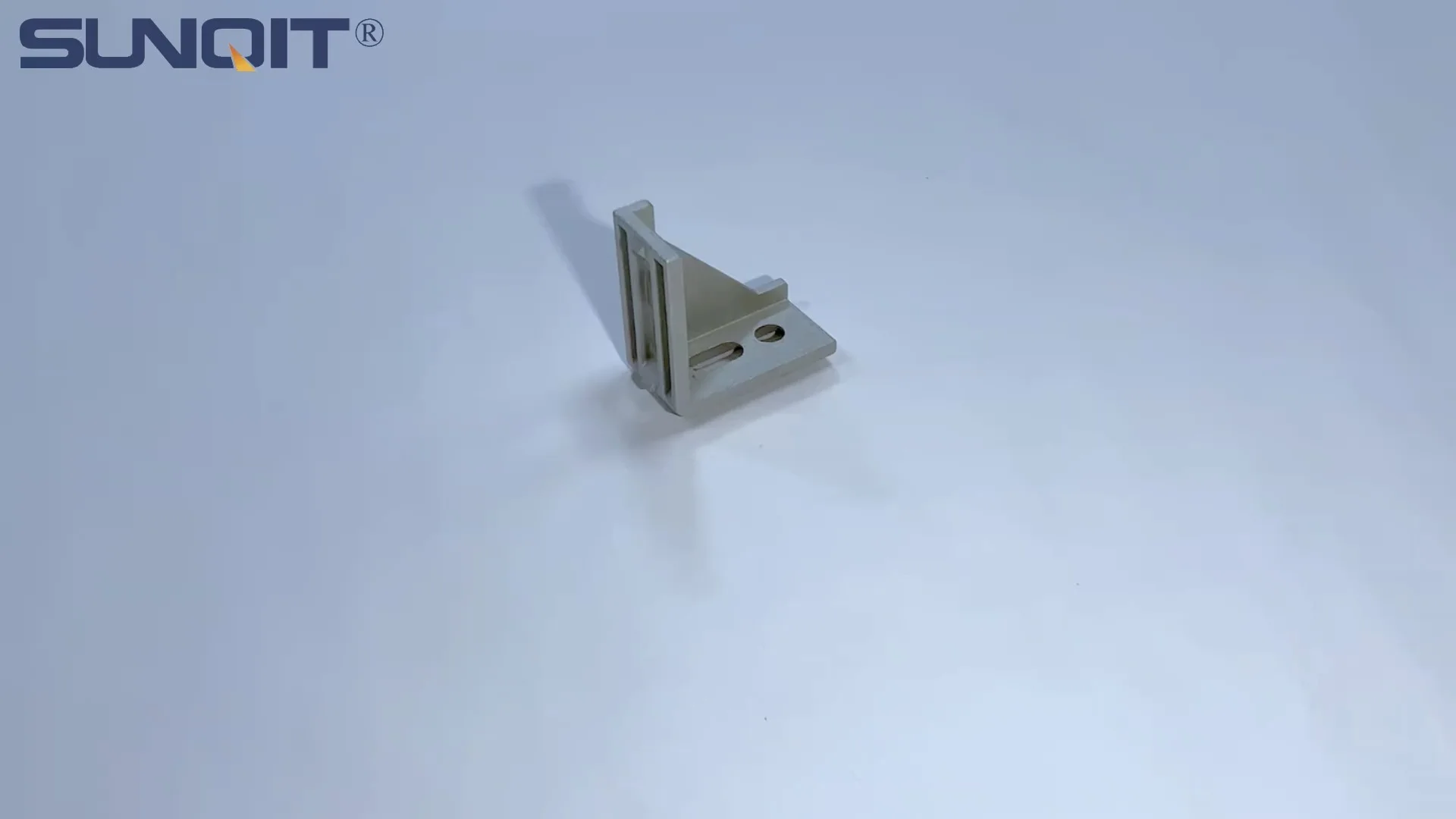
3060 Aluminum Angle Yards
It used for 90° flat connection for 20 series aluminum profile.
Walk into any modern manufacturing facility, and you'll notice a silent backbone holding everything together: structural components that organize workflows, support heavy loads, and adapt to ever-changing production needs. Among these, aluminum angle yards have emerged as unsung heroes, blending strength, flexibility, and cost-effectiveness. Today, the spotlight is on the 3060 aluminum angle yards—a series that's redefining what's possible in structural design. Let's dive into how these unassuming components are shaping the future of manufacturing, assembly, and beyond.
The Quiet Revolution of Aluminum Angle Yards
Aluminum angle yards, often overlooked in favor of flashier machinery, are the workhorses of industrial spaces. They form the frames of workbenches, the shelves of material racks, the supports of conveyor systems, and the bases of turnover trolleys. For decades, manufacturers relied on heavier materials like steel or basic aluminum profiles, but these came with trade-offs: steel was durable but cumbersome, early aluminum designs lacked precision, and both struggled to keep up with the demand for rapid reconfiguration in lean manufacturing environments.
Enter the 3060 aluminum angle yards. Named for their approximate dimensions (30mm x 60mm), this series isn't just a new size—it's a leap forward in engineering. What makes them different? It starts with the material: high-grade aluminum extrusion profile, engineered for strength without the weight penalty. But the real magic lies in how they're designed: modular, precise, and built to grow with your operations. Let's trace their evolution to understand why they're becoming indispensable.
From Basic Frames to Smart Structures: The Evolution of 3060
Older aluminum angle yards were functional but limited. Think of them as "one-size-fits-most" solutions: fixed angles, basic connectors, and little room for customization. If a factory needed to adjust a workbench height or add a shelf to a material rack, it often meant cutting, welding, or buying entirely new components—time-consuming and wasteful, two things the lean system movement actively rejects.
The shift to aluminum extrusion profile changed the game. Extrusion—where aluminum is forced through a die to create consistent, complex shapes—allowed for profiles with integrated features like T-slots, grooves, and mounting points. Suddenly, angle yards weren't just static frames; they were platforms for customization. The 3060 series took this a step further by optimizing the cross-section for balance: 30mm width for stability, 60mm height for vertical strength, and a wall thickness that balances durability and weight.
Early adopters quickly noticed the difference. A electronics manufacturer in China, for example, swapped their old steel workbenches for 3060-based setups and reported a 40% reduction in assembly time for new product lines—because they could reconfigure the angle yards in hours, not days. A automotive parts supplier in Germany noted that the lighter weight of 3060 frames cut down on worker fatigue during trolley movements, boosting daily productivity by 15%. These aren't just anecdotes; they're proof that structural design innovation directly impacts the bottom line.

Core Innovations Driving 3060's Success
So, what exactly makes 3060 aluminum angle yards stand out? Let's break down the key innovations reshaping their structural design—and why they matter for manufacturers, warehouse managers, and anyone building with efficiency in mind.
1. Material Science: Stronger, Lighter, Smarter
At the heart of 3060 angle yards is the aluminum extrusion profile itself. Most 3060 series use 6063-T5 aluminum alloy, a blend prized for its excellent extrudability, corrosion resistance, and strength-to-weight ratio. Unlike cheaper alloys, 6063-T5 undergoes heat treatment after extrusion, which aligns its grain structure for added rigidity. The result? A profile that can support up to 200kg per linear meter (depending on setup) while weighing 40% less than a comparable steel angle—critical for applications like mobile trolleys or overhead racks where weight matters.
But it's not just about the alloy. Modern extrusion techniques allow for micro-optimizations in the profile's cross-section. Look closely at a 3060 angle yard, and you'll see reinforced edges, strategically placed ribs, and smooth internal surfaces. These details reduce stress concentration points, making the angle yard more resistant to bending or warping under heavy loads. A recent test by a leading aluminum profile supplier showed that 3060 angle yards could withstand 50,000 cycles of load stress (simulating daily use) with less than 0.1mm of deformation—far exceeding the industry standard of 0.5mm.
2. Modularity: Built for the Lean System Mindset
The lean system isn't just a buzzword; it's a philosophy centered on eliminating waste, streamlining workflows, and adapting quickly to change. 3060 aluminum angle yards embody this mindset through modular design. Unlike traditional welded frames, 3060 components connect using aluminum profile accessories—think brackets, corner codes, T-slot nuts, and bolts—that require no special tools to assemble or disassemble.
Imagine you run a small electronics assembly line. One week, you're building smartwatches; the next, you switch to wireless earbuds. With old steel frames, you'd need separate workbenches for each product. With 3060 angle yards, you can reconfigure the same base frame: adjust the height using telescoping legs, add dividers with slot-in panels, or mount tool holders using T-slot connectors—all in under an hour. This flexibility slashes the need for storage space (no more piles of unused frames) and reduces capital expenditure on new equipment.
Aluminum profile accessories take this further. Manufacturers now offer specialized connectors for 3060, like 90° corner codes with built-in leveling feet, 45° brackets for angled shelves, and even swivel joints that let sections rotate. A logistics warehouse in Canada, for instance, uses 3060 angle yards with rotating brackets to create adjustable material racks that can tilt for easy access to bins—cutting picking time by 25%.
3. Precision Engineering: Tolerances That Transform Performance
In structural design, "close enough" isn't good enough. A 1mm misalignment in a connector can lead to wobbly workbenches, uneven weight distribution, or even safety hazards. 3060 aluminum angle yards tackle this with precision extrusion and machining. Modern extrusion dies are CNC-machined to tolerances of ±0.1mm, ensuring that every 3060 profile is identical in shape and size. Connectors, too, are manufactured to match these tight tolerances, so they slide into T-slots smoothly and lock securely without play.
This precision has ripple effects. For one, it improves load distribution. When all components fit perfectly, weight is spread evenly across the frame, reducing stress on individual joints. A 3060-based material rack B (3 row and 3 floor) setup, for example, can safely hold 50kg per shelf without sagging, compared to 35kg with older, less precise angle yards. Precision also simplifies assembly: workers don't need to "force" parts together, cutting down on errors and assembly time.
4. Sustainability: Green by Design
Sustainability isn't just a trend—it's a business imperative. 3060 aluminum angle yards shine here, too. Aluminum is 100% recyclable, and recycling it uses just 5% of the energy needed to produce new aluminum. Unlike steel, which rusts and requires painting (a source of volatile organic compounds), aluminum forms a natural oxide layer that resists corrosion, eliminating the need for toxic coatings.
The modular design adds another layer of sustainability. When a 3060 frame is no longer needed, it can be disassembled, and the components reused or recycled. A furniture manufacturer in Italy, for example, estimates that they've saved 12 tons of waste over three years by reusing 3060 angle yards from old production lines to build new prototypes. Even the packaging for 3060 components is shifting to recycled cardboard and biodegradable plastics, aligning with the circular economy model.

How 3060 Stacks Up: A Comparison with Traditional Angle Yards
Curious how 3060 aluminum angle yards measure up against older designs? The table below breaks down key features, showing why the future of structural design is leaning toward 3060.
| Feature | Traditional Aluminum Angle Yards | 3060 Aluminum Angle Yards |
|---|---|---|
| Material | Basic aluminum alloys, often unheat-treated | 6063-T5 aluminum extrusion profile (heat-treated for strength) |
| Weight (per meter) | 2.5–3.0kg | 1.8–2.2kg (40% lighter than steel equivalents) |
| Assembly Time | 2–3 hours (requires welding/cutting) | 30–60 minutes (tool-free with aluminum profile accessories) |
| Load Capacity (per linear meter) | 100–150kg | 180–220kg (with proper bracing) |
| Reconfigurability | Low (permanent welds; difficult to modify) | High (modular connectors allow infinite adjustments) |
| Sustainability | Low (often ends up in landfills after use) | High (100% recyclable; components reusable) |

Real-World Impact: 3060 in Action
Numbers and specs tell part of the story, but real-world applications bring it to life. Let's look at how 3060 aluminum angle yards are transforming industries today.
Automotive Manufacturing: Leaner Assembly Lines
Automotive plants are a masterclass in the lean system, with production lines that change yearly (or even seasonally) to accommodate new models. A major automaker in Japan recently revamped its dashboard assembly area using 3060 angle yards. Previously, workers used fixed steel workbenches that required forklifts to move. Now, 3060-based workbenches on casters can be repositioned by two people in minutes. The T-slots on the angle yards let them mount custom tool holders, LED task lights, and even small conveyors (using roller track accessories) to feed parts directly to the line. The result? A 30% reduction in time spent walking between stations and a 20% drop in errors due to better tool organization.
E-Commerce Warehouses: Faster Order Fulfillment
E-commerce giants face a relentless demand: get orders out faster. To keep up, warehouses are ditching static shelving for dynamic, adaptable systems. A U.S.-based logistics firm turned to 3060 angle yards to build modular picking racks. The angle yards form the frame, with aluminum guide rail A and roller track placon mount connectors to add gravity-fed roller tracks. This setup lets bins slide forward as items are picked, eliminating the need to reach deep into shelves. Since installing 3060-based racks, the warehouse has increased picking rates by 28% during peak seasons—all without expanding the facility.
Medical Device Production: Clean, Precise Workspaces
Medical device manufacturing requires strict cleanliness and precision. 3060 angle yards, with their smooth aluminum surfaces and corrosion resistance, are ideal here. A medical equipment manufacturer in Switzerland uses 3060 to build cleanroom workbenches. The angle yards are anodized to prevent particle shedding, and aluminum profile accessories like gusset plates and sealed connectors leave no gaps for dust to collect. When the company needed to add a new testing station, they simply extended the existing 3060 frame with a few connectors and a pre-cut aluminum honeycomb panel top—no downtime, no disruption to sterile conditions.
The Road Ahead: What's Next for 3060?
The future of 3060 aluminum angle yards isn't just about incremental improvements—it's about reimagining what structural components can do. Here are three trends to watch:
1. Smart Integration with IoT
Imagine a 3060 material rack that alerts you when a shelf is overloaded, or a workbench that tracks usage patterns to suggest layout optimizations. That's the future with IoT integration. Some manufacturers are already embedding sensors into 3060 angle yards—strain gauges to monitor load, RFID tags for asset tracking, and temperature sensors for climate-sensitive environments. Paired with cloud software, these "smart" angle yards can feed data into a facility's management system, helping teams predict maintenance needs, optimize workflows, and even automate reconfigurations (e.g., adjusting shelf heights based on real-time inventory levels).
2. Customization at Scale
3D printing is opening doors for hyper-custom aluminum profile accessories. Need a unique bracket for a 3060 angle yard to mount a specific tool? Soon, you'll be able to download a design file, 3D-print it in high-strength plastic or even metal, and snap it into the T-slot—no minimum order quantities required. This will empower small businesses and startups to build custom setups without the cost of traditional manufacturing.
3. Eco-Friendly Coatings and Alloys
Sustainability will only deepen as a priority. Expect to see 3060 angle yards with bio-based anodizing coatings (using plant-derived dyes) and recycled aluminum alloys with the same strength as virgin materials. Some suppliers are even experimenting with "zero-waste" extrusion processes, where scrap from production is immediately recycled back into the extrusion line—closing the loop on material use.
Why 3060 Matters: More Than Just Metal
At the end of the day, 3060 aluminum angle yards are more than just structural components. They're enablers of innovation. They let small manufacturers compete with giants by reducing setup costs. They help warehouses adapt to e-commerce's ever-growing demands. They support the lean system's goal of continuous improvement by making change easy, not expensive.
As one factory manager put it: "We used to build our operations around our equipment. Now, with 3060 angle yards, we build our equipment around our operations." That's the future of structural design—flexible, efficient, and ready to evolve. And it's here, today, in the unassuming 3060 aluminum angle yard.
So, whether you're setting up a new production line, revamping a warehouse, or building a prototype lab, don't overlook the backbone. The 3060 series isn't just changing how we build structures—it's changing how we think about building, period.