- Company Articles
- Industry articles
- Industry standards
- Future of Industrial Framing: Innovations in 4040E EU Standard Aluminum Profile Applications

Future of Industrial Framing: Innovations in 4040E EU Standard Aluminum Profile Applications
Related Product
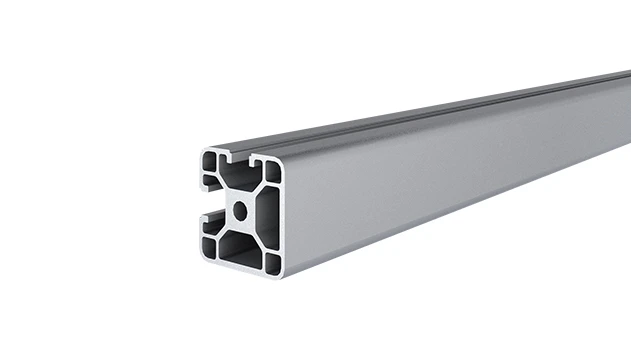
4040E EU Standard Aluminum Profile
4040E is a 4.00x4.00 CM fractional 40 series square extrusion T-slot profile with two side open T-slots, two side with closed face, each side with 4.00cm face. The profile has align-a-grooves to assist in aligning connecting profiles.
Walk into any modern manufacturing facility, warehouse, or assembly plant today, and you'll likely notice a quiet revolution unfolding across the factory floor. The rigid, one-size-fits-all metal structures of the past are giving way to sleek, modular systems that adapt as quickly as production needs change. At the heart of this transformation lies a material that's redefining industrial framing: the 4040E EU standard aluminum profile. More than just a component, it's a catalyst for flexibility, efficiency, and sustainability in industrial design—one that's reshaping how businesses build workspaces, streamline workflows, and prepare for the future.
For decades, manufacturers relied on heavy steel frames, cumbersome wooden workbenches, and fixed conveyor systems that demanded significant time and resources to modify. A simple shift in production lines or a new product launch could mean weeks of downtime, costly retooling, and frustrated teams struggling to keep up. But the 4040E aluminum profile changes the game. Lightweight yet surprisingly strong, infinitely customizable, and designed for rapid assembly, it's become the backbone of lean manufacturing, smart factories, and agile production environments worldwide. Let's dive into why this unassuming aluminum extrusion is becoming indispensable—and how it's setting the stage for the next era of industrial innovation.
Why Aluminum? The Material Advantage Behind 4040E
To understand the 4040E's impact, we first need to appreciate why aluminum has emerged as the material of choice for modern industrial framing. Unlike steel, which is dense and prone to corrosion without constant maintenance, aluminum brings a unique set of benefits that align perfectly with today's manufacturing priorities. Its natural resistance to rust and wear means it thrives in harsh environments—from humid warehouses to cleanrooms—without the need for painting or treatments. This durability translates to longer lifespans, reducing the frequency of replacements and lowering long-term costs.
But perhaps aluminum's most compelling trait is its strength-to-weight ratio. A 4040E profile, named for its 40mm x 40mm cross-section (a standard dimension in EU industrial design), weighs roughly a third of an equivalent steel beam while maintaining comparable load-bearing capacity. This lightness makes installation a breeze: teams can assemble workbenches, racks, or conveyor supports without heavy machinery, cutting setup time from days to hours. It also simplifies reconfiguration—when a production line needs to shift, workers can disassemble and rebuild structures with minimal effort, keeping downtime to a minimum.
Then there's the modularity. The 4040E's T-slot design—longitudinal grooves running along its length—turns every profile into a blank canvas for customization. By sliding accessories into these slots, users can add shelves, brackets, lighting, or even electronic components like sensors and monitors without drilling or welding. It's a "build-as-you-go" approach that empowers teams to design solutions tailored to their exact needs, whether that's a workbench with integrated ESD (electrostatic discharge) protection for electronics assembly or a flow rack with adjustable roller tracks for material handling. This flexibility isn't just convenient; it's a lifeline for small and medium-sized enterprises (SMEs) that need to scale operations without overinvesting in infrastructure.
| Feature | Traditional Steel Framing | Wooden Workbenches/Racks | 4040E EU Standard Aluminum Profile |
|---|---|---|---|
| Weight | Heavy (requires machinery for installation) | Moderate but prone to warping | Lightweight (30% of steel; manual assembly possible) |
| Durability | High, but prone to corrosion without coating | Low (susceptible to moisture, scratches, and wear) | Excellent (rust-resistant, withstands daily use for 10+ years) |
| Customization | Limited (requires welding/cutting for modifications) | Basic (fixed dimensions; hard to adapt) | Unlimited (T-slot design accepts accessories; reconfigurable in minutes) |
| Sustainability | Recyclable but energy-intensive to produce | Renewable but short lifespan; limited recyclability | Highly sustainable (100% recyclable, low embodied energy, long lifecycle) |
| Cost Over Time | High (maintenance, replacement, downtime for changes) | Low upfront, high long-term (frequent replacements) | Cost-effective (minimal maintenance, reusable components, reduced downtime) |
Beyond the Profile: How Accessories Amplify Functionality
A 4040E aluminum profile is only as versatile as the accessories that accompany it. Fortunately, the ecosystem of aluminum profile accessories has grown in tandem with demand, offering everything from connectors and brackets to specialized components that turn basic frames into fully functional systems. These accessories are the unsung heroes of modular design, enabling users to tailor structures to specific tasks without reinventing the wheel.
Take, for example, the humble 90° aluminum profile connector. A small, unassuming piece of hardware, it allows two 4040E profiles to join at a right angle in seconds—no screws, no adhesives, no welding. This simplicity is revolutionary. In the past, connecting steel beams required precise measurements, drilling, and bolts, leaving little room for error. With aluminum connectors, even a novice can assemble a sturdy frame, freeing up skilled workers for more complex tasks. And if a design needs tweaking? Simply disconnect, adjust, and reconnect—no damage to the profiles, no waste, no hassle.
Then there are specialized accessories like T-slot rubber seal covers, which snap into the profile's grooves to protect wiring, hoses, or tools from dust and debris. Or aluminum hinge brackets that add swing-out shelves to workbenches, maximizing vertical space in tight areas. For material handling, roller track guides—another key accessory—turn static racks into dynamic flow systems. By mounting these guides onto 4040E frames, businesses create gravity-fed pathways for boxes, components, or finished products, reducing manual lifting and speeding up throughput. It's this combination of profiles and accessories that makes the system so powerful: the profile provides the structure, and the accessories provide the function, together creating solutions that grow with the business.

Real-World Impact: 4040E Applications Transforming Industries
Theory is one thing, but the true test of any industrial solution is how it performs on the factory floor. Across sectors—from automotive and electronics to logistics and pharmaceuticals—the 4040E profile is proving its worth in applications that demand precision, reliability, and adaptability. Let's explore three key use cases where it's making a tangible difference.
1. Workbenches: The Heart of the Assembly Line, Reimagined
The workbench is where products come to life, and for assembly line workers, it's their second home. A poorly designed bench can lead to fatigue, errors, and slow production; a well-designed one becomes an extension of the team, boosting comfort and efficiency. 4040E aluminum profiles are revolutionizing workbench design by putting customization in the hands of the people who use them.
Consider a manufacturer of medical devices, where precision is non-negotiable. With 4040E, they can build workbenches with adjustable heights to accommodate workers of different statures, reducing strain on backs and shoulders. T-slot grooves allow for mounting tools, magnifying lamps, and ESD wristband connectors directly onto the frame, keeping essentials within arm's reach. Need to add a shelf for documentation or a bin for waste? Simply slide on a bracket and secure it—no tools required. And when production shifts to a new device with different requirements, the bench can be reconfigured in an hour, not a week. This adaptability isn't just about comfort; it's about empowering teams to work smarter, not harder.
2. Flow Racks: Streamlining Material Handling with Roller Track Systems
In warehouses and distribution centers, the efficient movement of materials is the lifeblood of operations. Traditional static racks force workers to bend, reach, and lift heavy items, slowing down picking and increasing the risk of injury. Flow racks, built with 4040E profiles and roller tracks, solve this by using gravity to move goods from the back to the front, creating a "first-in, first-out" (FIFO) system that's both ergonomic and efficient.
A electronics distributor, for example, might use 4040E frames to build multi-tiered flow racks for circuit boards and components. By angling the roller tracks slightly, boxes glide forward as items are removed from the front, ensuring stock is always accessible and reducing the need for workers to stretch or climb. The racks can be adjusted to fit different box sizes—simply add or remove roller track sections or adjust the frame height using aluminum profile accessories. During peak seasons, when inventory spikes, the same racks can be expanded by adding more 4040E sections, avoiding the need to purchase entirely new systems. It's lean manufacturing in action: reducing waste, improving safety, and keeping costs in check.
3. Conveyor Supports: Flexible Pathways for Dynamic Production
Conveyor systems are the arteries of manufacturing, moving products between stations with minimal human intervention. But traditional conveyors are fixed in place, making them rigid and costly to modify. 4040E profiles are changing this by serving as lightweight, adaptable supports for conveyor belts and roller tracks, allowing businesses to create custom pathways that evolve with production.
Imagine a food packaging plant that switches between seasonal products—jars in summer, bottles in winter, and gift sets during the holidays. With a 4040E-based conveyor system, they can adjust the height, width, and angle of the conveyor in hours to accommodate different package sizes. Aluminum's corrosion resistance ensures the supports hold up in washdown environments, where steel would rust over time. And because the system is modular, adding a new branch or redirecting the flow is as simple as connecting new profiles and accessories. This flexibility means the plant can take on special orders, test new product lines, and scale operations without being limited by fixed infrastructure.
Sustainability: Building a Greener Future with Aluminum
In an era where sustainability is no longer a buzzword but a business imperative, the 4040E profile shines as an eco-friendly alternative to traditional materials. Aluminum is one of the most recyclable materials on the planet—nearly 75% of all aluminum ever produced is still in use today—and recycling it requires just 5% of the energy needed to produce new aluminum. For businesses aiming to reduce their carbon footprint, this is a game-changer.
But sustainability isn't just about recycling; it's about reducing waste in the first place. The 4040E's modular design minimizes scrap during production and installation. Unlike steel, which often requires cutting to size (generating waste), aluminum profiles come in standard lengths that can be combined to fit any design, with accessories filling in the gaps. And when a structure reaches the end of its useful life, the profiles and accessories can be disassembled, sorted, and recycled—no demolition required. This circular approach aligns with global efforts to reduce industrial waste and supports businesses in meeting ESG (Environmental, Social, Governance) goals, which are increasingly important to customers, investors, and regulators.
Looking Ahead: The Future of 4040E and Industrial Framing
As technology advances and manufacturing becomes more automated and data-driven, the role of industrial framing will only grow in importance. The 4040E EU standard aluminum profile is well-positioned to lead this evolution, thanks to its compatibility with emerging trends like smart factories and Industry 4.0. Imagine workbenches equipped with IoT sensors that monitor usage and alert teams when maintenance is needed, or flow racks that adjust their angles automatically based on real-time production data—all built on a foundation of 4040E profiles and connected via aluminum profile accessories.
Another trend on the horizon is the integration of 3D printing with aluminum framing. As 3D-printed accessories become more accessible, businesses could one day design custom brackets, connectors, or tool holders on-site, printing them to fit their exact 4040E setup. This would further reduce lead times, minimize reliance on external suppliers, and unlock even more creative solutions. Additionally, advances in aluminum alloys could make future profiles even lighter or stronger, expanding their applications into new industries like aerospace or renewable energy.
Conclusion: More Than a Profile—A Partner in Progress
The 4040E EU standard aluminum profile is more than just a piece of industrial hardware. It's a symbol of how innovation in materials can drive transformation across entire industries. By prioritizing flexibility, efficiency, and sustainability, it's empowering businesses to adapt to change, reduce costs, and create workspaces that put people first. From the factory floor to the boardroom, it's proving that the future of industrial framing isn't about building bigger—it's about building smarter.
For manufacturers, warehouse operators, and entrepreneurs looking to stay ahead in a fast-paced world, the message is clear: the 4040E profile isn't just an investment in infrastructure; it's an investment in agility. It's the difference between being stuck in the past and ready for whatever the future brings. And as we move into an era where adaptability is the key to survival, that's a difference worth embracing.
So the next time you walk through a modern factory, take a closer look at those sleek, silver frames holding up workbenches, guiding conveyor belts, or organizing shelves. You're not just seeing aluminum—you're seeing the future of industrial design, one 4040E profile at a time.