- Company Articles
- Industry articles
- Industry standards
- Future of Lean Manufacturing: Innovations in 3030 National Standard Profile A Applications

Future of Lean Manufacturing: Innovations in 3030 National Standard Profile A Applications
Related Product
3030 National Standard Profile A
Workbench, production line, logistic rack, warehouse rack Industry: Manufacturer workshop, Automobile, Electronic, Assembling, logistic
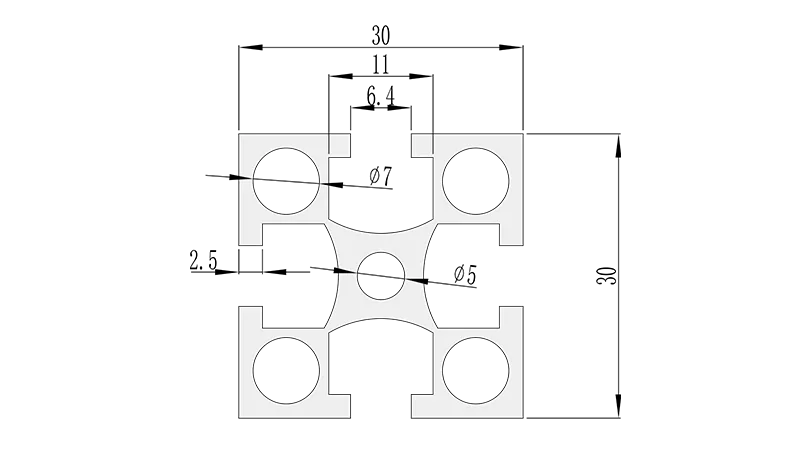
Walk into any modern manufacturing facility today, and you'll likely notice a quiet revolution unfolding on the factory floor. Gone are the days of rigid, one-size-fits-all workstations and static production lines that resist change. Instead, there's a new focus on flexibility, efficiency, and adaptability—core principles of lean manufacturing that have evolved from buzzwords into tangible, day-to-day practices. At the heart of this evolution lies a seemingly unassuming component: the 3030 National Standard Profile A. This aluminum extrusion profile, paired with innovative aluminum profile accessories, is redefining how manufacturers design, build, and optimize their workspaces. Let's dive into how this modular solution is shaping the future of lean manufacturing.
The Evolution of Lean: From Principles to Practical Tools
Lean manufacturing, born from the Toyota Production System in the mid-20th century, has always been about eliminating waste—whether it's time, materials, or unnecessary movement. But for decades, adopting lean principles often meant overhauling entire production lines or investing in custom-built equipment that was expensive to modify. As manufacturing demands shifted—shorter product lifecycles, smaller batch sizes, and the rise of personalized products—these rigid systems became liabilities. Factories needed tools that could keep up with constant change without sacrificing efficiency or increasing costs.
Enter modular aluminum profiles. Lightweight, strong, and infinitely configurable, these profiles (and their accompanying accessories) have become the backbone of modern lean systems. Among them, the 3030 National Standard Profile A stands out. Designed to balance strength, versatility, and cost-effectiveness, this 30mm x 30mm extrusion has become a go-to choice for manufacturers looking to build lean solutions that grow and adapt with their needs. But what makes it so special, and how is it driving innovation in lean manufacturing?
Understanding 3030 National Standard Profile A: More Than Just a Piece of Aluminum
At first glance, the 3030 National Standard Profile A might look like any other metal bar. But its design is a masterclass in engineering for lean manufacturing. Let's break down its key features:
1. Precision Engineering for Modularity
The 3030 Profile A is an aluminum extrusion profile, meaning it's created by forcing heated aluminum through a die to form its distinct shape. Its 30mm x 30mm cross-section is optimized for balance: large enough to support heavy loads (up to 500kg per meter in some configurations) but compact enough to fit into tight workspaces. The real magic, however, lies in its T-slot design—longitudinal grooves running along its length that allow aluminum profile accessories (like connectors, brackets, and end caps) to slide into place and lock securely with minimal tools. This means no welding, no drilling, and no permanent modifications. A workstation built with 3030 Profile A can be disassembled, reconfigured, or repurposed in minutes, not days.
2. Material Matters: Strength, Lightweight, and Sustainability
Aluminum was chosen for a reason. It's 30% lighter than steel, reducing the physical strain on workers who need to move or adjust equipment. Yet, it's surprisingly strong—thanks to alloying elements like magnesium and silicon, the 3030 Profile A can handle the rigors of daily manufacturing use, from supporting heavy machinery to withstanding repeated assembly and disassembly. Perhaps most importantly, aluminum is infinitely recyclable. Unlike plastic or wood, which degrade over time, aluminum profiles can be melted down and reused without losing quality, aligning with the lean principle of sustainability and reducing a factory's carbon footprint.
3. A Ecosystem of Accessories: The Key to Versatility
A profile is only as good as the accessories that accompany it, and the 3030 Profile A has a robust ecosystem. Aluminum profile accessories like internal straight aluminum joints, 90° aluminum profile connectors, and plastic end caps allow for endless configurations. Need to build a workbench with a shelf? Add a bracket. Want to attach a conveyor to a material rack? Slide in a roller track connector. Even specialized components, like ESD (electrostatic discharge) accessories for electronics manufacturing, are available, making the 3030 Profile A suitable for industries ranging from automotive to medical device production.
Innovations in Application: How 3030 Profile A is Transforming Workspaces
The true power of the 3030 National Standard Profile A lies in its applications. Let's explore three key areas where it's driving innovation in lean manufacturing:
1. Adaptive Workstations: From Static to Smart
Workbenches are the heartbeat of any production line, and the 3030 Profile A is revolutionizing their design. Traditional workbenches, often made of wood or steel, are fixed in size and function. If a new product requires a taller surface or additional shelving, manufacturers would need to buy a bench or hire a welder to modify the old one—both costly and time-consuming. With 3030 Profile A, workbenches become dynamic tools.
Take the "Workbench E (single deck-without caster)" as an example. Built with 3030 Profile A frames and aluminum honeycomb panels for the work surface, it starts as a basic workstation. But add a few aluminum profile accessories—like height-adjustable legs, tool holders, or ESD mats—and it transforms into a specialized station for electronics assembly. Need to reconfigure it for a different product? Loosen a few connectors, adjust the height, and reattach the accessories. What once took days now takes hours, or even minutes. This adaptability reduces downtime and allows manufacturers to respond quickly to changing production needs—exactly what lean manufacturing demands.
2. Lean Systems Integration: Streamlining Material Flow
Lean manufacturing isn't just about workstations; it's about the flow of materials from receiving to shipping. Bottlenecks here can grind production to a halt. The 3030 Profile A excels at creating seamless, customizable flow systems, from material racks to roller conveyors.
Consider the "Material Rack B (3 row and 3 floor)," a common storage solution in factories. Built with 3030 Profile A uprights and crossbars, it can be tailored to hold specific parts—whether small electronic components or large automotive parts. Add swivel roller balls (1 inch or 0.5 inch) to the shelves, and suddenly, materials glide smoothly from the back to the front, eliminating the need for workers to reach or strain. For dynamic material flow, 3030 Profile A pairs with roller tracks and accessories, like plastic roller track guide rails (yellow or grey) and aluminum guide rails. These tracks can be integrated into conveyor systems, allowing parts to move from one workstation to the next with minimal manual intervention—reducing human error and speeding up production.
What's most impressive is how these systems scale. A small manufacturer might start with a single material rack and a short roller track. As they grow, they can add more 3030 Profile A sections, connect additional tracks, and even integrate automated components like sensors or robotic arms—all without replacing the existing infrastructure. It's lean manufacturing in action: start small, scale as needed, and eliminate waste at every step.
3. Sustainability and Cost Savings: The Long-Term Impact
Lean manufacturing isn't just about efficiency—it's about long-term value. The 3030 Profile A delivers on both sustainability and cost savings. Let's break it down:
| Metric | Traditional Steel/Wood Systems | 3030 National Standard Profile A Systems |
|---|---|---|
| Initial Cost | Lower upfront, but requires custom fabrication | Slightly higher upfront, but no custom fabrication fees |
| Modification Cost | High (welding, new parts, labor) | Low (reuse existing profiles and accessories) |
| Lifespan | 5-10 years (prone to rust, warping, or damage) | 15+ years (aluminum resists corrosion; profiles can be recycled) |
| Carbon Footprint | Higher (steel production emits CO2; wood sourcing may deplete resources) | Lower (aluminum is 100% recyclable; 95% less energy to recycle than produce new) |
| Downtime for Changes | Days to weeks | Hours to days |
The data speaks for itself. While 3030 Profile A systems may have a slightly higher initial cost, their long-term savings are significant. A factory that reconfigures its workstations twice a year could save tens of thousands of dollars in labor and new equipment costs alone. Add in the sustainability benefits—like meeting corporate ESG goals or reducing waste sent to landfills—and the value becomes even clearer.
Case Study: How a Mid-Sized Electronics Manufacturer Adopted 3030 Profile A
To put this into perspective, let's look at a fictional but realistic example: XYZ Electronics, a mid-sized manufacturer producing circuit boards for smartphones. Before adopting 3030 National Standard Profile A, XYZ struggled with two key issues: rigid workstations that couldn't keep up with new phone models, and material racks that caused bottlenecks in component flow.
Their old workstations were wooden benches with fixed shelves. When a new phone model required taller circuit boards, workers had to stack boxes on the floor to raise the boards—wasting time and increasing the risk of errors. Material racks were steel, with no roller balls, so workers spent hours each day retrieving components from the back of shelves. XYZ's lean coordinator estimated they were losing 15% of productive time to these inefficiencies.
The solution? XYZ invested in 3030 Profile A workstations and material racks. They replaced the wooden benches with adjustable Workbench E units, adding height-adjustable legs and tool holders. For material storage, they built Material Rack B units with 1-inch swivel roller balls, allowing components to slide forward as they were used. The transformation was immediate: setup time for new product lines dropped by 40%, and workers reported a 25% reduction in physical strain. Within six months, XYZ recouped the initial investment in 3030 Profile A systems through increased productivity and reduced downtime.
The Future: Where 3030 Profile A and Lean Manufacturing Go Next
As manufacturing continues to evolve—driven by Industry 4.0, automation, and the need for even greater flexibility—the 3030 National Standard Profile A is poised to play an even bigger role. Here are three trends to watch:
1. Smart Integration with Industry 4.0
The T-slot design of 3030 Profile A isn't just for mechanical accessories; it can also house sensors, cables, and IoT devices. Imagine a workbench built with 3030 Profile A that includes embedded sensors to track production times, monitor tool usage, or alert managers when parts are running low. This data can feed into lean management software, identifying waste in real time and suggesting optimizations. It's lean manufacturing meets smart technology—and the 3030 Profile A is the perfect platform for this integration.
2. Advanced Aluminum Profile Accessories for Specialized Industries
As demand grows, we'll see more specialized aluminum profile accessories tailored to niche industries. For example, medical device manufacturers might need antimicrobial coatings for 3030 Profile A workstations, while aerospace companies could benefit from high-temperature-resistant connectors. These innovations will make the 3030 Profile A even more versatile, expanding its use beyond traditional manufacturing into new sectors.
3. Circular Economy Models
Sustainability will only become more critical, and the 3030 Profile A aligns perfectly with circular economy principles. Manufacturers may start leasing profiles and accessories instead of buying them, returning used components to suppliers for recycling or refurbishment. This "profile-as-a-service" model would reduce upfront costs and ensure materials are reused, further cutting waste—a win for both businesses and the planet.
Conclusion: The 3030 Profile A—A Foundation for Lean's Future
Lean manufacturing has always been about progress—finding better ways to work, eliminating waste, and adapting to change. The 3030 National Standard Profile A embodies this spirit. It's not just a piece of aluminum; it's a tool that empowers manufacturers to build workspaces that are flexible, efficient, and sustainable. Whether it's through adaptive workbenches, streamlined material flow systems, or integration with smart technology, this aluminum extrusion profile is proving that the future of lean manufacturing isn't just about principles—it's about practical, adaptable solutions.
As XYZ Electronics discovered, the right tools can turn lean goals into reality. And in a world where manufacturing demands are constantly shifting, the 3030 Profile A is more than just a trend—it's a foundation for the future. So the next time you step onto a factory floor, take a closer look at those aluminum workstations and racks. Chances are, they're built with 3030 National Standard Profile A—and they're quietly revolutionizing lean manufacturing, one T-slot at a time.