- Company Articles
- Industry articles
- Industry standards
- Future of Manufacturing: 2060 EU Standard Aluminum Profile Innovations

Future of Manufacturing: 2060 EU Standard Aluminum Profile Innovations
Related Product
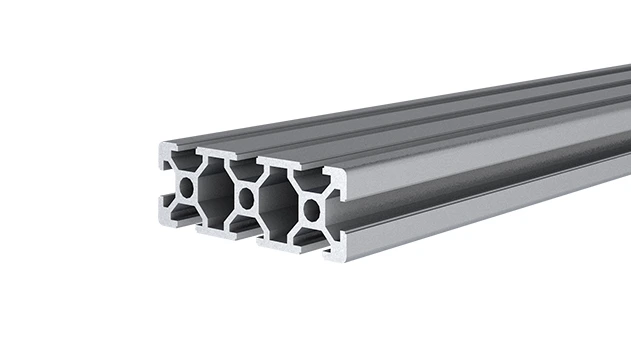
2060 EU Standard Aluminum Profile
2060 is a 2.00 x 4.00CM fractional 20 series square extrusion T-slot profile with four open T-slots, two side with 2.00cm face, the other side with 6.00cm face. The profile has align-a-grooves to assist in aligning connecting profiles.
The manufacturing industry has always been the backbone of global progress, evolving with each technological leap to meet the demands of efficiency, sustainability, and adaptability. Today, as we stand on the cusp of a new industrial era—one driven by automation, circular economies, and smart factories—the tools and materials that power production lines are undergoing a quiet revolution. At the heart of this transformation lies a material that's been a workhorse for decades but is now being reimagined: aluminum. Specifically, the 2060 EU standard aluminum profile is emerging as a cornerstone of modern manufacturing, promising to reshape how we design, build, and optimize production systems. Let's dive into how this innovation, paired with advancements in aluminum extrusion profiles and accessories, is not just keeping pace with change but leading it—especially when integrated with lean systems and applied to everyday workhorses like the humble workbench.
The Manufacturing Landscape: Challenges and the Need for Change
To understand why the 2060 EU standard aluminum profile matters, let's first acknowledge the challenges manufacturers face today. Traditional production setups often rely on rigid, heavy materials like steel, which are durable but come with significant drawbacks. Steel is prone to corrosion, requires frequent maintenance, and its fixed design makes it hard to reconfigure when production needs shift—say, when a factory switches from assembling smartphones to electric vehicle components. Add to that rising labor costs, pressure to reduce carbon footprints, and the need for faster time-to-market, and it's clear: the status quo isn't cutting it anymore.
Then there's the issue of waste. Lean manufacturing principles have taught us that waste—whether in time, materials, or space—is the enemy of efficiency. Yet, traditional systems are rife with it. A steel workbench, for example, might take hours to assemble, require specialized tools, and once built, can't be easily adjusted to accommodate taller workers or new equipment. When production lines change, these structures often end up in landfills, contributing to environmental harm and financial loss. Manufacturers need solutions that are lightweight, durable, adaptable, and sustainable—qualities that aluminum has long promised but is now delivering in spades, thanks to standards like the 2060 EU specification.
What is the 2060 EU Standard Aluminum Profile?
The 2060 EU standard aluminum profile isn't just another type of aluminum—it's a set of guidelines and specifications developed by the European union to ensure consistency, safety, and performance in aluminum extrusion profiles used across industries. Think of it as a quality stamp that guarantees the material meets strict criteria for strength, durability, dimensional accuracy, and environmental friendliness. But beyond compliance, the 2060 standard is a catalyst for innovation, pushing manufacturers to refine their extrusion processes and develop profiles that address the specific needs of modern factories.
At its core, aluminum extrusion is a process where raw aluminum is heated and pushed through a die to create complex cross-sectional shapes—everything from simple tubes to intricate profiles with T-slots, grooves, and channels. The 2060 EU standard takes this a step further by mandating precise tolerances (so profiles fit together seamlessly), using high-grade aluminum alloys that balance strength and weight, and ensuring compatibility with a wide range of accessories. This standardization is key: it means that a manufacturer in Germany can order 2060 EU standard aluminum profiles from a supplier in Spain and trust that they'll work perfectly with accessories sourced from Italy. No more guesswork, no more mismatched parts, no more delays.
But what makes the 2060 standard truly game-changing is its focus on versatility. Unlike older aluminum profiles, which were often designed for specific applications, 2060 profiles are engineered to be modular. Their T-slot design, for example, allows for easy attachment of accessories like brackets, panels, and connectors without welding or drilling. This modularity isn't just convenient—it's transformative. It turns static structures into dynamic systems that can be reconfigured in minutes, not days, adapting to new tasks, workflows, and even factory layouts.

Innovations in Aluminum Extrusion Profiles: Beyond the Basics
The 2060 EU standard has spurred innovations in aluminum extrusion profiles that go far beyond "just" being lightweight and strong. Let's break down some of the most impactful advancements:
1. Precision Engineering for Seamless Integration
Aluminum extrusion profiles under the 2060 standard are manufactured with microscopic precision. The T-slots, for instance, have consistent widths and depths, ensuring that accessories like bolts, nuts, and end caps fit snugly every time. This might sound trivial, but anyone who's struggled to attach a bracket to a misaligned steel frame knows: precision saves hours of frustration and rework. In a busy factory, where downtime costs money, this level of consistency translates directly to higher productivity.
2. Enhanced Strength-to-Weight Ratio
Aluminum has always been lighter than steel, but the 2060 standard pushes the envelope with advanced alloys. By blending aluminum with elements like magnesium and silicon, manufacturers have created profiles that are 30% lighter than traditional aluminum while maintaining—or even exceeding—the strength of mild steel. This is a game-changer for applications like workbenches and material racks, where weight affects both mobility and structural integrity. A lighter workbench is easier to move (no need for forklifts!), reduces strain on factory floors, and can still support heavy machinery like 3D printers or assembly tools.
3. Corrosion Resistance and Low Maintenance
Unlike steel, aluminum naturally forms a protective oxide layer that resists rust, but the 2060 standard takes this further with optional anodized coatings. Anodization—an electrochemical process that thickens the oxide layer—gives the profiles a sleek, scratch-resistant finish that stands up to harsh factory environments, including exposure to oils, chemicals, and humidity. This means less time spent painting or replacing corroded parts, and more time focused on production. For factories in coastal areas or those handling corrosive materials, this durability is a lifesaver.
| Feature | Traditional Steel Profiles | 2060 EU Standard Aluminum Extrusion Profiles |
|---|---|---|
| Weight | Heavy (e.g., 7850 kg/m³ density) | Lightweight (2700 kg/m³ density—30% lighter than steel) |
| Corrosion Resistance | Prone to rust; requires painting/coating | Naturally corrosion-resistant; anodized options for extra protection |
| Customization/Reconfiguration | Fixed design; requires welding/drilling to modify | Modular T-slot design; reconfigurable with basic tools |
| Assembly Time | Hours (requires specialized tools and labor) | Minutes (tool-free or simple hand tools) |
| Sustainability | High carbon footprint; difficult to recycle without degradation | 100% recyclable; low energy production; minimal waste |
| Long-Term Cost | High (maintenance, replacement, disposal costs) | Low (minimal maintenance, reusable, recyclable) |
The Role of Aluminum Profile Accessories: Small Parts, Big Impact
A 2060 EU standard aluminum extrusion profile is only as good as the accessories that bring it to life. Aluminum profile accessories—think end caps, connectors, brackets, and rubber strips—are the unsung heroes of modular manufacturing. These small, often overlooked components turn basic aluminum tubes into fully functional systems, from workbenches to conveyor belts.
Take end caps, for example. The 2060 standard specifies end caps for profiles like the 2020, 3030, and 4040 series, which snap into place to cover sharp edges, preventing injuries and keeping dust and debris out of T-slots. Then there are connectors: 90° aluminum profile connectors, 45° brackets, and 135° joints that allow profiles to be joined at any angle without welding. These connectors are designed to slide into T-slots and tighten with a simple hex key, making assembly so intuitive that even a new factory worker can build a basic rack in under an hour.
Rubber strips and T-slot seal covers are another example of thoughtful accessory design. These soft, flexible strips fit into T-slots to protect wires and cables from abrasion when routing them through workbenches or material racks. In a factory with hundreds of power tools and sensors, this small detail reduces the risk of downtime due to damaged wiring. It's these little touches—born from understanding real-world manufacturing pain points—that make the 2060 system so effective.
Perhaps most importantly, aluminum profile accessories are standardized, meaning they're interchangeable across different profile sizes. A 4040 aluminum profile can use the same connectors as a 3030 profile, as long as they're 2060 EU compliant. This interchangeability reduces inventory costs—factories don't need to stock dozens of unique parts—and makes reconfiguration even easier. Need to extend a workbench? Just grab a few extra profiles and connectors from the shelf, and you're done.
Integrating with Lean Systems: From Waste to Efficiency
Lean manufacturing isn't just a buzzword; it's a philosophy centered on maximizing value while minimizing waste. The 2060 EU standard aluminum profile aligns perfectly with this ethos, acting as a physical enabler of lean principles. Let's take a closer look at how:
1. Eliminating Waste in Assembly and Reconfiguration
Traditional assembly processes are wasteful. Building a steel workbench might involve cutting, welding, painting, and curing—steps that take time, energy, and materials. With 2060 aluminum profiles, assembly is a matter of connecting pre-cut, pre-finished pieces with simple tools. No welding, no painting, no waiting. This slashes lead times: a lean team can design, build, and test a new production cell in a day instead of a week. And when the cell needs to change—say, to accommodate a new product—disassembly is just as fast. Profiles and accessories can be reused in other parts of the factory, eliminating the waste of scrapping entire structures.
2. Optimizing Space with Modular Design
Space is a precious commodity in factories, and lean systems demand that every square meter adds value. 2060 aluminum profiles excel here with their modularity. A material rack, for example, can be built to exact dimensions—say, 3 rows and 3 floors—to fit perfectly in a tight corner, maximizing vertical space. If production scales and more storage is needed, additional shelves can be added without rebuilding the entire rack. This flexibility ensures that space is never wasted, whether you're storing small components or large machinery.
3. Reducing Labor Waste with Ergonomic Design
Lean systems also focus on respecting people—ensuring workers have safe, comfortable environments that minimize fatigue and injury. 2060 aluminum workbenches can be height-adjustable, with accessories like footrests and monitor mounts that adapt to individual workers. This reduces strain on backs, necks, and shoulders, lowering absenteeism and boosting productivity. When workers don't have to hunch over a too-low bench or reach awkwardly for tools, they're happier, faster, and more engaged—all of which drive lean success.
4. Supporting Just-In-Time (JIT) Production
JIT production relies on delivering materials exactly when they're needed, reducing inventory waste. Aluminum conveyor systems built with 2060 profiles are lightweight and easy to reposition, allowing factories to move materials directly to assembly lines without excess storage. Roller tracks, for example—another accessory in the 2060 ecosystem—can be integrated into workbenches to slide components from one station to the next, eliminating the need for workers to walk back and forth to fetch parts. This seamless flow cuts down on time waste and ensures that production keeps pace with demand.
The Workbench: A Case Study in Innovation
Let's bring this all together with a concrete example: the workbench. It's a staple of every factory, yet it's often overlooked as a source of inefficiency. Traditional workbenches are static, heavy, and one-size-fits-all. The 2060 EU standard aluminum profile is changing that, turning the workbench into a dynamic, adaptable tool that grows with your needs.
Consider the "Workbench E (single deck—without caster)" mentioned in our keyword list—a simple, no-frills design that's anything but basic. Built with 2060 aluminum extrusion profiles, this workbench starts with a frame of 4040 or 3030 profiles, connected by 90° aluminum profile connectors. The deck, often made of aluminum honeycomb panel (another 2060-compliant accessory), is lightweight but strong enough to support 200 kg of equipment. Because the frame uses T-slots, adding accessories is a breeze: a monitor arm for digital work instructions, a tool holder for screwdrivers and pliers, or a bin rack for small parts. Need to raise the height? Swap out the leg profiles for longer ones. Want to add casters later? Just attach caster mounts to the T-slots—no drilling required.
But the real magic is in how this workbench integrates with the rest of the production system. Let's say a factory assembles smart home devices. On Monday, the workbench might be set up for circuit board testing, with a static deck and anti-static mats (another 2060 accessory) to protect sensitive electronics. By Friday, if the line switches to assembling device casings, the deck can be swapped for a roller track-equipped surface, allowing casings to slide easily from one worker to the next. When the project ends, the workbench can be disassembled, and its parts reused to build a material rack or a packing station. No waste, no extra cost—just pure efficiency.
Workers love these benches too. Unlike cold, hard steel, aluminum stays cool to the touch in summer and isn't prone to sharp edges, making it more comfortable during long shifts. The modular design also lets teams personalize their workspaces—adding cup holders, cable management clips, or even small plants—fostering a sense of ownership and pride. Happy workers, as any lean leader will tell you, are more productive workers.
Sustainability: Building a Greener Future
In today's world, sustainability isn't optional—it's a business imperative. Customers, regulators, and investors are demanding that companies reduce their environmental impact, and manufacturing is under particular scrutiny. Here again, the 2060 EU standard aluminum profile shines, offering a path to greener production.
Aluminum is 100% recyclable, and recycling it uses just 5% of the energy required to produce new aluminum from bauxite ore. The 2060 standard encourages the use of recycled aluminum in its profiles, reducing reliance on virgin materials and cutting carbon emissions. For factories aiming for net-zero goals, this is a significant win. What's more, because the profiles are modular and reusable, they rarely end up in landfills. A 2060 aluminum workbench might have a lifespan of 10+ years, and when it's finally retired, its parts can be melted down and turned into new profiles—closing the loop on the circular economy.
The lightweight nature of aluminum also reduces transportation emissions. Shipping steel profiles requires heavy trucks and burns more fuel, but aluminum's lower weight means more profiles can be transported in a single trip, cutting emissions per unit. For global suppliers, this translates to a smaller carbon footprint across the entire supply chain.
Even the production process of 2060 EU standard profiles is greener. Modern extrusion facilities use renewable energy sources like solar and wind power, and water-based coolants instead of toxic chemicals. The result is a material that's not just good for factories, but good for the planet.
Future Trends: What's Next for 2060 EU Aluminum Profiles?
The 2060 EU standard aluminum profile is already a game-changer, but its evolution is far from over. Here are a few trends to watch in the coming years:
1. Smart Profiles with Embedded Sensors
Imagine a workbench that can monitor its own load capacity, detect when a tool is missing, or track how often it's reconfigured. Researchers are experimenting with embedding sensors into 2060 aluminum profiles—sensors that measure weight, temperature, and vibration. These "smart profiles" could send real-time data to factory management systems, alerting teams to potential issues (like a overloaded shelf) before they cause downtime. Paired with AI, this data could even predict when a profile might need maintenance, further reducing waste.
2. 3D-Printed Accessories
While 2060 aluminum profiles themselves are extrusion-based, their accessories are ripe for 3D printing. Factories could one day download custom bracket designs from a cloud library and print them on-site, eliminating the need to wait for parts to be shipped. 3D-printed accessories could also be made from recycled plastics, adding another layer of sustainability to the system.
3. Integration with Digital Twins
Digital twins—virtual replicas of physical systems—are becoming essential for factory planning. 2060 aluminum profiles, with their standardized dimensions, are ideal for digital twin integration. Engineers can design a production line in 3D software, simulate how the aluminum profiles will perform under different loads, and even test reconfigurations virtually before building anything in the real world. This reduces trial-and-error and ensures that every system is optimized from day one.
Conclusion: Building the Factories of Tomorrow, Today
The 2060 EU standard aluminum profile isn't just a material upgrade—it's a mindset shift. It represents a move away from rigid, wasteful manufacturing systems and toward flexible, sustainable, and human-centered ones. By combining the strength of aluminum extrusion profiles, the versatility of standardized accessories, and the efficiency of lean systems, this innovation is empowering factories to do more with less—less time, less money, and less environmental impact.
Whether it's a simple workbench or a complex conveyor system, the 2060 EU standard is proving that the future of manufacturing isn't about replacing humans with machines; it's about giving humans better tools to thrive. Tools that adapt to their needs, reduce frustration, and let them focus on what they do best: creating, innovating, and building the products that shape our world.
As we look ahead, one thing is clear: the factories of 2030 and beyond won't just be smart—they'll be built on smart materials. And at the top of that list? The 2060 EU standard aluminum profile. It's not just the future of manufacturing. It's the present.