- Company Articles
- Industry articles
- Industry News
- Future of Manufacturing: 40 Steel Wheel Roller Track Innovations

Future of Manufacturing: 40 Steel Wheel Roller Track Innovations
Related Product
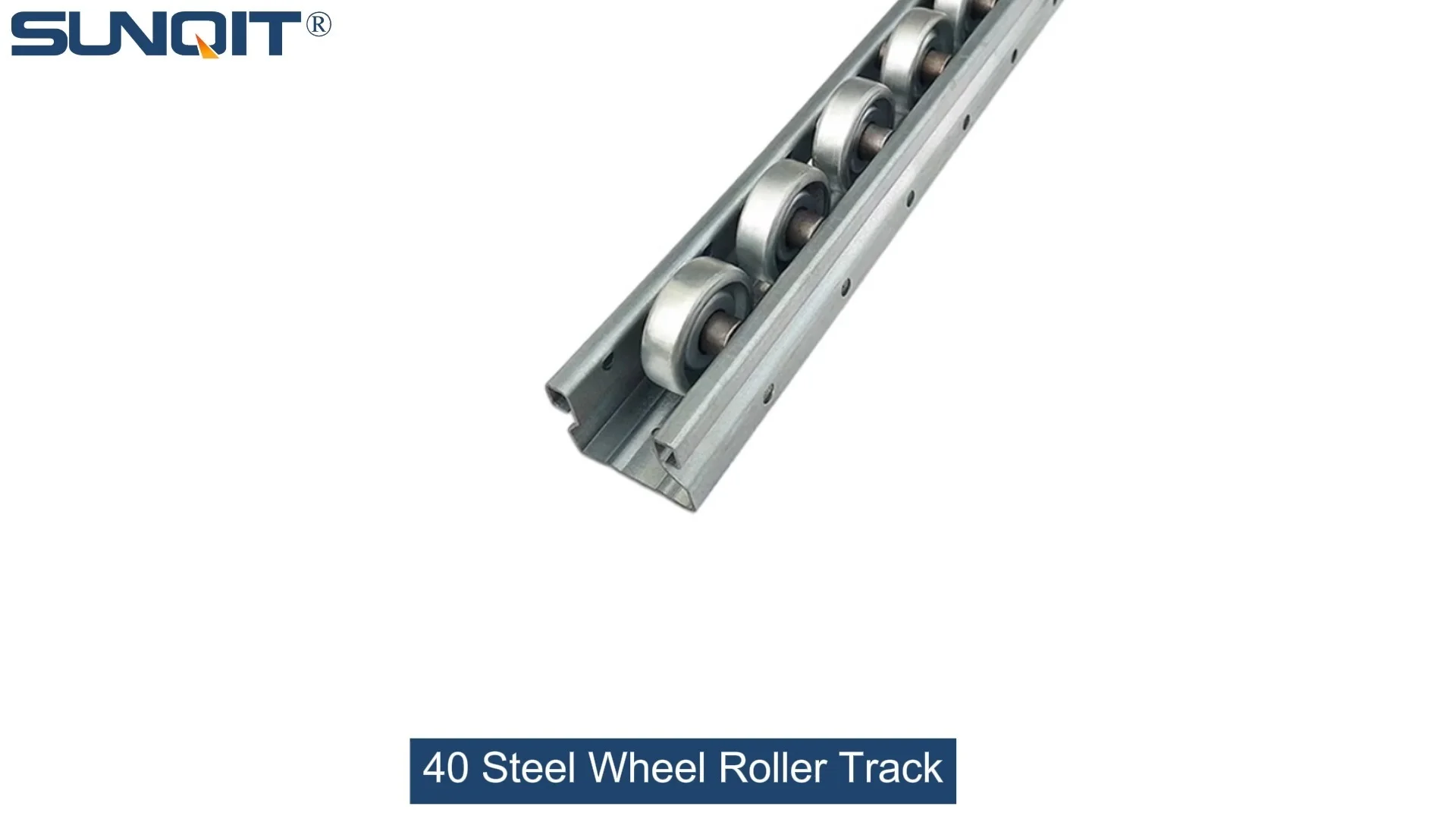
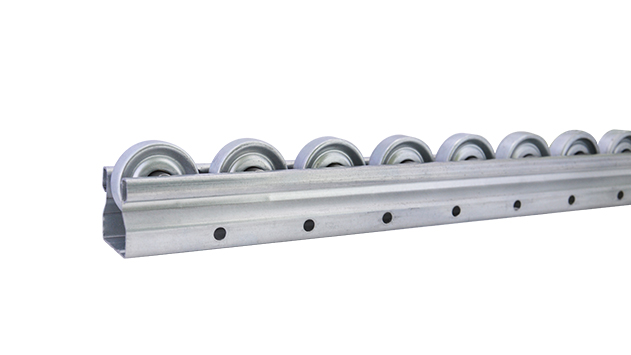
40 Steel Wheel Roller Track
Heavy duty steel wheel roller track with cylindrical steel rollers for use in processing, logistics and materials handling operations. Ideal for transporting goods quickly and easily as well as for installing on shelving to aid in picking operations.
Walk into any modern factory today, and you'll feel the hum of change. Production lines that once chugged along with rigid, one-size-fits-all equipment are now evolving—smoother, more adaptable, and deeply focused on one goal: doing more with less. In an industry where every second counts and every square foot of floor space matters, the difference between falling behind and leading the pack often comes down to the tools we use to build the products of tomorrow. That's where lean manufacturing steps in, and at its heart? Innovations like the 40 Steel Wheel Roller Track—quietly revolutionizing how things get made, one smooth roll at a time.
Gone are the days of clunky conveyors that jam, inflexible workbenches that can't keep up with new product designs, and material racks that turn simple part retrieval into a daily puzzle. Today's manufacturers need systems that bend without breaking, adapt without overhauling, and grow as their business grows. And that's exactly what we're diving into: how the 40 Steel Wheel Roller Track, paired with complementary lean solutions, is rewriting the rulebook for efficiency, sustainability, and adaptability in manufacturing.
The Heart of Modern Assembly: Understanding 40 Steel Wheel Roller Track
Let's start with the star of the show: the 40 Steel Wheel Roller Track. You might be thinking, "It's just a track with wheels—how revolutionary can it be?" But ask any factory floor manager who's made the switch, and they'll tell you: it's not just a tool, it's a game-changer. Picture this: a production line where plastic components for smartphones glide from the storage area to the assembly station, no manual lifting, no bottlenecks, no frustrating delays. That's the reality with 40 Steel Wheel Roller Track.
What Makes 40 Steel Wheel Roller Track Stand Out?
First, it's all in the details. The "40" refers to the track's width, optimized to balance load capacity with space efficiency—perfect for both small parts (like circuit boards) and larger components (think automotive sensors). The steel wheels? They're precision-engineered to reduce friction, so even when fully loaded, materials move with minimal effort. But what really sets it apart is flexibility. Unlike traditional fixed conveyors that require heavy machinery to reconfigure, this track snaps into place with simple connectors, letting teams rearrange workflows in hours, not days.
| Feature | Traditional Rigid Conveyors | 40 Steel Wheel Roller Track |
|---|---|---|
| Installation Time | Weeks (requires specialized labor) | Hours (basic tools, on-site team) |
| Adaptability | Fixed path—hard to modify | Reconfigurable; adjust for new products easily |
| Maintenance | Costly repairs; entire line may stop | Modular parts—replace wheels/sections without downtime |
| Noise Level | Loud, constant hum | Quiet operation (smooth-rolling steel wheels) |
Engineering Excellence: Materials and Design
The magic isn't just in the movement—it's in the durability. Made from high-grade steel, the track withstands the wear and tear of 24/7 operations, whether it's in a bustling automotive plant or a precision-focused medical device workshop. The wheels themselves are treated to resist corrosion, ensuring they stay smooth even in environments with coolants or cleaning agents. And here's a detail that matters to anyone watching the bottom line: the track's modular design means you only replace what breaks. No more scrapping an entire conveyor because of one faulty section.
Beyond the Track: Complementary Innovations Shaping Production Lines
A great track is just the start. To truly transform a factory, you need a ecosystem of tools that work together seamlessly. Think of it like a symphony: the 40 Steel Wheel Roller Track is the melody, but the lean pipe workbenches, flow racks, and conveyors are the harmony that makes the whole piece sing. Let's break down how these innovations complement each other.
Lean Pipe Workbenches: Where Precision Meets Flexibility
Ever watched an assembly worker stretch, reach, or fumble for a tool? That's wasted time—and in manufacturing, wasted time is wasted money. Enter the lean pipe workbench: a workstation built around the way people actually work. Made from lightweight yet sturdy aluminum lean pipes and joints, these benches are customizable down to the inch. Need a shelf for screws? Add it. A holder for a soldering iron? Done. An ESD mat to protect sensitive electronics? Consider it included.
What's brilliant is how they integrate with the 40 Steel Wheel Roller Track. Imagine a workbench positioned right next to the track: parts roll in smoothly, land within arm's reach of the assembler, and finished components roll out—no more walking back and forth to fetch materials. In a 3C assembly line we worked with last year, this setup cut down on worker movement by 40%, slashing assembly time for each smartphone by nearly 2 minutes. Multiply that by thousands of units, and the impact speaks for itself.
Flow Racks: Streamlining Material Handling from Storage to Assembly
Let's backtrack a step: before parts even reach the roller track, they're sitting in storage. Traditional warehouses often mean workers digging through bins, hunting for the right component, or overstocking to avoid shortages. Flow racks solve this by turning storage into a "first-in, first-out" system. Tilted shelves with roller tracks let materials slide forward as they're used, so the next part is always at the front—no digging, no guessing, no delays.
Pair a flow rack with the 40 Steel Wheel Roller Track, and you've got a material handling dream team. At a medical device facility in California, we installed flow racks near their cleanroom entrance, loaded with sterilized parts. As soon as a part was taken, the next one rolled forward, and when the rack needed restocking, the 40 Steel Wheel Track carried bins from the warehouse directly to the rack—all without human intervention. The result? A 35% reduction in stockouts and a 25% faster transition from storage to production.
Conveyors: The Silent Workhorses of Continuous Production
Not every part is small enough for a roller track, and not every production line is a straight shot. That's where conveyors come in—especially when they're designed with the same lean principles as the 40 Steel Wheel Track. From belt conveyors for delicate circuit boards to chain conveyors for heavier automotive parts, these systems keep production moving 24/7, even when workers are off the clock.
The key here is adaptability. A traditional conveyor might only handle one type of product, but modern lean conveyors adjust—speed up for high-demand items, slow down for precision work, or even change direction with a quick reconfiguration. At an appliance manufacturer in Texas, they used to have separate conveyors for refrigerators and ovens. By switching to a modular conveyor system, they now use the same line for both, saving 2,000 square feet of floor space and cutting energy costs by 18%.
Tailored Solutions: Lean Systems That Grow with Your Business
Here's the truth about manufacturing: no two factories are the same. A 3C plant churning out smartphones has different needs than a medical device maker producing surgical tools. That's why "one-size-fits-all" systems never work. The best lean solutions are custom-built—designed around your products, your workflows, and your goals. Let's look at how this plays out in real life.
Case Study: 3C Assembly Line Transformation
A leading 3C manufacturer approached us with a problem: their production lines were struggling to keep up with rapid product launches. Every time they introduced a new smartphone model, they had to shut down lines for days to retool workbenches and conveyors. By the time they were back up, competitors were already shipping similar models.
Our solution? A fully modular system centered on 40 Steel Wheel Roller Tracks, lean pipe workbenches, and flow racks. We designed workbenches with quick-release joints, so they could be reconfigured in under an hour. The roller track connected each workstation, with detachable sections that could be added or removed as needed. Flow racks stored components for multiple models, with color-coded bins to prevent mix-ups. Within three months, their line changeover time dropped from 3 days to 4 hours. They launched two more models that year—and their market share grew by 12%.
Case Study: Medical Device Manufacturing Efficiency Boost
Medical device manufacturing is all about precision and compliance. A client in this space was struggling with two issues: ESD (electrostatic discharge) damage to sensitive components and inefficient material flow in their cleanroom. Their old workbenches weren't ESD-safe, and workers were spending too much time moving parts between stations.
We started with ESD workbenches—fitted with conductive mats and grounded frames to protect components. Then, we added 40 Steel Wheel Roller Tracks with ESD-safe wheels, connecting the workbenches in a U-shape. Finally, we installed flow racks outside the cleanroom, loaded with pre-sterilized parts that rolled directly into the room via the track. The result? Zero ESD-related defects in six months and a 30% increase in daily production volume. "It's like night and day," their production manager told us. "Our team can focus on building quality devices, not fighting the tools."
| Industry | Key Challenge | Lean Solution | Outcome |
|---|---|---|---|
| 3C Assembly | Slow line changeover for new products | Modular 40 Steel Wheel Roller Track + Lean Pipe Workbenches | Changeover time from 3 days → 4 hours; 12% market share growth |
| Medical Devices | ESD damage + inefficient material flow | ESD Workstations + 40 Steel Wheel Roller Track + Flow Racks | 0 ESD defects; 30% higher daily production |
| Automotive Parts | Heavy component handling injuries | Chain Conveyors + Flow Racks | 90% reduction in manual lifting; 50% fewer workplace injuries |

The Future Landscape: Sustainability and Adaptability in Manufacturing
If there's one trend shaping manufacturing more than any other, it's sustainability. Customers want eco-friendly products, regulators are cracking down on waste, and businesses are realizing that "green" and "profitable" aren't opposites—they're partners. Lean systems like the 40 Steel Wheel Roller Track are leading this charge, thanks to two key principles: reusability and adaptability.
Reusability and Circular Economy in Lean Systems
Traditional manufacturing equipment is often a "use once, then scrap" proposition. A conveyor that works for a 2023 model might be obsolete by 2025, ending up in a landfill. Lean systems, by contrast, are built to be reused. Aluminum lean pipes, steel roller tracks, and modular joints can be disassembled, reconfigured, and repurposed for new lines, new products, or even new factories.
Take the 40 Steel Wheel Roller Track, for example. When a client in Michigan upgraded their production line last year, instead of scrapping their old track, they sent it to another facility in Mexico, where we reassembled it into a new system. The cost? 60% less than buying new. And because steel and aluminum are infinitely recyclable, even when a component finally wears out, it doesn't become waste—it becomes raw material for something new.
Smart Manufacturing Integration: IoT and Roller Track Innovations
The future isn't just about sustainability—it's about intelligence. Imagine a 40 Steel Wheel Roller Track that "talks" to your other systems: sensors that track how many parts are moving, alerting you when stock is low; IoT-connected wheels that monitor wear and tear, scheduling maintenance before a breakdown; AI that analyzes flow data to suggest workflow tweaks for even higher efficiency.
This isn't science fiction. We're already testing smart roller tracks with clients, and the results are promising. At a computer peripheral factory in Taiwan, sensors on their 40 Steel Wheel Track detected a slowdown in part flow, traced it to a misaligned wheel, and sent an alert to maintenance—all before production was affected. What used to take a full shift of troubleshooting now takes 15 minutes. As smart manufacturing grows, these integrations will become standard, turning lean systems into "thinking" systems that optimize themselves.

Conclusion: Embracing the Future with 40 Steel Wheel Roller Track and Beyond
Manufacturing has always been about progress—finding better, faster, smarter ways to build the things that power our world. Today, that progress is driven by lean innovations like the 40 Steel Wheel Roller Track, lean pipe workbenches, flow racks, and conveyors. These aren't just tools; they're partners in growth—helping factories adapt to change, reduce waste, and build products with purpose.
The future of manufacturing isn't about replacing humans with machines. It's about giving humans the right machines—tools that make their work easier, safer, and more fulfilling. When a worker doesn't have to lift heavy parts, when a line can reconfigure in hours instead of weeks, when waste is minimized and efficiency is maximized—that's when manufacturing truly thrives.
So whether you're running a small workshop or a global production facility, the question isn't "Do I need lean systems?" It's "How soon can I start?" Because in the end, the future belongs to those who build it—one smooth roll, one smart adjustment, one innovative solution at a time.