- Company Articles
- Industry articles
- Industry standards
- Future-Proofing Your Facility with 2020 EU Standard Aluminum Profile Upgrades

Future-Proofing Your Facility with 2020 EU Standard Aluminum Profile Upgrades
Related Product
2020 EU Standard Aluminum Profile
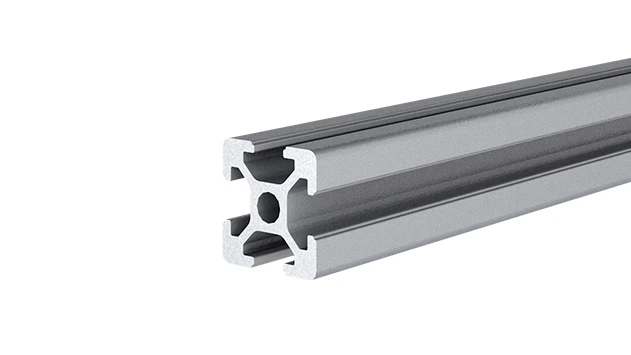
2020 is a 2.00 x 2.00CM fractional 20 series square extrusion T-slot profile with four open T-slots, one on each 2.00 face. The profile has align-a-grooves to assist in aligning connecting profiles.
Let's start with a scenario many facility managers know all too well: You've just wrapped up a quarterly review, and the notes are clear. Your production floor is struggling to keep up with shifting demands—custom orders are on the rise, team sizes fluctuate, and that "temporary" workaround for the packaging station? It's been permanent for six months. The problem? Your current setup feels like trying to fit a square peg into a round hole. Rigid workbenches, fixed shelving, and clunky material racks weren't built for today's fast-paced, ever-changing workflows. So, what's the solution? Enter 2020 EU standard aluminum profile upgrades—your facility's ticket to flexibility, durability, and staying ahead of the curve.
In this article, we're diving into how these unassuming aluminum extrusion profiles, paired with the right aluminum profile accessories, can transform your space from a static environment into a dynamic, future-ready hub. Whether you're running a small workshop or a large-scale manufacturing plant, the goal is simple: create a facility that adapts as quickly as your business does. And that's exactly where 2020 EU standard aluminum profiles shine.
The Challenge: Why "Good Enough" Setup Isn't Enough Anymore
For years, many facilities relied on traditional materials—wooden workbenches that warp, steel racks that rust, and fixed conveyor systems that can't keep up with new product lines. These setups might work for a while, but they come with hidden costs: downtime when reconfiguring, safety risks from worn parts, and the constant stress of knowing your space isn't built to scale. Let's say you land a big order that requires a new assembly line layout. With a steel frame system, you're looking at days of (demolition), welding, and re-painting—all while production grinds to a halt. With wooden workbenches? They might not even support the weight of new equipment, leading to cracks or instability.
Then there's the issue of employee satisfaction. A workstation that's too low, too cramped, or lacks proper storage isn't just inefficient—it's demotivating. When your team spends more time adjusting to a rigid setup than focusing on their tasks, morale dips, and so does productivity. And in today's competitive market, losing even a fraction of efficiency can mean falling behind.
The Solution: 2020 EU Standard Aluminum Profiles
So, what makes 2020 EU standard aluminum extrusion profiles different? Let's break it down. These profiles are engineered with precision, designed to meet strict European quality standards that prioritize durability, compatibility, and adaptability. Unlike generic aluminum or steel, they're built with a T-slot design—those clever grooves running along the length—that makes attaching accessories a breeze. No welding, no drilling, no hassle. Just slide in a bracket, tighten a screw, and you're done. That means reconfiguring a workbench or adding a shelf takes minutes, not days.
But it's not just about the profiles themselves—it's the ecosystem of aluminum profile accessories that truly unlock their potential. From corner brackets and hinges to casters and panel mounts, these small but mighty components turn basic aluminum extrusion profiles into customized solutions. Need a mobile workstation? Add lockable casters. Want to integrate a tool rail above your assembly line? Snap on a bracket. The possibilities are nearly endless, and because everything is standardized, you never have to worry about parts not fitting together.
Let's take a real-world example. Imagine a electronics manufacturer that previously used fixed steel workbenches. Their team often struggled with limited space for tools, and repositioning the benches for large orders required a forklift and a full afternoon. After upgrading to 2020 EU standard aluminum profile workbenches, they added adjustable shelves, tool hooks, and even integrated ESD (electrostatic discharge) mats to protect sensitive components. Best of all, when a rush order came in, they reconfigured three workstations into a temporary assembly line in under an hour—no heavy lifting, no downtime. The team noticed the difference immediately: "It's like working with a space that actually listens to what we need," one supervisor noted.

Traditional vs. Aluminum: A Clear Winner
Still on the fence? Let's put traditional materials head-to-head with 2020 EU standard aluminum extrusion profiles. The table below breaks down the key factors that matter most for your facility:
| Factor | Traditional Materials (Wood/Steel) | 2020 EU Standard Aluminum Profiles |
|---|---|---|
| Flexibility | Fixed layouts; requires tools/welding to modify | Tool-free reconfiguration with T-slot accessories |
| Durability | Wood warps; steel rusts; prone to damage over time | Corrosion-resistant, lightweight yet strong; withstands heavy use |
| Cost Over Time | Low upfront cost, but high replacement/modification expenses | Slightly higher initial investment, but lasts decades with minimal upkeep |
| Sustainability | Wood requires deforestation; steel production is energy-intensive | Recyclable, energy-efficient production, and reusable components |
| Safety | Sharp edges on steel; splinters in wood; heavy and hard to move | Smooth edges, lightweight design, and secure locking accessories |
As you can see, while traditional materials might seem cheaper upfront, the long-term benefits of aluminum profiles—from reduced downtime to lower replacement costs—make them a smarter investment. And when you factor in the ability to adapt to new technologies, product lines, or safety regulations, they're not just an upgrade—they're a way to future-proof your facility.
Beyond the Basics: Real-World Applications
So, how exactly can you use 2020 EU standard aluminum extrusion profiles in your facility? Let's explore some of the most impactful applications, all made possible by the right aluminum profile accessories.
1. Workstations Built for Your Team
A workbench isn't just a table—it's the center of your team's day. With aluminum profiles, you can design workstations that fit your employees, not the other way around. Need a height-adjustable bench for ergonomic comfort? Use telescopic profiles and locking levers. Want to add a monitor arm, tool tray, or ESD mat? T-slot accessories make it easy. Even better, if an employee transfers departments or your needs change, you can reconfigure the bench in minutes. For example, a manufacturing plant in Germany recently upgraded to aluminum workbenches and saw a 22% reduction in reported ergonomic issues—proof that small changes in setup can make a big difference.
2. Flow Racks That Keep Pace with Production
Material handling is the backbone of any facility, and flow racks are critical for keeping parts moving smoothly. Traditional steel flow racks are heavy and fixed, making it hard to adjust for different product sizes. Aluminum flow racks, on the other hand, use lightweight roller tracks (easily attached with aluminum profile accessories) that can be spaced, angled, or extended as needed. Whether you're moving small electronics or larger components, you can customize the rack to ensure items glide into place without jams or delays. And when you introduce a new product line with different dimensions? Just swap out the roller tracks—no need to buy a whole new rack.
3. Lean Systems for Streamlined Operations
Lean manufacturing isn't just a buzzword—it's about eliminating waste and maximizing value. 2020 EU standard aluminum profiles are a lean manager's dream. From kanban boards and visual management systems to pull stations and error-proofing fixtures, these profiles let you build the exact tools your team needs to stay efficient. For instance, a automotive parts supplier used aluminum profiles to create a custom kitting station, where parts are organized by order and delivered directly to the assembly line. The result? A 15% reduction in picking errors and a 30% faster order fulfillment time.
4. Mobile Solutions for On-the-Go Flexibility
Not everything in your facility needs to stay in one place. Aluminum profiles paired with heavy-duty casters (another key aluminum profile accessory) create mobile workstations, tool carts, and material transporters that can move where they're needed most. Imagine a maintenance team with a rolling cart equipped with all their tools, parts, and a fold-down work surface—no more running back and forth to the shop. Or a warehouse that uses mobile flow racks to bring materials directly to the packing station during peak hours. The mobility doesn't just save time; it turns your entire facility into a flexible, adaptable space.
Why 2020 EU Standard? Quality You Can Trust
You might be wondering: Why specifically the 2020 EU standard? After all, there are plenty of aluminum profiles on the market. The answer lies in the details. EU standards are known for their strict quality control, ensuring that every profile meets consistent specifications for strength, precision, and compatibility. That means when you buy a 2020 EU standard profile, you know it will fit with any other EU-standard accessory—no guesswork, no mismatched parts.
These profiles are also tested for durability in harsh industrial environments, from extreme temperatures to heavy vibration. Unlike cheaper alternatives that might bend, crack, or corrode over time, EU-standard aluminum extrusion profiles are built to last. And because they're made with high-grade aluminum, they're lightweight without sacrificing strength—so you get the best of both worlds: easy maneuverability and long-term reliability.
Another key benefit? Sustainability. EU standards prioritize eco-friendly production processes, from using recycled aluminum to reducing energy consumption. For facilities aiming to reduce their carbon footprint, this isn't just a nice-to-have—it's a requirement. And since aluminum is 100% recyclable, even at the end of its life, your profiles won't end up in a landfill. They'll be melted down and turned into new products, closing the loop on sustainability.
Ready to Future-Proof Your Facility?
The world of manufacturing and warehousing is changing fast. New technologies, shifting consumer demands, and evolving safety regulations mean that the facility that works today might not work tomorrow. 2020 EU standard aluminum extrusion profiles aren't just a way to keep up—they're a way to get ahead. By investing in a system that's flexible, durable, and built to adapt, you're not just upgrading your workspace; you're investing in your team, your productivity, and your future.
So, what's the first step? Start small. Maybe upgrade one workbench or flow rack and see how it transforms that corner of your facility. Chances are, your team will notice the difference immediately—and you'll start wondering why you didn't make the switch sooner. From there, the possibilities are endless. Add mobile carts, expand with new profiles, or design a fully customized lean system that fits your unique needs. With aluminum profile accessories, the only limit is your imagination.
Future-proofing your facility isn't about predicting the future—it's about building a space that can handle whatever the future throws at it. And with 2020 EU standard aluminum extrusion profiles, you're not just building a workspace; you're building a foundation for success. So, take that first step. Your team, your productivity, and your bottom line will thank you.