- Company Articles
- Industry articles
- Industry standards
- Future Trends: 2040 National Standard Profile Innovations in Smart Factories

Future Trends: 2040 National Standard Profile Innovations in Smart Factories
Related Product
2040 National Standard Profile
45° external bending joint, used for 45° external connection of two aluminum pipes.
Walk into any cutting-edge smart factory today, and you'll be struck by the rhythm of it all: robotic arms gliding with precision, materials flowing seamlessly from one workstation to the next, and workers collaborating with technology to turn ideas into products faster than ever. Behind this orchestrated efficiency lies an unsung hero—the humble yet revolutionary structural profiles that form the backbone of workbenches, flow racks, conveyors, and more. Among these, the 2040 National Standard Profile has emerged as a game-changer, redefining how smart factories adapt, scale, and thrive. Let's dive into how this innovation is reshaping the future of manufacturing.
From Rigid to Agile: The Evolution of Factory Profiles
Not long ago, factory floors were dominated by heavy, fixed structures. Steel pipes welded into workbenches that stayed put for decades, wooden shelves that warped under weight, and conveyor systems that required a team of engineers to reconfigure. These setups worked for mass production of the same product day in and day out, but in an era where consumer demands shift overnight and customization is king, rigidity became a liability.
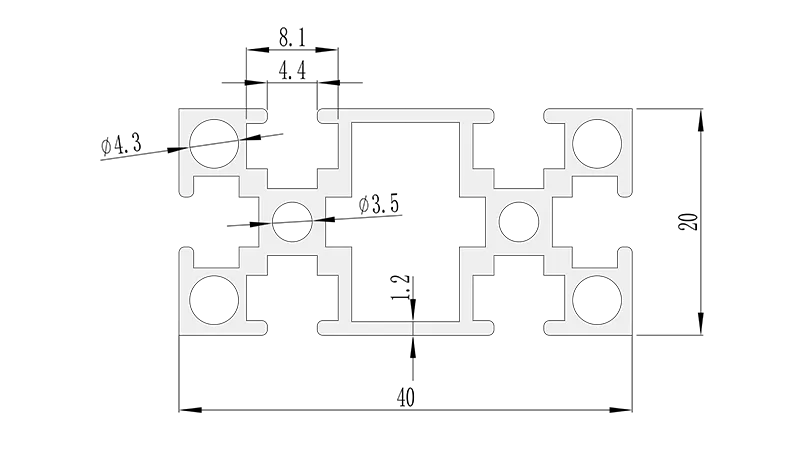
Enter aluminum profiles. Lighter than steel and resistant to corrosion, they offered more flexibility, but early versions still had limitations. Many were designed with proprietary slots or non-standard dimensions, making it hard to mix and match accessories from different suppliers. Then came national standardization, and with it, the 2040 National Standard Profile—a 20mm x 40mm aluminum extrusion profile that balances size, strength, and adaptability to meet the unique needs of smart factories.
What Makes 2040 National Standard Profile Stand Out?
At first glance, a 2040 profile might look like just another piece of aluminum. But its true magic lies in the details—from the material it's made of to the precision engineering that goes into every meter. Let's break down its key attributes:
1. Aluminum Extrusion: Strength Without the Bulk
Unlike older profiles cut from solid blocks, the 2040 National Standard Profile is crafted using aluminum extrusion. Picture this: molten aluminum is heated to a precise temperature, then pushed through a custom die that shapes it into the exact 20x40mm cross-section. This process creates a profile with a consistent structure, intricate internal ribs for added strength, and a smooth surface finish. The result? A profile that's 30% lighter than steel but can still support heavy loads—think stacks of circuit boards, power tools, or even small robotic components—without bending or warping.
2. The Perfect Size for Smart Factory Dynamics
Why 20mm x 40mm? It's a sweet spot. Too narrow, and the profile might lack stability for larger workstations; too wide, and it becomes bulky, limiting how tightly components can be packed in space-constrained factories. The 20x40mm dimensions strike a balance, making it ideal for everything from compact assembly tables to multi-tiered flow racks. It's narrow enough to fit into tight corners yet wide enough to accommodate the T-slots that make customization possible.
3. Corrosion Resistance: Built to Last in Harsh Environments
Smart factories aren't just clean rooms—many handle chemicals, coolants, or humid conditions that would rust steel profiles in months. The 2040 National Standard Profile, made from high-grade aluminum, naturally resists corrosion. For extra protection, most suppliers offer anodized finishes that create a hard, protective layer, ensuring the profile stays looking and performing like new even after years of heavy use.
Design Innovations Driving Smart Factory Efficiency
Beyond its material and size, the 2040 National Standard Profile's design is where it truly outshines predecessors. Every groove, slot, and curve is engineered with smart factory needs in mind—flexibility, speed, and integration.
T-Slot Technology: The Key to Modularity
At the heart of the 2040 profile is its T-slot design—a long, narrow channel running the length of the profile, shaped like a "T." This slot isn't just for show; it's a universal interface for aluminum profile accessories. Need to add a shelf? Slide a bracket into the T-slot and tighten a bolt. Want to attach a light bar over a workstation? Clip a connector into place. Unlike traditional profiles that required drilling holes or welding, the T-slot lets workers reconfigure setups in minutes, not days. It's like building with advanced Lego bricks—only for factories.
Precision Engineering for Seamless Integration
Smart factories rely on precision—even a millimeter of misalignment can throw off a conveyor belt or jam a robotic arm. The 2040 National Standard Profile is manufactured to tight tolerances, ensuring every piece is identical in size and shape. This consistency means profiles from different batches or suppliers fit together perfectly, reducing assembly time and minimizing errors. Whether you're building a single workbench or a 50-meter production line, you can trust the 2040 profile to align flawlessly.
Thermal Management: Keeping Cool in High-Tech Environments
Modern factories are packed with electronics—sensors, controllers, and smart devices that generate heat. Over time, excess heat can degrade performance or shorten equipment life. The 2040 profile's aluminum construction acts as a natural heat sink, drawing warmth away from sensitive components and dissipating it into the air. Some advanced versions even include internal channels that allow for liquid cooling, making them ideal for high-power applications like battery production or semiconductor manufacturing.
Aluminum Profile Accessories: The Unsung Heroes
A profile is only as good as the accessories that bring it to life. The 2040 National Standard Profile's ecosystem of aluminum profile accessories is what turns a simple piece of aluminum into a fully functional workstation, flow rack, or conveyor system. Let's spotlight a few standouts:
Connectors: The Glue That Holds It All Together
Connectors are the workhorses of the 2040 system. From 90-degree angle brackets for corners to T-junctions for branching off a main frame, these accessories lock into the T-slots with remarkable strength. Many use a cam-lock design—twist a handle, and the connector tightens against the slot, creating a bond that can support hundreds of kilograms. Best of all, they're reusable: take apart a workstation on Friday, and reassemble it as a material cart on Monday with the same connectors.
End Caps: Safety Meets Aesthetics
Sharp edges on exposed profile ends are a safety hazard in busy factories. 2040 profile end caps snap into place, covering these edges with a smooth, durable finish. They're not just protective, though—available in colors like black, white, or gray, they add a polished look to workstations, aligning with the clean, modern aesthetic of smart factories.
Brackets and Shelf Supports: Customization Without Compromise
Need a shelf that tilts for easy access to parts? Or a bracket to mount a monitor above a workstation? These accessories slide into the T-slots and lock in place, no tools required. Some even have built-in adjustment mechanisms, letting workers tweak angles or heights on the fly to reduce fatigue or improve ergonomics.
Integrating 2040 Profiles with Lean Systems
Smart factories aren't just about technology—they're about lean principles: eliminating waste, optimizing workflows, and adapting to change. The 2040 National Standard Profile is a lean manufacturer's dream, enabling the flexibility to implement these principles in ways old profiles never could.
Flow Racks: Streamlining Material Movement
Flow racks are a staple of lean manufacturing, using gravity to feed materials to workers, reducing the need for manual lifting. Traditional flow racks were often fixed, built to hold one type of container. With 2040 profiles, flow racks become adaptable. Want to switch from 12-inch to 18-inch bins? Simply adjust the shelf height using T-slot brackets. Need to add a second level for smaller parts? Clip on new crossbars in minutes. This adaptability cuts down on "dead space" and ensures materials are always within arm's reach, slashing wasted motion.
Quick Changeovers: From Batch Production to Mass Customization
Mass customization—producing small batches of unique products—requires factories to switch setups quickly. With 2040 profiles, changeover time drops dramatically. For example, a smartphone assembly line might need to switch from assembling Model A to Model B, which has different component sizes. Instead of rebuilding the entire workstation, workers can swap out brackets, adjust shelf heights, and reposition tools using T-slot accessories—all in under an hour. This agility lets factories take on smaller, more varied orders without sacrificing efficiency.
Waste Reduction: Building Only What You Need
Traditional profiles often came in fixed lengths, leading to cutting waste—if you needed a 5-foot section but only had 10-foot pieces, half the material went unused. The 2040 National Standard Profile is available in customizable lengths, so factories order exactly what they need. Plus, since it's modular, old profiles can be repurposed instead of scrapped. A worn-out workbench, for example, can be disassembled, and its profiles reused to build a new material trolley—keeping waste out of landfills and saving costs.
Traditional vs. 2040 National Standard Profile: A Comparison
| Feature | Traditional Steel Profiles | Older Aluminum Profiles | 2040 National Standard Profile (Aluminum Extrusion) |
|---|---|---|---|
| Material | Mild steel | Low-grade aluminum | High-grade aluminum alloy (6063-T5) |
| Weight (kg/m) | 3.5–4.5 | 1.8–2.2 | 1.2–1.5 |
| Tensile Strength (MPa) | 370–450 | 180–220 | 240–280 |
| Modularity | Low (welded joints, hard to reconfigure) | Medium (limited accessory compatibility) | High (T-slot design, universal accessories) |
| Corrosion Resistance | Low (prone to rust without coating) | Medium (basic aluminum, no anodization) | High (anodized finish, natural aluminum resistance) |
| Setup Time (per workstation) | 8–12 hours (welding, drilling) | 3–5 hours (bolting, limited adjustment) | 1–2 hours (tool-free T-slot assembly) |
Real-World Impact: Case Studies in Smart Manufacturing
Numbers tell part of the story, but real-world examples show how 2040 National Standard Profile transforms operations. Let's look at two factories that embraced this innovation.
Case Study 1: Electronics Manufacturer Cuts Changeover Time by 75%
A mid-sized electronics company producing circuit boards for medical devices struggled with long changeover times between product models. Their old steel workstations required welding to adjust, taking 8 hours to reconfigure. After switching to 2040 profiles and aluminum profile accessories, they redesigned their workstations to be modular. Now, workers use T-slot brackets to adjust shelf heights, swap out tool holders, and reposition lighting—all in 2 hours or less. The result? They went from running 2 product models per day to 5, boosting revenue by 30% in six months.
Case Study 2: Automotive Supplier Reduces Waste by 40%
An automotive parts supplier was drowning in waste—scrapped steel from cutting profiles to length, unused space in fixed flow racks, and downtime from broken equipment. They replaced all steel profiles with 2040 National Standard Profile. By ordering custom lengths, they cut material waste by 25%. Modular flow racks adapted to different part sizes, reducing unused space by 30%. And since aluminum is lighter, their material trolleys were easier to move, slashing worker fatigue and injury rates. Within a year, total waste dropped by 40%, and employee satisfaction scores rose by 25%.
Future Horizons: Where 2040 Profiles Are Headed Next
The 2040 National Standard Profile is already a star in smart factories, but its evolution is far from over. Here's what's on the horizon:
IoT Integration: Smart Profiles for Smart Factories
Imagine a profile that can "talk"—sensors embedded in the T-slots could monitor temperature, vibration, or weight, sending data to factory management systems. If a flow rack is overloaded, it could alert workers before it collapses. If a workstation vibrates excessively, maintenance could be scheduled proactively. Early prototypes of "smart 2040 profiles" are already in testing, promising to add a new layer of intelligence to factory floors.
Sustainability: Recycled Aluminum and Carbon-Neutral Production
As factories aim for net-zero goals, suppliers are exploring recycled aluminum for 2040 profiles. Recycled aluminum uses 95% less energy to produce than virgin aluminum, without sacrificing strength. Some suppliers are even offsetting remaining emissions, offering "carbon-neutral 2040 profiles" to eco-conscious manufacturers.
3D-Printed Accessories: On-Demand Customization
While 2040 profiles themselves are mass-produced, their accessories could soon be 3D-printed on-site. Factories with 3D printers could design custom brackets or connectors, print them in an hour, and test them immediately. This would eliminate wait times for specialty parts and unlock even more creative workstation designs.
Conclusion: The Backbone of Tomorrow's Factories
The 2040 National Standard Profile isn't just a piece of aluminum—it's a symbol of how smart manufacturing is evolving. By combining lightweight strength, modular design, and a robust ecosystem of aluminum profile accessories, it empowers factories to be agile, efficient, and sustainable. Whether it's reducing changeover times, cutting waste, or enabling mass customization, this innovation is quietly revolutionizing how products are made.
As smart factories continue to grow, the 2040 profile will only become more integral. It's a reminder that sometimes, the most impactful innovations aren't flashy robots or AI systems—they're the foundational tools that make those technologies possible. So the next time you walk through a smart factory, take a closer look at the workbenches and flow racks. Chances are, you'll see the 2040 National Standard Profile hard at work—building the future, one T-slot at a time.