- Company Articles
- Industry articles
- Industry standards
- Future Trends: 3030a EU Standard Aluminum Profile in Smart Manufacturing

Future Trends: 3030a EU Standard Aluminum Profile in Smart Manufacturing
Related Product
3030A EU Standard Aluminum Profile
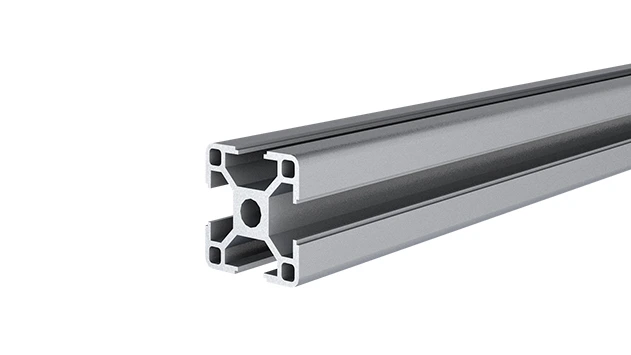
3030 is a 3.00 x 3.00CM fractional 30 series square extrusion T-slot profile with four open T-slots, each side with 3.00cm face. The profile has align-a-grooves to assist in aligning connecting profiles.
Walk into any modern manufacturing facility today, and you'll notice a quiet revolution unfolding. The clunky, fixed production lines of yesteryear are giving way to agile, adaptable workspaces where change is not just possible—it's expected. As smart manufacturing takes hold, driven by Industry 4.0 technologies like IoT sensors, AI-driven analytics, and automated robotics, the infrastructure that supports these operations is undergoing a transformation of its own. At the heart of this shift lies a deceptively simple component: the 3030a EU Standard Aluminum Profile. More than just a piece of metal, this extrusion is becoming the backbone of flexible, future-ready factories. Let's dive into why this particular aluminum extrusion profile is capturing the attention of manufacturers worldwide, and how it's shaping the next era of smart production.
What Makes the 3030a EU Standard Aluminum Profile Unique?
First, let's get to know the star of the show. The 3030a EU Standard Aluminum Profile is a type of aluminum extrusion profile—meaning it's formed by pushing heated aluminum through a die to create a consistent, cross-sectional shape. Its name gives away its key dimension: 30mm by 30mm, a size that strikes a sweet spot between strength and versatility. But what really sets it apart is its adherence to EU standards, which ensure uniformity in tolerances, material quality, and compatibility across suppliers. This standardization is a game-changer for manufacturers operating in global supply chains, where parts from different regions need to fit together seamlessly.
Unlike traditional steel frames or even non-standard aluminum profiles, the 3030a is designed with modularity in mind. Its T-slot design—longitudinal grooves running along its length—allows for easy attachment of aluminum profile accessories like brackets, connectors, panels, and sensors. Think of it as the industrial equivalent of a (Lego) set for adults: with the right accessories, you can build, disassemble, and reconfigure structures in hours, not weeks. This flexibility is critical in smart manufacturing, where production lines often need to switch between products or scale up (or down) on short notice.
The 3030a's Role in Building Smart Factories
Smart manufacturing isn't just about adding robots or software to old processes—it's about reimagining how work gets done. Factories today need to be data-driven, energy-efficient, and capable of rapid iteration. The 3030a EU Standard Aluminum Profile supports all three goals, acting as a physical platform that integrates with digital tools.
Take data collection, for example. In a smart factory, every piece of equipment generates data—from machine uptime to product quality metrics. The 3030a's T-slots make it easy to mount IoT sensors, cameras, and barcode scanners directly onto workbenches, material racks, or conveyor systems. No more drilling holes or welding brackets; just slide a sensor bracket into the T-slot, tighten a screw, and you're ready to collect data. This adaptability reduces the barrier to implementing smart technologies, especially for small and medium-sized manufacturers (SMEs) with limited engineering resources.
Energy efficiency is another area where the 3030a shines. Aluminum is inherently lightweight—about one-third the weight of steel—so structures built with 3030a require less energy to move or reposition. This is particularly valuable for mobile workstations or automated guided vehicle (AGV) tracks, where reducing weight translates to lower power consumption. Additionally, aluminum's natural corrosion resistance means these structures last longer with minimal maintenance, reducing the need for frequent replacements and cutting down on waste.

Beyond Flexibility: Key Benefits for Manufacturers
While flexibility is often the first benefit cited, the 3030a offers a host of advantages that resonate with manufacturers' bottom lines and long-term goals. Let's break them down:
- Cost Savings Over Time: Initially, aluminum profiles may cost more than steel, but their modularity reduces installation and reconfiguration costs. A study by the European Aluminum Association found that manufacturers using modular aluminum systems saved up to 30% on retooling expenses compared to fixed steel setups. When a production line needs to change, there's no need to cut, weld, or repaint—simply disassemble the 3030a structure and rebuild it elsewhere.
- Support for Lean Systems: Lean manufacturing principles, focused on eliminating waste and streamlining workflows, are a cornerstone of smart factories. The 3030a aligns perfectly with this ethos. For example, a lean system might require a workbench that can be adjusted to ergonomic heights for different operators, or a material rack that adapts to varying batch sizes. With 3030a and its compatible accessories, these adjustments are straightforward. No more custom-building furniture for every new product; the same base structure can be modified with new brackets or shelves as needed.
- Sustainability Credentials: As brands and regulators push for greener operations, aluminum's recyclability is a major plus. The 3030a is made from high-grade aluminum, which can be recycled repeatedly without losing quality. Many suppliers also use recycled aluminum in their extrusion processes, reducing the carbon footprint of production. For manufacturers aiming for net-zero goals, choosing 3030a over non-recyclable materials is a tangible step forward.
Real-World Applications: From Workbenches to Whole Factories
To understand the 3030a's impact, let's look at how it's being used on factory floors today. One of the most common applications is the humble workbench—but not the static, one-size-fits-all kind of the past. Modern 3030a workbenches are customizable hubs where operators assemble products, test equipment, or monitor production data. They might include integrated lighting, tool holders, and even small conveyors (built with 3030a rails) to move parts between stations. Because the profile is lightweight, these workbenches can be mounted on casters for easy repositioning, turning a fixed workspace into a mobile one.
Beyond workbenches, 3030a is transforming material handling. Take material racks, for instance. A traditional steel rack might be designed to hold one type of container, but a 3030a rack can be outfitted with adjustable shelves, dividers, or roller tracks (using, you guessed it, aluminum profile accessories) to accommodate everything from small bins to large pallets. This adaptability is crucial in mixed-production environments, where a single line might produce 10 different products in a day.
Another area is collaborative robot (cobot) stations. Cobots work alongside human operators, and their workspaces need to be safe, flexible, and easy to reconfigure. 3030a frames are often used to build safety cages around cobots, with quick-release panels that allow for maintenance access. The T-slots also let manufacturers mount emergency stop buttons, light curtains, or status indicators directly onto the frame, creating a cohesive, integrated workspace.
The Power of Aluminum Profile Accessories
What truly unlocks the 3030a's potential is its ecosystem of aluminum profile accessories. These small, often overlooked components turn a simple extrusion into a building block for almost any structure. Below is a breakdown of the most essential accessories and how they enhance the 3030a's functionality:
| Accessory Type | Function | Example Use Case |
|---|---|---|
| Angle Brackets | Connect profiles at 90° or 45° angles | Reinforcing corners of a workbench frame |
| T-Slot Nuts & Bolts | Secure accessories to the profile's T-slots | Attaching a monitor arm to a workbench |
| Panel Holders | Mount flat panels (wood, plastic, metal) to profiles | Adding a work surface to a material rack |
| End Caps | Cover exposed ends of profiles for safety and aesthetics | Finishing the edges of a cobot safety cage |
| Linear Motion Slides | Enable smooth sliding of components along the profile | Creating adjustable shelving on a material rack |
The beauty of these accessories is that they're designed to work together. A manufacturer might use angle brackets to build the frame of a workbench, then add panel holders for a wooden top, T-slot nuts to attach a tool organizer, and end caps to tidy up the edges. No special tools are needed—most accessories can be installed with a hex key or a screwdriver—making on-site modifications possible even for operators without advanced technical training.
Case Study: How a Electronics Manufacturer Scaled with 3030a
Let's take a look at a real example. A mid-sized electronics company in Germany, producing circuit boards for automotive clients, recently faced a challenge: their customers were demanding smaller batch sizes with faster turnaround times. Their existing production line, built with fixed steel workbenches and custom racks, couldn't keep up. Changing the line to accommodate a new product took weeks of downtime, eating into profits.
The solution? They replaced their steel infrastructure with 3030a EU Standard Aluminum Profile systems. Over three months, they rebuilt their workbenches, material racks, and testing stations using 3030a and compatible accessories. The results were striking: reconfiguring a production line for a new circuit board now takes just two days instead of two weeks. The company estimates they've reduced downtime by 60% and increased overall production capacity by 25%. Plus, by using recycled aluminum profiles and accessories, they've cut their carbon footprint by 15%—a selling point for eco-conscious automotive clients.
What made this transition successful? The 3030a's modularity meant the company could start small, replacing one workbench at a time, rather than shutting down the entire line. They also leveraged aluminum profile accessories like quick-release brackets and adjustable shelves to make daily adjustments easier for operators, reducing the need for engineering intervention.
Looking Ahead: The Future of 3030a in Smart Manufacturing
As smart manufacturing evolves, the 3030a EU Standard Aluminum Profile is poised to become even more integral. Here are three trends to watch:
- Integration with Digital Twins: Digital twins—virtual replicas of physical systems—are becoming standard in factory planning. 3030a's standardized dimensions make it easy to model in 3D software, allowing manufacturers to design and test new layouts digitally before building them in real life. This reduces trial-and-error and speeds up innovation.
- Smart Accessories: We're already seeing aluminum profile accessories with built-in smart features, like brackets that include RFID tags for inventory tracking or sensors that monitor temperature and vibration. In the future, these "smart accessories" could communicate directly with factory management systems, alerting teams to maintenance needs or optimizing workflows in real time.
- Circular Economy Models: As sustainability becomes a competitive advantage, suppliers are developing take-back programs for 3030a profiles. Instead of scrapping old structures, manufacturers can return used profiles to suppliers, who recycle them into new extrusions. This closed-loop system reduces waste and lowers material costs over time.
Perhaps the most exciting aspect is how the 3030a democratizes smart manufacturing. You don't need to be a multinational corporation with unlimited budgets to adopt flexible, data-driven production. SMEs can start small—with a single 3030a workbench—and scale up as they grow. This accessibility is key to driving innovation across the manufacturing sector, not just at the top.
Conclusion: Building the Factories of Tomorrow, Today
The 3030a EU Standard Aluminum Profile may not grab headlines like AI or robotics, but it's the unsung hero of smart manufacturing. By providing a flexible, sustainable, and cost-effective foundation for factory infrastructure, it empowers manufacturers to adapt, innovate, and thrive in an era of constant change. Whether it's a small workbench in a local workshop or a full-scale production line in a global plant, the 3030a and its ecosystem of aluminum profile accessories are proving that the future of manufacturing isn't just about technology—it's about building spaces that work with people, not against them.
As we look ahead, one thing is clear: the factories of tomorrow will be defined by their ability to change. And with the 3030a EU Standard Aluminum Profile, that change is within reach for every manufacturer willing to embrace it.