- Company Articles
- Industry articles
- Industry standards
- Future Trends: 4040A EU Standard Aluminum Profile Innovations in Lean Production

Future Trends: 4040A EU Standard Aluminum Profile Innovations in Lean Production
Related Product
4040A EU Standard Aluminum Profile
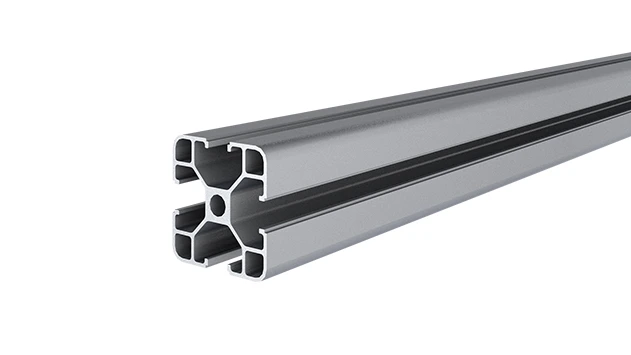
4040A is a 4.00x4.00 CM fractional 40 series square extrusion T-slot profile with four open T-slots, each side with 4.00cm face.
Walk into any modern manufacturing facility today, and you'll likely hear the term "lean production" thrown around. But it's more than just a buzzword—it's the lifeblood of operations that strive to do more with less. Lean production is about trimming waste, streamlining workflows, and empowering teams to adapt quickly to change. And in this fast-paced world, the tools we use to build these lean systems matter just as much as the principles themselves. That's where the 4040A EU Standard Aluminum Profile comes in. This unassuming material is quietly reshaping how manufacturers design, build, and evolve their lean systems, from workbenches to flow racks and beyond. Let's dive into why this aluminum profile is becoming the unsung hero of the next generation of lean manufacturing.
The Evolution of Lean Materials: Why 4040A Stands Out
For decades, lean systems relied heavily on traditional materials like steel pipes and wooden workbenches. These materials were sturdy, sure, but they came with a catch: rigidity. Steel is heavy, making it hard to reconfigure when production needs shift. Wooden structures warp over time and can't withstand the wear and tear of a busy factory floor. And if you needed to adjust a workbench height or add a shelf to a flow rack? You'd likely need a welder or a saw, grinding production to a halt while you made modifications. Enter the 4040A EU Standard Aluminum Profile—a material that's flipping the script on what lean systems can be.
At first glance, the 4040A profile might look like just another metal bar, but its design is genius in its simplicity. It's an extruded aluminum profile with a T-slot design running along its length, which means you can attach accessories—like brackets, shelves, or even wheels—without drilling or welding. This might sound small, but for lean production, it's a game-changer. Suddenly, building a workbench or a flow rack isn't a one-and-done project; it's a flexible, evolving system that grows with your needs.
What really sets 4040A apart, though, is its balance of strength and lightweight. Aluminum is about 30% the weight of steel, so even a fully assembled workbench or material rack is easy for a team to move or reconfigure. But don't let its lightness fool you—this profile is tough. The EU standard ensures consistent quality, with a thickness and structural integrity that can handle heavy loads, whether it's holding tools on a workstation or supporting boxes on a flow rack. And because it's aluminum, it resists corrosion, making it ideal for environments where moisture or chemicals are present—something steel struggles with unless it's heavily coated.
Design Flexibility: Building Lean Systems That Grow With You
One of the core principles of lean production is "just-in-time" manufacturing—producing what you need, when you need it. But how do you apply that principle to the physical systems that support production? Traditional setups force you to overbuild: you might install a massive steel workbench today because you think you'll need the space in a year, only to realize six months later that you need to rearrange the entire line. With 4040A, overbuilding becomes a thing of the past. Its modular design lets you start small and expand as needed, without wasting materials or time.
Let's take workbenches, for example. A standard workbench E (single deck-without caster) built with 4040A can be assembled in under an hour using basic tools—no welding required. But here's the kicker: if your team needs more storage, you can add shelves using aluminum profile accessories like brackets or end caps. If you need to move the workbench to a new location? Screw on some casters, and you're good to go. Compare that to a traditional wooden workbench: adding a shelf would mean cutting wood, drilling holes, and hoping it lines up. Moving it? You'd need a forklift. The 4040A profile turns "maybe later" into "right now," giving teams the agility to adapt on the fly.
This flexibility isn't just about physical adjustments—it's about empowering workers. In lean systems, frontline employees often have the best insights into what works (and what doesn't) on the floor. With 4040A, they don't need to wait for a maintenance team to modify a flow rack or adjust a workstation. They can grab a few aluminum profile accessories, tweak the setup, and get back to work. This kind of ownership boosts morale and fosters a culture of continuous improvement—the heart of lean production.
| Feature | Traditional Steel/Wood Systems | 4040A Aluminum Profile Systems |
|---|---|---|
| Weight | Heavy (hard to move/reconfigure) | 30% lighter than steel (easy to adjust by hand) |
| Assembly Time | Hours (requires welding/drilling) | Minutes (uses T-slot accessories, no special tools) |
| Reusability | Low (cutting/welding damages materials) | High (profiles and accessories can be reused indefinitely) |
| Customization | Limited (fixed designs, hard to modify) | Unlimited (mix and match accessories for any layout) |
| Long-Term Cost | Higher (replacement costs, downtime for changes) | Lower (reusable, minimal downtime, fewer replacements) |

Integrating 4040A with Core Lean Tools: From Flow Racks to Workstations
Lean production isn't just about the materials you use—it's about how those materials support the tools that make lean work. Think flow racks, which keep materials moving smoothly to where they're needed, or workstations designed to reduce unnecessary movement. The 4040A profile doesn't just replace old materials here; it elevates these tools, making them smarter and more efficient.
Take flow racks, for example. A typical flow rack uses rollers to let materials glide from the back to the front, ensuring first-in, first-out (FIFO) inventory management—a key lean principle. Traditional flow racks are often built with steel frames and fixed roller tracks, which work, but if you need to adjust the angle of the rollers or add a new lane for a different product size? You're looking at a major overhaul. With 4040A, the frame is modular, so you can adjust the height or width of the rack in minutes. Pair it with plastic roller track guide rails (like the yellow or grey ones you might see on the factory floor), and you can swap out roller tracks to match different material sizes without rebuilding the entire rack. It's leaner, faster, and far more adaptable.
Workstations are another area where 4040A shines. A well-designed workstation reduces wasted motion, keeps tools within arm's reach, and adapts to different tasks. With 4040A, you can build a workstation that starts as a simple single-deck setup (like the workbench E mentioned earlier) and then add a tool rail, a monitor mount, or even a bin for scrap materials—all using aluminum profile accessories. And because the profile is compatible with standard caster wheels, you can turn that workstation into a mobile cart in seconds, letting workers move it to where the action is instead of carrying materials back and forth.
What's really exciting is how 4040A integrates with other lean tools, like kanban systems or 5S (sort, set in order, shine, standardize, sustain). Imagine a 5S shadow board for tools: instead of drilling holes in a wooden board, you can mount tool holders directly into the T-slots of a 4040A panel. Need to rearrange the tools for a new task? Just slide the holders into a new position. It's small adjustments like these that add up to big gains in efficiency over time.
Case Study: How a Electronics Manufacturer Cut Waste with 4040A
Let's take a look at a real-world example to see the impact of 4040A in action. A mid-sized electronics manufacturer in Germany was struggling with their assembly line. Their old steel workbenches were fixed in place, and their flow racks were so heavy that reconfiguring them took a full day of downtime whenever they launched a new product. Workers were wasting time walking to retrieve tools, and materials often got stuck on the rigid steel flow rack rails, causing delays.
The company decided to switch to 4040A aluminum profiles for their workstations and flow racks. Within a week, they had rebuilt their assembly line using modular 4040A frames, plastic roller track guide rails (grey, to match their floor color), and aluminum profile accessories like adjustable shelves and tool hooks. The results were staggering:
- Changeover time: What used to take a day now took 2 hours, as workers could quickly reconfigure the 4040A workbenches and flow racks without tools.
- Material waste: Stuck materials on flow racks dropped by 70%, thanks to the smooth-rolling plastic guide rails paired with 4040A's stable frame.
- Worker satisfaction: Employees reported less fatigue, as they could adjust their workstations to their height and keep tools within arm's reach.
- Cost savings: Over six months, the company saved €30,000 in downtime and reduced tool replacement costs by 40% (since tools were now stored securely on the 4040A tool rails).
This isn't an isolated case. Across industries—from automotive to medical devices—manufacturers are seeing similar results when they swap traditional materials for 4040A aluminum profiles. It's not just about the profile itself; it's about the mindset shift it enables: lean systems that are as adaptable as the teams running them.
Sustainability: The Green Side of 4040A
These days, lean production isn't just about efficiency—it's about sustainability, too. Consumers and regulators alike are pushing companies to reduce their environmental footprint, and manufacturers are taking notice. Here again, 4040A aluminum profiles have a trick up their sleeve: they're inherently eco-friendly.
Aluminum is 100% recyclable, and recycling it uses just 5% of the energy needed to produce new aluminum. That means when a 4040A profile reaches the end of its life (which, let's be honest, could be decades), it can be melted down and turned into a new profile—no waste, no guilt. Compare that to wooden structures, which end up in landfills, or steel, which loses quality when recycled repeatedly.
The modular design of 4040A also plays a role in sustainability. Traditional systems often end up being scrapped entirely when production needs change, leading to material waste. With 4040A, you simply reconfigure the existing profiles and accessories. A workbench today becomes a flow rack tomorrow, which becomes a mobile cart next month. This "reduce, reuse, recycle" approach aligns perfectly with the lean principle of eliminating waste—including environmental waste.
Even the production of 4040A profiles is getting greener. Many suppliers now use renewable energy to power their extrusion processes, and the T-slot design minimizes material waste during manufacturing. It's a small detail, but when multiplied across thousands of profiles, it adds up to a significant reduction in carbon footprint. For companies looking to meet sustainability goals while staying lean, 4040A is a win-win.
What's Next? The Future of 4040A and Lean Production
So, where does the 4040A EU Standard Aluminum Profile go from here? The future looks bright, with innovations that will make it even more integral to lean production. One trend to watch is the integration of smart technology. Imagine 4040A profiles with built-in sensors that monitor weight on a flow rack, alerting teams when materials are running low. Or workstations with embedded LED lights that change color to signal when a tool is missing—all powered by the T-slot accessories that already make 4040A so versatile.
Another area of growth is customization. As manufacturers demand more specialized solutions, suppliers are developing new aluminum profile accessories—like ergonomic handles, anti-fatigue mats that snap into T-slots, or even magnetic tool holders. The goal? To make 4040A not just a building material, but a platform for endless lean innovations.
We're also likely to see 4040A expand beyond manufacturing. Lean principles are increasingly being adopted in sectors like healthcare, logistics, and even offices. A hospital could use 4040A to build modular medical supply carts that adjust to different department needs. A warehouse might use it for flexible picking stations that grow with their inventory. The possibilities are endless, and as more industries discover the benefits of 4040A, its impact will only grow.
Conclusion: Why 4040A Is More Than a Profile—It's a Lean Revolution
At the end of the day, lean production is about people. It's about giving teams the tools they need to work smarter, not harder. The 4040A EU Standard Aluminum Profile does exactly that. It's not just a material; it's a catalyst for change—a way to build lean systems that are flexible, sustainable, and empowering.
Whether you're building a workbench, a flow rack, or an entire assembly line, 4040A lets you focus on what matters: eliminating waste, boosting productivity, and creating a workplace where innovation thrives. As we look to the future of manufacturing, one thing is clear: the lean systems of tomorrow won't just be built on principles—they'll be built on 4040A.
So, the next time you walk into a factory and see a sleek, modular workstation or a smoothly flowing rack system, take a closer look. Chances are, it's built with 4040A aluminum profiles. And that's not just good for the bottom line—it's good for the workers, good for the planet, and good for the future of lean production.