- Company Articles
- Industry articles
- Industry standards
- Future Trends: 4040C EU Standard Aluminum Profile Innovations in Smart Factory Systems

Future Trends: 4040C EU Standard Aluminum Profile Innovations in Smart Factory Systems
Related Product
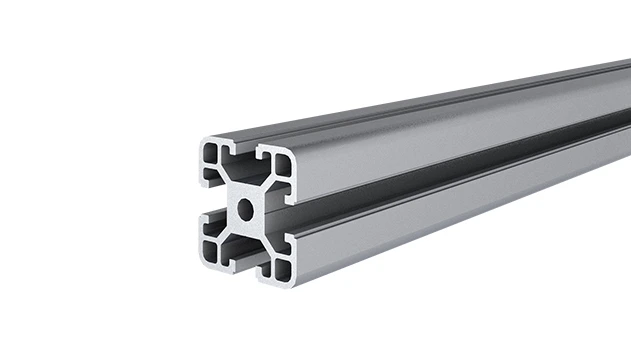
4040C EU Standard Aluminum Profile
4040C is a 4.00x4.00 CM fractional 40 series square extrusion T-slot profile with four open T-slots, each side with 4.00cm face. The profile has align-a-grooves to assist in aligning connecting profiles.
Walk into any modern smart factory today, and you'll notice a quiet revolution happening on the shop floor. Gone are the days of rigid, one-size-fits-all production lines bolted into concrete. Instead, you'll find modular workstations that shift shape overnight, material flow systems that adapt to new products in hours, and workbenches that adjust to operator needs with a few twists of a wrench. At the heart of this flexibility? Components like the 4040C EU Standard Aluminum Profile—a humble yet powerful building block that's redefining how factories design, build, and evolve their systems. Let's dive into why this unassuming aluminum extrusion is becoming the backbone of smart manufacturing, and how its latest innovations are shaping the factories of tomorrow.
What Makes the 4040C EU Standard Aluminum Profile So Special?
First, let's get technical—without getting lost in jargon. The 4040C is part of the EU standard aluminum extrusion profile family, named for its dimensions: 40mm by 40mm. But numbers alone don't tell the story. What sets this profile apart is its T-slot design—those continuous grooves running along its length that act like a universal adapter for almost any accessory you can imagine. Need to mount a shelf? Slide in a bracket. Add a light? Snap in a clamp. Attach a sensor for IoT monitoring? There's a T-slot nut for that. This adaptability isn't just convenient; it's revolutionary for factories that need to pivot quickly in response to changing market demands.
But the 4040C isn't just about slots. Its strength-to-weight ratio is a game-changer. Aluminum extrusion profile manufacturing involves heating aluminum billets and forcing them through a die to create consistent, precise shapes. For the 4040C, this process results in a frame that's light enough for a single worker to reconfigure (no heavy machinery needed) but strong enough to support heavy tools, materials, or even automated robots. Compare that to steel, which is heavier and harder to modify, or plastic, which lacks the durability for industrial use. The 4040C hits that sweet spot: tough, lightweight, and infinitely tweakable.
Another underrated feature? Compatibility. EU standard profiles like the 4040C are designed to work seamlessly with other sizes in the family—think 3030, 2020, or even larger 8080 profiles. This means a factory can start with a small 4040C workbench and scale up to a full production line by adding larger profiles, all while using the same connectors and tools. It's like building with industrial Legos, but for grown-ups who need their creations to withstand the rigors of 24/7 manufacturing.
Innovations in 4040C Design: Beyond the Basics
While the core T-slot concept has been around for decades, recent innovations in 4040C design are making it smarter, more durable, and even more user-friendly. One key advancement is precision manufacturing. Modern extrusion techniques now produce 4040C profiles with slot tolerances as tight as 0.1mm, ensuring that accessories from different suppliers fit perfectly. No more wrestling with loose brackets or misaligned holes—a huge time-saver for factory teams that can't afford downtime.
Then there are the coatings. Traditional aluminum profiles can corrode in humid or chemical-heavy environments, but new anodized finishes on the 4040C add a protective layer that resists scratches, chemicals, and wear. Some manufacturers are even experimenting with conductive coatings, turning the 4040C into a grounding solution for ESD workbench setups in electronics manufacturing. Imagine a workbench frame that not only holds circuit boards but also safely dissipates static electricity—all thanks to a specialized finish on the 4040C.
Accessory innovation is another area where the 4040C is shining. Today's aluminum profile accessories go far beyond basic brackets. Take the internal rotary aluminum joint, for example. This clever connector lets two 4040C profiles pivot 360 degrees, turning a fixed workbench into a foldable, space-saving station. Or consider quick-release casters that lock into T-slots with a push, letting workers move an entire workstation across the factory floor in minutes, then lock it down just as easily. These small but mighty accessories are turning the 4040C from a static frame into a dynamic, living system.

Lean System Integration: 4040C as the Enabler of Waste Reduction
Lean manufacturing has been a buzzword for years, but the 4040C is making it actionable for factories of all sizes. At its core, lean is about eliminating waste—whether that's wasted time, space, or materials. The 4040C excels here because it lets factories build exactly what they need, when they need it, without overbuilding or overspending.
Take material flow, for instance. A lean system relies on materials arriving at the workstation exactly when they're needed (just-in-time production). With 4040C-based roller track systems, this becomes simple. Roller track—those lines of small wheels that let bins and parts glide smoothly—can be mounted directly to 4040C frames. Need to adjust the angle of the track to speed up or slow down material flow? Loosen a few bolts, tilt the 4040C frame, and you're done. No need to rebuild the entire rack. This flexibility reduces the "motion waste" of workers walking to fetch parts, and the "inventory waste" of stockpiling materials because the flow system can't keep up.
Work-in-process (WIP) storage is another area where 4040C shines. Traditional fixed racks take up permanent floor space, even when they're half-empty. With 4040C, factories can build modular racks that expand or contract as WIP levels change. Add a shelf in the morning for a rush order, then disassemble it in the afternoon when demand drops. It's lean in action—using space only when necessary, and reallocating it when not.
Perhaps the biggest lean win with 4040C is in changeover time. Imagine a factory that produces two products: Product A in the morning, Product B in the afternoon. With traditional fixed equipment, switching between them might take hours—reconfiguring workstations, adjusting conveyors, retooling. With 4040C-based systems, workers can swap out tool holders, adjust roller track paths, and reposition workbenches in minutes. That's hours of saved production time per day, adding up to thousands of dollars in increased output.
Roller Track and Material Flow: 4040C's Role in Smoother Operations
Let's zoom in on roller track, one of the most common applications for 4040C profiles. In any factory, moving materials from point A to B is a daily challenge. Manual carts cause fatigue, conveyor belts are rigid, and automated systems are expensive. Roller track strikes the balance, and when paired with 4040C, it becomes a customizable, cost-effective solution.
Modern roller track systems using 4040C come in all flavors: steel wheels for heavy loads, aluminum wheels for lighter parts, even ESD-safe black wheels for electronics manufacturing. The 4040C frame provides the stability, while the track's angle and length can be adjusted on the fly. For example, a material rack B (3 rows, 3 floors) built with 4040C can have roller track installed on each shelf, letting bins slide forward as the front one is emptied—no more reaching to the back of a deep shelf. This not only speeds up access but reduces the risk of repetitive strain injuries for workers.
To illustrate the versatility, let's look at a real-world example: a automotive parts supplier I visited last year. They used to struggle with bottlenecks on their assembly line because parts bins would pile up, causing workers to stop and sort. By installing 4040C-based roller track conveyors that fed directly into workstations, they cut bin handling time by 40%. The key? They could angle the roller track slightly downward, using gravity to move parts to where they were needed, and adjust the track's width to fit different bin sizes—all using 4040C's T-slots to mount guides and stops. It was a simple fix, but it transformed their workflow.
| Roller Track Type | Best For | 4040C Integration Feature |
|---|---|---|
| Steel Roller Track (Yellow Wheel) | Heavy parts (50+ kg) | High-load brackets bolt into T-slots |
| Aluminum Roller Track (Black ESD Wheel) | Electronics, static-sensitive parts | Grounding clips attach via T-slots |
| Swivel Roller Balls (1 inch) | Small, irregularly shaped parts | Mounting plates slide into T-slots for quick repositioning |
Workbench Evolution: 4040C and the Rise of the Customizable Workstation
If roller track is the circulatory system of a smart factory, workbenches are the heart. And today's workbenches, built with 4040C, are a far cry from the fixed, wooden tables of the past. They're ergonomic, adaptable, and tailored to the tasks at hand—whether that's assembling smartphones or repairing heavy machinery.
Take the aluminum workbench E (single deck, without caster) as a starting point. Built with 4040C frames, this basic model can be tricked out with a mind-boggling array of options. Need a larger work surface? Add an aluminum honeycomb panel top that's lightweight but strong enough to support a 200kg load. Want to adjust the height for a taller operator? Swap out the legs for telescoping 4040C extensions. Even lighting and tool storage can be integrated: LED strips mount to T-slots above the bench, and magnetic tool holders snap into place on the side.
Ergonomics is where 4040C workbenches really shine. A study by the Manufacturing Ergonomics Institute found that adjustable-height workstations reduce operator fatigue by 35%—and with 4040C, adjustability is built in. Pneumatic lifts can be mounted to the frame, letting workers raise or lower the bench with the push of a button. For assembly lines with multiple shifts, this means each operator can set their ideal height in seconds, reducing the risk of back pain and increasing productivity.
In electronics manufacturing, ESD workbench requirements add another layer of complexity. Static electricity can fry sensitive components, so these workstations need to dissipate charge safely. 4040C profiles can be anodized with conductive coatings, turning the entire frame into a grounding path. Add an ESD-safe tabletop and wrist strap connectors (mounted, of course, via T-slots), and you've got a workstation that protects both parts and workers. What's impressive is how seamless this integration is—no extra tools or complicated wiring, just plug-and-play accessories that lock into the 4040C's grooves.
Future Trends: Where 4040C Profiles Are Headed Next
So, what's next for this versatile aluminum extrusion? The future looks bright, and it's all about smarter integration, sustainability, and even more customization.
One trend I'm particularly excited about is the marriage of 4040C with IoT and Industry 4.0. Imagine a 4040C workbench that "knows" when it's running low on parts—thanks to a sensor mounted in its T-slot that tracks bin levels and sends alerts to the warehouse. Or roller track systems with built-in RFID readers (again, mounted via T-slots) that log when a part passes through, giving managers real-time visibility into production flow. The 4040C's open design makes it the perfect platform for these smart add-ons, turning dumb frames into connected nodes in the factory's digital ecosystem.
Sustainability is another big driver. Aluminum is 100% recyclable, and as factories push for greener operations, the 4040C's eco-friendly credentials are becoming a selling point. Manufacturers are now offering profiles made from recycled aluminum, with the same strength and precision as virgin material. Even better, the modular nature of 4040C systems means less waste overall—instead of scrapping an entire workstation when needs change, you can reconfigure the frame and reuse the parts. I recently worked with a food packaging plant that saved over 2 tons of waste in a year by reusing 4040C profiles from old workstations to build new material racks.
Finally, 3D printing is opening up new possibilities for 4040C accessories. Smaller factories can now design and print custom brackets, clips, or tool holders that fit their unique needs, all without waiting for mass-produced parts. A local machine shop I know used 3D-printed T-slot adapters to mount a vintage drill press to a 4040C workbench, saving thousands of dollars on a new workstation. As 3D printing becomes more accessible, we'll see even more creative uses for 4040C, tailored to niche industries and one-of-a-kind processes.
Conclusion: The 4040C—Small Profile, Big Impact
At the end of the day, the 4040C EU Standard Aluminum Profile is more than just a piece of metal. It's a symbol of how smart manufacturing is moving away from rigidity and toward adaptability. In a world where consumer demands change overnight and product lifecycles grow shorter, factories need tools that can keep up. The 4040C delivers that, with its T-slot versatility, strength, and endless accessory ecosystem.
Whether it's enabling lean system waste reduction, powering customizable roller track flow, or supporting the smart workbenches of tomorrow, the 4040C is proving that the most innovative technologies aren't always the flashiest. Sometimes, they're the quiet, reliable building blocks that let creativity and efficiency thrive. As we look to the future of manufacturing, one thing is clear: the factories that embrace the 4040C and its innovations will be the ones leading the charge—agile, sustainable, and ready for whatever comes next.