- Company Articles
- Industry articles
- Industry standards
- Future Trends: 4080B EU Standard Aluminum Profile Innovations in Manufacturing Technology

Future Trends: 4080B EU Standard Aluminum Profile Innovations in Manufacturing Technology
Related Product
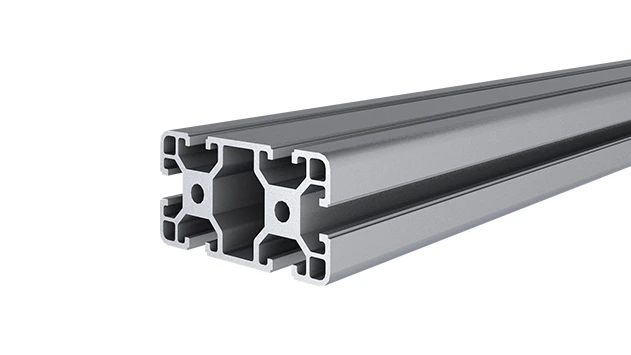
4080B EU Standard Aluminum Profile
4080B is a 4.00x8.00 CM fractional 40 series square extrusion T-slot profile with two side open T-slots, each side with 4.00cm face, two side with 8.00cm face. The profile has align-a-grooves to assist in aligning connecting profiles.
In the fast-paced world of manufacturing, where efficiency, flexibility, and sustainability are no longer just buzzwords but critical drivers of success, the materials and tools that form the backbone of production lines are undergoing a quiet revolution. Among these, aluminum extrusion profiles have emerged as unsung heroes, and none more so than the 4080B EU Standard Aluminum Profile. Far more than just a metal frame, this profile is reshaping how factories design workspaces, assemble production lines, and adapt to the ever-changing demands of modern manufacturing. Let's dive into the innovations that make the 4080B a game-changer, and explore why it's becoming the go-to choice for forward-thinking manufacturers and lean system suppliers worldwide.
What Exactly Is the 4080B EU Standard Aluminum Profile?
First things first: let's break down the basics. The "4080B" refers to its dimensions—40mm in width and 80mm in height—while "EU Standard" is a stamp of quality, ensuring compliance with strict European union regulations for safety, durability, and environmental impact. Made from high-grade aluminum alloy (typically 6063 T5, a material prized for its excellent strength-to-weight ratio and corrosion resistance), this profile is extruded into a precise, T-slot design. Those T-slots are where the magic happens: they allow for seamless integration with a vast array of aluminum profile accessories, from connectors and end caps to rubber strips and brackets, turning a simple piece of metal into a modular building block for almost any industrial structure.
But why does the EU standard matter? For manufacturers operating globally, compliance with EU norms isn't just about meeting legal requirements—it's a mark of reliability. EU standards demand rigorous testing for load capacity, material purity, and even recyclability, giving suppliers and end-users alike confidence that the 4080B isn't just durable, but also aligned with global sustainability goals. This is a big deal for lean pipe suppliers and aluminum profile suppliers, who often serve clients across continents and need materials that can adapt to diverse regulatory landscapes.
Innovation 1: Modular Design That Grows With Your Needs
One of the most striking innovations of the 4080B is its modularity. Traditional manufacturing setups often feel like fixed puzzles—once built, reconfiguring a workbench or material rack means hours of welding, drilling, or even replacing entire structures. The 4080B flips that script. Thanks to its T-slot design and compatibility with aluminum profile accessories like 90° aluminum profile connectors, 45° aluminum profile connectors, and internal straight aluminum joints, assembly becomes as simple as sliding, clamping, and tightening. Need to add a shelf to your workbench? Just slot in a bracket. Want to reposition a roller track for a new production line layout? Loosen a few bolts, adjust, and you're done. No welding, no cutting, no downtime.
This modularity is a dream for lean manufacturing. Lean systems thrive on eliminating waste—whether it's time, space, or resources—and the 4080B embodies that philosophy. A factory producing small electronics today might need a compact assembly line, but next year, when demand spikes, they can easily expand their workbench or material rack using the same 4080B profiles and accessories. It's like building with industrial Legos, but for grown-ups who need their creations to support heavy machinery and withstand daily wear and tear.

Innovation 2: Precision Engineering for Seamless Integration
Precision is everything in manufacturing, and the 4080B doesn't cut corners. Modern extrusion techniques ensure that each profile has consistent wall thickness, tight dimensional tolerances (often within ±0.1mm), and smooth T-slot edges. Why does this matter? For one, it means that when you buy a 4080B from a reputable aluminum extrusion profile supplier, you can trust that it will fit perfectly with accessories from the same supplier—or even other brands, thanks to standardized T-slot sizes. No more frustrating gaps between joints or wobbly structures because a bracket doesn't quite align.
Take, for example, the roller track system—a critical component in material handling. A roller track relies on precise alignment to ensure smooth, consistent movement of parts. With the 4080B's tight tolerances, attaching roller track placon mounts (used to secure roller tracks to the profile) becomes a breeze. Whether you're using a roller track placon mount for aluminum profile flat or a center support bracket, the T-slots guide the into place, ensuring the roller track sits level and stable. This precision reduces jams, minimizes wear on roller wheels, and keeps production lines running smoothly—something any factory floor manager will tell you is worth its weight in gold.
Innovation 3: Sustainability That Aligns With the Circular Economy
In an era where "green manufacturing" is no longer optional, the 4080B shines as an eco-friendly alternative to traditional steel profiles. Aluminum is infinitely recyclable—recycling it uses just 5% of the energy required to produce new aluminum, and it retains 100% of its mechanical properties. For manufacturers aiming to reduce their carbon footprint, this is a huge win. Even better, the 4080B's modular design means it can be disassembled and reused when a production line is retired or reconfigured, cutting down on waste that would otherwise end up in landfills.
EU standards also play a role here. To earn the EU mark, the 4080B must meet strict environmental criteria, from the materials used in production (no hazardous substances) to the energy efficiency of the extrusion process. This makes it a favorite among companies looking to comply with regulations like the EU's REACH or RoHS, or simply wanting to market their products as sustainably made. For aluminum profile suppliers, offering a profile that checks both quality and sustainability boxes is a powerful selling point in today's market.
Innovation 4: Supporting Lean Systems and Smart Manufacturing
Lean manufacturing isn't just about reducing waste—it's about creating systems that are efficient, flexible, and responsive. The 4080B was practically designed with lean principles in mind. Let's take a common scenario: a factory implementing 5S (Sort, Set in Order, Shine, Standardize, Sustain). To "Set in Order," they need workbenches, tool racks, and material storage that are organized and within easy reach. The 4080B makes this possible by allowing customization down to the smallest detail. Want a workbench with a built-in shelf for tools? Add an aluminum honeycomb panel to the T-slots. Need a mobile cart for transporting parts? Attach casters (using caster accessories like caster mounts) to a 4080B frame, and you've got a turnover trolley that's both sturdy and easy to move.
But the 4080B isn't just for static setups. As manufacturing moves toward Industry 4.0 and smart factories, the profile is proving its adaptability. Its T-slots can house sensors, cable management systems, or even small IoT devices, turning a simple workbench into a connected hub. Imagine a production line where the 4080B frame supports a conveyor system with integrated cameras that track part movement, or a workbench with built-in LED lights (powered via cables routed through T-slots) that adjust brightness based on ambient light. The possibilities are endless, and lean system suppliers are already leveraging this to offer "smart lean" solutions that blend traditional efficiency with cutting-edge technology.
Real-World Applications: From Workbenches to Whole Production Lines
Enough theory—let's look at how the 4080B is used in the real world. One of the most common applications is the humble workbench. Take the "aluminum workbench A" or "aluminum workbench J"—models often built using 4080B profiles. These workbenches are fully customizable: you can add a single deck (without casters for stationary use) or mount casters for mobility, attach tool hooks via T-slot brackets, or even add a pegboard for hanging supplies. Because the 4080B is strong enough to support heavy equipment (it can typically handle loads of 500kg or more when properly braced), it's ideal for assembly workbenches in automotive or electronics manufacturing, where tools and components can get heavy.
Material racks are another area where the 4080B excels. A "material rack B (3 row and 3 floor)"—a common design for storing parts—relies on the profile's load-bearing capacity to support multiple levels of inventory. By using 4080B uprights and crossbars, the rack can be adjusted to fit different part sizes, and adding roller track to the shelves allows for easy sliding of bins or boxes. This not only saves time when retrieving parts but also reduces the risk of strain injuries for workers—another win for lean, people-centric manufacturing.
Conveyor systems, too, are benefiting from the 4080B. Whether it's a roller conveyor, belt conveyor, or chain conveyor, the profile provides a stable, lightweight frame that can be extended or modified as needed. For example, a small manufacturer might start with a short roller conveyor using 4080B side frames and plastic roller track guide rails (yellow or grey, depending on their color-coding system). As their production grows, they can simply add more 4080B sections and connect them with roller track placon mount connectors—no need to replace the entire system.
How Does the 4080B Compare to Other Profiles?
You might be wondering: with so many aluminum profiles on the market (4040, 3030, 2020, etc.), why choose the 4080B? The answer lies in its versatility. Smaller profiles like the 2020 or 3030 are great for lightweight applications, like small shelving or machine guards, but they lack the load capacity for heavier tasks. Larger profiles, while strong, can be overkill for most workbenches or material racks, adding unnecessary weight and cost. The 4080B strikes the perfect balance: its 40x80mm size offers enough structural rigidity to support heavy loads (like industrial workbenches or multi-level racks) while remaining lightweight enough to be easily handled during assembly.
To put this into perspective, let's compare the 4080B with two other popular EU standard profiles using a quick table:
| Profile Type | Dimensions (WxH) | Typical Load Capacity (Per Meter) | Common Applications | Key Accessories |
|---|---|---|---|---|
| 4080B EU Standard | 40mm x 80mm | 300-500kg (depending on support spacing) | Heavy-duty workbenches, material racks, conveyor frames, production line structures | 90° aluminum profile connectors, roller track placon mounts, aluminum honeycomb panels |
| 4040A EU Standard | 40mm x 40mm | 150-300kg | Light to medium workbenches, machine guards, small shelving | 3030 aluminum angle codes, T-slot rubber seal covers, 2020 end caps |
| 3060 EU Standard | 30mm x 60mm | 200-400kg | Medium-duty racks, assembly line side rails, cart frames | 45° aluminum profile connectors, swivel roller balls (1 inch), caster installation bases |
As you can see, the 4080B stands out for its higher load capacity, making it the top choice for applications that demand both strength and flexibility. It's no wonder that lean pipe suppliers and aluminum profile suppliers are increasingly stocking the 4080B as a core product—its versatility means it can serve a wide range of clients, from small workshops to large automotive plants.
The Future of 4080B: What's Next?
So, what does the future hold for the 4080B EU Standard Aluminum Profile? If current trends are any indication, we can expect even more innovation. Here are a few areas to watch:
Advanced Surface Treatments: While anodizing (a process that adds a protective, decorative layer to aluminum) is already common, we're seeing suppliers experiment with new finishes. Think antimicrobial coatings for healthcare or food manufacturing, or conductive coatings for electronics assembly, where static control is critical (paired with ESD workbench accessories, this could be a game-changer for ESD workstation setups).
Digital Customization: With the rise of 3D modeling and CNC machining, aluminum profile suppliers are offering custom-cut 4080B profiles tailored to a client's exact specifications. Need a profile with a specific hole pattern for mounting sensors? Upload your design, and the supplier can pre-drill the T-slots—saving time on the factory floor.
Circular Economy Integration: As sustainability becomes even more important, we'll see suppliers offering take-back programs for old 4080B profiles, which can be recycled and extruded into new profiles. This not only reduces waste but also lowers costs for manufacturers, making the 4080B an even more attractive option for budget-conscious lean systems.
Integration with Additive Manufacturing: 3D printing is opening up new possibilities for aluminum profile accessories. Imagine 3D-printed brackets or custom end caps designed to fit the 4080B, allowing for even more unique, application-specific setups. This could revolutionize how small manufacturers prototype and iterate on their production lines.
Why Every Lean System Supplier Should Be Investing in 4080B
For lean system suppliers, the 4080B isn't just a product—it's a tool to deliver better value to clients. By offering solutions built around this profile, suppliers can provide customizable, sustainable, and future-proof systems that grow with their clients' businesses. Whether it's a simple workbench or a complex conveyor system, the 4080B allows suppliers to adapt quickly to client needs, reduce lead times (thanks to modular assembly), and stand out in a crowded market.
Moreover, because the 4080B is EU-standard, suppliers can easily serve clients in Europe and beyond, knowing they're meeting the highest regulatory standards. This is especially important as global supply chains become more interconnected, and manufacturers demand materials that can cross borders without compliance headaches.
Final Thoughts: The 4080B—More Than a Profile, a Manufacturing Partner
At the end of the day, the 4080B EU Standard Aluminum Profile is more than just a piece of metal. It's a symbol of how manufacturing is evolving—away from rigid, one-size-fits-all setups and toward flexible, sustainable, and human-centered workspaces. Whether you're a small workshop looking to upgrade your workbench or a large manufacturer designing a new production line, the 4080B offers the innovation, reliability, and versatility to help you build better. And with lean system suppliers and aluminum profile suppliers continuing to push the boundaries of what's possible with this profile, the future of manufacturing looks brighter—and more adaptable—than ever.
So, the next time you walk through a factory and see a sleek, modular workbench or a smoothly running conveyor system, take a closer look. Chances are, you're looking at the 4080B in action—quietly revolutionizing manufacturing, one T-slot at a time.