- Company Articles
- Industry articles
- Industry standards
- Future Trends in 3030b EU Standard Aluminum Profile Applications: Smart Manufacturing Integration

Future Trends in 3030b EU Standard Aluminum Profile Applications: Smart Manufacturing Integration
Related Product
3030B EU Standard Aluminum Profile
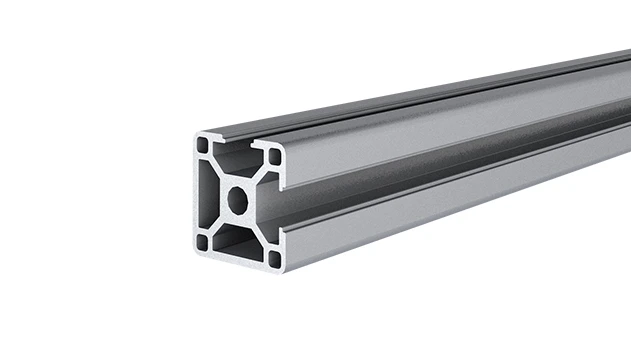
3030 is a 3.00 x 3.00CM fractional 30 series square extrusion T-slot profile with two side open T-slots, each side with 3.00cm face, 2 side with open slot, 2 side with closed face. The profile has align-a-grooves to assist in aligning connecting profiles.
Walk into any modern factory today, and you'll notice a quiet revolution unfolding. The clunky, rigid workstations of the past are making way for sleek, adaptable setups that seem to breathe with the rhythm of production. Robots glide along unobtrusive tracks, workbenches adjust height at the touch of a button, and material racks reconfigure in hours instead of weeks. At the heart of this transformation lies a component so versatile it's often called the "building block of smart manufacturing": the 3030b EU standard aluminum profile. More than just a piece of metal, it's a bridge between traditional industry and the agile, data-driven factories of tomorrow. Let's dive into how this unassuming profile is reshaping the future of manufacturing, and why its role in smart systems is only set to grow.
Understanding the 3030b EU Standard Aluminum Profile: More Than Just Metal
To appreciate the 3030b's impact, you first need to understand what makes it stand out. Imagine a material that's lightweight enough to be maneuvered by a single worker but strong enough to support heavy machinery. A material that resists corrosion, stands up to daily wear and tear, and can be customized into almost any shape or structure. That's the 3030b EU standard aluminum profile in a nutshell. Its name gives a clue: "3030" refers to its dimensions (30mm x 30mm), a sweet spot that balances stability with flexibility, while "EU standard" guarantees strict quality control—no cutting corners on durability or precision here.
What truly sets it apart, though, is its modularity. Unlike fixed steel structures, the 3030b profile features T-slots along its length, allowing accessories like joints, brackets, and panels to snap into place without welding or drilling. This means a factory floor manager can retool a workstation in an afternoon instead of waiting for a construction crew. For manufacturers juggling short production runs and frequent product changes, this adaptability isn't just convenient—it's a competitive advantage. And because it's aluminum, it's inherently sustainable: 100% recyclable, with a low carbon footprint compared to steel, aligning perfectly with the green manufacturing goals many companies now prioritize.
EU standards add another layer of value. For global suppliers and manufacturers, consistency is key. A 3030b profile sourced from a supplier in Germany fits seamlessly with accessories from a supplier in China, thanks to unified specifications. This interoperability reduces headaches, cuts lead times, and ensures that even complex systems—like a cross-continental production line—work as a cohesive unit. It's no wonder that lean system designers, in particular, have embraced the 3030b: it embodies the "lean" philosophy of minimizing waste (time, resources, effort) while maximizing value.
Current Applications: The 3030b in Action Today
The 3030b isn't a future technology—it's already hard at work in factories around the world. Let's take a closer look at where it's making the biggest difference today, and how these use cases hint at its future potential.
Workbenches: Ergonomics Meets Flexibility
Walk up to a workstation in an automotive or electronics plant, and chances are it's built with 3030b profiles. Traditional workbenches were one-size-fits-all, forcing workers to adapt to the furniture instead of the other way around. Today's 3030b-based workbenches change that. Using adjustable brackets and height-locking joints, they can be tailored to each operator's height, reducing strain and boosting productivity. Add casters (those small, swiveling wheels that make mobility a breeze) and the workbench becomes a mobile unit, able to shift to where it's needed most on the factory floor. Some even integrate tool holders, cable management channels, and ESD (electrostatic discharge) surfaces—critical for sensitive electronics—all snapped into the T-slots without a single weld. It's not just a workbench; it's a personalized command center for the modern factory worker.
Material Racks: From Static Storage to Dynamic Flow
Material handling is the lifeblood of manufacturing, and here too, the 3030b profile shines. Take the "material rack b (3 row and 3 floor)" design—a common setup in warehouses and assembly lines. Built with 3030b uprights and crossbars, these racks are sturdy enough to hold heavy components but light enough to reconfigure when production needs shift. Need an extra shelf for a new part? Just add a few brackets. Expanding to a new product line? Extend the rack with additional profiles. The magic lies in the accessories: roller track guide rails (often in yellow or grey, as you'll see on factory floors) snap into the T-slots, turning static shelves into gravity-fed lanes that move materials smoothly to the next workstation. It's a small change that eliminates manual lifting, cuts down on wait times, and keeps production flowing like a well-oiled machine.
Conveyor Systems: The Backbone of Automated Flow
Conveyors are the arteries of a factory, and 3030b profiles are becoming their preferred "skeleton." Traditional steel conveyors are heavy, expensive to modify, and prone to rust in humid environments. 3030b-based conveyors, by contrast, are lightweight, corrosion-resistant, and infinitely customizable. Roller tracks—like the 40 steel roller track with yellow wheels or the 38 aluminum roller track with side guides—mount directly to the profiles, creating pathways that can curve, rise, or split to route materials exactly where they need to go. And because the profiles are modular, adding a new branch to a conveyor system is as simple as adding a few sections and connectors, not overhauling the entire line. For factories adopting lean manufacturing principles, this means less waste, faster setup, and the ability to scale production up or down without massive capital investment.

Future Trends: How 3030b Profiles Are Shaping Smart Manufacturing
The 3030b's current applications are impressive, but its future role in smart manufacturing is even more exciting. As factories evolve into interconnected ecosystems—powered by IoT, automation, and real-time data—this profile is poised to be the physical backbone that ties everything together. Let's explore the key trends driving this integration.
IoT Integration: Profiles as "Smart" Infrastructure
Imagine a factory where your workbench or material rack doesn't just hold tools or parts—it talks to you. That's the promise of IoT-enabled 3030b profiles. Thanks to their T-slot design, embedding sensors into the profiles is surprisingly simple. Temperature sensors can monitor heat buildup in machinery, vibration sensors can detect wear in moving parts, and occupancy sensors can track how often a workstation is used. This data flows to a central dashboard, giving managers real-time insights into bottlenecks, maintenance needs, or underutilized space. For example, a 3030b-based conveyor track with built-in motion sensors could alert operators if a roller jams, preventing a line shutdown. Or a workbench with weight sensors could automatically reorder supplies when stock runs low. The profile isn't just a structure anymore; it's a data-collecting node in the factory's nervous system.
Adaptive Workspaces: Factories That "Learn" and Evolve
Smart manufacturing isn't just about automation—it's about adaptability. Consumer demands change overnight, and factories need to pivot quickly. Here, the 3030b profile's modularity becomes a superpower. Picture a production line that reconfigures itself for a new product in hours, not days. Using motorized joints and programmable casters (another accessory gaining traction), 3030b-based workstations could adjust their layout automatically, guided by AI that analyzes production schedules. Need to switch from assembling smartphones to tablets? The system repositions workbenches, readjusts conveyor angles, and even reallocates tools—all while workers focus on higher-value tasks. This isn't science fiction; companies like Tesla and Foxconn are already testing modular setups with aluminum profiles, reporting 30% faster changeover times compared to fixed lines.
Sustainability: Building the Circular Factory
Sustainability isn't just a buzzword anymore—it's a business imperative. Aluminum's recyclability makes the 3030b profile a cornerstone of the circular economy in manufacturing. Unlike steel, which loses strength when recycled, aluminum can be melted down and reused indefinitely without quality loss. This means that when a factory retires a 3030b-based workstation, the profiles don't end up in a landfill—they're recycled into new profiles, closing the loop. Even better, the modular design reduces waste from the start. Instead of building a custom steel structure that's scrapped when production changes, 3030b components are reused elsewhere in the factory. For example, a material rack from a discontinued line might become part of a new conveyor system or a temporary storage unit. It's manufacturing with a conscience, and it's driving more companies to choose 3030b over traditional materials.
Customization at Scale: From "One-Size-Fits-All" to "One-for-All"
In the past, customization meant high costs and long lead times. Not anymore. The 3030b profile, paired with 3D printing and CNC machining, is enabling "mass customization" of factory setups. Suppliers can now produce specialized accessories—like custom brackets or sensor mounts—that snap into standard 3030b profiles, allowing factories to tailor their systems without reinventing the wheel. For small and medium-sized manufacturers (SMEs), this is a game-changer. They no longer need to invest in expensive, custom steel infrastructure; instead, they can mix and match off-the-shelf 3030b profiles and accessories to build exactly what they need. It's democratizing smart manufacturing, putting the power of adaptability into the hands of companies that couldn't afford it before.
The Synergy with Aluminum Profile Accessories: The "Secret Sauce" of Versatility
A profile is only as good as the accessories that bring it to life. The 3030b's true strength lies in its ecosystem of compatible parts—joints, brackets, rollers, and more—that turn basic aluminum extrusions into fully functional systems. Let's take a closer look at some key accessories and how they enhance the profile's capabilities in smart manufacturing.
| Accessory Type | Primary Function | Role in Smart Manufacturing | Example Use Case |
|---|---|---|---|
| Internal Rotary Aluminum Joints | Allow 360° rotation between profiles | Enable adjustable workbench heights or rotating material racks | An assembly workstation where the operator swivels tools into place |
| Roller Track Guide Rails (Yellow/Grey) | Create gravity-fed lanes for material flow | Reduce manual handling; integrate with sensors for flow monitoring | A smartphone assembly line where components glide to workers |
| ESD-Compliant Casters | Provide mobility while dissipating static electricity | Enable safe, flexible movement of sensitive electronics | A mobile workbench transporting circuit boards without static damage |
| Parallel Aluminum Joints | Connect profiles side-by-side for reinforced structures | Build sturdy, lightweight frames for robotic arms or heavy machinery | A 3030b frame supporting a collaborative robot (cobot) on the factory floor |
| Placon Mounts for Rail Connection | Secure roller tracks to profiles at various angles | Customize conveyor paths (e.g., inclines, declines) for optimal flow | A material chute that guides parts from an upper to lower assembly line |
What's remarkable about these accessories is their standardization. Thanks to EU norms, a roller track from one supplier fits a 3030b profile from another, giving manufacturers the freedom to mix and match based on cost, availability, or specific needs. This interoperability is critical for smart manufacturing, where systems often combine components from multiple vendors to create a seamless whole.
Overcoming Challenges: Paving the Way for Widespread Adoption
For all its promise, the 3030b profile isn't without challenges. As with any new technology, adoption barriers exist—but they're far from insurmountable. Let's address the most common concerns and how the industry is solving them.
Cost: Short-Term Investment, Long-Term Gain
Critics often point to the higher upfront cost of aluminum profiles compared to basic steel. It's true: a 3030b profile and its accessories may cost more than a welded steel frame initially. But the math changes when you factor in the long term. Steel structures are fixed; if you need to reconfigure, you're looking at demolition, welding, and repainting—costs that add up fast. 3030b profiles, by contrast, are reusable. A single set of profiles can be repurposed 5-10 times over their lifespan, slashing retooling costs by 60-70% according to industry studies. Add in labor savings from faster setup and reduced downtime, and the ROI becomes clear. For forward-thinking manufacturers, it's not an expense—it's an investment in agility.
Skill Gaps: From Welders to "Profile Architects"
Another hurdle is the shift in skills. Welding steel requires specialized training, but building with 3030b profiles is more like assembling furniture—no welding, just snapping and locking. This means factories need to upskill workers, teaching them to design and build with modular components. The good news? Suppliers are stepping up. Many now offer free training programs, online tutorials, and even design software tailored to 3030b systems. Some even send technical teams to help factories plan their first setup. It's a small investment in training that pays off in a workforce that's more adaptable and empowered.
Standardization: Ensuring Compatibility Across Borders
While EU standards help, global manufacturers sometimes struggle with compatibility when sourcing profiles from non-EU suppliers. A "3030" profile from Asia might have slightly different T-slot dimensions, making it incompatible with EU accessories. To solve this, industry groups are pushing for global standards, while leading suppliers now offer "global compatibility" lines—profiles that meet both EU and Asian specs. For factories with international operations, this ensures that a 3030b setup in Germany works with the same accessories as one in China, simplifying supply chains and reducing headaches.
Conclusion: The 3030b Profile—Building the Factories of Tomorrow, Today
As we stand on the cusp of Industry 4.0, the 3030b EU standard aluminum profile isn't just a component—it's a symbol of manufacturing's future. It represents the shift from rigid, wasteful processes to agile, sustainable systems that put people and data at the center. Whether it's enabling IoT-connected workbenches, adaptive material racks, or recyclable conveyor systems, its versatility makes it the ideal partner for smart manufacturing.
For manufacturers ready to embrace change, the message is clear: the future isn't about building bigger factories—it's about building smarter ones. And the 3030b profile? It's the tool that makes that future possible. So the next time you walk into a factory and see those sleek, silver profiles, remember: you're not just looking at aluminum. You're looking at the backbone of the next industrial revolution.