- Company Articles
- Industry articles
- Industry News
- Future Trends in Flat Swivel Castor Wheel Design for Smart Manufacturing

Future Trends in Flat Swivel Castor Wheel Design for Smart Manufacturing
Related Product
Flat Swivel Castor Wheel
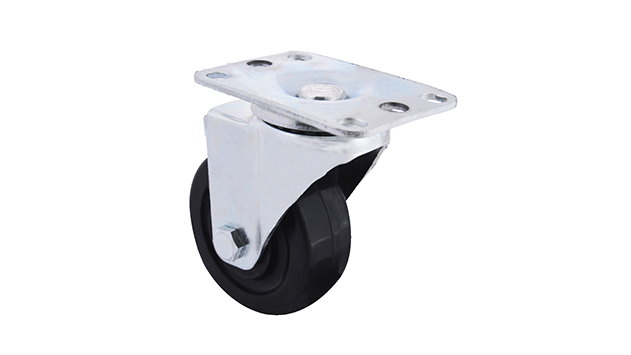
Chair Casters Ball Bearing Wheels Rubber Base. Resistant to abrasion, impact and corrosion. Heavy payload can hold 70-90Kgs per pcs,which can make it works at a stable and smooth status.
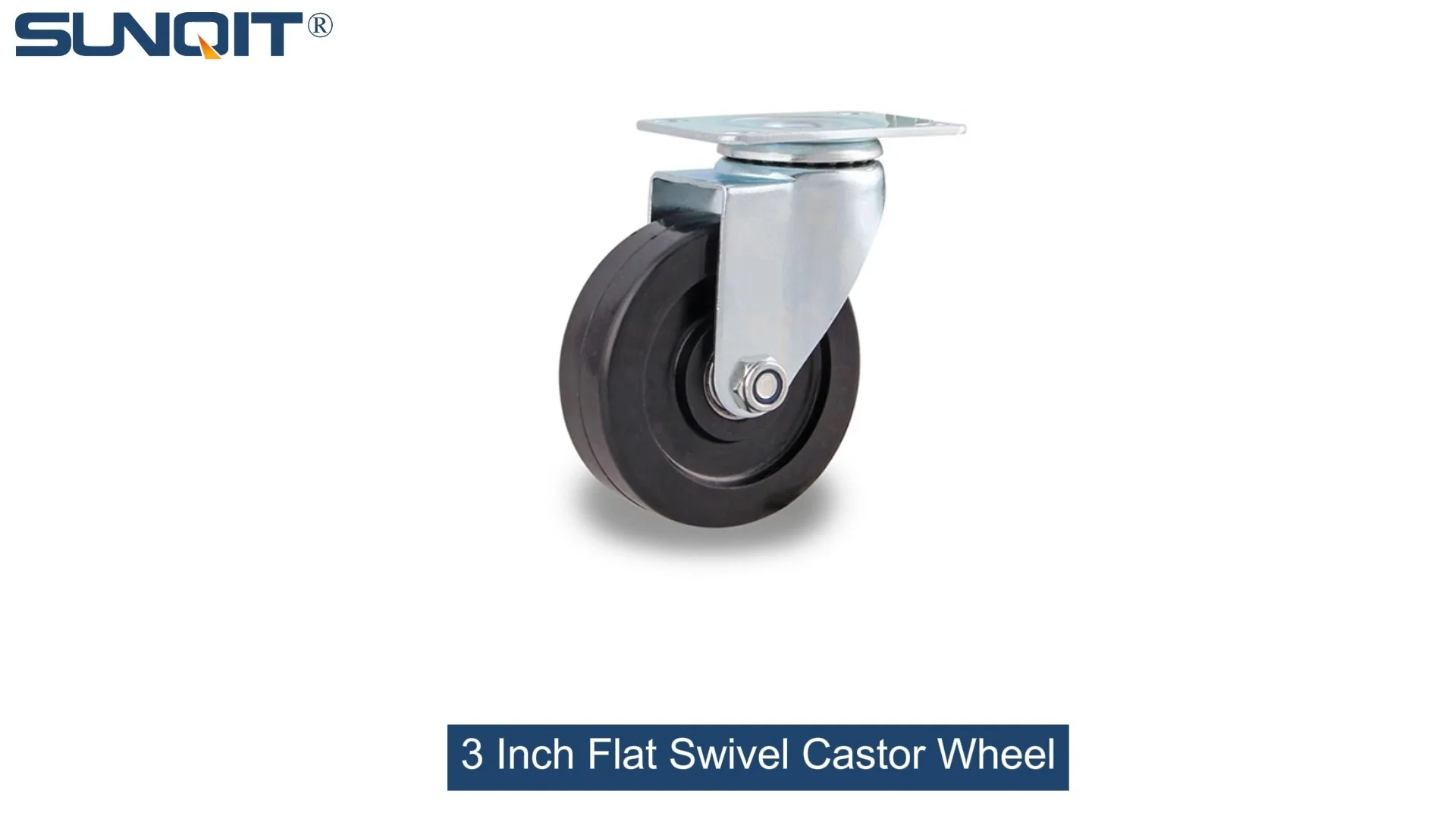
In the bustling landscape of smart manufacturing, where every second counts and efficiency reigns supreme, even the smallest components play a starring role. Enter the flat swivel castor wheel—a humble yet indispensable part of the machinery that keeps production lines moving, workbenches gliding, and turnover trolleys navigating tight corners with ease. As factories evolve into interconnected, data-driven hubs, the design of these castors is undergoing a quiet revolution. No longer just about "rolling smoothly," modern flat swivel castor wheels are becoming smarter, more sustainable, and deeply integrated with the principles of lean systems. Let's dive into the trends shaping their future and how they're set to redefine mobility in the factories of tomorrow.
1. Material Innovation: Beyond Steel—Lighter, Stronger, and Smarter
For decades, castor wheels were largely defined by heavy steel or rubber, prioritizing durability over finesse. But in smart manufacturing, where agility and energy efficiency are non-negotiable, materials are getting a makeover. Today's designers are turning to advanced composites, high-grade aluminum, and even recycled polymers to strike a balance between strength and weight.
Aluminum, in particular, is emerging as a game-changer. Lightweight yet surprisingly robust, aluminum lean pipe and its derivatives are influencing castor design, too. Imagine a flat swivel castor wheel with an aluminum core—corrosion-resistant, easy to clean, and 30% lighter than traditional steel models. This isn't just about reducing physical strain on workers pushing heavy trolleys; it's about cutting down on energy use. Lighter castors mean less power needed to move automated guided vehicles (AGVs) or conveyor systems, directly lowering operational costs.
Then there's the rise of ESD (Electrostatic Discharge) materials, a critical consideration in electronics manufacturing. Many modern workbenches and turnover trolleys in semiconductor or circuit board production now use ESD-safe components, and castor wheels are no exception. New formulations of rubber and plastic incorporate conductive fibers that dissipate static electricity, protecting sensitive components from damage. It's a small detail, but in a industry where a single static spark can ruin a $1,000 microchip, it's a lifesaver.
Perhaps most exciting is the experimentation with self-healing polymers. These materials can repair minor scratches or cracks when exposed to heat or UV light, extending the lifespan of castor wheels and reducing the need for frequent replacements. Pair that with reinforced treads made from graphene-infused rubber, and you've got a wheel that can handle heavy loads (up to 500kg per castor, in some cases) while resisting wear and tear for years on end.
2. IoT and Smart Sensing: Castors That "Talk"
If there's one buzzword dominating manufacturing today, it's "connectivity." From sensors on conveyor belts to AI-powered predictive maintenance, Industry 4.0 thrives on data—and flat swivel castor wheels are getting in on the action. The next generation of castors won't just roll; they'll "talk," sharing real-time insights about their performance and the environment around them.
Picture this: A flat swivel castor wheel equipped with a tiny accelerometer and load sensor. As it rotates, it tracks metrics like vibration, temperature, and weight distribution. If a wheel starts wobbling (a sign of bearing wear) or the load exceeds its capacity, it sends an alert to the factory's central system. Maintenance teams can then schedule repairs before a breakdown occurs, avoiding costly downtime. This isn't science fiction—companies are already testing prototype castors with Bluetooth Low Energy (BLE) chips that transmit data to cloud-based dashboards, allowing managers to monitor hundreds of castors across the plant from a single screen.
But it's not just about maintenance. Smart castors can also optimize workflow. For example, in a lean system-focused facility, where minimizing waste is key, sensors in castors on turnover trolleys can track how often materials are moved, identify bottlenecks, and suggest route adjustments. If a trolley carrying circuit boards from the SMT line to the testing station is consistently delayed at a certain corner, the data might reveal a need for a wider aisle or a smoother floor surface. It's mobility meets analytics, turning every roll into a source of actionable intelligence.
Even better, these sensors are getting smaller and more energy-efficient. Some designs use kinetic energy—generated by the wheel's rotation—to power the sensors, eliminating the need for batteries. Others integrate solar panels into the castor housing for indoor use, tapping into factory lighting to stay charged. The result? A self-sustaining, always-on data stream that keeps the factory floor one step ahead of problems.
3. Ergonomics: Putting People at the Center of Design
Smart manufacturing isn't just about machines—it's about people, too. As factories shift toward human-centric workspaces, flat swivel castor wheels are being reimagined to reduce strain, improve comfort, and boost productivity. After all, a worker pushing a heavy trolley shouldn't have to exert extra force because of clunky, unresponsive castors.
One key focus is noise reduction. Traditional castors, especially those with metal-on-metal components, can generate squeaks and rattles that disrupt the workspace and fatigue workers over time. New designs address this with precision-engineered ball bearings, shock-absorbing rubber treads, and even "silent roll" technology—specialized coatings on wheel surfaces that minimize friction against concrete or tile floors. Imagine a factory where the only sounds are the hum of machinery and the soft whir of castors gliding by; it's not just quieter, it's calmer, and calmer workers are more focused.
Adjustability is another ergonomic trend. Many modern workbenches and trolleys now feature castors with height-adjustable stems, allowing workers to customize the height of their work surfaces to their own body types. No more hunching over a trolley that's too low or straining to reach a shelf that's too high. Some castors even come with lockable swivel mechanisms—push a button, and the wheel locks into a fixed direction for straight-line movement; push again, and it swivels 360 degrees for tight turns. This flexibility reduces the physical effort needed to maneuver equipment, cutting down on repetitive strain injuries.
Grip and stability are also getting attention. In environments where floors might be oily (like automotive plants) or dusty (like electronics assembly), castor treads are being designed with specialized patterns to prevent slipping. Soft, non-marking rubber is becoming standard for cleanrooms, while textured polyurethane treads offer extra traction in industrial settings. The goal? To make moving heavy loads feel effortless, so workers can focus on their tasks, not on wrestling with equipment.

4. Sustainability: Castors with a Conscience
Sustainability isn't just a buzzword in manufacturing—it's a business imperative. As companies aim for net-zero goals and circular economy models, even castor wheels are being held to higher environmental standards. The future of flat swivel castor design lies in reducing waste, using eco-friendly materials, and making products that last longer and are easier to repair.
Modularity is leading the charge here. Instead of replacing an entire castor when the wheel wears out, designers are creating systems where components—like the tread, bearings, or swivel joint—can be swapped out individually. This not only extends the life of the castor but also reduces the amount of scrap metal and plastic ending up in landfills. Caster accessories, too, are getting a sustainable upgrade: think recycled steel brackets, biodegradable lubricants, and packaging made from 100% recycled cardboard.
Materials are also going green. Some manufacturers are experimenting with plant-based rubbers derived from dandelion sap (a renewable alternative to traditional rubber trees) or recycled plastic from ocean waste. Even aluminum, already a sustainable choice due to its high recyclability, is being sourced from suppliers using solar-powered smelting processes. The result is a castor wheel with a significantly lower carbon footprint—without compromising on performance.
End-of-life considerations are also part of the equation. Many companies now offer take-back programs for old castors, where they're disassembled, and reusable parts are refurbished or melted down to make new components. It's a closed-loop system that aligns with the lean principle of "reducing waste"—not just in production, but in the entire lifecycle of the product.

5. Integration with Lean Systems: Moving in Perfect Sync
At the heart of smart manufacturing lies the concept of lean systems—streamlining processes, eliminating waste, and creating seamless workflows. Flat swivel castor wheels are becoming critical enablers of this philosophy, acting as the "muscles" that keep materials and products flowing according to lean principles.
Take just-in-time (JIT) production, for example. In a JIT system, materials arrive exactly when they're needed, minimizing inventory costs. But this requires precise, reliable mobility. A slow or stuck castor on a turnover trolley could delay a delivery to the assembly line, disrupting the entire schedule. Modern flat swivel castors, with their smooth rotation and high weight capacities, ensure that materials move quickly and predictably, keeping JIT timelines on track.
Waste reduction is another lean pillar, and castors are helping here, too. By reducing the effort needed to move equipment, they cut down on "non-value-added" time—time spent pushing, pulling, or maneuvering instead of assembling, testing, or inspecting. Lightweight aluminum castors, for instance, make it easier for a single worker to move a loaded trolley, eliminating the need for two people and freeing up labor for more critical tasks.
Flexibility is also key in lean environments, where production lines might reconfigure overnight to accommodate new products. Flat swivel castors with quick-release mechanisms allow workbenches, racks, and trolleys to be rearranged in minutes, not hours. No more bolts to unscrew or tools to fetch—simply unlock the castors, reposition the equipment, and lock them back in place. This agility makes it easier for factories to adapt to changing demand, a hallmark of lean manufacturing.
6. Customization: One Castor, Endless Possibilities
Gone are the days of "one-size-fits-all" castors. Smart manufacturing spans industries as diverse as aerospace, medical devices, and consumer electronics, each with unique needs. A castor designed for a heavy-duty automotive trolley won't work for a delicate pharmaceutical rack, and vice versa. That's why customization is becoming a core trend in flat swivel castor design.
Manufacturers now offer castors in a dizzying array of configurations: different wheel diameters (from 2 inches for small workbenches to 8 inches for industrial trolleys), tread materials (rubber for grip, polyurethane for quietness, metal for high temperatures), and load capacities (from 50kg to 1,000kg+). Need a castor that's ESD-safe for electronics assembly? There's a version for that. Working in a food processing plant that requires FDA-approved materials? Check. Operating in a cold-storage facility where temperatures drop to -30°C? Specialized low-temperature rubber treads have you covered.
Caster accessories are keeping pace, too. Quick-change wheel hubs allow operators to swap treads in seconds, adapting to different floor conditions. Swivel locks with color-coded levers make it easy to identify locked vs. unlocked castors at a glance. Even the mounting plates are customizable—square, round, or rectangular—to fit any piece of equipment.
This level of customization isn't just about meeting needs; it's about future-proofing. As factories upgrade their equipment or pivot to new product lines, their castors can evolve with them. A single base castor model might support a dozen different accessories, making it easier to adapt without buying entirely new units. It's smart, cost-effective, and perfectly aligned with the dynamic nature of smart manufacturing.
Traditional vs. Future-Ready: A Snapshot of Castor Evolution
| Feature | Traditional Flat Swivel Castors | Future-Ready Flat Swivel Castors |
|---|---|---|
| Core Material | Steel or basic rubber; heavy and prone to corrosion | Aluminum, composites, or recycled polymers; lightweight and corrosion-resistant |
| Sensing Capabilities | None; performance monitored manually | Built-in sensors for load, vibration, and wear; real-time data transmission |
| Ergonomics | Basic design; often noisy and hard to maneuver | Adjustable height, silent roll technology, and easy-grip treads |
| Sustainability | Single-use design; difficult to repair | Modular components, recycled materials, and take-back programs |
| Integration with Lean Systems | Limited; mobility often a bottleneck | Quick reconfiguration, energy efficiency, and data-driven workflow optimization |
Conclusion: The Future is Rolling
Flat swivel castor wheels may not grab headlines like AI-powered robots or 3D printers, but their evolution is a testament to the detail-oriented progress of smart manufacturing. From aluminum cores to IoT sensors, from modular designs to sustainability-focused materials, these small but mighty components are becoming integral to the factories of tomorrow—smarter, greener, and more human-centric than ever before.
As lean systems continue to dominate manufacturing philosophy and Industry 4.0 transforms factories into connected ecosystems, the role of flat swivel castor wheels will only grow. They're no longer just about movement; they're about data, efficiency, and sustainability. So the next time you see a trolley gliding across a factory floor or a workbench rotating smoothly into place, take a moment to appreciate the castors beneath it—they're not just rolling. They're rolling toward the future.