- Company Articles
- Industry articles
- Industry News
- Future Trends: Innovations in Flat Adjustable Swivel Castor Wheel Design for Lean Manufacturing

Future Trends: Innovations in Flat Adjustable Swivel Castor Wheel Design for Lean Manufacturing
Related Product
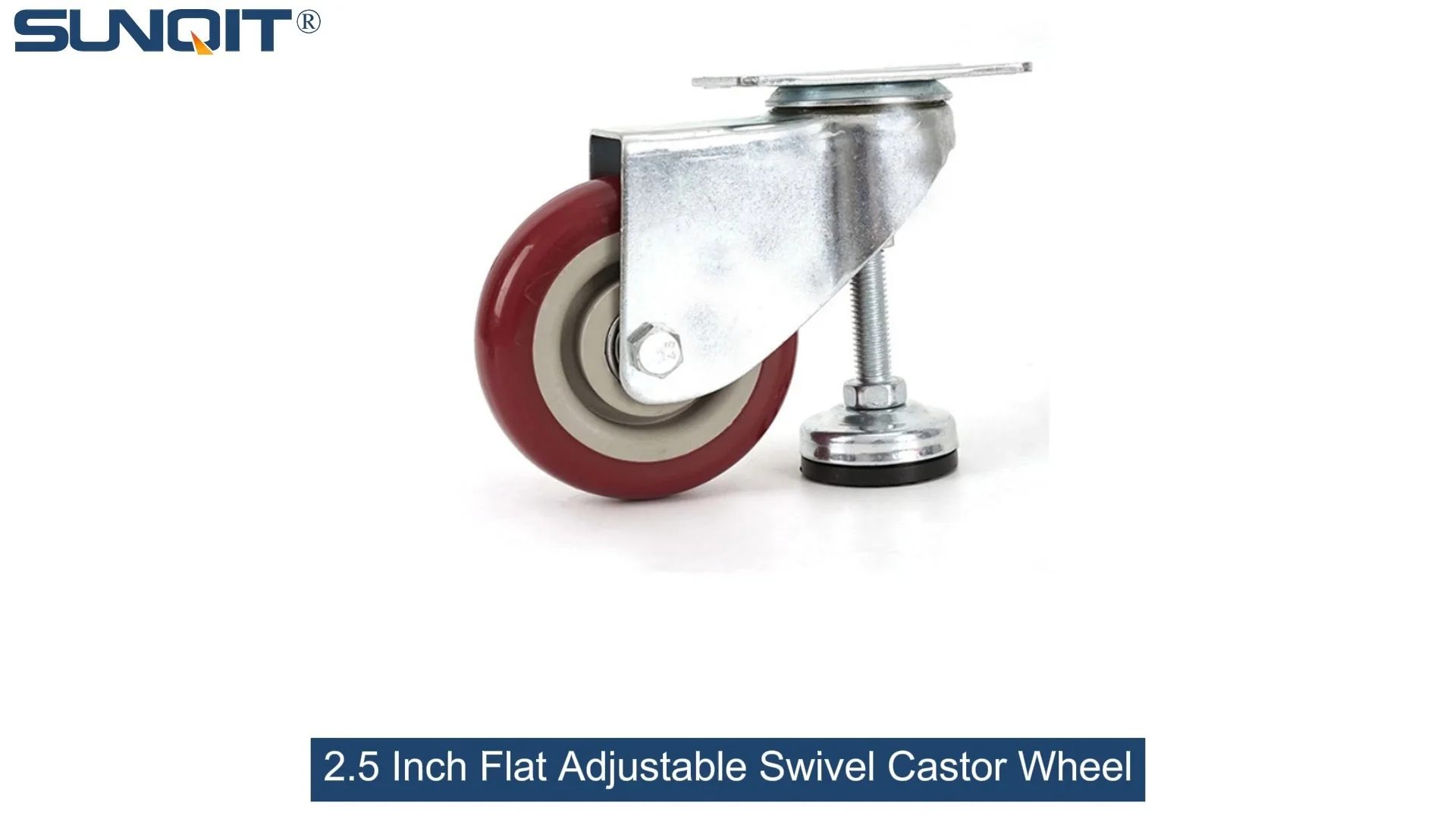
Flat Adjustable Swivel Castor Wheel
Swivel Chair Casters Ball Bearing Wheels Rubber Base with adjustable height function. Resistant to abrasion, impact and corrosion. Heavy payload can hold 80Kgs per pcs,which can make it works at a stable and smooth status.
In the fast-paced world of lean manufacturing, where every second counts and waste is the enemy, the smallest components often hold the biggest potential for transformation. Walk through any production floor, and you'll see the rhythm of workbenches being repositioned, turnover trolleys gliding between stations, and flow racks delivering materials exactly where they're needed. At the heart of this orchestration? Castor wheels. Not just any castors, though—but flat adjustable swivel castor wheels, the unsung heroes that keep lean systems moving smoothly. As manufacturers push for greater efficiency, sustainability, and adaptability, these components are undergoing a revolution. Let's dive into the innovations reshaping their design, and how they're becoming a cornerstone of the next generation of lean manufacturing.
Lean Manufacturing and the Hidden Cost of "Stuck" Mobility
Lean manufacturing isn't just a set of principles—it's a mindset centered on eliminating waste, optimizing flow, and empowering workers to do their best. From 5S (Sort, Set in Order, Shine, Standardize, Sustain) to continuous improvement, every aspect of the production process is scrutinized for inefficiencies. Yet, one area that's often overlooked is mobility. Think about it: a workbench that's hard to move disrupts workflow. A trolley with stiff swivel castors forces workers to exert extra effort, leading to fatigue and slower task completion. A flow rack with misaligned wheels creates bottlenecks as materials get stuck mid-transit. These aren't just minor annoyances—they're forms of waste: wasted time, wasted energy, and wasted potential.
Traditional castor wheels were never designed with lean's demands in mind. Heavy, rigid, and prone to jamming, they turned simple tasks into struggles. A worker might spend 10 minutes wrestling a loaded esd workbench into place, only to find the castors lock unevenly, leaving the surface wobbly. Or a turnover trolley with worn-out wheels might damage floor surfaces, leading to costly repairs. These issues don't just hurt productivity; they demotivate teams and undermine the very spirit of lean: making work easier, not harder.
Enter the flat adjustable swivel castor wheel. Built for the realities of modern manufacturing, these designs address the pain points of traditional castors while aligning with lean's core goals. They're not just wheels—they're tools that enable flexibility, reduce physical strain, and keep production lines flowing without interruption. Let's explore how they're evolving to meet the needs of tomorrow's factories.
From Clunky to Cutting-Edge: The Evolution of Castor Wheel Design
Castor wheels have been around for centuries, but their design remained largely unchanged until the rise of lean manufacturing in the late 20th century. Early castors were simple: a metal wheel mounted on a fixed axle, attached to a rigid bracket. They worked for moving heavy objects, but that was about it. As factories adopted lean principles, however, the demands on mobility skyrocketed. Workstations needed to be reconfigured quickly for batch production. Materials had to flow seamlessly from one process to the next. And with the growth of sensitive industries like electronics, castors had to avoid generating static electricity (a critical feature for esd workbench setups).
The first wave of innovation focused on swivel functionality. Manufacturers introduced ball bearings to reduce friction, allowing wheels to rotate 360 degrees with minimal effort. But even these improvements had limits. The brackets were often bulky, making them unsuitable for low-profile equipment like workbenches. Adjustability was nonexistent—if a floor was uneven, the entire workstation would wobble, risking damage to materials or injury to workers. And sustainability? Traditional castors were made from steel, which is durable but heavy, and prone to rust in humid environments, leading to frequent replacements.
Today's flat adjustable swivel castor wheels are a far cry from their predecessors. Let's break down the key advancements driving their design:

Innovation 1: Materials That Marry Strength, Lightness, and Sustainability
The first thing you'll notice about modern flat adjustable swivel castor wheels is their materials. Steel is still used in heavy-duty applications, but manufacturers are increasingly turning to aluminum and composite materials to strike a balance between strength and weight. Aluminum, in particular, has emerged as a game-changer. It's 30% lighter than steel but offers comparable load capacity, making castors easier to maneuver. For workers pushing a loaded workbench across the factory floor, that weight reduction translates to less physical strain and fewer injuries—a direct win for lean's focus on employee well-being.
But aluminum isn't just about weight. It's naturally corrosion-resistant, making it ideal for factories with high humidity or exposure to chemicals. This longevity reduces the need for frequent replacements, cutting down on waste and lowering long-term costs. Take, for example, a food processing plant using stainless steel pipe series equipment: aluminum castors here would stand up to daily washdowns without rusting, outlasting traditional steel castors by years. And because aluminum is 100% recyclable, end-of-life disposal aligns with sustainability goals—a must for manufacturers aiming to reduce their carbon footprint.
For specialized environments, composite materials are taking center stage. ESD-compliant wheels, made from conductive plastics, are now standard in electronics manufacturing. These wheels prevent static buildup, protecting sensitive components on esd workbenches from damage. Similarly, polyurethane (PU) treads are replacing rubber for better grip and noise reduction. A PU wheel glides quietly across concrete, reducing factory noise pollution and creating a more pleasant work environment—another lean win, as quieter spaces boost focus and productivity.

Innovation 2: Adjustability That Solves the "Uneven Floor" Problem
If there's one universal frustration in manufacturing, it's uneven floors. Even the most well-maintained facilities have slight dips or bumps, and traditional castors have no way to compensate. The result? Wobbly workbenches, materials sliding off flow racks, and workers wasting time shimming corners with scraps of wood. Flat adjustable swivel castor wheels tackle this head-on with micro-adjustment features that let users level equipment in seconds.
How does it work? Many modern castors feature a threaded stem or a height-adjustable bracket. By simply turning a knob or using a wrench, workers can raise or lower individual castors by up to 20mm, ensuring the workbench or trolley sits perfectly flat. This adjustability isn't just about stability—it's about precision. In industries like aerospace, where parts must be assembled with sub-millimeter accuracy, a level workstation is non-negotiable. With adjustable castors, teams can set up and reconfigure workstations in minutes, not hours, aligning with lean's emphasis on quick changeovers.
Some designs take adjustability a step further. Imagine a flat adjustable swivel castor wheel with a built-in spring-loaded mechanism that automatically compensates for minor floor irregularities. As the castor rolls over a bump, the spring compresses, keeping the wheel in contact with the floor and the workstation stable. It's a small detail, but it eliminates the need for manual adjustments, further reducing waste in the process.

Innovation 3: Caster Accessories That Extend Lifespan and Performance
A castor is only as good as its components, and manufacturers are doubling down on caster accessories to enhance durability and functionality. Sealed bearings, for example, are now standard. These bearings prevent dust, dirt, and debris from entering the swivel mechanism, reducing friction and extending lifespan. In a busy factory, where floors are rarely spotless, this means castors stay smooth and responsive for years, not months.
Locking mechanisms are another area of innovation. Traditional castor locks often slip under heavy loads, leaving workbenches to roll unexpectedly. New designs feature dual-locking systems: one to lock the swivel rotation and another to lock the wheel itself. This "total lock" ensures the castor stays in place, even when bumped or jostled. For workers assembling delicate components on an esd workbench, this peace of mind is invaluable—no more worrying about the workstation shifting mid-task.
Even small accessories like replaceable treads are making a difference. Instead of replacing the entire castor when the tread wears out, workers can swap in a new tread in minutes. This modular approach reduces waste and cuts maintenance costs, aligning with lean's "repair, don't replace" philosophy. It's these thoughtful details that make modern flat adjustable swivel castor wheels more than just components—they're investments in long-term efficiency.
How Modern Castors Align with Lean Systems: A Closer Look
At their core, flat adjustable swivel castor wheels are designed to support lean systems by reducing waste and enhancing flow. Let's map their benefits to key lean principles:
- Eliminating Motion Waste: Lightweight aluminum castors and smooth swivel mechanisms reduce the effort needed to move equipment. A worker can reposition a workbench in half the time, freeing up minutes that add up to hours of productive work per week.
- Optimizing Layout Flexibility: Adjustable height and swivel locks make it easy to reconfigure workstations for new projects. In a contract manufacturing facility, this adaptability means faster setup times for custom orders, reducing lead times and improving customer satisfaction.
- Reducing Defects: Stable, level workbenches (thanks to adjustable castors) minimize errors in assembly. On an esd workbench, for example, a level surface ensures sensitive circuit boards aren't damaged by uneven pressure during testing.
- Enhancing Safety: Corrosion-resistant materials and secure locking mechanisms lower the risk of accidents. A castor that doesn't rust or slip is less likely to cause a workstation to tip, protecting both workers and materials.
Traditional vs. Innovative Castor Wheels: A Comparative Overview
| Feature | Traditional Castor Wheels | Innovative Flat Adjustable Swivel Castor Wheels |
|---|---|---|
| Material | Steel (heavy, prone to rust) | Aluminum/composites (lightweight, corrosion-resistant) |
| Weight Capacity | High, but at the cost of maneuverability | Comparable high capacity, with easier movement |
| Adjustability | None; fixed height | Micro-adjustable height (up to 20mm) for uneven floors |
| Swivel & Locking | Basic swivel; unreliable locks | 360° smooth swivel; dual-locking (swivel + wheel) |
| Specialty Options | Limited (e.g., rubber treads) | ESD-compliant, noise-reducing PU treads, corrosion-resistant |
| Sustainability | Short lifespan; non-recyclable components | Recyclable aluminum; replaceable parts (reduced waste) |
The Road Ahead: What's Next for Flat Adjustable Swivel Castor Wheels?
As lean manufacturing evolves, so too will the design of flat adjustable swivel castor wheels. Here are three trends to watch:
Smart Castors: IoT-Enabled Predictive Maintenance
Imagine a castor wheel with a built-in sensor that monitors wear, temperature, and load. When the tread wears down to a critical level, or the bearing temperature rises (a sign of impending failure), the sensor sends an alert to the maintenance team. This predictive approach eliminates unplanned downtime—a major source of waste in lean systems. Early adopters in automotive manufacturing are already testing these smart castors on flow racks, reporting a 25% reduction in unexpected equipment failures.
3D-Printed Caster Accessories for Customization
Not all factories have the same needs. A pharmaceutical plant might require ultra-sterile castors with smooth, easy-to-clean surfaces, while a furniture manufacturer needs heavy-duty wheels for large workbenches. 3D printing is making it possible to produce custom caster accessories—like specialized treads or brackets—in small batches, without the high costs of traditional tooling. This customization ensures castors fit the unique demands of each lean system, further optimizing performance.
Bio-Based Composites for Even Greater Sustainability
Sustainability will only grow in importance, and manufacturers are exploring bio-based composites for castor treads and brackets. Materials like hemp-reinforced plastics or starch-based polymers offer comparable durability to traditional plastics but are fully biodegradable. Paired with recyclable aluminum frames, these castors could one day be entirely waste-free—aligning with the circular economy goals of forward-thinking lean systems.
Conclusion: Small Wheels, Big Impact on Lean's Future
Flat adjustable swivel castor wheels may not grab headlines, but their role in lean manufacturing is undeniable. By solving the "little" problems—stiff swivels, uneven floors, heavy movement—they free up workers to focus on what matters: creating value. As materials, design, and technology continue to advance, these castors will become even more integral to lean systems, driving efficiency, sustainability, and worker satisfaction.
For manufacturers looking to stay ahead in the lean revolution, the message is clear: don't overlook the wheels. Investing in innovative flat adjustable swivel castor wheels isn't just about upgrading equipment—it's about investing in a more efficient, sustainable, and human-centered future of manufacturing. After all, in lean, every detail counts—and sometimes, the smallest components make the biggest difference.