- Company Articles
- Industry articles
- Industry News
- Future Trends: Innovations in Three Way Aluminum Pipe Joint Design for Manufacturing

Future Trends: Innovations in Three Way Aluminum Pipe Joint Design for Manufacturing
Related Product
Three Way Aluminum Pipe Joint
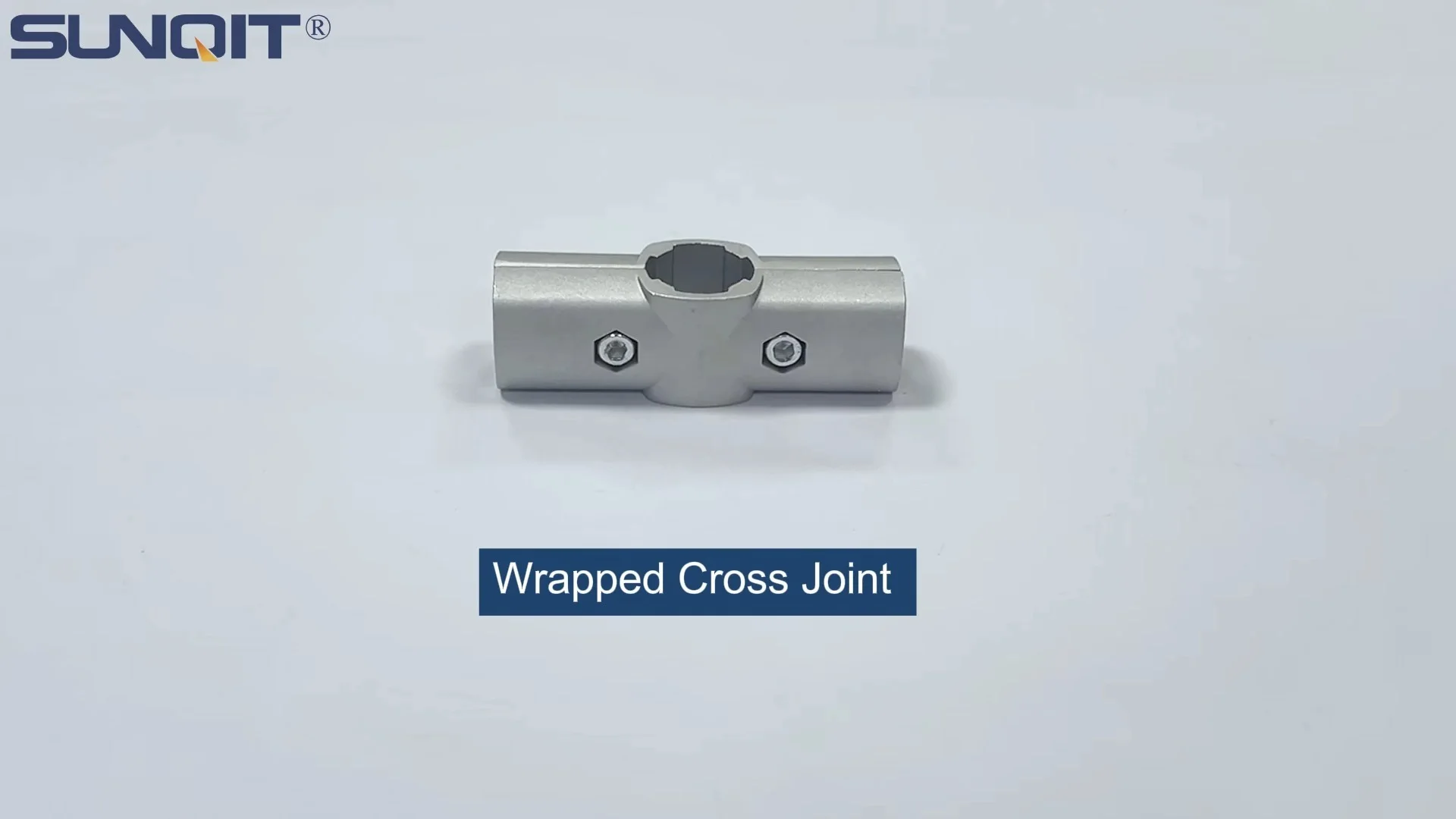
Aluminum 3 way pipe joint for 28mm aluminum pipe connection in 3 direction.
In the fast-paced world of manufacturing, where agility, efficiency, and sustainability are no longer buzzwords but critical survival strategies, the smallest components often hold the biggest potential for transformation. Among these unsung heroes are three way aluminum pipe joints—unassuming connectors that bind together the modular systems powering modern production lines, workbenches, and material handling setups. As factories evolve to meet the demands of custom manufacturing, shorter product cycles, and eco-conscious operations, the design of these joints is undergoing a quiet revolution. This article explores the future trends and innovations in three way aluminum pipe joint design, uncovering how these tiny but mighty components are reshaping the manufacturing landscape, enhancing lean system capabilities, and enabling the flexible factories of tomorrow.
The Backbone of Modern Manufacturing: Why Aluminum Profiles Matter
Before diving into the specifics of three way joints, it's essential to understand the role of aluminum profiles in today's manufacturing ecosystems. Aluminum has long been favored for its unique blend of strength, lightweight properties, and recyclability, but its true power lies in modularity. Aluminum profiles—extruded into standardized shapes with T-slots for easy attachment—serve as the building blocks for everything from assembly workbenches to conveyor systems, material racks, and even automated machinery frames. Unlike rigid steel structures, aluminum profiles allow manufacturers to reconfigure their layouts in hours, not weeks, adapting to new products, production volumes, or process improvements.
This modularity is the cornerstone of lean system principles, which focus on eliminating waste, optimizing flow, and continuous improvement. A lean system thrives on flexibility: if a workbench needs an extra shelf, a conveyor path needs rerouting, or a material rack needs to accommodate larger parts, the system should adjust without major overhauls. Here, the aluminum profile becomes more than just a structural element; it's a canvas for innovation. And at the heart of this canvas? The joints that hold it all together.
The Unsung Hero: Three Way Aluminum Pipe Joints and Their Role in Modularity
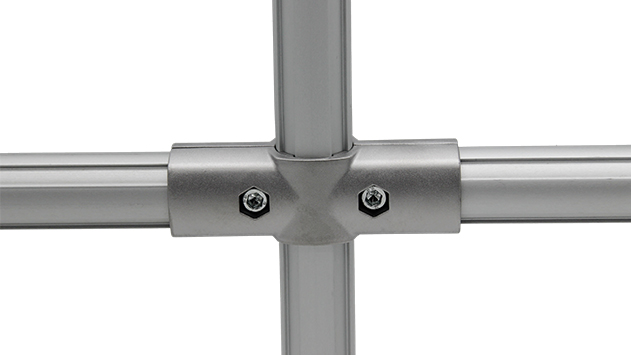
Three way aluminum pipe joints are the connective tissue of modular aluminum systems. As the name suggests, these joints enable the connection of three aluminum pipes at various angles, creating stable, load-bearing structures that can be customized to fit specific needs. Whether it's forming the corner of a workbench, branching a material rack into multiple levels, or splitting a conveyor track to feed two assembly stations, three way joints make it possible to build complex structures from simple, standardized parts.
Traditional three way joints, while functional, often came with trade-offs. Many were designed for fixed angles (typically 90 degrees), limiting design flexibility. Others required tools for assembly—wrenches, Allen keys, or even welding—slowing down reconfiguration and increasing labor costs. Some were prone to loosening under vibration, compromising structural integrity over time. As manufacturing demands shifted toward greater agility and lower downtime, these limitations became increasingly problematic.
Traditional vs. Next-Gen Joints: A Comparison
| Feature | Traditional Three Way Joints | Innovative Three Way Aluminum Pipe Joints |
|---|---|---|
| Angle Flexibility | Fixed (usually 90°); limited adjustability | Multi-angle (30°, 45°, 90°, 135°); some with infinite rotation |
| Assembly Time | 5–10 minutes per joint (requires tools) | 30 seconds–2 minutes (tool-less, snap-fit or quick-lock) |
| Load Capacity | Moderate (up to 150 kg per joint) | High (up to 300 kg+ with reinforced designs) |
| Vibration Resistance | Prone to loosening; requires periodic retightening | Integrated locking mechanisms (e.g., cam locks, friction fit) |
| Sustainability | Often single-material; limited recyclability if mixed with plastics | 100% aluminum or aluminum-recycled plastic blends; fully recyclable |
The table above highlights the key gaps innovative designs are addressing. Today's three way aluminum pipe joints are not just incremental improvements but reimagined solutions built for the challenges of modern manufacturing.
Innovations Reshaping Three Way Joint Design
The future of three way aluminum pipe joints lies in four critical areas of innovation: material science, ergonomic engineering, smart integration, and sustainability. Let's explore each in detail.
1. Advanced Materials: Stronger, Lighter, Greener
Material innovation is driving significant leaps in joint performance. Traditional joints were often made from die-cast aluminum alloys, which, while durable, had limitations in load capacity and precision. Newer designs are leveraging high-strength aluminum alloys—such as 6061-T6 and 7075-T6—known for their exceptional tensile strength and fatigue resistance. These alloys allow joints to support heavier loads (think: stacked material racks or workbenches with heavy machinery) without adding bulk, keeping structures lightweight and energy-efficient to move or reconfigure.
But it's not just about aluminum. Some manufacturers are integrating engineering-grade plastics (like glass-reinforced nylon) into joint components, reducing weight further while improving corrosion resistance—critical for factories with humid or chemical-exposed environments. These hybrid joints combine the structural rigidity of aluminum with the flexibility of plastic, creating connectors that are both strong and adaptable. Perhaps most importantly, these materials are being sourced with sustainability in mind: 70% of aluminum used in new joints comes from recycled sources, and plastic components are often made from bio-based or recycled polymers, aligning with circular economy goals.
2. Tool-Less Assembly: Speed and Simplicity
In a lean system, every minute saved on setup or reconfiguration translates to higher productivity. This is where tool-less three way joints are making a dramatic impact. Imagine a factory floor where a team can disassemble a workbench, reconfigure it into a material trolley, and have it back in operation in under an hour—without a single wrench. That's the reality tool-less joints are enabling.
Innovative designs feature intuitive locking mechanisms: cam levers that snap into place with a quarter-turn, spring-loaded pins that lock pipes securely, or friction-fit collars that tighten as pressure is applied. These joints eliminate the need for specialized tools, reducing training time for new employees and minimizing the risk of lost or misplaced equipment. Some even include color-coded indicators to show when a joint is fully secured, preventing human error during assembly. For example, a red ring around the joint turns green once it's locked, giving operators instant visual confirmation that the structure is safe to use.
3. Multi-Angle and Adaptive Geometry
Gone are the days of one-size-fits-all 90-degree joints. Modern three way aluminum pipe joints are embracing adaptive geometry, allowing users to set angles anywhere from 0° to 180° in 5° increments. This flexibility opens up new design possibilities: sloped conveyor tracks for gravity-fed material flow, ergonomic workbenches with tilted surfaces to reduce worker strain, or material racks with angled shelves to prevent small parts from slipping off.
How do they work? Many feature a rotating core with indexed notches, allowing the joint to "click" into position at specific angles. Others use a ball-and-socket design with a locking collar, enabling infinite adjustability for truly custom configurations. For high-precision applications, some joints even include laser-etched angle markers, ensuring consistency across multiple structures. This adaptability is particularly valuable in industries like electronics manufacturing, where product sizes vary widely, and assembly lines need to switch between smartphones, tablets, and wearables with minimal downtime.
4. Smart Integration: Sensors and Data-Driven Maintenance
The rise of Industry 4.0 is bringing "smart" technology to even the most basic manufacturing components—and three way joints are no exception. Embedded sensors in select joint models can monitor temperature, vibration, and load stress in real time, sending data to factory management systems. This predictive maintenance capability is a game-changer: if a joint on a conveyor track starts vibrating beyond normal levels, the system can alert maintenance teams before it fails, preventing costly downtime.
Some joints also include RFID tags or QR codes, allowing operators to scan them with a smartphone to access assembly instructions, load capacity charts, or maintenance history. This digital thread ensures that even temporary workers or third-party contractors can assemble structures correctly, reducing errors and improving safety. While smart joints are currently more common in high-tech industries like aerospace or automotive, their cost is decreasing, making them accessible to small and medium-sized manufacturers as well.

Real-World Impact: Case Studies in Lean System Transformation
To understand the practical benefits of these innovations, let's look at two case studies where three way aluminum pipe joints have driven measurable improvements in lean system performance.
Case Study 1: Automotive Parts Manufacturer Reduces Changeover Time by 65%
A mid-sized automotive parts supplier was struggling with long changeover times between production runs of different car door components. Their assembly line used traditional steel workbenches and fixed material racks, which took 4–6 hours to reconfigure—time that could have been spent manufacturing. The company switched to a modular system built with aluminum profiles and innovative three way joints. The results were striking: with tool-less, multi-angle joints, the team could disassemble and reassemble workstations in just 1.5 hours, a 65% reduction in changeover time. The lighter aluminum structures also reduced the number of workers needed for reconfiguration from four to two, cutting labor costs. Within six months, the company had increased production capacity by 20% and reduced waste from scrapped parts due to assembly errors by 35%.
Case Study 2: Electronics Plant Enhances Ergonomics and Worker Satisfaction
An electronics manufacturer faced high turnover rates on its assembly lines, partly due to ergonomic issues: workers reported neck and back strain from leaning over fixed-height workbenches. The company invested in adjustable workstations built with three way aluminum pipe joints featuring infinite angle adjustment. Employees could now tilt their work surfaces to 15° or raise/lower them by up to 30 cm, customizing their stations to their height and task. The tool-less joints made it easy for workers to adjust their setups throughout the day, reducing fatigue. Within a year, worker-reported discomfort dropped by 70%, and turnover rates decreased by 25%. Productivity also improved, with assembly errors falling by 18% as workers were more comfortable and focused.

The Road Ahead: Future Trends in Three Way Joint Design
As manufacturing continues to evolve, so too will the design of three way aluminum pipe joints. Here are three trends to watch in the coming years:
1. AI-Driven Design Optimization
Manufacturers are increasingly using artificial intelligence to design joints that are lighter, stronger, and more efficient. AI algorithms analyze thousands of design iterations, simulating how joints perform under different loads, temperatures, and vibration conditions. This leads to "generative design" joints—structures with organic, almost bone-like geometries that minimize material use while maximizing strength. For example, an AI-optimized joint might have hollowed-out sections in low-stress areas, reducing weight by 15% without compromising durability. These designs, once impossible to produce with traditional manufacturing, are now feasible with 3D printing, allowing for rapid prototyping and customization.
2. Self-Healing and Adaptive Materials
Imagine a joint that can repair minor cracks or wear on its own. While still in the experimental stage, self-healing materials are being explored for use in aluminum joints. These materials contain microcapsules filled with a healing agent that ruptures when damage occurs, releasing a polymer that bonds the crack shut. For factories with high-vibration environments (like heavy machinery plants), this could extend joint lifespan by years, reducing replacement costs and downtime. Similarly, adaptive joints with shape-memory alloys could "self-adjust" under extreme temperatures, maintaining tight connections even as the structure expands or contracts.
3. Integration with Digital Twins
Digital twins—virtual replicas of physical systems—are becoming standard in smart manufacturing. Three way joints are being designed with built-in data points that feed into these twins, allowing engineers to monitor joint performance in real time and simulate how changes (like adding a new conveyor branch) will affect the entire system. For example, if a digital twin predicts that a three way joint on a material rack will exceed its load capacity when stacked with new, heavier parts, engineers can proactively upgrade to a higher-strength joint before a failure occurs. This level of predictive planning is transforming maintenance from reactive to proactive, further aligning with lean system principles.
Conclusion: The Future is Modular, Flexible, and Human-Centered
Three way aluminum pipe joints may not grab headlines, but their evolution is a microcosm of the broader shifts in manufacturing: a move toward systems that are adaptable, sustainable, and designed around the needs of people. As these joints become stronger, smarter, and easier to use, they're enabling factories to respond faster to market changes, reduce their environmental footprint, and create safer, more ergonomic workspaces for employees.
For manufacturers looking to stay competitive in the years ahead, investing in modular systems with innovative joints isn't just a choice—it's a necessity. Whether it's reducing changeover times, improving worker satisfaction, or meeting sustainability goals, the humble three way joint is proving that big innovation often comes in small packages. As we look to the future, one thing is clear: the factories of tomorrow will be built on the flexibility of today's joints—and the possibilities are endless.