- Company Articles
- Industry articles
- Industry News
- Future Trends: Lightweight & High-Load T-Groove Aluminum Pipe Innovations

Future Trends: Lightweight & High-Load T-Groove Aluminum Pipe Innovations
Related Product
T-Groove Aluminum Pipe
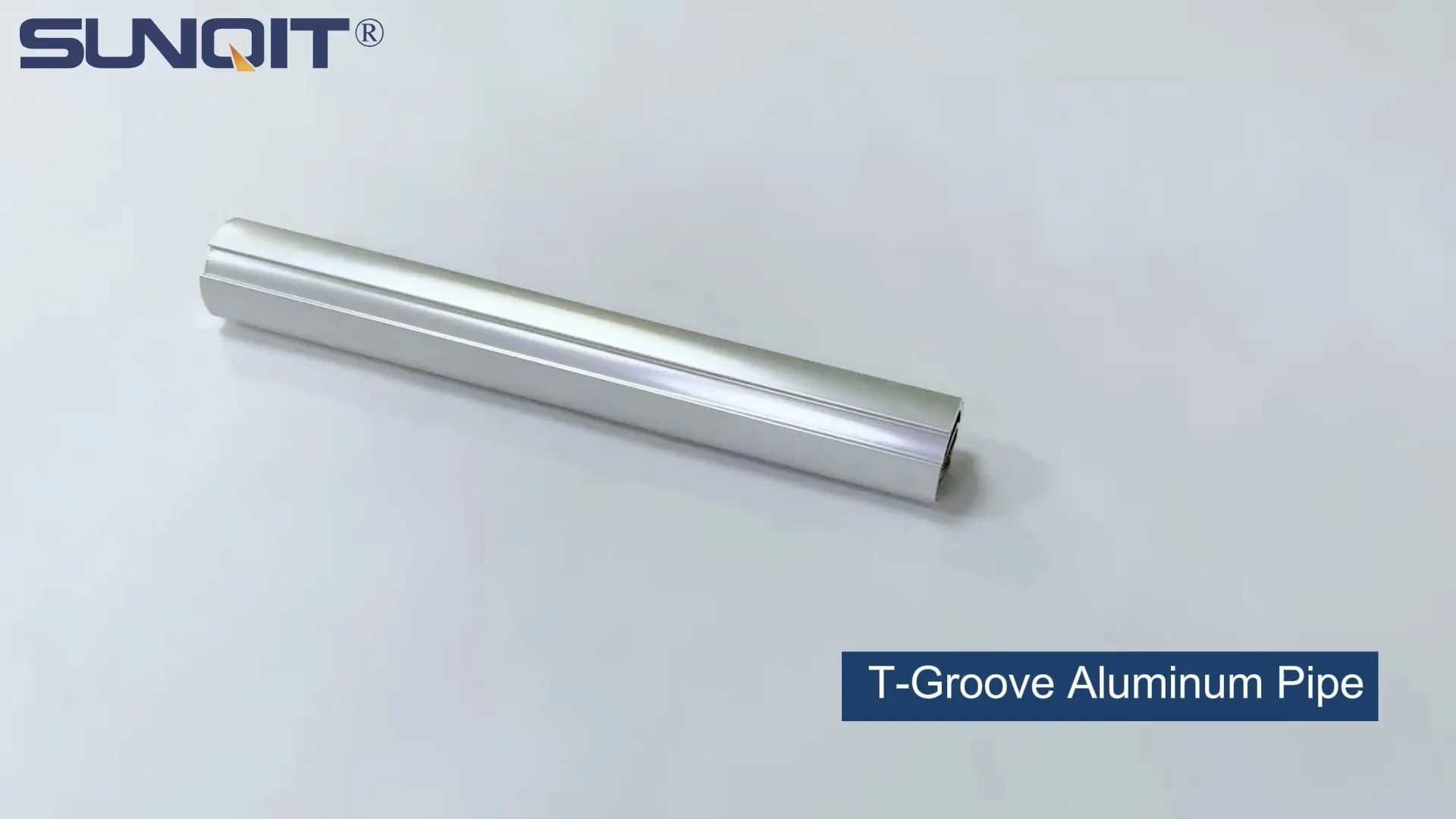
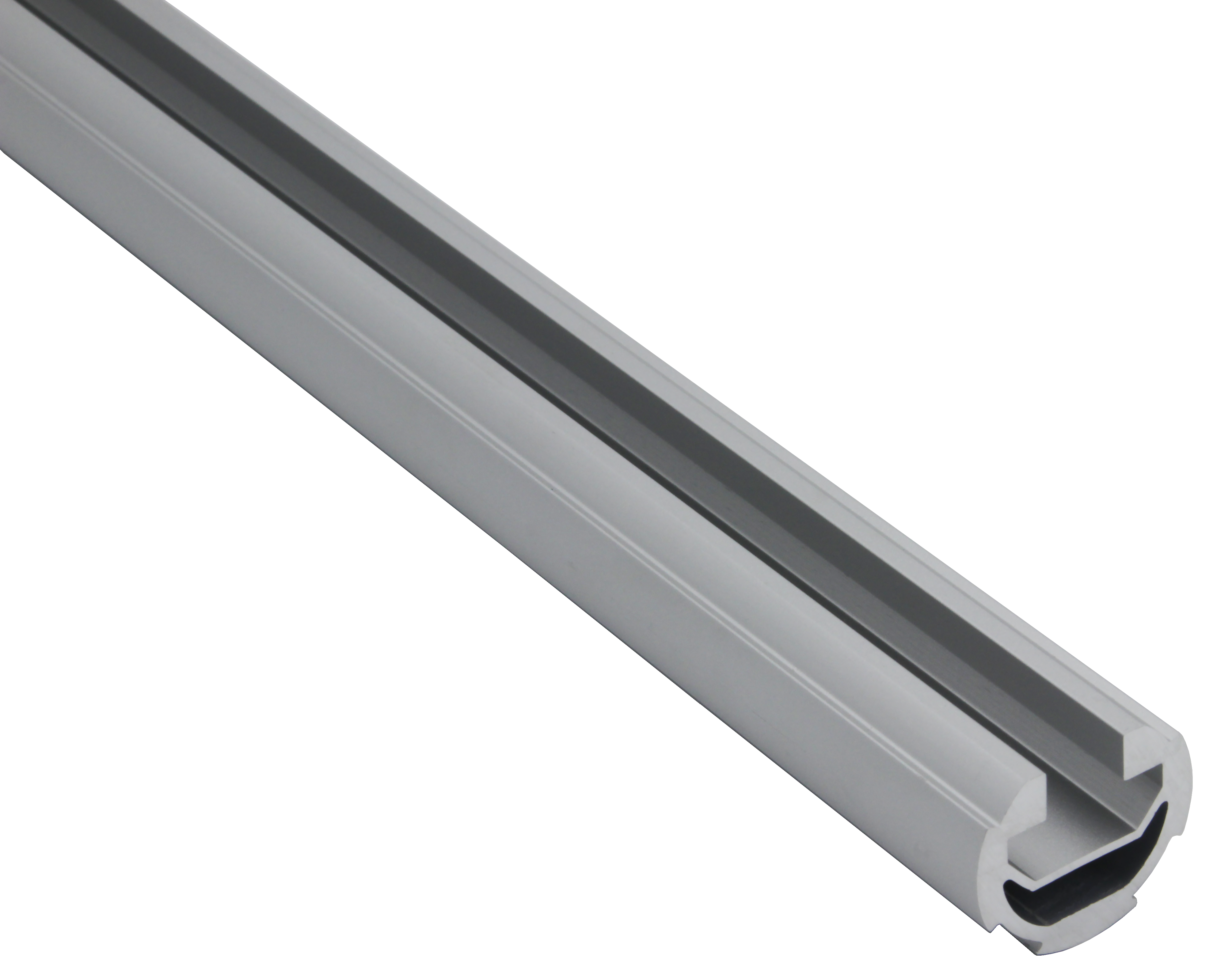
The aluminum pipe opening 10mm is installed into the T-shaped slider, which can be installed with casters or other matching functional parts. The groove can be used for positioning and is used for the track of the roller.
Walk into any manufacturing facility today, and you'll sense the pressure in the air—pressure to produce faster, adapt quicker, and reduce waste at every turn. Modern factories aren't just about machines; they're about systems that can keep up with shifting consumer demands, shorter product lifecycles, and the relentless pursuit of efficiency. For decades, manufacturers leaned on tried-and-true materials like steel and wood to build workbenches, material racks, and production lines. But as the industry evolves, those traditional materials are starting to show their age. Steel is strong, but it's heavy and hard to reconfigure. Wood is cheap, but it warps, splinters, and can't stand up to the wear and tear of a busy factory. Enter T-groove aluminum pipe—a quiet disruptor that's redefining what's possible on the factory floor. This isn't just another metal tube; it's a versatile, lightweight, and surprisingly strong solution that's quickly becoming the backbone of lean, agile manufacturing systems worldwide.
The Rise of T-Groove Aluminum Pipe: More Than Just Metal
To understand why T-groove aluminum pipe is gaining traction, let's start with the basics: what exactly is it? At its core, T-groove aluminum pipe is an aluminum extrusion profile—meaning it's created by pushing heated aluminum through a die to form a specific cross-sectional shape. The "T-groove" refers to the T-shaped channel running along the length of the pipe, a design detail that might seem small but unlocks a world of possibilities. Unlike smooth steel pipes or solid wooden beams, this groove allows for quick, tool-free attachment of accessories: brackets, connectors, shelves, and even casters. It's like building with a set of high-tech Legos, but for grown-ups who need their creations to withstand heavy loads and constant use.
But why aluminum? Aluminum has long been prized for its strength-to-weight ratio, but T-groove designs take that advantage to the next level. Traditional aluminum pipes are often plain tubes, useful for basic structures but limited in flexibility. T-groove pipes, by contrast, are engineered with modularity in mind. The extrusion process allows manufacturers to create pipes with varying wall thicknesses, internal ribbing, and custom groove sizes, tailoring the product to specific load requirements. For example, a pipe used in a lightweight material rack might have a thinner wall, while one supporting a heavy-duty workbench could feature reinforced ribs—all without sacrificing the material's natural lightness.
What really sets T-groove aluminum apart, though, is its departure from the "one-size-fits-all" mentality of traditional manufacturing materials. In the past, if a factory needed to reconfigure a production line or upgrade a workbench, it meant cutting steel, welding joints, or replacing entire wooden structures—time-consuming, labor-intensive tasks that often resulted in downtime. With T-groove aluminum, reconfiguration is as simple as sliding a connector into the groove, tightening a knob, and moving the pipe to its new position. This flexibility isn't just convenient; it's a game-changer for manufacturers operating in fast-paced industries like electronics, automotive, and consumer goods, where production lines might need to shift from assembling smartphones to tablets overnight.
Lightweight Meets High-Load: The Core Advantage
The magic of T-groove aluminum pipe lies in its ability to balance two seemingly opposing traits: lightness and strength. Let's put this into perspective. A standard 1-meter length of 20mm steel pipe weighs around 2.4 kilograms, while a comparable T-groove aluminum pipe weighs just 0.8 kilograms—less than half. That might not sound like much on paper, but multiply that by hundreds of pipes in a large production line, and the difference adds up. Lighter structures are easier to move, require less energy to transport, and reduce the strain on factory floors and equipment. Imagine a team of workers needing to reposition a heavy steel workbench versus a T-groove aluminum one; the latter can be shifted by two people in minutes, while the former might require a forklift and a team of four. Time saved here is time that can be spent on actual production, not rearranging furniture.
But lightness means nothing if the pipe can't hold up under pressure. Skeptics might wonder: How can something so light support the heavy tools, parts, and materials that fill a factory? The answer lies in smart engineering. T-groove aluminum pipes aren't just hollow tubes; many are designed with internal reinforcing ribs or thicker walls at stress points, distributing weight evenly along the length of the pipe. Take, for example, a workbench built with T-groove aluminum. A typical single-deck workbench (without casters) might use 40mm diameter pipes with a 2mm wall thickness and internal ribbing. Tests show that such a structure can support up to 300 kilograms of evenly distributed weight—more than enough for power tools, assembly components, and even small machinery. Compare that to a wooden workbench of the same size, which might start to sag under 200 kilograms, or a steel one that can handle the weight but requires a reinforced base to prevent the floor from buckling.
Another factor boosting load capacity is the precision of the aluminum extrusion process. When aluminum is extruded, it forms a uniform structure with consistent strength throughout—no weak spots, no inconsistencies. Steel pipes, by contrast, can have seams or imperfections from welding, which can fail under stress. Wood, of course, is prone to knots and grain irregularities that weaken its structure over time. T-groove aluminum's reliability is a huge plus for manufacturers who can't afford unexpected failures on the production line. A material rack holding delicate electronic components, for instance, needs to stay stable to prevent costly damage; T-groove aluminum's consistent strength gives managers peace of mind that their products are safe, even during busy shifts.
Beyond the Pipe: The Role of Aluminum Profile Accessories
A T-groove aluminum pipe is only as good as the accessories that bring it to life. Think of the pipe as the canvas; the accessories are the paintbrushes, paints, and tools that turn it into a masterpiece. Aluminum profile accessories—connectors, brackets, casters, and end caps—are the unsung heroes of this system, enabling everything from simple workbenches to complex conveyor systems. What makes these accessories so special? They're designed to work seamlessly with the T-groove, creating a friction-fit connection that's both strong and easy to adjust.
Let's start with connectors, the backbone of any modular system. Traditional steel structures rely on welding or bolts, which are permanent and require tools to modify. T-groove connectors, on the other hand, slide into the groove and lock in place with a thumb screw or cam lever. Take the internal rotary aluminum joint, for example: this small but mighty accessory allows two pipes to connect at any angle, rotating smoothly to adjust the position of a shelf or a tool holder. Need to tilt a workbench surface for better ergonomics? Just loosen the joint, adjust the angle, and tighten it back up—no welding, no drilling, no hassle. Similarly, parallel aluminum joints let you attach two pipes side by side, creating a sturdier base for heavy loads without adding unnecessary weight.
Casters and wheels are another essential accessory, turning static structures into mobile workstations. A basic aluminum tube frame with a set of swivel casters becomes a turnover trolley, capable of transporting materials across the factory floor with ease. But not all casters are created equal; T-groove systems offer options like ESD (electrostatic discharge) casters for electronics manufacturing, where static electricity can damage sensitive components, or heavy-duty locking casters for workbenches that need to stay put during use. The best part? Swapping out casters is as simple as removing a few screws—no need to replace the entire trolley if a wheel wears out.
Then there are the finishing touches: end caps to cover sharp edges, rubber strips to reduce noise and prevent scratches, and even sensor mounts for smart factory integration. These small details might seem trivial, but they add up to a safer, more efficient workspace. For example, plastic roller track guide rails—available in yellow or grey—can be attached to T-groove pipes to create gravity-fed material racks, allowing parts to slide smoothly from one workstation to the next. No more manual lifting, no more wasted time fetching components—just a steady, reliable flow of materials that keeps production moving.
The beauty of aluminum profile accessories is their interoperability. Most manufacturers design their accessories to fit standard T-groove sizes, meaning you can mix and match components from different brands (though it's always best to check compatibility). This flexibility ensures that as your needs change, you don't have to start from scratch. Need to add a shelf to an existing workbench? Grab a bracket, slide it into the groove, and you're done. Want to turn a static rack into a mobile one? Swap out the fixed feet for casters. It's this modularity that makes T-groove aluminum systems so appealing to small and large manufacturers alike—whether you're a startup building your first production line or a multinational corporation scaling up operations.

T-Groove Aluminum in Lean Systems: Building a More Efficient Future
Lean manufacturing isn't just a buzzword; it's a philosophy centered on eliminating waste, streamlining processes, and continuous improvement. And T-groove aluminum pipe is quickly becoming the material of choice for companies looking to put lean principles into practice. Why? Because lean systems thrive on flexibility and adaptability—two areas where T-groove aluminum excels.
Consider the concept of "just-in-time" production, where materials are delivered exactly when they're needed, reducing inventory costs and storage waste. To make this work, factories need material racks and workbenches that can be reconfigured to accommodate different part sizes and production schedules. A traditional steel rack might be built to hold a specific type of part, but if the product line changes, that rack becomes obsolete. With T-groove aluminum, the same rack can be adjusted in minutes: add a few more shelves, adjust the height of the crossbars, or even repurpose it as a workbench. This reduces the need for excess equipment, cutting down on both upfront costs and storage space—key components of waste reduction in lean systems.
Workbenches are another area where T-groove aluminum shines in lean environments. A typical lean workbench needs to be ergonomic, durable, and adaptable to different tasks. The Workbench E (single deck, without casters), for example, is a popular T-groove aluminum design that can be customized with tool holders, LED lights, and even integrated power strips. Because it's lightweight, it can be positioned to minimize movement for workers, reducing fatigue and increasing productivity. And if a new tool or machine is added to the workstation, the workbench can be modified to fit it—no need to order a brand-new bench. This not only saves money but also reduces the waste associated with discarding old equipment.
Material flow is another cornerstone of lean manufacturing, and T-groove aluminum plays a vital role here too. Roller tracks, often made from aluminum extrusion profiles with attached swivel roller balls, can be mounted on T-groove frames to create gravity-fed conveyor systems. These tracks allow parts to move smoothly from one workstation to the next, eliminating the need for manual transport and reducing the risk of errors or damage. For example, a material rack with 3 rows and 3 floors, built using T-groove pipes and roller tracks, can ensure that the right parts are always within reach, minimizing "search waste" and keeping production on track.
Perhaps the most significant contribution of T-groove aluminum to lean systems is its role in continuous improvement. In lean manufacturing, workers are encouraged to suggest changes to improve processes, but those changes often require physical modifications to the workspace. With traditional materials, implementing these suggestions can be time-consuming and costly, leading to resistance or delays. T-groove aluminum removes those barriers. A worker who notices that a material rack is too low can adjust the height themselves; a team that wants to rearrange their workstations to reduce bottlenecks can do so in an afternoon. This empowers employees to take ownership of their workspace, fostering a culture of innovation and collaboration—key drivers of long-term success in lean systems.

Comparing Traditional and Modern: Why T-Groove Aluminum Wins
Still not convinced that T-groove aluminum is worth the switch? Let's take a closer look at how it stacks up against traditional materials like steel and wood. The table below compares key factors that matter most to manufacturers: weight, load capacity, installation time, sustainability, and durability.
| Material | Weight (per linear meter) | Max Load Capacity (evenly distributed) | Installation Time (Basic Workbench) | Recyclability | Long-Term Durability |
|---|---|---|---|---|---|
| Steel Pipe (20mm) | 2.4 kg | 400 kg | 2-3 hours (requires welding/bolting) | Recyclable, but energy-intensive to process | Prone to rust without coating; seams may weaken over time |
| Wooden Beam (4x4 inch) | 1.8 kg | 200 kg (varies by wood type/grain) | 1-2 hours (requires cutting, drilling, screws) | Biodegradable, but not easily recyclable for structural use | Warps with moisture; splinters; susceptible to pests |
| T-Groove Aluminum Pipe (40mm) | 0.8 kg | 300 kg | 30-45 minutes (tool-free assembly) | Highly recyclable; retains 95% of original value | Corrosion-resistant; no seams; consistent strength over time |
As the table shows, T-groove aluminum holds its own against steel in load capacity while being significantly lighter. It outperforms wood in both strength and durability, and installation time is a fraction of what's needed for traditional materials. But the real standout is sustainability: aluminum is one of the most recyclable materials on the planet, with nearly 75% of all aluminum ever produced still in use today. Recycling aluminum uses just 5% of the energy required to produce new aluminum, making it a greener choice for eco-conscious manufacturers. Steel is recyclable too, but the process is more energy-intensive, and wood, while biodegradable, can't be recycled into structural beams once it's worn out.
Cost is another factor to consider, and while T-groove aluminum may have a higher upfront price tag than wood or even steel, its long-term savings are hard to ignore. A steel workbench might cost less initially, but factor in the labor for welding, the cost of anti-rust coatings, and the need to replace it every 5-7 years due to corrosion, and the total cost of ownership starts to climb. T-groove aluminum, on the other hand, requires minimal maintenance (just a quick wipe-down to remove dust), can be reconfigured dozens of times, and has a lifespan of 15-20 years or more. For manufacturers looking to invest in their future, the math is clear: T-groove aluminum pays for itself in reduced downtime, lower labor costs, and fewer replacements.
Future Trends: Where T-Groove Aluminum is Headed
So, what's next for T-groove aluminum pipe? As technology advances and manufacturing needs evolve, we're seeing three key trends emerge that will shape the future of this innovative material.
First, smarter integration with Industry 4.0 technologies. The rise of smart factories—equipped with IoT sensors, AI-driven analytics, and automation—demands materials that can keep up. T-groove aluminum is already being designed with built-in channels for wiring and sensor mounts, making it easier to add cameras, weight sensors, or RFID readers to workbenches and racks. Imagine a material rack that automatically tracks inventory levels as parts are removed, or a workbench that alerts maintenance when it's approaching maximum load capacity. These aren't just sci-fi concepts; they're practical applications that T-groove aluminum is making possible today.
Second, a focus on sustainability. As governments and consumers push for greener manufacturing practices, T-groove aluminum's recyclability and energy efficiency are becoming even more valuable. Manufacturers are exploring ways to reduce the carbon footprint of aluminum extrusion, from using renewable energy in production to developing plant-based lubricants for the extrusion process. We're also seeing the rise of "circular" T-groove systems, where old pipes and accessories are collected, recycled, and turned into new products—closing the loop and minimizing waste.
Third, expansion into new industries. While T-groove aluminum got its start in manufacturing, its versatility is opening doors in sectors like aerospace, healthcare, and even retail. In aerospace, lightweight yet strong T-groove structures are being used to build assembly jigs for aircraft components. In healthcare, ESD-safe workbenches and cleanroom-compatible accessories are helping labs and medical device manufacturers maintain strict sterility standards. And in retail, modular T-groove displays are allowing stores to rearrange their layouts overnight to keep up with seasonal trends—no more expensive custom fixtures that become obsolete in a few months.
Overcoming Challenges: Why Now is the Time to Switch
Of course, no innovation comes without challenges. One common concern among manufacturers is the upfront cost of T-groove aluminum compared to wood or steel. It's true that T-groove systems can cost more initially, but as we've seen, the long-term savings in labor, maintenance, and reconfiguration make them a worthwhile investment. Many suppliers now offer financing options or trade-in programs for old steel/wood equipment, making the switch more accessible for small businesses.
Another challenge is knowledge gaps. Some factory managers and workers are unfamiliar with T-groove aluminum and may be hesitant to adopt a new system. To address this, suppliers are offering training programs, online tutorials, and even on-site demos to show how easy it is to build and modify T-groove structures. Once teams see how quickly they can assemble a workbench or reconfigure a rack, the hesitation often melts away.
Finally, there's the perception that T-groove aluminum is "too light" for heavy-duty applications. This couldn't be further from the truth. As we discussed earlier, modern T-groove designs can support loads comparable to steel, and ongoing engineering innovations are pushing those limits even higher. For manufacturers with extreme load requirements, suppliers offer reinforced pipes and heavy-duty accessories that can handle 500 kg or more—proving that lightness doesn't mean weakness.
Conclusion: Building the Factories of Tomorrow, Today
T-groove aluminum pipe isn't just a material; it's a mindset shift. It's about moving away from rigid, one-time-use structures and embracing a future where manufacturing systems are as agile and adaptable as the businesses they support. Whether you're building a simple workbench or a complex conveyor system, T-groove aluminum offers the lightweight strength, modular flexibility, and sustainability that modern factories need to thrive.
As we look ahead, the message is clear: the factories of tomorrow won't be built with steel and wood. They'll be built with materials like T-groove aluminum—materials that empower innovation, reduce waste, and grow with your business. So why wait? The future of manufacturing is already here, and it's lighter, stronger, and more versatile than ever before. It's time to pick up that T-groove pipe and start building.