- Company Articles
- Industry articles
- Industry News
- Future Trends: Smart Manufacturing with 2040 EU Standard Aluminum Profile & IoT

Future Trends: Smart Manufacturing with 2040 EU Standard Aluminum Profile & IoT
Related Product
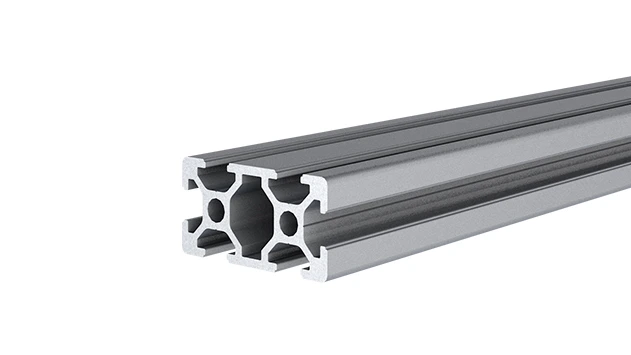
2040 EU Standard Aluminum Profile
2040 is a 2.00 x 4.00CM fractional 20 series square extrusion T-slot profile with four open T-slots, two side with 2.00cm face, the other side with 4.00cm face. The profile has align-a-grooves to assist in aligning connecting profiles.
Walk into any modern factory today, and you'll notice a quiet revolution unfolding. The clunky, fixed assembly lines of yesteryear are making way for something sleeker, smarter, and infinitely more adaptable. This isn't just about robots or fancy software—it's about the very bones of manufacturing: the infrastructure that holds everything together. In this shift, one component has emerged as a unsung hero: the 2040 EU standard aluminum profile. Pair it with the Internet of Things (IoT), and you've got a recipe for a manufacturing future that's not just efficient, but human-centric too. Let's dive into how these two powerhouses are reshaping the way we build, produce, and innovate.
The Backbone of Smart Factories: 2040 EU Standard Aluminum Profile
First things first: What exactly is a 2040 EU standard aluminum profile? At its core, it's a lightweight, durable extruded aluminum rail with a cross-section of 20mm by 40mm—dimensions that might sound small, but pack a punch in versatility. Unlike traditional steel pipes or fixed wooden structures, this profile is designed with precision in mind: its T-slot grooves run the length of the rail, allowing for easy attachment of accessories without welding or drilling. Think of it as the Lego of manufacturing—simple, modular, and ready to be reimagined whenever your needs change.
Why does the "EU standard" matter? For starters, it ensures consistency. Manufacturers across Europe (and increasingly globally) rely on these specs to guarantee that a bracket bought from one supplier will fit a profile from another. This interoperability is gold in smart manufacturing, where agility is key. A factory producing smartphones today might need to switch to wearables next month; with 2040 profiles, reconfiguring workstations isn't a weeks-long project—it's a matter of loosening a few bolts and rearranging components.
But it's not just about flexibility. Aluminum brings inherent advantages: it's corrosion-resistant, so it holds up in messy environments like automotive shops or food processing plants. It's lightweight enough for workers to handle without heavy machinery, yet strong enough to support tools, materials, and even small assembly robots. And let's not forget sustainability—aluminum is 100% recyclable, aligning with the growing push for eco-friendly manufacturing practices.
Traditional vs. 2040 Aluminum Profile Setups
| Feature | Traditional Steel/Wood Structures | 2040 EU Standard Aluminum Profile |
|---|---|---|
| Reconfiguration Time | Days to weeks (requires welding/cutting) | Hours (tool-free adjustments with accessories) |
| Weight | Heavy (requires machinery for movement) | Lightweight (manual handling possible) |
| Durability | Prone to rust (steel) or warping (wood) | Corrosion-resistant, long lifespan |
| IoT Integration | Limited (hardwired sensors, difficult to modify) | Seamless (T-slots accommodate sensor mounts, cable management) |
Beyond the Profile: Aluminum Profile Accessories That Make the Difference
A profile alone is just a rail—it's the aluminum profile accessories that turn it into a fully functional system. These small but mighty components are the unsung heroes of modular manufacturing, enabling everything from simple workbenches to complex material transport systems. Let's break down a few game-changers.
Take joints and connectors, for example. The 2040 profile's T-slot design works with a range of specialized joints—90-degree brackets for right angles, swivel joints for adjustable angles, and even internal rotary aluminum joints that let sections rotate smoothly. Imagine a workbench where the tool shelf can tilt 30 degrees for better ergonomics, or a material rack where shelves pivot to load/unload heavy boxes—all possible with a few clicks of these accessories.
Then there are the end caps and covers. T-slot rubber seal covers slide into the profile's grooves, hiding sharp edges and protecting cables that run through the rail (essential for IoT sensors!). Plastic end caps snap on to prevent dust buildup and add a clean, finished look—small details that make a big difference in daily use.
Clamps and brackets are another staple. Aluminum pipe clamps secure tools or auxiliary components like barcode scanners to the profile, while flat brackets create stable mounting points for monitors or LED task lights. Even something as simple as a caster wheel (from the keyword list!) becomes a tool for mobility: attach casters to a 2040 profile base, and suddenly your fixed workbench is a mobile station that can follow workers across the factory floor.
The beauty of these accessories? They're designed to work together. A roller track placon mount (used to attach roller tracks to profiles) can be paired with a swivel roller ball (0.5 inch or 1 inch, depending on load) to create a smooth sliding surface for materials. Add an aluminum guide rail, and you've got a custom conveyor system that can be extended or shortened in minutes. It's this modularity that makes 2040 profiles and their accessories a cornerstone of smart manufacturing—no two setups have to be the same, and every setup can evolve.

Lean System Meets IoT: Where Efficiency Gets Smart
Lean manufacturing has long been about eliminating waste—cutting unnecessary steps, streamlining workflows, and focusing on value. But lean alone can only go so far without data. Enter IoT: sensors, connectivity, and real-time analytics that turn a lean system into a smart lean system. And 2040 aluminum profiles? They're the perfect canvas for this integration.
Picture a lean workbench built with 2040 profiles. Its T-slots house tiny IoT sensors that track everything from tool usage (how often is that drill actually used?) to worker movement (are operators walking too far between stations?). Temperature sensors monitor heat buildup from machinery, while vibration sensors on nearby roller tracks detect if a bearing is starting to wear out. All this data flows to a central dashboard, giving managers a bird's-eye view of what's working and what's not.
Take predictive maintenance, for example. In a traditional setup, a roller track might fail unexpectedly, halting production until it's repaired. With IoT-enabled 2040 profiles, vibration and noise sensors on the track's rollers send alerts at the first sign of. The system can even predict when a replacement is needed, allowing maintenance teams to fix it during scheduled downtime. No more repairs, no more lost productivity—just smooth, uninterrupted workflow.
Then there's inventory management. Attach RFID tags to components moving along a roller track outfitted with 2040 profiles and aluminum guide rails. As each part passes a scanner, the IoT system updates inventory levels in real time. If stock runs low, it triggers an automatic reorder—no more manual counts or stockouts. For a lean system, this is a game-changer: it ensures materials arrive exactly when needed, reducing storage waste and keeping cash flow tight.
But it's not just about machines—it's about people. Smart workbenches can adjust height automatically based on worker preferences stored in the IoT system, reducing strain and fatigue. LED lights under the bench surface brighten or dim based on ambient light, protecting eyes during long shifts. Even feedback loops are smarter: workers can use a touchscreen mounted on the profile to flag bottlenecks or suggest improvements, which are instantly relayed to the management dashboard. This kind of collaboration turns lean from a top-down mandate into a team effort.
On the Factory Floor: Real-World Applications
Enough theory—let's talk about how 2040 EU standard aluminum profiles, aluminum profile accessories, and IoT are transforming day-to-day operations. From workbenches to roller tracks, these tools are making factories more efficient, adaptable, and human-centered.
The Smart Workbench: Where Precision Meets Data
Consider the "Workbench E (single deck-without caster)" from the keyword list—a simple setup, but with smart upgrades. Built with 2040 profiles and aluminum honeycomb panels for a sturdy, lightweight surface, this workbench isn't just a place to assemble parts. Its T-slots hold power strips, USB chargers for tools, and a small IoT hub that connects to sensors throughout the station. A barcode scanner integrated into the profile reads part numbers, logging each assembly step in real time. A small screen displays work instructions, updating automatically as the product changes. And if a worker pauses for too long, the system sends a gentle reminder (no nagging—just a helpful nudge) to keep the line moving.
Ergonomics matter here too. The bench's height is adjustable via a hand crank (connected to aluminum pipe clamps), and the accessories—like tool holders and bin dividers—can be rearranged to fit left- or right-handed workers. No more one-size-fits-all stations; this is manufacturing tailored to the people doing the work.
Roller Tracks: The Silent Workhorses of Material Flow
Roller tracks have been around for decades, but with 2040 aluminum profiles and swivel roller balls, they're getting a high-tech makeover. Imagine a material rack (say, "Material Rack B (3 row and 3 floor)" from the keywords) where each shelf is a roller track built with 2040 profiles and plastic roller track guide rails (yellow or grey, depending on the material type). Swivel roller balls (1 inch for heavy parts, 0.5 inch for smaller components) let workers slide bins effortlessly, reducing strain and speeding up transfers.
But add IoT, and these tracks become data goldmines. Each roller has a sensor that counts how many times it's used, flagging if a section is overloaded or underused. A "roller track placon mount center support bracket" houses a tiny camera that scans barcodes on passing bins, updating inventory and tracking lead times. If a bin gets stuck (maybe due to a misaligned plastic guide rail), the system alerts nearby workers via a light mounted on the profile—no more hunting for bottlenecks.
Turnover Trolleys: Mobility with Purpose
Even something as simple as a turnover trolley benefits from 2040 profiles. Built with lightweight aluminum tubes and caster wheels (with brake locks for stability), these trolleys glide across factory floors, carrying parts from storage to assembly lines. Their frames, made with parallel aluminum joints and aluminum foot bases, are strong enough to hold heavy loads but light enough for one person to maneuver. And with T-slot rubber seal covers hiding cables, they can even power small tools or LED lights for workers on the go.
Case Study: How XYZ Electronics Boosted Efficiency by 40% with Smart Aluminum Setups
Let's zoom in on a real-world example: XYZ Electronics, a mid-sized manufacturer of smartphone components. Three years ago, their factory was stuck in the past—fixed steel workbenches, manual inventory counts, and frequent production halts due to equipment failures. Workers complained about sore backs from lifting heavy bins, and managers struggled to pinpoint why some lines were faster than others.
Then, they partnered with a lean system supplier specializing in 2040 EU standard aluminum profiles. The first step? Replacing all steel workbenches with modular setups using 2040 profiles and aluminum profile accessories. Workers could now adjust their stations in minutes, and the team added IoT sensors to track tool usage and assembly times. Next, they upgraded their material racks and roller tracks, installing swivel roller balls and barcode scanners to automate inventory.
The results were staggering. Reconfiguration time for product changes dropped from two days to four hours. Predictive maintenance on roller tracks cut unexpected downtime by 60%. And with real-time data on worker movement, XYZ rearranged their lines to reduce walking distance by 30%, slashing fatigue and boosting morale. Most importantly, overall efficiency jumped by 40%—all from upgrading their infrastructure with smart, adaptable tools.
"It's not just about the profiles," says Maria, XYZ's production manager. "It's about giving workers the power to shape their own workspace. When a bench is comfortable and tools are within reach, people care more about the quality of their work. And with the data from IoT, we're not guessing anymore—we're making decisions that actually move the needle."
Challenges and How to Overcome Them
Adopting 2040 EU standard aluminum profiles and IoT isn't without hurdles. Let's address the biggest concerns and how to tackle them.
Initial Cost: Investing in the Future
Aluminum profiles and IoT sensors cost more upfront than traditional steel or wood. For small manufacturers, this can be a sticker shock. But here's the thing: traditional setups require constant repairs, replacements, and downtime. A 2040 profile system, with its durable aluminum and tool-free adjustments, lasts longer and adapts to new products, reducing the need for full overhauls. Plus, IoT-driven efficiency gains often pay for the investment within a year or two. Many suppliers offer financing or phased adoption plans—start with one line, prove the ROI, then expand.
Training: Getting Teams on Board
Workers used to fixed setups might resist change. "Why fix what isn't broken?" is a common refrain. The key is involving them from the start. Let workers test-drive a prototype workbench, ask for input on accessory placement, and train them on IoT tools in small, hands-on sessions. When employees see how the new system makes their jobs easier (less lifting, fewer errors), buy-in follows.
Integration Complexity: Making IoT Work for You
IoT can feel overwhelming—sensors, dashboards, data analytics… where do you start? Partner with a lean system supplier that specializes in smart manufacturing. They'll help you choose the right sensors (you don't need to track everything!), set up user-friendly dashboards, and train your team to interpret the data. Start small: focus on one pain point (like roller track downtime) before scaling to the entire factory.
The Road Ahead: What's Next for Smart Manufacturing with Aluminum Profiles?
The future looks bright—and modular. As IoT and AI advance, we'll see even smarter integration with 2040 profiles. Imagine AI-driven design tools that automatically generate workbench layouts based on production goals, or 3D-printed aluminum profile accessories customized for unique tasks. Sustainability will also take center stage, with recycled aluminum and energy-efficient IoT sensors becoming standard.
We'll also see more collaboration between humans and robots. Small, lightweight cobots (collaborative robots) will mount directly on 2040 profiles, working alongside workers to handle repetitive tasks. And with 5G connectivity, data from factory floors will flow faster than ever, enabling real-time adjustments across global supply chains.
But at the heart of it all will be the same principle that makes 2040 profiles so powerful: adaptability. The factories of tomorrow won't just be smart—they'll be human-centered , built to evolve with the people who run them and the products they create.
Conclusion: Building the Future, One Profile at a Time
Smart manufacturing isn't about replacing humans with machines—it's about giving humans the tools to work smarter, faster, and more comfortably. 2040 EU standard aluminum profiles, paired with aluminum profile accessories, lean systems, and IoT, are making this possible. They're the quiet revolution reshaping factory floors, one adjustable workbench and data-driven roller track at a time.
So whether you're a small workshop or a global manufacturer, the message is clear: the future of manufacturing is modular, connected, and built on a foundation that grows with you. And it all starts with a simple, 20mm by 40mm aluminum profile.