- Company Articles
- Industry articles
- Industry News
- Future Trends: T Slot Aluminum Pipe with Board Holder in Smart Manufacturing Systems

Future Trends: T Slot Aluminum Pipe with Board Holder in Smart Manufacturing Systems
Related Product
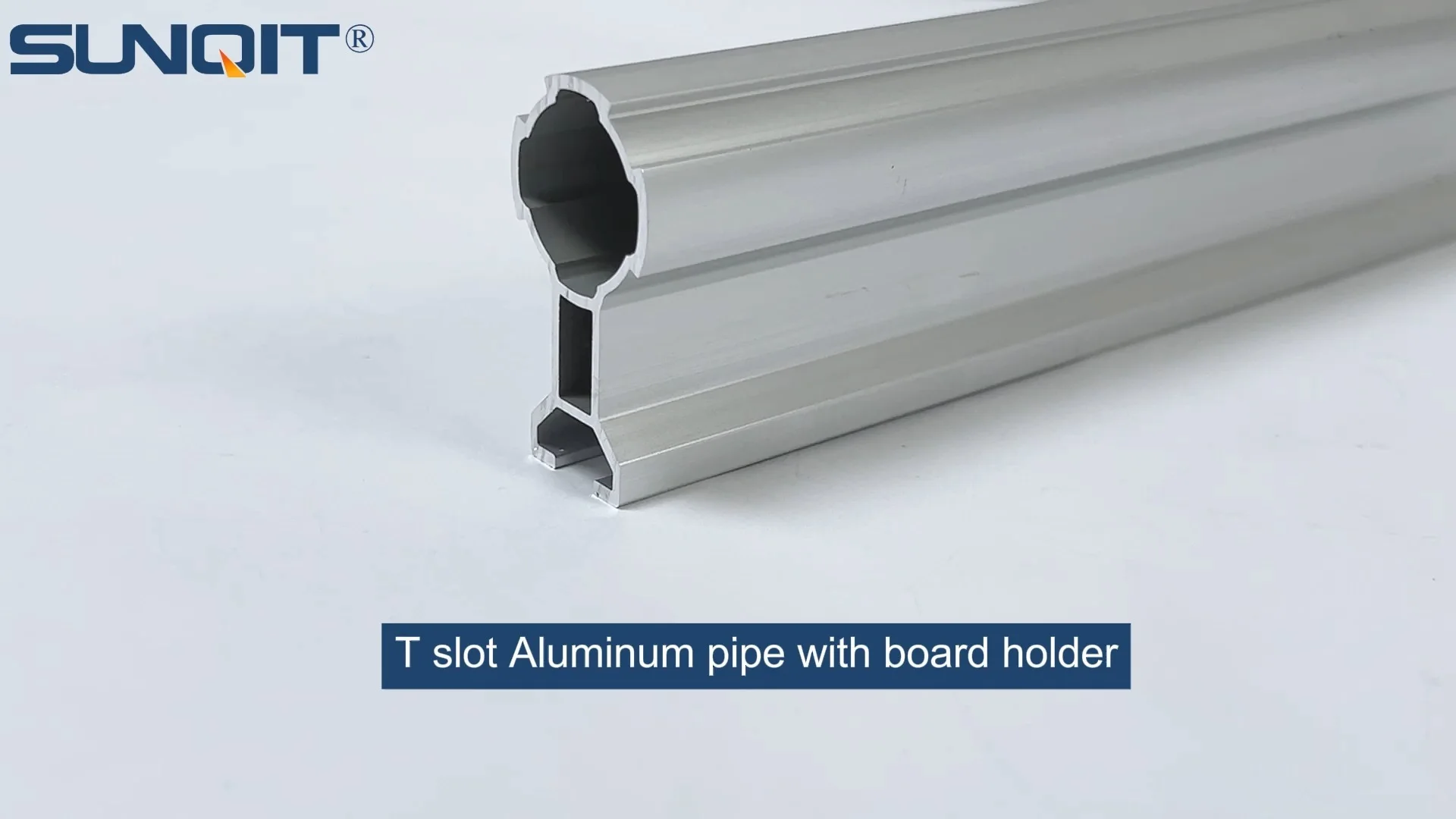
T Slot Aluminum Pipe with Board Holder
T slot Aluminum pipe with board holder,the pipe one side connected by a joint, the other side with a slot which can hold a tray or a aluminum pannel
Walk into any modern factory today, and you'll notice a quiet revolution unfolding. The clunky, rigid production lines of the past are making way for something smarter, more agile, and infinitely adaptable. This isn't just about robots or fancy software—it's about the bones of the operation: the workbenches, material racks, and workstation setups that keep production flowing. And at the heart of this transformation? T slot aluminum pipe with board holder systems. These unassuming components are quietly redefining what smart manufacturing looks like, offering a level of flexibility and customization that traditional steel or plastic systems can't match. Let's dive into why they're becoming indispensable, how they integrate with lean systems, and what the future holds for these versatile tools.
1. The Shift to Smart Manufacturing: Why Rigidity No Longer Works
Manufacturing has always been about evolution. From the assembly lines of the Industrial Revolution to the automation of the late 20th century, each era brought new ways to make things faster, better, and cheaper. Today, we're in the midst of Industry 4.0—the "smart factory" era—where connectivity, data, and adaptability are king. Factories aren't just producing goods anymore; they're producing insights, optimizing in real time, and pivoting quickly to meet changing customer demands. But here's the catch: all that digital intelligence needs a physical backbone that can keep up.
Think about it: if your production line is bolted together with fixed steel frames, reconfiguring it to make a new product or scale up a hot-selling item takes weeks (or months) of downtime, not to mention costly renovations. That's a problem when consumer preferences shift overnight or supply chains get disrupted. Smart factories need systems that can change as fast as their data does. They need workstations that can be rearranged in hours, not days. They need material racks that adapt to new inventory sizes without requiring a complete overhaul. Enter T slot aluminum pipe with board holder systems—a solution built for the speed and flexibility of modern manufacturing.
2. T Slot Aluminum Pipe: More Than Just Metal Tubing
At first glance, T slot aluminum pipe might look like any other metal tube. But pick one up, and you'll notice the difference immediately. It's lightweight—far lighter than steel—yet surprisingly strong, thanks to its aluminum extrusion profile design. Run your finger along its length, and you'll feel the signature "T slot" groove running down one or more sides. That groove isn't just a design quirk; it's the secret to its versatility. It's where accessories like board holders, tool hooks, and sensors attach, no drilling or welding required. Simply slide a connector into the slot, tighten a screw, and you're done. Need to move it later? Loosen the screw, reposition, and tighten again. It's that easy.
But why aluminum? For starters, it's corrosion-resistant, which matters in factories where moisture, coolants, or chemicals are part of the process. Unlike steel, it won't rust, so your workbench or flow rack stays functional (and looking clean) for years. It's also recyclable, aligning with the sustainability goals many manufacturers are prioritizing today. And because it's extruded—shaped by forcing molten aluminum through a die—profiles can be customized to specific sizes and slot configurations, making it easy to tailor to unique needs. Whether you're building a small workbench for electronics assembly or a large material flow rack for automotive parts, there's a T slot aluminum pipe that fits.
Aluminum Profile Accessories: The Glue That Holds It All Together
A pipe is only as good as the accessories that connect it, and T slot aluminum systems shine here. Aluminum profile accessories—think joints, brackets, connectors, and end caps—are designed to work seamlessly with the T slot grooves. Take a 90-degree corner joint, for example: it slides into the slot of two perpendicular pipes, creating a sturdy right angle in seconds. No welding, no special tools, just a hex key and a few minutes. Need to add a shelf? Use a flat bracket that bolts directly into the T slot. Want to attach a monitor arm for a digital work instruction screen? A simple clamp-on bracket does the job. These accessories turn a basic pipe into a modular building block, letting you design almost any structure you can imagine.
What's most impressive is how these accessories evolve with manufacturing needs. Today, you can find accessories like cable management clips (to keep wires tidy in smart workstations), LED light brackets (for better visibility), and even sensor mounts (to track production metrics). It's a system that grows with your factory, not against it.

3. The Board Holder: Small Accessory, Big Impact
If T slot aluminum pipe is the backbone of the workstation, the board holder is the hands that keep everything organized. In any manufacturing setting, operators need quick access to tools, work instructions, checklists, or even digital displays. A misplaced document or a tool that's hard to reach can slow down production, create errors, and frustration. Board holders solve this by providing a dedicated, adjustable space for these essentials—and when paired with T slot aluminum, they become even more powerful.
Traditional board holders are often fixed: glued to a wall, bolted to a bench, or permanently attached to a rack. If you need to move them—say, to adjust the height for a taller operator or reposition them for a new workflow—you're out of luck. T slot board holders, though, are different. They attach directly to the T slot groove using simple brackets, so you can slide them up, down, left, or right in minutes. Need to angle the board for better visibility? A swivel joint lets you tilt it. Want to add a second board for a new set of instructions? Just clip on another holder. It's customization without the commitment.
In smart factories, this adaptability is game-changing. Imagine a workbench where operators switch between assembling two different products: Product A requires a printed checklist, while Product B uses a tablet running a digital tutorial. With a T slot board holder, you can quickly swap a paper holder for a tablet mount, or even have both side by side. No downtime, no retooling—just a quick adjustment. It's small changes like this that add up to big gains in efficiency.

4. Integrating with Lean Systems: Waste Reduction, Simplified
Lean manufacturing has been a buzzword for decades, but its core principle—eliminating waste—has never been more relevant. Waste can take many forms: time wasted on reconfiguring workstations, money wasted on custom steel fabrication, or space wasted on oversized, fixed racks. T slot aluminum pipe with board holder systems are a lean manager's dream, because they're built to minimize all three types of waste.
Let's start with time waste. Traditional production lines often require custom-built steel structures. If you need to change a workbench height or add a shelf, you'd have to call in a fabricator, wait for them to design and build the part, and then install it—days or weeks of downtime. With T slot aluminum, you can do it yourself, in hours. A maintenance technician or even a line operator can reconfigure a workstation using basic tools and off-the-shelf accessories. That means less idle time and more production.
Then there's material waste. Steel is heavy, so shipping and installing it uses more energy. It's also hard to recycle if you need to scrap a structure. Aluminum, by contrast, is lightweight (reducing shipping costs and energy use) and 100% recyclable. Even better, since T slot systems are modular, you can repurpose parts when you reconfigure. That old workbench frame? Take it apart and use the pipes to build a new material rack. No waste, just reuse.
Space waste is another area where T slot systems excel. Lean principles emphasize "right-sized" equipment—structures that fit the task, not the other way around. T slot aluminum lets you build compact, tailored workstations. For example, a small electronics assembly line might need a narrow workbench with a board holder for tools and a flow rack for components. A T slot system can be designed to fit exactly that space, without wasted inches. And if production scales up later, you can easily add extensions to the existing structure, rather than replacing it entirely.
| Waste Type | Traditional Steel/Plastic Systems | T Slot Aluminum Systems |
|---|---|---|
| Time Waste (Reconfiguration) | Weeks (requires custom fabrication) | Hours (modular assembly with accessories) |
| Material Waste | High (hard to recycle, non-reusable parts) | Low (recyclable aluminum, repurposable components) |
| Space Waste | Oversized, fixed structures | Custom-sized, compact designs |
| Cost Waste | High upfront and reconfiguration costs | Lower total cost (modular, reusable parts) |
5. Real-World Applications: From Workbenches to Flow Racks
Talk is cheap—let's look at how T slot aluminum pipe with board holder systems are transforming real manufacturing setups. Take workbenches, for example. A typical production workbench needs to hold tools, parts bins, a board for instructions, and maybe a computer. With a T slot aluminum frame, you can design a bench that's exactly the right height for your operators (reducing ergonomic injuries), with a board holder positioned at eye level, and tool hooks along the side. If you switch to a taller operator, adjust the legs using height-adjustable feet (another handy aluminum profile accessory). If you need to add a second level for more tools, bolt on a shelf in minutes.
Then there's flow racks—essential for lean material handling. Flow racks use gravity to feed parts to operators, reducing the need to bend or reach. Traditional flow racks are often fixed in size, so if you start using larger bins, you're out of luck. T slot aluminum flow racks, though, let you adjust the width and height of the rack to fit new bin sizes. The roller tracks (yes, roller track accessories work with T slot systems too) can be repositioned, and the sides can be extended with additional pipes. It's a rack that grows with your inventory, not against it.
One automotive parts manufacturer I spoke with recently shared their experience: they switched from steel workbenches to T slot aluminum with board holders and saw a 30% reduction in setup time when launching new products. Operators could reconfigure their workstations themselves, and the board holders kept instructions organized, cutting down on errors. "We used to spend days waiting for a welder to adjust a bench," the plant manager told me. "Now, we do it in the morning and start production by lunch." That's the power of adaptability.
6. Future Trends: What's Next for T Slot Aluminum Systems?
So, where do we go from here? As smart manufacturing evolves, T slot aluminum pipe with board holder systems are poised to become even more integral. Here are three trends to watch:
Integration with IoT and Smart Sensors
Smart factories run on data, and T slot systems are becoming data hubs. Imagine a workbench with a board holder that includes a built-in sensor. This sensor could track how often operators reference work instructions (indicating confusion) or how long tools sit unused (signaling waste). The T slot grooves make it easy to run wires for these sensors, and modular accessories let you add or remove them as needed. In the near future, we might see "smart board holders" with touchscreens that update in real time, showing production targets, quality alerts, or maintenance reminders—all powered by data from the factory floor.
Sustainability Takes Center Stage
Manufacturers are under increasing pressure to reduce their carbon footprints, and T slot aluminum systems are already ahead here. But expect to see even greener innovations: recycled aluminum profiles (using less energy to produce), plant-based plastic accessories (reducing reliance on petroleum), and designs optimized for minimal material use. Some suppliers are even experimenting with "circular" systems, where old pipes and accessories are collected, refurbished, and resold—closing the loop on waste.
AI-Driven Design Tools
Designing a T slot structure today is easier than ever, but AI will make it simpler. Imagine a tool where you input your needs ("I need a workbench for 3 operators with 2 board holders and a flow rack") and the AI generates a 3D model, lists the required pipes and accessories, and even suggests optimizations (like adding cable management or adjusting height for ergonomics). Some suppliers are already testing these tools, and they could democratize customization—even small factories with limited design experience could build professional-grade workstations.
7. Conclusion: The Future is Flexible
At the end of the day, manufacturing isn't just about machines—it's about people. It's about giving operators the tools they need to work smarter, not harder. T slot aluminum pipe with board holder systems do exactly that: they put control back in the hands of the people on the factory floor, letting them adapt, customize, and innovate without waiting for someone else to build it for them. In a world where change is the only constant, that flexibility isn't just a nice-to-have—it's a necessity.
So, whether you're running a small electronics shop or a large automotive plant, it's time to think about the bones of your operation. Are your workbenches and racks holding you back, or propelling you forward? If it's the former, maybe it's time to take a closer look at T slot aluminum systems. They might not be the flashiest part of your smart factory, but they just might be the most important.
The future of manufacturing isn't rigid. It's adaptable. It's modular. It's T slot aluminum pipe with board holder systems—quietly building the factories of tomorrow, one groove at a time.