- Company Articles
- Industry articles
- Industry News
- Global Market Demand for Lean Pipe Clamp B: Regional Trends

Global Market Demand for Lean Pipe Clamp B: Regional Trends
Related Product
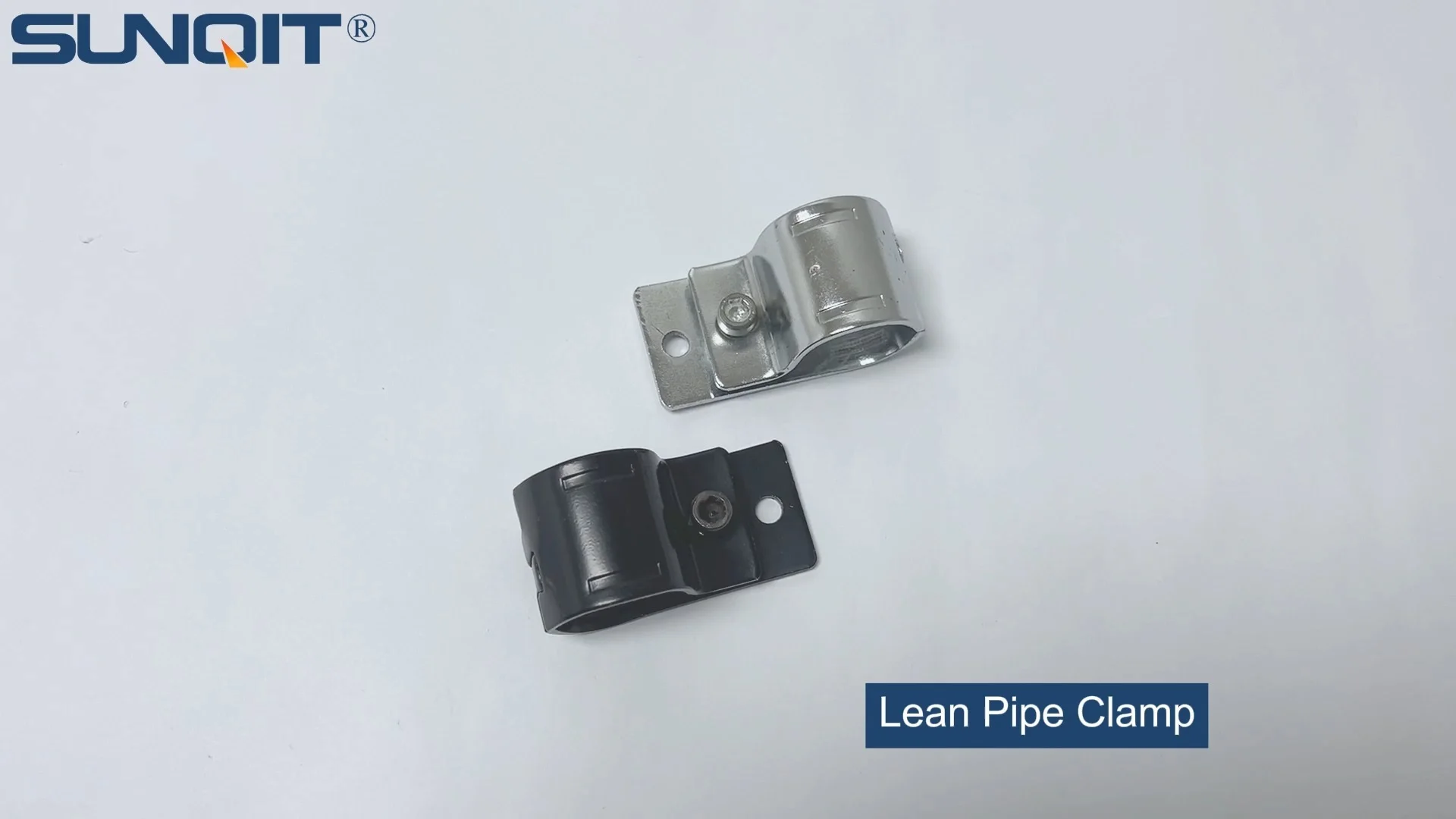
Lean Pipe Clamp
Lean pipe clamp is used for rack system hang monitor or other panel for workbenck, flowrack in production daily use.
The Backbone of Modern Lean Systems
Walk into any bustling manufacturing facility today, and you'll likely spot a network of modular workbenches, flow racks, and conveyors humming with activity. Behind this seamless orchestration of productivity lies a quiet hero: components like the lean pipe clamp B. In an era where efficiency isn't just a goal but a survival strategy, lean manufacturing has become the cornerstone of operations for industries ranging from automotive to electronics. At its heart is the ability to adapt, evolve, and minimize waste—and that's where yet critical parts like lean pipe clamp B come into play.
Lean systems thrive on flexibility. A production line that can reconfigure in hours instead of days, a workbench that adjusts to new workflows with minimal downtime, a material rack that grows with inventory needs—these aren't just conveniences; they're competitive advantages. And lean pipe clamp B? It's the unsung connector that holds these systems together, literally and figuratively. As manufacturers worldwide race to keep up with shifting consumer demands and Industry 4.0 innovations, the demand for reliable, durable, and adaptable components like this clamp has never been higher. But this demand isn't uniform across the globe. Regional nuances, industry priorities, and even cultural approaches to manufacturing shape how and why lean pipe clamp B finds its place in factories from Detroit to Düsseldorf to Dongguan.
To truly understand this global demand, we need to look beyond the product itself and into the stories of the regions driving it. What challenges are North American manufacturers facing that make lean pipe clamp B indispensable? How does Europe's focus on sustainability influence its material choices, and how does that impact clamp demand? Why is Asia-Pacific emerging as a powerhouse not just for production, but for innovation in lean components? And what role do lean pipe suppliers play in bridging these regional gaps, ensuring that a factory in Mexico has the same access to quality clamps as one in Malaysia?
Understanding Lean Pipe Clamp B: More Than Just a Fastener
Before diving into regional trends, let's take a moment to appreciate what makes lean pipe clamp B so vital. At first glance, it might seem like just another metal fastener, but in reality, it's a precision-engineered component designed to balance strength, flexibility, and ease of use. Typically made from materials like steel or aluminum—with aluminum profile variants gaining traction for their lightweight and corrosion-resistant properties—these clamps are the linchpin of modular lean systems. They connect lean pipes (hollow tubes used to build structures) at various angles, allowing for the creation of everything from simple workbenches to complex material handling setups.
What sets lean pipe clamp B apart is its versatility. Unlike fixed welding or permanent fixtures, these clamps allow for tool-free adjustments. A maintenance worker can loosen a clamp, reposition a pipe, and tighten it back in minutes, adapting the system to a new production run or a revised workflow. This modularity is a game-changer for small and medium enterprises (SMEs) with limited budgets, as well as large corporations scaling up operations. For example, an electronics manufacturer introducing a new smartphone model can reconfigure its assembly line workbenches using lean pipe clamp B instead of investing in entirely new infrastructure—a cost-saving move that also reduces waste.
But it's not just about flexibility. Durability matters, too. In high-paced environments where vibrations, heavy loads, and constant use are the norm, a clamp that fails can bring an entire line to a halt. Reputable lean pipe suppliers prioritize materials and design here: reinforced joints, corrosion-resistant coatings, and precision machining ensure that lean pipe clamp B can withstand the rigors of daily factory life. This reliability is why manufacturers don't just buy clamps—they build relationships with suppliers who consistently deliver on quality, even as demand spikes.

Global Market Overview: A Snapshot of Demand
The global market for lean pipe clamp B is on a steady upward trajectory, driven by several key factors. First, the rise of automation and smart manufacturing has pushed factories to adopt more agile systems. Lean systems, with their modularity, integrate seamlessly with IoT sensors and automated conveyors, and lean pipe clamp B is critical to maintaining that integration. Second, the post-pandemic focus on supply chain resilience has led manufacturers to prioritize local sourcing and adaptable in-house production, both of which rely on lean components. Third, sustainability goals are pushing the industry toward reusable, recyclable materials—like aluminum profile clamps—that reduce environmental impact without sacrificing performance.
According to industry insights, the Asia-Pacific region currently dominates the market, accounting for over 45% of global demand, followed by North America and Europe. However, growth rates tell a more nuanced story. Latin America and the Middle East, though smaller markets, are seeing double-digit growth as they invest in manufacturing infrastructure to meet regional demand and reduce import dependency. Meanwhile, in mature markets like North America, demand is driven less by volume and more by innovation—manufacturers here are willing to pay a premium for clamps that offer enhanced features, such as quick-release mechanisms or compatibility with advanced aluminum profile systems.
Another trend shaping demand is the shift toward specialized clamps for niche industries. For instance, the medical device sector requires clamps that meet strict hygiene standards, often favoring stainless steel variants, while the automotive industry leans into heavy-duty steel clamps for high-load applications. This specialization has led lean pipe suppliers to diversify their product lines, offering not just standard lean pipe clamp B but also custom solutions tailored to regional industry needs.

Regional Trends: Unpacking Demand Dynamics
North America: Innovation and Quality Take Center Stage
In North America, manufacturing is synonymous with innovation. From Detroit's automotive giants to Silicon Valley's tech startups, the region's factories are early adopters of new technologies, and their demand for lean pipe clamp B reflects this. Here, it's not just about having a clamp—it's about having a clamp that can keep up with rapid prototyping, frequent workflow changes, and strict safety regulations.
The automotive industry, a cornerstone of North American manufacturing, relies heavily on lean systems to streamline production. Assembly lines here are often high-mix, low-volume, meaning they produce multiple car models on the same line. This requires workbenches and material racks that can adjust quickly, and lean pipe clamp B is essential for that adjustability. Suppliers catering to this market often highlight features like "vibration resistance" and "tool-free adjustment" to appeal to automotive manufacturers, who can't afford delays from loose or faulty clamps.
Another key driver in North America is the focus on worker ergonomics. Factories are increasingly designing workspaces that reduce strain and improve productivity, and lean pipe clamp B plays a role here, too. Adjustable workbenches, built using clamps that lock securely at varying heights, allow workers to customize their stations, reducing injuries and boosting morale. Lean pipe suppliers in the region often partner with ergonomic consultants to develop clamps that support these designs, further cementing their role as strategic partners rather than just vendors.
Sustainability is also gaining ground. While steel clamps remain popular for their strength, there's growing interest in aluminum profile clamps, which are lighter, recyclable, and resistant to rust—ideal for factories in humid regions like the American South. Lean pipe suppliers in Canada and the U.S. are responding by expanding their aluminum product lines, often marketing them as "green alternatives" to traditional steel clamps.
Europe: Sustainability and Precision as Non-Negotiables
Europe's approach to manufacturing is deeply rooted in sustainability and precision, and this is reflected in its demand for lean pipe clamp B. The European union's strict environmental regulations, such as the REACH and RoHS directives, push manufacturers to use materials that are non-toxic, energy-efficient to produce, and recyclable. As a result, aluminum profile clamps have surged in popularity here—aluminum is not only 100% recyclable but also requires 95% less energy to recycle than to produce from raw ore. Lean pipe suppliers in Europe often highlight their compliance with these regulations, using certifications like ISO 14001 to differentiate their products.
Germany, the region's manufacturing powerhouse, is a case in point. Its automotive and machinery industries are known for precision engineering, and they demand the same from their lean components. Lean pipe clamp B used in German factories is often tested to rigorous standards, ensuring that it can maintain tight tolerances even under repeated use. Suppliers here invest heavily in R&D, developing clamps with features like anti-slip grips and corrosion-resistant coatings that meet the country's high-quality benchmarks.
Another trend in Europe is the rise of "circular manufacturing," where components are designed for disassembly and reuse. Lean pipe clamp B fits perfectly into this model, as it allows systems to be broken down, reconfigured, and repurposed instead of discarded. Factories in countries like the Netherlands and Denmark, leaders in circular economy practices, are increasingly specifying reusable clamps in their procurement policies, driving demand for durable, long-lasting variants. Lean pipe suppliers in these markets often offer take-back programs, where old clamps are recycled or refurbished, further aligning with regional sustainability goals.
Asia-Pacific: Volume, Affordability, and Rapid Industrialization
Asia-Pacific is the engine of global lean pipe clamp B demand, and for good reason. The region is home to some of the world's largest manufacturing hubs: China's Pearl River Delta, India's Tamil Nadu, Vietnam's Ho Chi Minh City, and Malaysia's Penang, to name a few. These hubs produce everything from consumer electronics to textiles, and their sheer scale drives massive demand for lean components. Here, lean pipe clamp B is often viewed as a "workhorse" product—reliable, affordable, and easy to source locally.
China, the world's factory, dominates regional demand. Its manufacturing sector, which spans automotive, electronics, and machinery, relies on lean systems to maintain high production volumes at low costs. Local lean pipe suppliers in China have perfected mass production, offering clamps at competitive prices without compromising on basic quality. This has made China not just a consumer but also a major exporter of lean pipe clamp B, supplying markets in Africa, Latin America, and even Europe.
India is another growth story. With its "Make in India" initiative, the country is rapidly expanding its manufacturing base, particularly in sectors like pharmaceuticals and renewable energy. These industries require clean, organized workspaces, and lean systems—held together by clamps—are the solution of choice. Lean pipe suppliers here are adapting to local needs, offering clamps that can withstand India's hot, humid climate and frequent power fluctuations (which sometimes lead to manual handling of heavy loads, requiring extra-strong clamps).
Southeast Asia, too, is emerging as a key player. Countries like Vietnam and Thailand are attracting electronics manufacturers (think Apple suppliers) with their lower labor costs and strategic location. These factories often import lean systems from China but source clamps locally to reduce lead times. This has created opportunities for regional lean pipe suppliers, who are now investing in quality control to meet the strict standards of international brands.
Latin America & Middle East: Emerging Markets with Growing Ambitions
While smaller than other regions, Latin America and the Middle East are when it comes to lean pipe clamp B demand. In Latin America, countries like Mexico and Brazil are seeing growth driven by nearshoring trends—North American companies relocating production closer to home to avoid supply chain disruptions. Mexican factories, for example, now produce auto parts for U.S. carmakers, and they're adopting lean systems to match American efficiency standards. This has boosted demand for lean pipe clamp B, often sourced from local suppliers or regional distributors of global lean pipe suppliers.
Brazil, on the other hand, has a strong domestic manufacturing sector, particularly in aerospace and agriculture. These industries require specialized lean systems, and local suppliers are rising to the challenge, offering custom clamps for heavy-duty applications like aircraft component assembly. The government's focus on industrial modernization has also led to subsidies for factories adopting lean practices, further fueling demand.
In the Middle East, the UAE and Saudi Arabia are leading the charge. The UAE's "Industrial Strategy 2030" aims to double the manufacturing sector's GDP, with a focus on high-tech industries like robotics and semiconductors. These advanced factories demand state-of-the-art lean systems, and lean pipe clamp B is part of that package. Saudi Arabia, meanwhile, is investing in automotive and electronics production as part of its Vision 2030 plan to diversify from oil. Here, international lean pipe suppliers are partnering with local distributors to ensure timely delivery of quality clamps, as imported components often face logistical delays in the region.

Comparative Analysis: Regional Demand Metrics
| Region | Key Industries Driving Demand | 2023-2028 Demand Growth Rate | Dominant Lean Pipe Suppliers | Primary Materials Used | Key Challenges |
|---|---|---|---|---|---|
| North America | Automotive, Aerospace, Electronics | 5.8% CAGR | Regional suppliers, U.S.-based manufacturers | Steel, Aluminum Profile | High labor costs, strict safety regulations |
| Europe | Machinery, Automotive, Medical Devices | 4.5% CAGR | German, Italian, and Nordic suppliers | Aluminum Profile, Stainless Steel | Stringent sustainability laws, high material costs |
| Asia-Pacific | Electronics, Textiles, Automotive | 7.2% CAGR | Chinese, Indian, and Southeast Asian suppliers | Steel, Aluminum, Plastic-Coated Steel | Price competition, quality control variations |
| Latin America | Auto Parts, Food Processing, Pharmaceuticals | 9.1% CAGR | Local distributors, Mexican and Brazilian suppliers | Steel, Low-Cost Aluminum | Import dependencies, infrastructure gaps |
| Middle East | Aerospace, Oil & Gas Equipment, Electronics | 8.3% CAGR | International suppliers (via local partnerships) | Stainless Steel, Aluminum Profile | Logistical delays, limited local production |
The Role of Lean Pipe Suppliers in Shaping Trends
Behind every regional trend lies a network of lean pipe suppliers working to meet local needs. These suppliers aren't just vendors—they're partners, often collaborating with manufacturers to design custom solutions. For example, a lean pipe supplier in Germany might work with a automotive client to develop a clamp that integrates with specific aluminum profile systems, while a supplier in China might focus on optimizing production to offer lower prices for high-volume orders.
Global suppliers, too, play a role in standardizing quality across regions. Companies with a presence in multiple continents often share R&D insights, ensuring that a clamp sold in the U.S. meets the same durability standards as one sold in India. They also navigate complex regulatory landscapes, helping local manufacturers comply with import/export laws and material regulations. For instance, a lean pipe supplier based in Taiwan might certify its clamps to both EU REACH standards and U.S. OSHA requirements, making it easier for clients in those regions to source from them.
But perhaps the most critical role suppliers play is in fostering innovation. As manufacturers demand more from their lean systems—faster assembly, higher weight capacities, better sustainability—suppliers are responding with new designs. We're seeing clamps with integrated RFID tags for inventory tracking, ergonomic handles to reduce worker strain, and even 3D-printed prototypes for custom applications. These innovations not only drive demand but also push the entire industry forward, making lean systems more efficient and accessible.
Future Outlook: What Lies Ahead for Lean Pipe Clamp B?
Looking ahead, the global demand for lean pipe clamp B is poised to grow, fueled by several key trends. First, the continued rise of Industry 4.0 will drive demand for "smart" lean systems, and clamps will need to integrate with sensors that monitor wear and tear, alerting maintenance teams before failures occur. Second, sustainability will remain a top priority, pushing suppliers to develop even more eco-friendly materials—think clamps made from recycled aluminum or bio-based plastics. Third, the growth of small-batch manufacturing (driven by e-commerce and personalized products) will increase the need for ultra-flexible lean systems, where clamps that can handle frequent reconfigurations are king.
Regionally, Asia-Pacific will likely remain the largest market, but its growth may slow slightly as competition intensifies and wages rise. Meanwhile, Latin America and the Middle East will continue to outpace other regions, as their manufacturing sectors mature. North America and Europe will focus on high-value, specialized clamps, with suppliers there investing in automation to offset labor costs.
One wildcard is the potential for material innovation. Could carbon fiber clamps become a reality, offering even greater strength-to-weight ratios? Or will 3D printing make custom clamps accessible to small manufacturers, reducing reliance on mass-produced parts? Only time will tell, but one thing is clear: lean pipe clamp B, in all its forms, will remain a critical component of the global manufacturing ecosystem.
Conclusion: The Unsung Hero of Lean Efficiency
In the grand scheme of manufacturing, lean pipe clamp B may seem small, but its impact is enormous. It's the difference between a production line that adapts and one that stagnates, between a factory that thrives and one that falls behind. As we've explored, its global demand is shaped by regional stories—North America's quest for innovation, Europe's commitment to sustainability, Asia-Pacific's drive for volume, and emerging markets' hunger for growth. And through it all, lean pipe suppliers act as the connective tissue, ensuring that no matter where a factory is located, it has access to the clamps it needs to build better, faster, and smarter.
So the next time you walk through a factory, take a moment to look at the workbenches and racks around you. Chances are, there's a lean pipe clamp B holding them together, quietly supporting the workers, the products, and the economies that rely on them. In a world of constant change, it's the steady, reliable components like this that keep manufacturing moving forward—and that's something worth celebrating.