- Company Articles
- Industry articles
- Industry News
- Global Market Trends: 40 Aluminum Roller Track Green Demand 2025

Global Market Trends: 40 Aluminum Roller Track Green Demand 2025
Related Product
40 Aluminum Roller Track Green
Durable and smooth-running modular roller rails. The system is fully assembled. The roller rail profile contains plastic rollers mounted on steel axles. Aluminum frame with plastic wheel make it anti corrosion,and material convey more smooth.
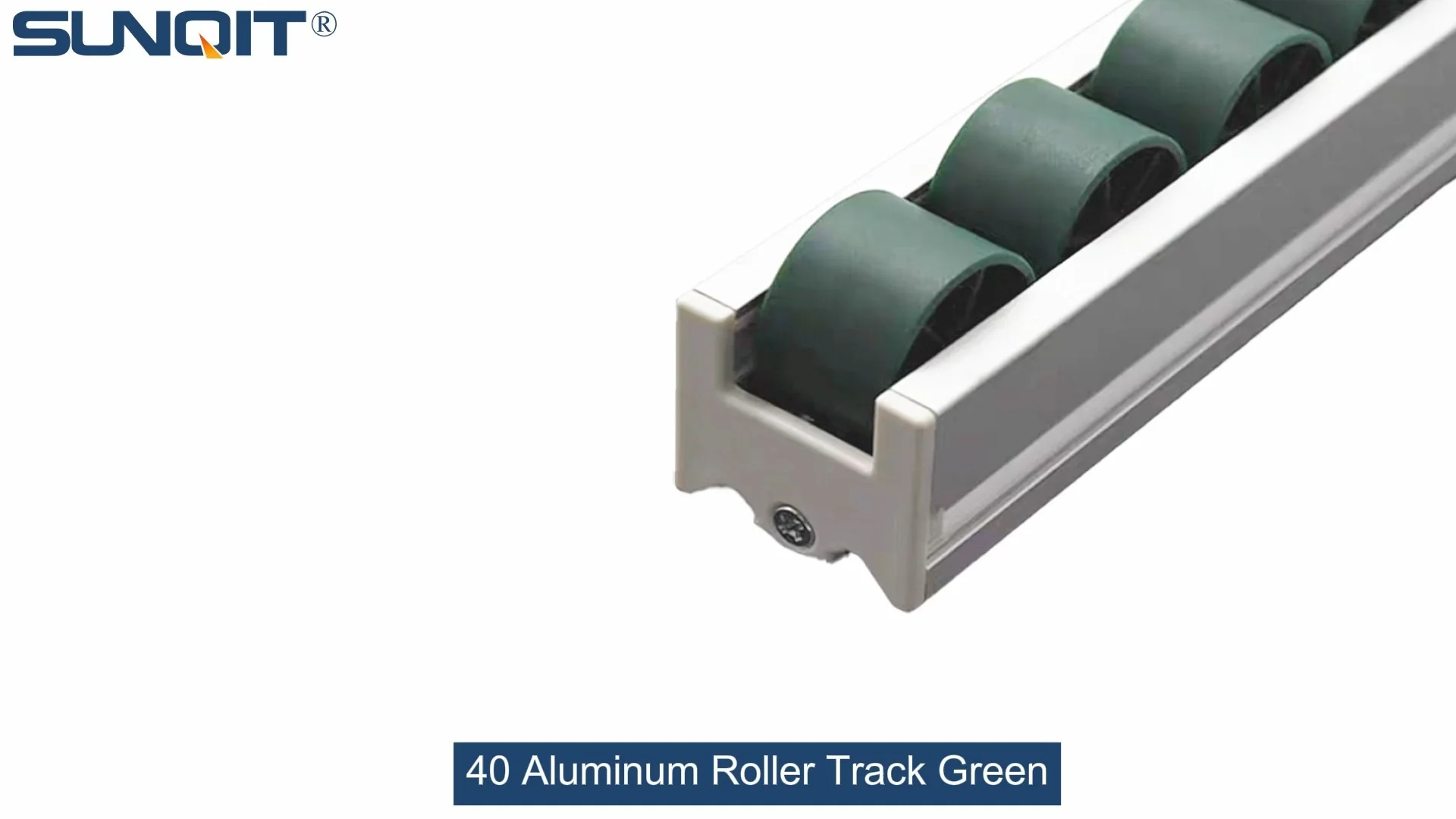
Let's talk about something that's quietly transforming the manufacturing and logistics world in 2025—40 aluminum roller track green. You might not have noticed it at first glance, but this simple yet powerful component is becoming a backbone for businesses looking to balance efficiency, sustainability, and flexibility. Whether you're walking through a busy 3C assembly line, a high-tech medical device factory, or a sprawling warehouse, chances are you're seeing this green-colored aluminum track hard at work. But why is it suddenly in such high demand? What trends are driving businesses to switch to this specific roller track? In this article, we'll dive deep into the global market trends for 40 aluminum roller track green in 2025, explore the key factors fueling its growth, and look at how it integrates with other lean manufacturing tools to create smarter, more sustainable operations.
What Is 40 Aluminum Roller Track Green?
You might be wondering, "What exactly is 40 aluminum roller track green?" Let's break it down. First, the "40" refers to the width of the track—40mm, a standard size that fits most lean manufacturing setups. The "aluminum" part tells you it's made from high-quality, lightweight aluminum, which is both durable and recyclable. The "green"? That's not just a color choice; it's a statement. This track is coated with an eco-friendly green finish that's non-toxic, scratch-resistant, wear-resistant, and corrosion-resistant.
Unlike traditional steel tracks that are heavy and prone to rust, or plastic tracks that degrade quickly, this aluminum track checks all the boxes: it's light enough to move and reconfigure easily, strong enough to handle heavy loads (up to 500kg per meter, depending on the setup), and designed to last for 10+ years. And since it's made from aluminum, you can recycle it fully at the end of its lifecycle—no landfill waste, no environmental guilt. This aligns perfectly with the circular economy goals many businesses are chasing in 2025.
But what makes it stand out from other aluminum tracks? The green coating isn't just for show. It's a mark of compliance with international environmental standards like RoHS and REACH, meaning it's safe to use in industries like medical devices and food processing where hygiene and safety are non-negotiable. The smooth surface of the track ensures items slide seamlessly, reducing friction and wear on both the track and the products moving on it—translating to lower maintenance costs and fewer replacements over time.
Key Market Drivers for 40 Aluminum Roller Track Green in 2025
The surge in demand for this track isn't random. It's driven by four major trends that are shaping the manufacturing and logistics industries in 2025:
1. The Global Sustainability Push
In 2025, sustainability isn't just a buzzword—it's a business imperative. A 2024 survey by the World Economic Forum found that 72% of global manufacturers have set targets to achieve carbon neutrality by 2030. To meet these goals, they're re-evaluating every aspect of their operations, from raw material sourcing to equipment choices.
This is where 40 aluminum roller track green shines. Let's compare it to a plastic alternative: a plastic track might cost 30% less upfront, but it typically lasts only 2-3 years before cracking or degrading. Once that happens, it's thrown into a landfill, contributing to plastic waste. On the other hand, the aluminum track lasts 10+ years and is 100% recyclable. For a manufacturer producing 10,000 units per year, switching to this track could reduce their plastic waste by 500kg annually.
Governments are also incentivizing eco-friendly equipment. The EU's Circular Economy Action Plan offers tax breaks for companies using recyclable materials, while China's "Green Manufacturing Initiative" provides subsidies for businesses adopting sustainable tools. These incentives are making it even more attractive for businesses to switch to this track.
2. The Need for Flexible Production Lines
Post-pandemic, manufacturers can't rely on rigid production lines. Supply chain disruptions, changing consumer preferences, and fast product cycles require agility. This track is designed for flexibility: it uses simple connectors (part of aluminum profile accessories ) to attach to other components, so you can disassemble and rebuild it in hours—no welding, no heavy machinery needed.
Take a 3C assembly company making wireless earbuds. If they launch a new model with a different battery size, they can adjust the track layout to fit the new parts in just a few hours. This flexibility saves time and money, and it allows businesses to respond quickly to market changes. A 2025 report by McKinsey found that flexible production lines reduce lead times by 30% on average—this track is a key part of that equation.
3. Growth in Key Industries
Several industries are driving demand for this track in 2025:
- Logistics & Warehousing: E-commerce continues to boom—global e-commerce sales are expected to hit $8 trillion in 2025. Warehouses need to optimize picking processes, and this track is a core component of flow racks (which use gravity to move items from back to front). The global flow rack market is growing by 12% YoY, and this track is the top choice for these racks.
- 3C Electronics: The 3C industry (computers, communication, consumer electronics) has product cycles as short as 6 months. Manufacturers use this track in lean solutions like flexible workstations to adjust lines quickly.
- Medical Devices: Cleanroom operations require non-toxic, easy-to-clean equipment. This track's green coating meets these standards, making it ideal for transporting sensitive parts like surgical instruments.
- Automotive: EV production lines need flexible tools to handle battery components. This track is strong enough to carry heavy batteries and flexible enough to adapt to new EV models.
4. Cost Efficiency Over Time
While this track might cost more upfront than plastic alternatives, it's cheaper in the long run. Let's do the math: a plastic track costs $50 per meter and lasts 2 years. This aluminum track costs $120 per meter and lasts 10 years. Over 10 years, the plastic track would cost $250 per meter (5 replacements), while the aluminum track costs $120—half the price. Plus, the aluminum track requires less maintenance (no rust removal, no replacement of broken parts), saving even more money.

Global Market Segments & Regional Insights
The global demand for 40 aluminum roller track green is expected to reach 3.1 million meters in 2025, growing by 14% YoY. Let's look at the regional and industry-wise split:
Regional Demand (2025)
| Region | Demand (Million Meters) | YoY Growth (%) | Key Drivers |
|---|---|---|---|
| Asia-Pacific | 1.6 | 16 | 3C manufacturing boom (China, Vietnam), logistics expansion, government subsidies |
| Europe | 0.9 | 13 | Sustainability regulations, automotive EV production, medical device growth |
| North America | 0.5 | 11 | E-commerce (Amazon, Walmart), Tesla EV lines, warehouse optimization |
| Rest of World | 0.1 | 9 | Industrialization in Latin America, African logistics growth |
Asia-Pacific is the largest market, with China accounting for 60% of regional demand. Chinese 3C manufacturers like Foxconn use this track in their assembly lines, while logistics giants like Alibaba use it in their warehouses. Vietnam, a rising 3C hub, is seeing a 20% YoY growth in demand.
In Europe, Germany is the top market. BMW uses this track in its EV production lines, while Siemens uses it in its medical device factories. The UK's post-Brexit supply chain resilience efforts are also driving demand.
Industry-Wise Demand (2025)
| Industry | Demand Share (%) | Key Use Cases |
|---|---|---|
| Logistics & Warehousing | 35 | Flow racks, picking lines |
| 3C Electronics | 25 | Lean workstations, conveyors |
| Automotive | 18 | EV assembly lines, part transport |
| Medical Devices | 12 | Cleanroom conveyors, workstations |
| Others | 10 | Food processing, aerospace |

Integration with Lean Manufacturing Tools
This track doesn't work alone—it's part of a larger ecosystem of lean tools. Let's see how it integrates with key components:
1. Flow Racks
Flow racks are a staple in warehouses, and this track is their heart. The track's smooth surface ensures items slide easily (first-in, first-out), reducing picking time by 20%. For example, Amazon uses flow racks with this track in its fulfillment centers: when a worker takes a box from the front, the next box slides down automatically, so no one has to restock manually.
2. Conveyors
Conveyors move parts through production lines, and this track is often used in roller conveyors. It's lightweight (so it doesn't add to the conveyor's load) and durable (so it can handle continuous use). A 3C manufacturer might use a conveyor with this track to move circuit boards—no scratches, no damage, just smooth transport.
3. Lean Solutions
Lean solutions focus on reducing waste, and this track is key to that. For example, a medical device company might use a lean workstation with this track: if they need to add a new step to the assembly process, they can adjust the track layout in hours. This reduces waste (no need for new equipment) and improves efficiency.
4. Aluminum Profile Accessories
Aluminum profile accessories (like connectors, clamps, and brackets) are essential for reconfiguring this track. These accessories are designed to fit perfectly with the track, so you can build custom setups without any hassle. For example, if you want to attach the track to a workstation, you can use a bracket to secure it in place—no drilling, no glue.

Future Outlook Beyond 2025
The future of 40 aluminum roller track green is bright. Here are some trends to watch:
1. Smart Integration
Conclusion
In 2025, 40 aluminum roller track green is more than just a piece of equipment—it's a symbol of the shift towards smarter, more sustainable manufacturing. Its combination of sustainability, flexibility, and cost efficiency makes it a top choice for businesses looking to stay competitive.
The global demand is growing fast, driven by sustainability goals, flexible production needs, and growth in key industries. And as it integrates with flow racks , conveyors , lean solutions , and aluminum profile accessories , it becomes an even more powerful tool.
For businesses that haven't adopted this track yet, now is the time. It's an investment that will pay off in the long run—reducing your environmental footprint, improving efficiency, and allowing you to adapt to changing market demands. The future of manufacturing is green and flexible—this track is leading the way.