- Company Articles
- Industry articles
- Industry standards
- Global Standards for Three Way Lean Pipe Joint Quality

Global Standards for Three Way Lean Pipe Joint Quality
Related Product
Three Way Lean Pipe Joint
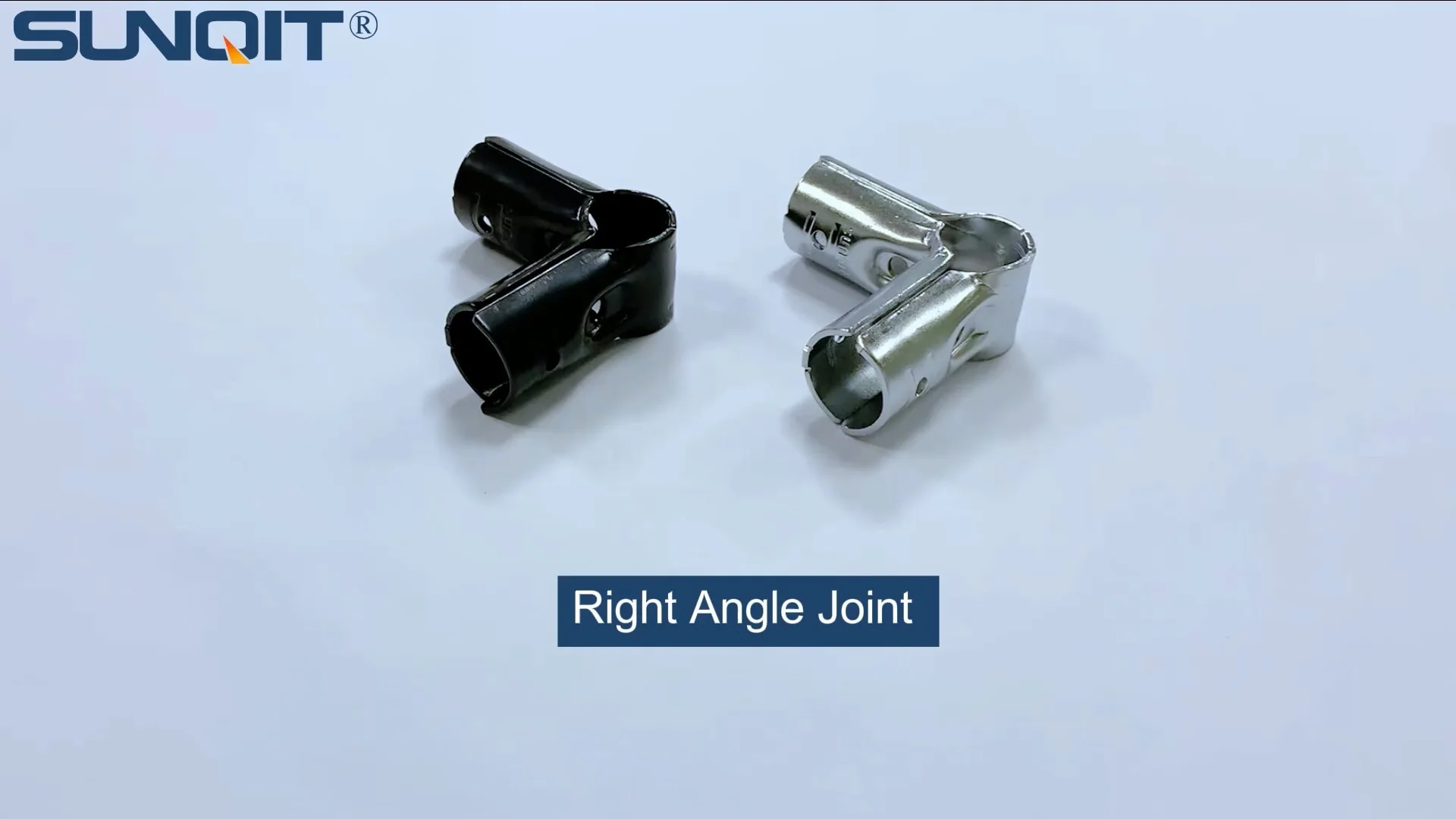
Three way lean pipe joint for 3 pcs 28MM lean pipe connection in straight angle, which used widely in workbench, flow rack, hand trolley frame connection.
Walk into any modern manufacturing facility, and you'll likely see a symphony of moving parts: conveyor belts gliding, workbenches holding precision tools, flow racks organizing components, and assembly lines humming with activity. Behind this orchestration lies an unsung hero: the three way lean pipe joint. These small, unassuming components are the quiet architects of lean systems, holding together everything from simple material racks to complex production cells. But what happens when one of these joints fails? A workbench wobbles, a flow rack collapses, or a conveyor jams—suddenly, the entire line grinds to a halt, costing time, money, and frustration. That's why quality isn't just a buzzword here; it's the foundation of operational efficiency. In this article, we'll dive deep into the global standards that define a high-quality three way lean pipe joint, why they matter, and how they shape the future of manufacturing.
The Backbone of Lean Systems: Why Three Way Lean Pipe Joints Matter
Lean manufacturing isn't just about cutting waste—it's about building systems that are flexible, durable, and adaptable. And at the heart of these systems are lean pipes and their accessories, with three way joints acting as the critical connectors. Think of them as the joints in your own body: they don't just hold things together; they allow movement, support weight, and adapt to different positions. A well-designed three way joint lets manufacturers reconfigure workstations in hours, not days, responding quickly to shifts in production needs. But for that flexibility to work, the joint itself must be unshakably reliable.
Consider a typical scenario: a car parts manufacturer uses a lean pipe workbench to assemble brake components. The workbench is held together by three way joints, supporting tools, parts bins, and even a small conveyor. If one joint is weak, the workbench might sag under the weight of a heavy drill, misaligning the parts and leading to faulty assemblies. Worse, if a joint fails entirely, the workbench could collapse, injuring an operator or damaging expensive equipment. This isn't just a hypothetical—manufacturers report that up to 15% of unplanned downtime in lean systems can be traced back to substandard connectors and joints. That's why global standards for three way lean pipe joints aren't just guidelines; they're lifelines for productivity.
What Makes a Three Way Lean Pipe Joint "High Quality"?
Before we dive into standards, let's clarify what "quality" actually means for these joints. It's not just about being "strong enough"—it's about balancing three key traits: stability , versatility , and durability . A stable joint maintains its position under load, even when bumped or vibrated. A versatile joint works seamlessly with different lean pipe sizes, coatings, and accessories, from steel pipes to aluminum profiles. And a durable joint resists wear, corrosion, and fatigue, standing up to years of adjustments and heavy use.
But quality isn't just technical—it's also user-centric. Operators and maintenance teams need joints that are easy to install without specialized tools, adjust without stripping threads, and repair without replacing the entire system. A joint that requires a wrench and 20 minutes to tighten might save money upfront, but over time, it slows down reconfigurations and increases labor costs. On the flip side, a joint that's too loose might be easy to adjust but fails to hold position, leading to constant readjustments. The sweet spot? A joint that's both secure and user-friendly—a balance that global standards are designed to enforce.
Fun Fact: The first lean pipe systems, developed in the 1980s, used basic steel pipes and plastic joints. Today's three way joints, by contrast, are engineered with computer-aided design (CAD) and tested to withstand up to 500 kg of static load—enough to support a small car! This evolution is driven by global standards, pushing manufacturers to innovate while ensuring consistency.

Global Quality Standards: A Comparative Guide
Quality is subjective—unless it's standardized. Around the world, organizations like the International Organization for Standardization (ISO), the American National Standards Institute (ANSI), and Germany's DIN have developed rigorous criteria for three way lean pipe joints. These standards cover everything from material composition to performance testing, ensuring that a joint made in China, Germany, or Brazil meets the same basic level of quality. Let's break down the key players and what they prioritize.
| Standard Organization | Key Focus Areas | Material Requirements | Load Capacity (Static) | Corrosion Resistance | Dimensional Tolerance |
|---|---|---|---|---|---|
| ISO (International) | Global compatibility, safety | Carbon steel (min. 0.2% C), stainless steel (304/316 grades), aluminum alloys (6061-T6) | ≥ 300 kg per joint | ≥ 500 hours salt spray (no red rust) | ±0.1mm on critical dimensions |
| ANSI (USA) | Heavy-duty applications, durability | High-strength steel (A36), aluminum (6063-T5) | ≥ 400 kg per joint | ≥ 1000 hours salt spray (stainless steel) | ±0.05mm on threaded components |
| DIN (Germany) | Precision, repeatability | Steel (St37-2), aluminum (AlMgSi0.5) | ≥ 350 kg per joint | ≥ 720 hours salt spray (with coating) | ±0.08mm on mating surfaces |
| JIS (Japan) | Lightweight design, ease of assembly | Carbon steel (S25C), aluminum (A5052) | ≥ 250 kg per joint | ≥ 300 hours salt spray (zinc-plated) | ±0.15mm overall |
At first glance, these standards might seem similar, but the differences reveal priorities. ANSI, for example, emphasizes heavy loads and corrosion resistance, reflecting the demands of industries like aerospace and automotive in the U.S. DIN, with its focus on precision, caters to Germany's reputation for engineering excellence, where even tiny tolerances can affect product quality. ISO, as a global standard, strikes a balance, ensuring that a joint made in India can work with a lean pipe from Poland. For manufacturers operating across borders, complying with ISO is often a baseline, with additional certifications (like ANSI or DIN) added for regional markets.

Materials: The Building Blocks of Quality
You can't build a high-quality joint with low-quality materials. That's why global standards start with strict material guidelines. Let's break down the most common materials and why they matter:
1. Carbon Steel: The Workhorse
Carbon steel is the backbone of many lean pipe systems, prized for its strength and affordability. Standards like ISO and DIN specify minimum carbon content (0.2% for ISO) to ensure hardness and load-bearing capacity. But raw steel is prone to rust, so most joints are coated—either with zinc plating (galvanization) or PE coating (polyethylene). ISO requires zinc-plated joints to withstand 500 hours of salt spray testing without red rust, while PE coatings must resist chipping and peeling under impact. For example, a PE coated lean pipe joint used in a food processing plant needs to stand up to daily cleaning with harsh chemicals, so the coating's adhesion is just as critical as the steel beneath it.
2. Stainless Steel: The Corrosion Fighter
In environments where moisture, chemicals, or sanitation are priorities—think pharmaceutical labs or marine equipment—stainless steel is king. Standards like ANSI specify 304 or 316-grade stainless steel, with 316 offering extra resistance to saltwater and acids. The chromium content (18-20% in 304) forms a protective oxide layer, preventing rust. But stainless steel isn't just about corrosion; it's also non-reactive, making it safe for food contact. A three way stainless steel joint in a beverage bottling plant, for instance, won't leach chemicals into the product, ensuring compliance with health regulations.
3. Aluminum: The Lightweight Innovator
As manufacturers push for more flexible, mobile systems, aluminum has emerged as a star material. Aluminum lean pipe joints are 30-40% lighter than steel, making them ideal for portable workbenches and turnover trolleys. Standards like JIS and ISO specify alloys like 6061-T6, which combine lightness with impressive strength (tensile strength of 310 MPa). Aluminum also resists corrosion naturally, thanks to its oxide layer, though anodizing can boost this further. The downside? Aluminum is softer than steel, so standards like DIN require thicker walls (min. 2mm) for joints to prevent deformation under load. For example, an aluminum profile-based workstation in an electronics plant can be reconfigured by a single operator, thanks to the lightweight joints—no forklift needed.

Manufacturing Processes: Precision in Every Detail
Even the best materials can fail if the manufacturing process is flawed. Global standards don't just dictate what to make—they dictate how to make it. Let's walk through the key steps in producing a three way lean pipe joint, and how standards ensure consistency at each stage.
1. Forging vs. Casting: Strength Starts Here
Most high-quality joints are forged, not cast. Forging involves heating metal and shaping it under high pressure, aligning the grain structure and eliminating internal voids. Casting, by contrast, pours molten metal into a mold, which can leave weak spots or air bubbles. ISO requires critical load-bearing components (like the "arms" of a three way joint) to be forged, with ultrasonic testing to detect hidden defects. ANSI goes further, mandating that forging dies be inspected every 10,000 units to ensure dimensional accuracy. The result? A forged joint can withstand 20-30% more stress than a cast one, making it worth the higher production cost for critical applications.
2. Machining: The Art of Precision
After forging, joints undergo machining to refine their shape, add threads, and create mating surfaces. Here, dimensional tolerance is everything. A thread that's too loose won't grip the pipe; one that's too tight will strip when adjusted. ISO specifies a tolerance of ±0.1mm for the inner diameter of the joint, ensuring it fits standard lean pipes (typically 28mm or 30mm outer diameter). To achieve this, manufacturers use CNC machines with precision tools, and standards require regular calibration of these machines (at least monthly for ISO compliance). For example, a three way joint with misaligned threads might seem to fit initially, but over time, the uneven stress will cause the pipe to crack—or the joint to loosen, leading to a wobbly workstation.
3. Coating and Finishing: Protection and Performance
The final step is coating, and here, standards leave no room for shortcuts. Zinc plating, for instance, must be at least 8 microns thick (ISO) to ensure corrosion resistance, applied using an electroplating process that ensures even coverage. PE coating, popular for its color options and grip, must be 0.8-1.2mm thick, with adhesion tests requiring the coating to resist peeling when a crosshatch pattern is cut into it. Even the color matters—yellow or black PE coatings are common in manufacturing, but standards like DIN specify that colors must be UV-stable, so they don't fade under factory lighting. A faded coating might seem trivial, but in a busy plant, color-coded joints help operators quickly identify pipe sizes or system zones, reducing errors during reconfiguration.
Testing Protocols: Putting Joints Through Their Paces
No standard is complete without testing—and three way lean pipe joints undergo some rigorous trials before they hit the market. These tests aren't just box-ticking exercises; they simulate years of real-world use in a matter of weeks. Let's look at the key tests mandated by global standards:
1. Static Load Testing
This test measures how much weight a joint can support without deforming. A joint is mounted to a steel frame, and a hydraulic press applies increasing weight until the joint bends or breaks. ISO requires a minimum static load of 300 kg, but many manufacturers aim higher—some premium joints can handle 500 kg or more. For context, that's the weight of two average refrigerators stacked on top of each other. The test isn't just about maximum load, though; it also checks for "permanent deformation." If a joint bends more than 0.5mm under 300 kg, it fails—even if it doesn't break. Why? Because a deforming joint will throw off the alignment of the entire system over time.
2. Fatigue Testing: The Test of Time
Static load tells us about strength; fatigue testing tells us about longevity. Imagine a joint in a conveyor system, which vibrates every time a box passes over it, or a workbench that's adjusted weekly as production needs change. Over time, these small stresses can cause metal fatigue—microscopic cracks that grow until the joint fails. To simulate this, standards like ANSI require joints to undergo 100,000 cycles of load (applying and releasing 70% of the static load) without failure. That's equivalent to adjusting the joint once a day for over 270 years—more than enough for most manufacturing equipment lifespans.
3. Corrosion Testing: Battling the Elements
Salt spray testing is the gold standard here. Joints are placed in a chamber where a 5% saltwater mist is sprayed continuously, mimicking coastal or high-humidity environments. ISO requires 500 hours of exposure with no red rust; ANSI ups the ante to 1000 hours for stainless steel joints. But it's not just about rust—standards also check for coating adhesion. A joint with peeling zinc plating might look fine initially, but after a few months in a damp factory, the exposed steel will corrode, weakening the joint from the inside out.
Real-World Impact: How Standards Improve Manufacturing
Enough theory—let's talk about results. Manufacturers that adopt globally compliant three way lean pipe joints report tangible benefits. Take a electronics manufacturer in Malaysia that switched from generic local joints to ISO-certified ones. Previously, they were replacing joints every 6-8 months due to corrosion in their humid factory. After switching to zinc-plated, ISO-compliant joints, replacement cycles stretched to 3+ years, cutting maintenance costs by 40%. Even better, unplanned downtime dropped by 25%, as there were no more surprise joint failures during shifts.
Another example: a U.S.-based automotive supplier needed to meet ANSI standards to sell to a major carmaker. By upgrading to ANSI-compliant three way joints, they increased the load capacity of their flow racks by 30%, allowing them to store heavier components without reinforcing the entire structure. This freed up floor space, as they could stack more parts vertically, and reduced the number of racks needed by 15%. The investment in certified joints paid for itself in 10 months through space savings and improved throughput.
Pro Tip for Buyers: Always ask for test reports. A reputable lean pipe supplier should provide certificates of compliance with ISO, ANSI, or DIN, including salt spray test results and load capacity data. If a supplier can't produce these, it's a red flag—their joints might not meet the standards they claim.
Challenges in Compliance: Why Not All Joints Are Created Equal
Despite the clear benefits, not all manufacturers adhere to global standards. Why? Cost is a big factor. Forging, precision machining, and rigorous testing add expense, and some suppliers cut corners to offer lower prices. For example, a non-compliant joint might use cast steel instead of forged, saving 30% on production costs but sacrificing 50% of the load capacity. Or it might skip the salt spray test, leading to premature corrosion.
Another challenge is regional variation. A joint that meets ISO standards might not align with local building codes in some countries, requiring manufacturers to tweak designs for specific markets. For instance, a three way joint sold in the EU must comply with REACH regulations (restricting hazardous substances), adding another layer of testing. For small suppliers, navigating these overlapping standards can be overwhelming, leading some to ignore them altogether.
Counterfeiting is also a problem. Unscrupulous suppliers stamp "ISO Certified" on joints that never underwent testing, relying on buyers' trust to make sales. To avoid this, look for third-party certifications—organizations like SGS or TÜV Rheinland independently verify compliance, giving buyers peace of mind. A little due diligence here can save a lot of headaches later.
The Future of Three Way Lean Pipe Joint Standards
As manufacturing evolves, so too will the standards for three way lean pipe joints. Here are three trends shaping the future:
1. Smart Joints: Adding Intelligence to Connectivity
Imagine a joint with a built-in sensor that tracks load, vibration, and temperature, sending data to a factory management system. If a joint is approaching its load limit, the system alerts maintenance before failure. While still in early stages, standards bodies like ISO are exploring guidelines for these "smart joints," ensuring sensor accuracy and data security. This could revolutionize predictive maintenance, turning reactive fixes into proactive prevention.
2. Sustainable Materials: Greening the Lean Pipeline
With sustainability becoming a priority, standards are starting to focus on eco-friendly materials and processes. For example, ISO is developing criteria for recycled steel content in joints (aiming for 30% minimum by 2030) and biodegradable coatings. Aluminum, already lightweight, is being paired with plant-based lubricants during machining to reduce environmental impact. The goal? A lean system that's not just efficient in production, but also in its carbon footprint.
3. Miniaturization: Smaller Joints, Bigger Possibilities
As electronics and medical devices shrink, so do the workstations that assemble them. Standards are adapting to smaller lean pipe systems, with joints designed for 15mm or 20mm pipes (down from the traditional 28mm). These mini-joints need the same strength and precision as their larger counterparts but in a compact form. ISO is updating its dimensional tolerance guidelines to account for these smaller sizes, ensuring compatibility with micro-lean systems.
Conclusion: Quality Joints, Quality Manufacturing
Three way lean pipe joints may be small, but their impact on manufacturing is enormous. They're the difference between a system that adapts and thrives, and one that struggles with downtime, waste, and inefficiency. Global standards—ISO, ANSI, DIN, and others—ensure that these joints meet consistent benchmarks for strength, durability, and safety, no matter where they're made or used.
For manufacturers, investing in compliant joints isn't an expense—it's an investment in reliability. It means fewer breakdowns, lower maintenance costs, and the flexibility to reconfigure systems with confidence. For suppliers, adhering to standards opens doors to global markets, as buyers increasingly demand proof of quality before placing orders.
The next time you walk through a factory, take a moment to look at the lean pipe structures around you. Chances are, the three way joints holding them together are quietly upholding decades of engineering standards. And in that quiet reliability lies the true power of lean manufacturing: systems built not just to work, but to work better—today, tomorrow, and for years to come.