- Company Articles
- Industry articles
- Industry standards
- Green Manufacturing Certification: How 40 Steel Roller Track Green Helps Meet Standards

Green Manufacturing Certification: How 40 Steel Roller Track Green Helps Meet Standards
Related Product
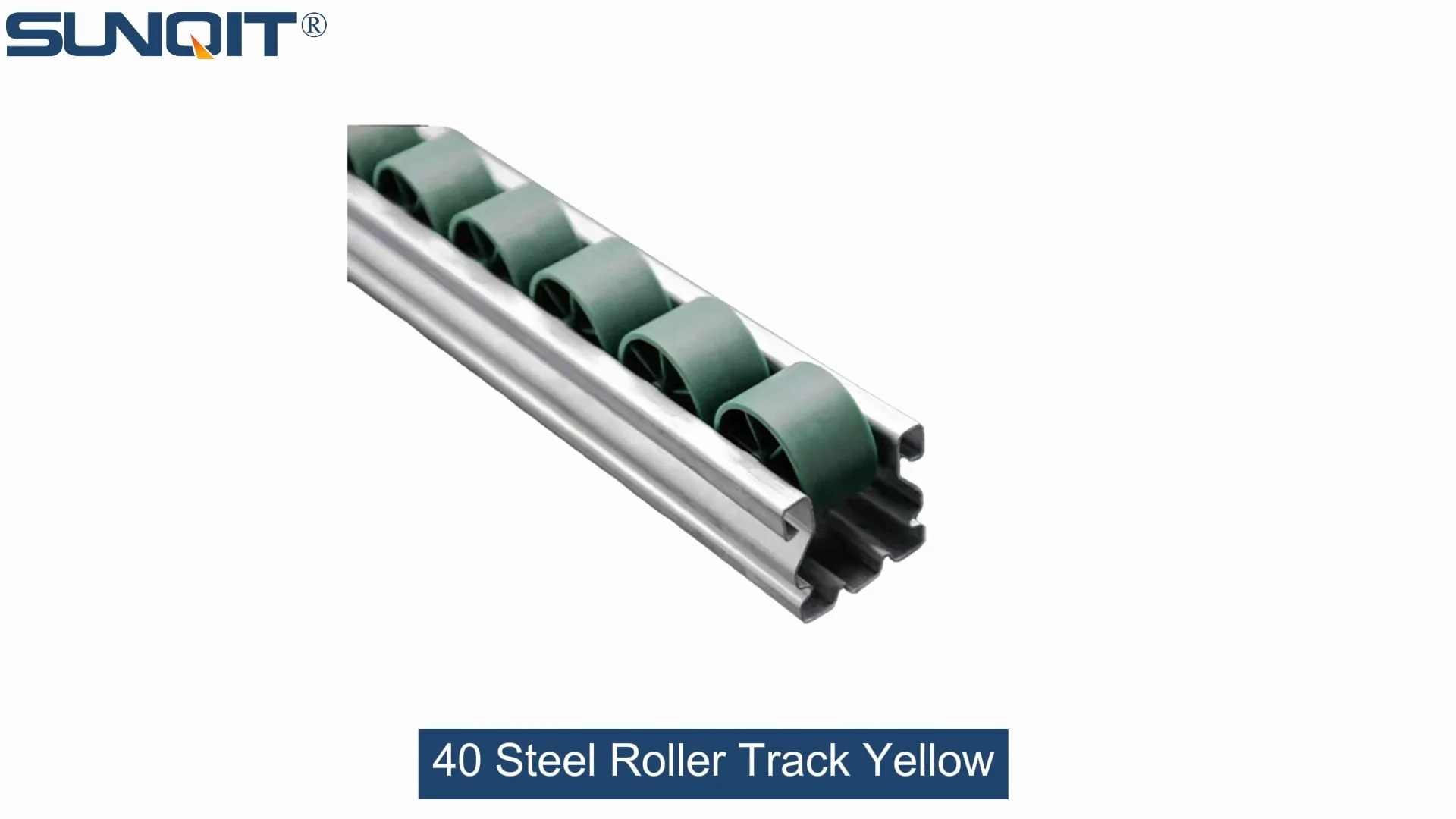
40 Steel Roller Track Green
The roller track can be installed with multiple accessories to create different slopes and configurations of flow racks.All steel conveyor 40 roller track accessories are engineered to perfectly fit the sliding rail.
Green Manufacturing Certification: How 40 Steel Roller Track Green Helps Meet Standards
In today's fast-paced manufacturing world, green certifications are no longer just a marketing buzzword—they're a critical part of staying competitive, compliant, and responsible. Regulators are tightening environmental rules, customers are choosing sustainable brands, and investors are prioritizing eco-friendly businesses. But for many manufacturers, translating these high-level certification goals into practical, on-the-ground changes can feel overwhelming. How do you make sure every tool, every component, and every process aligns with standards like ISO 14001, IATF 16949, or LEED? The answer often lies in small, intentional choices—like opting for the
40 Steel Roller Track Green
instead of traditional, one-and-done alternatives. This robust, reusable component is a workhorse that helps manufacturers check multiple boxes for green certifications while boosting operational efficiency. Let's explore how it works, why it matters, and how it fits into a larger sustainable manufacturing strategy.
What Are Green Manufacturing Certifications, and Why Do They Matter?
Green manufacturing certifications are third-party validations that a company's processes and products meet strict environmental standards. They cover everything from waste reduction and energy efficiency to material recyclability and circular economy practices. For example:
•
ISO 14001
: The global gold standard for environmental management systems. It requires companies to identify their environmental impacts, set reduction targets, and continuously improve their sustainability performance.
•
IATF 16949
: For the automotive industry, it integrates environmental requirements with quality management, focusing on reducing waste and emissions in production lines.
•
LEED (Leadership in Energy and Environmental Design)
: Though often associated with buildings, LEED also applies to manufacturing facilities, rewarding practices like resource-efficient material handling and waste minimization.
These certifications aren't just about compliance. They also deliver tangible benefits: lower operational costs (less waste = fewer expenses), better brand reputation (customers trust sustainable companies), and access to new markets (many retailers only work with certified suppliers). For manufacturers, the question isn't "should we get certified?"—it's "how do we get certified efficiently?"
Lean Systems and Green Manufacturing: A Natural Partnership
Lean manufacturing has long been about eliminating waste—"muda" in Japanese—and doing more with less. But did you know lean principles are a perfect match for green initiatives? Both lean and green focus on:
1. Reducing material waste: Cutting down on scrap, overproduction, and unused resources.
2. Saving energy: Streamlining processes to use less power and fuel.
3. Reusing resources: Extending the life of tools and components instead of replacing them.
This synergy means that investing in a
lean system
isn't just good for efficiency—it's a step toward green certification. Companies like szsunqit specialize in lean systems that align with both goals, making it easier for manufacturers to hit two targets at once. Their product lineup, including the 40 Steel Roller Track Green, is designed to be both lean (waste-free) and green (sustainable).
Deep Dive: What Is the 40 Steel Roller Track Green?
The
40 Steel Roller Track Green
is a high-quality, steel-based roller track built for durability and flexibility. Unlike plastic or fixed metal tracks that end up in landfills when your production line changes, this track is designed to adapt with your business. Let's break down its key features that make it a green certification powerhouse:
1. Long Lifespan: Less Replacement, Less Waste
Made from robust, corrosion-resistant steel, this roller track lasts for years—often a decade or more—even in high-traffic, heavy-load environments. Traditional plastic tracks might need replacement every 2-3 years due to wear and tear, but the 40 Steel Roller Track Green stands the test of time. This long lifespan directly reduces waste: fewer components discarded, fewer resources used to make new ones, and lower transportation emissions from shipping replacements. For certifications like ISO 14001, which emphasizes waste minimization, this is a huge win.
2. Reconfigurability: Adapt Without Discarding
Manufacturing lines are never static. New products, changing demand, and process optimizations mean you need tools that can evolve with you. The 40 Steel Roller Track Green is fully reconfigurable—you can disassemble it, move it to a new location, and reassemble it in a different layout in hours. No need to buy a whole new track system when you adjust your workflow. This reusability is a cornerstone of the circular economy, a key requirement for many green certifications. It turns a "use-once" asset into a long-term investment that grows with your business.
3. Recyclable Materials: Closing the Loop
Steel is one of the most recyclable materials on the planet—nearly 90% of steel produced globally is recycled. When the 40 Steel Roller Track Green finally reaches the end of its useful life (after many years of service), it can be melted down and turned into new steel products with zero loss of quality. This closed-loop system aligns with certifications that prioritize circularity, like the EU's Circular Economy Action Plan. Unlike plastic tracks, which often end up in landfills or incinerators, this steel track leaves a minimal environmental footprint at every stage of its lifecycle.
4. Compatibility with Lean Components: Integrated Sustainability
The 40 Steel Roller Track Green doesn't work in isolation. It's part of a larger
lean system
that includes
flow racks
,
aluminum profiles
, and custom solutions. For example, pairing it with flow racks creates a smooth, gravity-fed material flow that reduces the need for powered conveyors (saving energy) and minimizes product damage (another form of waste). This integrated approach makes it easier to meet green certification standards because every component works together to reduce environmental impact. Companies like szsunqit specialize in designing these integrated systems, so you don't have to piece together components from different suppliers.
How 40 Steel Roller Track Green Addresses Specific Certification Requirements
Let's get concrete: how does this roller track help you meet the exact criteria of popular green certifications? Let's take ISO 14001 as an example—one of the most widely adopted environmental standards. ISO 14001 requires companies to:
1. Identify and Control Environmental Impacts
Every component in your manufacturing line has an environmental impact—from the resources used to make it to the waste generated when it's discarded. The 40 Steel Roller Track Green minimizes these impacts: it uses fewer resources over time (long lifespan), generates less waste (reusable), and is made from recyclable materials (steel). By choosing this track, you're actively reducing your facility's environmental footprint, which is a key requirement for ISO 14001.
2. Continuously Improve Sustainability Performance
ISO 14001 isn't a one-time checkmark—it's about ongoing improvement. The reconfigurability of the 40 Steel Roller Track Green makes it easy to optimize your processes over time. For example, if you find that your current material flow is causing unnecessary energy use, you can adjust the track layout to reduce worker movement and conveyor time. This ability to iterate and improve aligns perfectly with ISO 14001's focus on continuous improvement.
3. Comply with Applicable Environmental Laws
Many countries have strict laws about waste disposal, material safety, and carbon emissions. The 40 Steel Roller Track Green is made from non-toxic, compliant materials—no harmful chemicals or pollutants. Its recyclability also helps you comply with laws that restrict landfill waste (like the EU's Waste Framework Directive). For manufacturers operating in multiple countries, this compliance is critical to avoiding fines and maintaining operations.
Real-World Examples: How Manufacturers Use It to Get Certified
Let's look at a few hypothetical (but realistic) examples of how the 40 Steel Roller Track Green has helped manufacturers meet green certification standards:
Case Study 1: 3C Assembly Plant
A mid-sized 3C assembly plant (making smartphones and tablets) wanted to get ISO 14001 certified. Their biggest challenge was waste from frequent production line changes—every time they launched a new product, they had to discard old plastic roller tracks, generating tons of non-recyclable waste each year. They switched to the 40 Steel Roller Track Green and paired it with szsunqit's flow racks and aluminum profiles. The results? They reduced their roller track waste by 85% (since the steel tracks were reusable), cut energy use by 12% (thanks to smoother material flow), and got ISO 14001 certified in 12 months. Plus, the new system was more efficient—they increased production output by 10% without adding more staff.
Case Study 2: Automotive Parts Manufacturer
An automotive parts manufacturer needed to meet IATF 16949 standards (which integrate environmental and quality requirements). They were using traditional fixed roller tracks that were heavy, hard to maintain, and generated a lot of scrap when lines changed. They opted for the 40 Steel Roller Track Green and szsunqit's custom solution to design a flexible production line. The reconfigurable track allowed them to adjust their line for new parts quickly, reducing downtime by 15% and scrap waste by 20%. They also saved money on energy—since the steel track was lighter than their old system, their conveyors used less power. Within 6 months, they passed their IATF 16949 audit with flying colors.
Case Study 3: Medical Device Warehouse
A medical device warehouse wanted to get LEED certification for their facility. Their main goal was to reduce waste from product damage and improve material flow. They installed the 40 Steel Roller Track Green in their picking area, paired with flow racks. The smooth, gravity-fed flow reduced product damage by 30% (since items moved gently along the track) and cut the time workers spent picking orders by 25%. This reduction in product damage (a form of waste) and improved efficiency helped them meet LEED's waste minimization and energy efficiency criteria. They got their LEED Silver certification in 2024.
Comparing Traditional vs. 40 Steel Roller Track Green: A Quick Overview
| Feature | Traditional Roller Track | 40 Steel Roller Track Green |
|---|---|---|
| Lifespan | 2-3 years (plastic) / 5-6 years (fixed steel) | 10+ years |
| Reconfigurability | No—fixed layout; must be discarded when lines change | Yes—easily disassembled and reassembled |
| Recyclability | Low (plastic) / Medium (fixed steel, hard to recycle) | High (100% recyclable steel) |
| Waste Generation | High (frequent replacements) | Low (minimal replacement, recyclable at end of life) |
| Compatibility with Lean Components | Limited (often designed for specific systems) | High (works with flow racks, aluminum profiles, custom solutions) |
| Green Certification Alignment | Low (fails on waste and circularity) | High (meets ISO 14001, IATF 16949, LEED criteria) |
Beyond the Roller Track: Building a Fully Sustainable Lean System
The 40 Steel Roller Track Green is a great start, but to truly excel at green certifications, you need a holistic approach. Companies like szsunqit offer
custom solutions
that integrate this roller track with other sustainable lean components:
•
Flow Racks
: These gravity-fed racks work with the roller track to create a smooth material flow, reducing energy use and product damage.
•
Aluminum Profiles
: Lightweight, recyclable, and reconfigurable—perfect for building workstations and frames that align with green standards.
•
Custom Lean Systems
: Tailored to your industry (3C assembly, medical devices, warehousing) to optimize sustainability and efficiency. For example, szsunqit's custom solutions for medical device manufacturers include easy-to-clean components that meet hygiene standards while being sustainable.
This integrated approach ensures that every part of your system works together to meet green certification standards. You don't have to worry about one component undermining your sustainability efforts—everything is designed to align with your goals.
Final Thoughts: Why the 40 Steel Roller Track Green Is a Smart Investment
Green manufacturing certifications are here to stay, and the 40 Steel Roller Track Green is a small but powerful tool to help you get there. It's not just about compliance—it's about building a more efficient, cost-effective, and responsible manufacturing operation. By choosing this roller track, you're making a choice that benefits your business (lower costs, higher efficiency) and the planet (less waste, fewer resources). Whether you're just starting your sustainability journey or already on the path to certification, this component is a must-have in your toolkit.
Remember: Every choice you make on the factory floor adds up. The 40 Steel Roller Track Green is more than just a piece of equipment—it's a step toward a greener, more sustainable future for manufacturing. And with partners like szsunqit, you don't have to do it alone—they have the expertise and products to help you turn your green certification goals into reality.