- Company Articles
- Industry articles
- Industry News
- Growing Demand for Suction Cup Anti-Slip Foot Adjusters in Smart Factories

Growing Demand for Suction Cup Anti-Slip Foot Adjusters in Smart Factories
Related Product
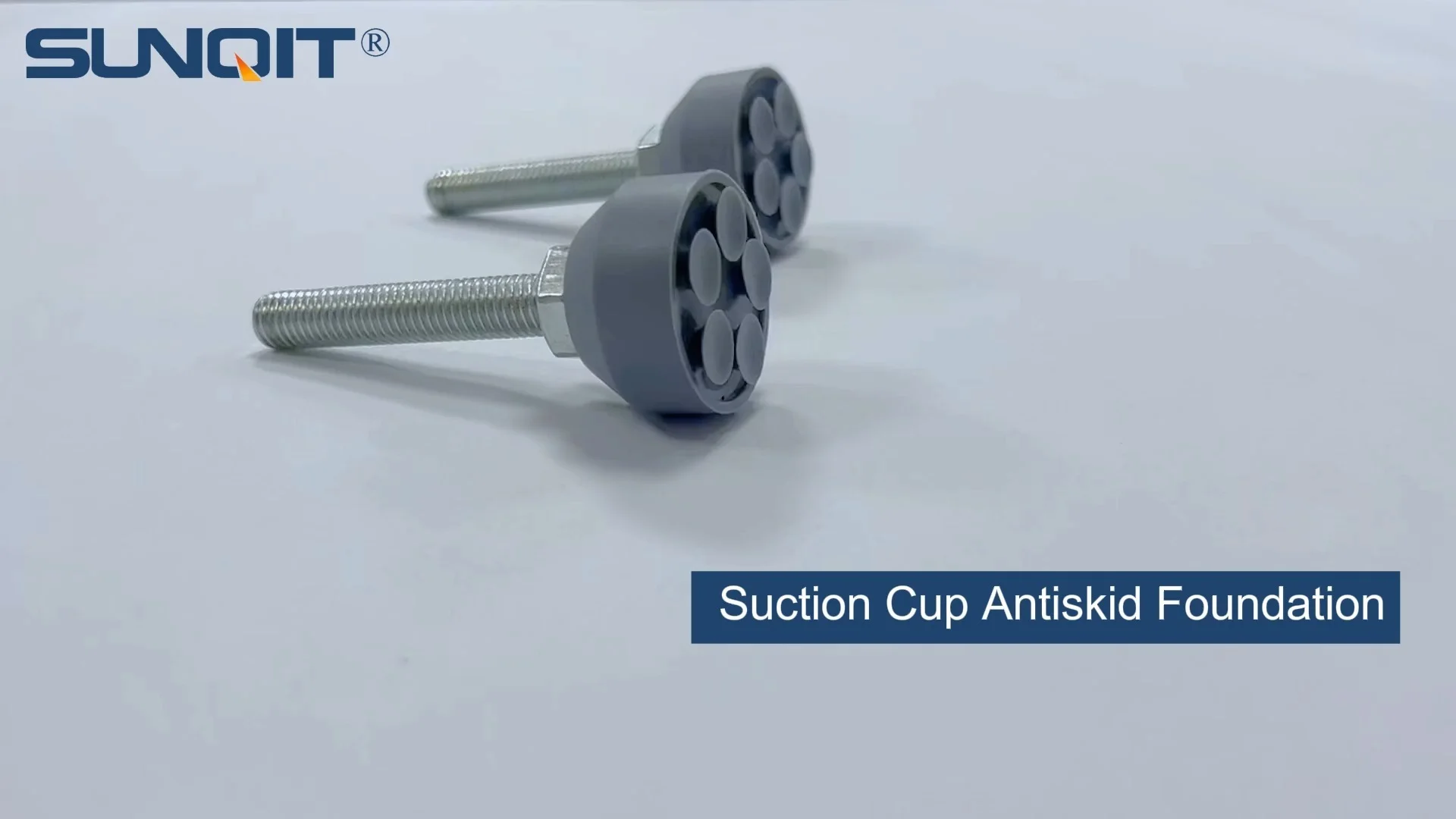
Suction Cup Anti-slip Foot Adjuster
D=35mm suction cup anti-slip foot adjusterï¼screw M10*55ï¼with a blot, used for workbench, flowrack pipe contact with groud.
In the bustling heart of modern manufacturing, where every second counts and precision is non-negotiable, smart factories are redefining how we produce goods. These high-tech hubs, equipped with IoT sensors, automated machinery, and data-driven systems, promise efficiency, accuracy, and scalability like never before. But behind the scenes of this industrial revolution lies a quiet yet critical challenge: ensuring that the equipment powering these factories stays stable, secure, and perfectly positioned. Enter the unsung hero of factory stability—the suction cup anti-slip foot adjuster. In recent years, this unassuming component has seen a surge in demand, becoming a staple in smart factory setups worldwide. Let's dive into why these small but mighty tools are becoming indispensable, how they integrate with lean systems, and why they're quickly replacing traditional alternatives in the race for manufacturing excellence.
The Rise of Smart Factories and Their Unique Challenges
Smart factories are no longer the stuff of science fiction. Today, they're a reality, with facilities across automotive, electronics, pharmaceuticals, and aerospace sectors adopting technologies like robotics, AI-driven quality control, and real-time production monitoring. These advancements have transformed factory floors into interconnected ecosystems where machines communicate, adapt, and optimize processes on the fly. However, this leap forward brings with it a new set of demands—demands that traditional factory equipment often struggles to meet.
One of the most pressing challenges is the need for absolute stability. Unlike conventional factories, where heavy machinery might operate with some tolerance for movement, smart factories rely on precision instruments that can be thrown off by even the slightest vibration or shift. Think about a semiconductor production line, where microchips smaller than a fingernail are assembled with nanometer-level accuracy. A workbench that wobbles by a fraction of a millimeter could ruin an entire batch, costing thousands of dollars and delaying production. Similarly, in electronics manufacturing, where electrostatic discharge (ESD) can fry sensitive components, equipment must not only stay still but also maintain consistent grounding—another area where stability plays a key role.
Then there's the issue of uneven floors. Many smart factories are retrofitted from older facilities, where decades of wear and tear have left floors with cracks, dips, or uneven surfaces. Even newly built factories can suffer from minor imperfections in concrete pouring. These inconsistencies make it hard to keep equipment level, which is crucial for everything from conveyor belts that need to move materials smoothly to inspection stations that require a flat surface for accurate measurements. Add to this the increasing use of lightweight, modular equipment—like aluminum profile workbenches and mobile material racks—and the need for reliable stabilization becomes even more apparent.
The Critical Role of Stability in Factory Equipment
Stability might not be the most glamorous topic in manufacturing, but it's the backbone of operational efficiency. In a lean system, where waste reduction and process optimization are paramount, any instability in equipment translates to wasted time, resources, and potential defects. Let's break down why stability matters so much in the context of smart factory operations:
1. Precision and Quality Control: Modern manufacturing processes, especially in industries like medical devices and electronics, demand pinpoint accuracy. For example, when assembling a printed circuit board (PCB), automated pick-and-place machines need to position components with tolerances as tight as ±0.01mm. If the machine's base shifts due to an unstable foot, the component could be misaligned, leading to a faulty PCB. Over time, these small errors add up, increasing reject rates and hurting bottom lines.
2. Safety First: Unstable equipment isn't just a quality risk—it's a safety hazard. Heavy machinery, loaded material racks, or workbenches with sharp tools can tip over if not properly secured, putting workers at risk of injury. In a smart factory, where humans and robots often work side by side, ensuring that all equipment stays firmly in place is critical to maintaining a safe collaborative environment.
3. Vibration Dampening: Many smart factory machines, from 3D printers to laser cutters, generate vibrations during operation. While some vibration is inevitable, excessive movement can transfer to nearby equipment, disrupting their performance. A stable base with effective anti-slip and shock-absorbing properties can dampen these vibrations, preventing cross-contamination of movement between machines.
4. ESD Protection: In electronics manufacturing, electrostatic discharge (ESD) can destroy sensitive components. Equipment like ESD workstations and material racks need to maintain continuous grounding to dissipate static electricity. An unstable foot that loses contact with the floor can break this grounding path, exposing components to ESD damage. Stability here isn't just about movement—it's about maintaining electrical continuity.
5. Longevity of Equipment: Constant movement or wobbling puts unnecessary stress on equipment frames, joints, and internal components. Over time, this can lead to premature wear and tear, increasing maintenance costs and downtime. A stable base reduces this stress, extending the lifespan of expensive machinery and tools.

Enter Suction Cup Anti-Slip Foot Adjusters: A Game-Changer
For years, factories relied on basic solutions to stabilize equipment: rubber feet, metal pads, or even makeshift shims. While these worked for simpler setups, they fall short in the demanding environment of smart factories. That's where suction cup anti-slip foot adjusters come in. These innovative components combine the adjustability of traditional foot levelers with the superior grip of a suction mechanism, creating a solution that adapts to uneven surfaces, locks equipment in place, and enhances overall stability.
At first glance, a suction cup anti-slip foot adjuster might look similar to a standard leveling foot, but its design is far more sophisticated. The base features a flexible suction cup made from durable rubber or silicone, which creates a vacuum seal with the floor when pressure is applied. This seal not only prevents slipping but also helps absorb vibrations. On top of the suction cup is an adjustable threaded stem, allowing users to raise or lower the foot to level equipment on uneven surfaces. Some models even include a locking nut to secure the adjustment once set, ensuring the foot doesn't loosen over time.
What sets these foot adjusters apart is their ability to "grip" the floor rather than just rest on it. Traditional rubber feet rely on friction alone, which can fail on smooth surfaces like polished concrete or when exposed to oils, coolants, or water—common in many factory environments. Suction cup feet, on the other hand, use atmospheric pressure to create a bond with the floor, making them far more resistant to slipping, even in wet or greasy conditions.

Key Features That Drive Demand
The growing popularity of suction cup anti-slip foot adjusters isn't accidental. Manufacturers have designed them with the specific needs of smart factories in mind, packing in features that address pain points traditional solutions can't. Let's explore the key attributes that make these foot adjusters a must-have in modern manufacturing:
1. Adaptive Suction Technology: The core of these foot adjusters is their suction cup base, which conforms to the floor's surface to create a tight seal. Unlike rigid metal feet, the flexible suction cup can adapt to minor cracks, bumps, or unevenness in the floor, ensuring maximum contact area. This adaptability is crucial in older factories with imperfect floors, where traditional levelers might leave gaps that compromise stability.
2. Precision Adjustability: Most models feature a threaded stem that allows for micro-adjustments—often down to 0.5mm increments. This level of precision makes it easy to level equipment perfectly, even on highly uneven surfaces. For example, a workbench with four suction cup feet can be adjusted individually to ensure the tabletop is completely flat, which is essential for tasks like manual assembly or quality inspection.
3. High Load Capacity: Don't let their small size fool you—suction cup anti-slip foot adjusters are built to handle heavy loads. Depending on the model, they can support anywhere from 50kg to 500kg per foot, making them suitable for everything from lightweight aluminum profile workbenches to heavy-duty material racks. This load capacity is achieved through robust materials like reinforced rubber for the suction cup and high-strength steel for the stem.
4. Resistance to Chemicals and Wear: Factory floors are harsh environments, exposed to oils, solvents, coolants, and constant foot traffic. Suction cup feet are typically made from chemical-resistant materials like nitrile rubber or polyurethane, which stand up to these substances without degrading. The suction cup's surface is also textured to maintain grip even as it wears, ensuring long-term performance.
5. ESD Compatibility: For electronics manufacturers, ESD protection is non-negotiable. Many suction cup anti-slip foot adjusters are designed with conductive materials that dissipate static electricity, making them safe for use with ESD workstations and sensitive equipment. This feature eliminates the need for separate grounding straps, simplifying setup and reducing costs.
6. Easy Installation and Maintenance: Unlike some stabilization solutions that require specialized tools or professional installation, suction cup foot adjusters are designed for user-friendliness. They typically screw into standard threaded holes on equipment bases, and adjusting them is as simple as turning the stem with a wrench or by hand. Maintenance is minimal—just occasional cleaning of the suction cup to remove dirt or debris that might break the seal.

Real-World Applications in Smart Factories
Suction cup anti-slip foot adjusters aren't just theoretical solutions—they're making a tangible difference on factory floors around the world. Let's look at some common applications where these foot adjusters are proving their worth:
1. Workbenches for Precision Assembly: Workbenches are the workhorses of any factory, used for everything from manual assembly to quality testing. In smart factories, many workbenches are equipped with sensitive tools like microscopes, torque wrenches, or ESD-safe mats. A wobbly workbench can make precise tasks nearly impossible, leading to errors and frustration. By installing suction cup anti-slip foot adjusters, manufacturers can ensure the workbench stays level and stable, even when operators lean on it or heavy tools are placed on it. For example, a medical device manufacturer in Germany recently switched to these foot adjusters on their assembly workbenches, reporting a 30% reduction in component misalignment errors.
2. Material Racks and Storage Systems: Material racks, especially those holding heavy components like automotive parts or metal sheets, need to stay stable to prevent tipping. Traditional racks often use fixed feet or casters, but casters can roll on uneven floors, and fixed feet may not adapt to dips. Suction cup foot adjusters provide a secure base that grips the floor, even when the rack is fully loaded. A leading aerospace supplier in the U.S. replaced the casters on their material racks with suction cup feet, eliminating incidents of racks shifting during loading and unloading.
3. Automated Guided Vehicle (AGV) Charging Stations: AGVs are a staple in smart factories, moving materials between stations autonomously. When AGVs dock at charging stations, they need to align perfectly with the charger to ensure a secure connection. If the charging station shifts due to unstable feet, the AGV might fail to charge, causing downtime. Suction cup foot adjusters keep the charging station firmly in place, ensuring consistent alignment and reliable charging.
4. 3D Printing and Additive Manufacturing Equipment: 3D printers, especially industrial-grade models, are highly sensitive to vibration and movement. Even a small shift during printing can ruin a complex part, wasting hours of time and expensive materials. By installing suction cup feet on 3D printers, manufacturers can dampen vibrations and prevent shifting, improving print quality and reducing waste. A jewelry manufacturer in Italy, which uses 3D printers to create intricate designs, saw a 40% reduction in failed prints after upgrading to suction cup foot adjusters.
5. Inspection and Metrology Stations: Quality control is a cornerstone of smart manufacturing, and inspection stations equipped with coordinate measuring machines (CMMs) or optical scanners require absolute stability. These machines measure parts with micrometer-level precision, and any movement in their base can render measurements inaccurate. Suction cup anti-slip foot adjusters provide the rock-solid foundation needed for reliable inspections, ensuring that every measurement is trustworthy.
How Suction Cup Anti-Slip Foot Adjusters Compare to Traditional Solutions
To truly appreciate the value of suction cup anti-slip foot adjusters, it's helpful to compare them to the traditional solutions they're replacing. Below is a table contrasting suction cup feet with two common alternatives: rubber leveling feet and caster wheels.
| Feature | Suction Cup Anti-Slip Foot Adjusters | Traditional Rubber Leveling Feet | Caster Wheels |
|---|---|---|---|
| Stability | Excellent—suction seal prevents slipping even on smooth/wet floors | Good—relies on friction; may slip on smooth or oily surfaces | Poor—designed for mobility, not stability; can roll unintentionally |
| Adaptability to Uneven Floors | High—flexible suction cup conforms to gaps and bumps | Medium—adjustable stem but rigid base may leave gaps | Low—casters can get stuck in cracks; height adjustment limited |
| Load Capacity | High (50kg–500kg per foot) | Medium (30kg–300kg per foot) | Varies (casters with brakes: 50kg–200kg; without brakes: lower) |
| Vibration Dampening | Excellent—suction cup absorbs shocks and vibrations | Good—rubber provides some absorption but less than suction | Poor—wheels transfer vibrations; brakes add minimal dampening |
| ESD Compatibility | Available with conductive materials for ESD protection | Limited—some rubber feet are conductive, but not all | Rare—casters are typically non-conductive; ESD versions are expensive |
| Maintenance | Low—occasional cleaning of suction cup | Low—replace when rubber wears out | High—wheels need lubrication; brakes can fail; bearings wear out |
| Cost | Moderate—higher than basic rubber feet but lower than specialized casters | Low—inexpensive but may need frequent replacement | High—casters with brakes or locking mechanisms are costly |
As the table shows, suction cup anti-slip foot adjusters outperform traditional solutions in key areas like stability, adaptability, and vibration dampening—all critical for smart factory operations. While caster wheels offer mobility, they sacrifice stability, making them unsuitable for precision tasks. Rubber feet are affordable but lack the grip and adaptability of suction cup designs. For manufacturers prioritizing lean system efficiency, quality, and safety, suction cup foot adjusters strike the perfect balance.
Future Trends and Market Growth
The demand for suction cup anti-slip foot adjusters is on the rise, and all signs point to this trend continuing in the coming years. Several factors are driving this growth:
1. Expansion of Smart Factories: The global smart factory market is projected to grow at a CAGR of over 15% through 2030, according to industry reports. As more manufacturers invest in automation, IoT, and precision machinery, the need for stable equipment bases will surge—directly benefiting suction cup foot adjuster suppliers.
2. Focus on Sustainability: Modern manufacturers are under pressure to reduce waste and improve sustainability. Suction cup foot adjusters, with their long lifespan and minimal maintenance needs, align with these goals. Unlike casters, which require frequent replacement of wheels and bearings, suction cup feet can last for years, reducing landfill waste.
3. Innovation in Material Science: Advances in materials like graphene-reinforced rubber and conductive polymers are making suction cup foot adjusters even more durable, conductive, and efficient. These innovations will expand their applications into new industries, such as renewable energy and electric vehicle manufacturing.
4. Customization Options: Suppliers are increasingly offering custom suction cup foot adjusters tailored to specific industries. For example, food and beverage manufacturers can get feet made from FDA-approved materials, while semiconductor plants can order ultra-low-profile feet for cleanroom environments. This customization is making suction cup solutions accessible to a wider range of businesses.
Challenges and Considerations for Adoption
While suction cup anti-slip foot adjusters offer numerous benefits, there are a few considerations manufacturers should keep in mind when adopting them:
1. Floor Surface Compatibility: Suction cup feet work best on smooth, non-porous surfaces like concrete, tile, or epoxy. On highly porous surfaces like unfinished wood or gravel, the suction seal may not form properly. Manufacturers with such floors may need to use a sealant or a smooth overlay to maximize effectiveness.
2. Initial Cost vs. Long-Term Savings: Suction cup foot adjusters are more expensive than basic rubber feet upfront. However, their longer lifespan, reduced maintenance, and error-prevention benefits typically result in a positive return on investment (ROI) within 6–12 months.
3. Installation Training: While installation is generally straightforward, proper technique is needed to ensure the suction cup forms a tight seal. Manufacturers should train maintenance staff on how to clean the floor, adjust the foot, and check the seal periodically.
Conclusion: The Future of Factory Stability
In the fast-paced world of smart manufacturing, where every detail counts, suction cup anti-slip foot adjusters are emerging as a critical component in the quest for efficiency, precision, and safety. By addressing the unique stability challenges of modern factories—from uneven floors to vibration-sensitive machinery—these small but powerful tools are helping manufacturers unlock new levels of productivity and quality.
As smart factories continue to evolve, driven by advancements in AI, robotics, and IoT, the demand for innovative stabilization solutions will only grow. Suction cup anti-slip foot adjusters, with their adaptability, durability, and performance, are well-positioned to lead this charge. They may not be the most visible part of the factory floor, but their impact is undeniable—quietly ensuring that the future of manufacturing stands on a solid foundation.
For manufacturers looking to stay ahead in the competitive landscape of smart manufacturing, investing in suction cup anti-slip foot adjusters isn't just a choice—it's a strategic decision that pays dividends in quality, safety, and bottom-line results. After all, in a world where precision is everything, stability isn't just a nice-to-have—it's essential.