- Company Articles
- Industry articles
- Industry standards
- Gusset ALP 4040 in Medical Device Racks: Ensuring Sterility and Safety Standards

Gusset ALP 4040 in Medical Device Racks: Ensuring Sterility and Safety Standards
Related Product
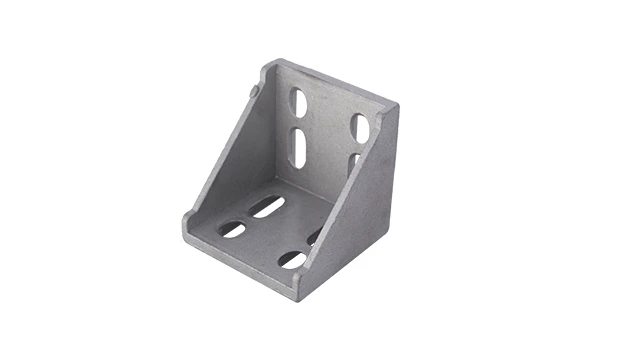
Gusset ALP 4040
The 4040 bracket/Gusset is an external fastening method that creates a 90 degree connection. 4040 means this size is used for 40 series aluminum profile with a quick connection by bolt and nut. It is a lightweight bracket that requires no machining servic
How a small but mighty component is revolutionizing healthcare storage
The Hidden Hero in Hospital Storage Rooms
Picture this: It's 3 a.m. in a busy city hospital. A trauma team rushes into the emergency room, and the nurse on duty needs to grab a sterile surgical instrument set—fast. She heads to the storage rack, pulls open the drawer, and in seconds, has the tools in hand. No second-guessing if the packaging is intact, no worrying about dust or contaminants. That moment of efficiency? It's not just luck. It's the result of storage systems designed with one goal in mind: keeping medical devices sterile, accessible, and safe. And at the heart of many of these systems? A component you've probably never heard of but relies on daily: the Gusset ALP 4040.
In healthcare, sterility isn't just a buzzword—it's a matter of life and death. A single contaminated instrument can lead to infections, prolonged hospital stays, or worse. That's why medical storage racks aren't just metal shelves; they're carefully engineered ecosystems. And the Gusset ALP 4040, a humble but critical bracket, plays a starring role in making these ecosystems work. Let's dive into why this small part matters so much, and how it teams up with materials like aluminum profile and systems like lean system to set new standards in safety.
The Sterility Challenge: Why Traditional Racks Fall Short
Before we talk about solutions, let's talk about the problem. Medical storage racks face a unique set of challenges. First, they need to keep devices sterile. That means no nooks, crannies, or rough surfaces where dust, bacteria, or moisture can hide. Second, they need to be durable enough to handle heavy loads—think stacks of instrument trays or bulk packages of gloves—without bending or warping. Third, they need to be easy to clean. Hospital staff don't have time to scrub hard-to-reach areas; cleaning protocols need to be quick, thorough, and repeatable.
Traditional metal racks often miss the mark here. Many are welded together, leaving tiny gaps in the weld seams where debris loves to collect. Others use materials that scratch easily, creating grooves for bacteria to thrive. And let's not forget mobility: fixed racks can make it impossible to clean the floor underneath, leading to hidden dirt buildup over time. Even worse, some racks are so rigidly built that reconfiguring them for new equipment or workflow changes is nearly impossible—wasting space and slowing down staff.
Enter the Gusset ALP 4040. This bracket, designed to reinforce connections between aluminum profiles, addresses almost all these pain points. But to understand why, we need to start with the material it's paired with most often: aluminum profile.

Aluminum Profile: The Foundation of Clean, Strong Storage
Aluminum profile isn't just popular in medical settings by accident. Unlike steel, it's naturally resistant to corrosion—critical in environments where cleaning agents and moisture are constants. It's also lightweight, making racks easier to move (more on that later) without sacrificing strength. But the real win? Its smooth, non-porous surface. Unlike wood or even some plastics, aluminum doesn't absorb liquids or trap particles. A quick wipe with a disinfectant is all it takes to sanitize it, which is a game-changer for busy hospitals.
But aluminum profiles alone aren't enough. To build a sturdy rack, you need strong connections. That's where the Gusset ALP 4040 comes in. This bracket is designed to fit snugly at the joints of aluminum profiles, creating a connection that's both rigid and seamless. Unlike welds, which can crack over time or leave uneven edges, the Gusset ALP 4040 locks profiles together with precision. No gaps, no sharp edges, no hidden spaces for contaminants. It's like building with Lego blocks, but for grown-ups who need their creations to withstand daily use in high-stakes environments.
Let's break down the design: The Gusset ALP 4040 is shaped like a small, flat triangle (or "gusset," hence the name), with pre-drilled holes that align perfectly with the T-slots in aluminum profiles. This means you can secure it with simple bolts, no welding required. The result? A joint that's strong enough to support heavy loads but easy to disassemble if you need to reconfigure the rack. For example, if a hospital adds a new line of larger instrument cases, staff can loosen the bolts, adjust the shelf height, and re-tighten—all in minutes. That flexibility is key to adapting to changing needs, which is where lean system principles come into play.

Lean System: Efficiency Meets Sterility
You've probably heard of lean system in manufacturing—its focus on reducing waste, streamlining workflows, and maximizing value. But lean thinking isn't just for factories; it's transforming healthcare too. In medical storage, "waste" can mean wasted space, wasted time searching for supplies, or wasted effort in cleaning. The Gusset ALP 4040, paired with aluminum profiles, is a lean dream come true.
Here's how it works: Lean system encourages "just-in-time" storage, meaning supplies are kept exactly where they're needed, in the quantities needed. That might mean a small rack in the OR prep area for immediate-use instruments, and a larger rack in the central supply room for bulk storage. With modular racks built using Gusset ALP 4040 brackets, hospitals can customize each storage zone to fit its specific purpose. No more one-size-fits-all racks that leave half the space unused or cram supplies into overcrowded shelves.
Another lean principle is "5S"—sort, set in order, shine, standardize, sustain. The modular design of these racks makes 5S a breeze. "Sort" becomes easy when you can adjust shelf heights to separate different types of devices. "Set in order" is simplified by labeling clear, accessible spaces. "Shine" (cleaning) is faster because there are no hidden gaps. "Standardize" is possible because racks can be replicated across departments, so staff know exactly where to find supplies. And "sustain"? The durability of aluminum profiles and Gusset ALP 4040 connections means the system stays functional for years, so habits don't fall apart due to equipment failure.
But lean isn't just about efficiency—it's about safety. When supplies are organized and easy to find, staff spend less time rushing, reducing the risk of mistakes. When racks are stable and secure, there's no danger of shelves collapsing under heavy loads. And when cleaning is simplified, protocols are followed more consistently. It's a win-win: better care for patients, less stress for staff.
Beyond Racks: Workbench and Mobility with Caster Wheel
Medical storage doesn't stop at racks. Many facilities use specialized workbench stations for preparing instruments, assembling kits, or packaging supplies. These workbenches need the same sterility and durability as racks, and they often use the same aluminum profile and Gusset ALP 4040 brackets. Imagine a workbench in a sterile processing department: it needs a flat, stable surface for laying out instruments, and it needs to be easy to wipe down between uses. An aluminum profile workbench with Gusset ALP 4040-reinforced legs checks both boxes. The smooth surface resists stains and scratches, and the sturdy joints ensure the bench doesn't wobble—critical when handling sharp tools or fragile equipment.
Then there's mobility. In busy hospitals, being able to move storage racks or workbenches can make a huge difference. For example, during a deep cleaning of a storage room, staff might need to roll racks out to access the floor underneath. Or, in a pandemic surge, a mobile rack could be moved from the supply room directly to a temporary treatment area. That's where caster wheel comes in. Many aluminum profile racks are fitted with heavy-duty caster wheels, which are designed to lock securely when in use and roll smoothly when needed.
But not all caster wheels are created equal. Medical-grade casters need to be non-marking (to protect hospital floors), easy to clean (no crevices for dirt), and strong enough to support the rack's weight. They also need reliable brakes—you don't want a rack rolling away during a procedure! When paired with Gusset ALP 4040-reinforced racks, these casters create a system that's both mobile and stable. It's the best of both worlds: flexibility to move when you need to, and security when you don't.
Safety Standards: Meeting the Strictest Regulations
In healthcare, "good enough" isn't enough. Storage systems must meet rigorous standards set by organizations like the FDA, ISO, and CDC. Let's look at how Gusset ALP 4040 and its partners stack up.
First, material safety. Aluminum profiles are non-toxic and inert, meaning they won't react with disinfectants or leach chemicals into stored supplies. Stainless steel pipe series, sometimes used in high-moisture areas like sterile processing, offers similar benefits with added strength. Both materials are compliant with FDA regulations for food contact (though in this case, it's "device contact"), which gives hospitals peace of mind.
Second, structural safety. The Gusset ALP 4040's design ensures that rack joints can withstand heavy loads without failing. Manufacturers test these brackets to meet industry standards for weight capacity—often up to 500 pounds per shelf or more. This is crucial because overloaded or unstable racks are a major safety hazard. Imagine a shelf collapsing under a stack of surgical trays; the risk of injury to staff or damage to expensive equipment is too high. With Gusset ALP 4040, hospitals can trust that their racks will hold up, even under daily use.
Third, cleanability. As we mentioned earlier, smooth surfaces and minimal joints are key to meeting CDC cleaning protocols. The modular design of aluminum profile racks with Gusset ALP 4040 brackets means there are no weld seams or rivets to trap debris. A study by the Association for the Advancement of Medical Instrumentation (AAMI) found that modular racks were 30% faster to clean than traditional welded racks, with 25% fewer bacterial colonies detected after cleaning. That's a tangible difference in reducing infection risk.
Real-World Impact: How One Hospital Upgraded Its Storage
Let's put this all into context with a real example. Last year, a mid-sized hospital in the Midwest was struggling with frequent contamination issues in its sterile storage room. Staff were spending hours each week scrubbing traditional steel racks, but microbial tests still showed high bacteria counts. The racks were also fixed in place, making it hard to clean underneath, and they couldn't be adjusted to fit new, larger instrument cases. The hospital decided to invest in a new system: aluminum profile racks with Gusset ALP 4040 brackets, fitted with caster wheels for mobility.
The results were striking. Within three months, bacterial counts dropped by 45%, according to the hospital's infection control team. Cleaning time was cut in half, freeing up staff to focus on patient care. The adjustable shelves meant the hospital could fit 20% more supplies in the same space, reducing the need for extra storage rooms. And the caster wheels made deep cleaning days a breeze—staff simply rolled the racks out, cleaned the floor, and rolled them back in. "It's not just a rack upgrade," said the head of sterile processing. "It's a culture change. We're spending less time fighting contamination and more time ensuring every instrument is ready when it's needed."
Traditional vs. Gusset ALP 4040 Racks: A Side-by-Side Look
| Feature | Traditional Steel Racks | Gusset ALP 4040 + Aluminum Profile Racks |
|---|---|---|
| Cleaning Accessibility | Weld seams and rough edges trap debris; hard to reach all surfaces. | Smooth, modular joints with no hidden gaps; easy to wipe down entirely. |
| Durability | Prone to rust and corrosion in high-moisture areas; welds can weaken over time. | Aluminum resists corrosion; Gusset ALP 4040 brackets create strong, bolted joints that don't weaken. |
| Flexibility | Fixed shelf heights; difficult to reconfigure without cutting/welding. | Adjustable shelves via T-slot connections; reconfigurable in minutes with basic tools. |
| Mobility | Typically fixed in place; heavy and hard to move. | Optional caster wheels with locks for easy movement and secure positioning. |
| Sterility Maintenance | High risk of bacterial buildup in seams; requires frequent deep cleaning. | Low risk of buildup; quick, effective cleaning supports consistent sterility. |
The Future of Medical Storage: What's Next?
As healthcare evolves, so do storage needs. New technologies like robotic supply delivery, AI-driven inventory management, and stricter sterility standards are pushing the boundaries of what storage racks can do. The Gusset ALP 4040 and aluminum profile systems are poised to keep up. For example, some manufacturers are adding smart sensors to racks, which can monitor temperature, humidity, or weight (alerting staff if a shelf is overloaded). These sensors can be easily integrated into the T-slots of aluminum profiles, thanks to the flexibility of the system.
There's also a growing focus on sustainability. Aluminum is 100% recyclable, and modular systems reduce waste by allowing components to be reused or repurposed. Hospitals looking to reduce their carbon footprint are increasingly choosing aluminum over steel, which requires more energy to produce and isn't as easily recycled.
Perhaps most importantly, the human element remains at the center. At the end of the day, medical storage racks are tools for healthcare workers—nurses, techs, and doctors who need reliable, safe, and efficient systems to do their jobs well. The Gusset ALP 4040 might be a small part, but it's a reminder that every detail counts when it comes to patient care. It's not just about brackets and bolts; it's about creating environments where staff can focus on what matters most: healing.
Conclusion: Small Parts, Big Impact
The next time you walk into a hospital storage room, take a closer look at the racks. Chances are, you'll spot aluminum profiles connected by brackets like the Gusset ALP 4040. These unassuming components are quiet heroes, working behind the scenes to keep supplies sterile, staff efficient, and patients safe. They're a testament to the idea that great healthcare doesn't just come from cutting-edge medicine—it comes from the sum of many small, thoughtful choices, including the tools we use to store the instruments that save lives.
So, the next time someone asks, "Why does a bracket matter in healthcare?" you can tell them: Because sterility isn't an accident. It's built, one Gusset ALP 4040 at a time.