- Company Articles
- Industry articles
- Industry standards
- Heavy Duty Split Foot Seat Load Testing: Industry Standards Explained

Heavy Duty Split Foot Seat Load Testing: Industry Standards Explained
Related Product
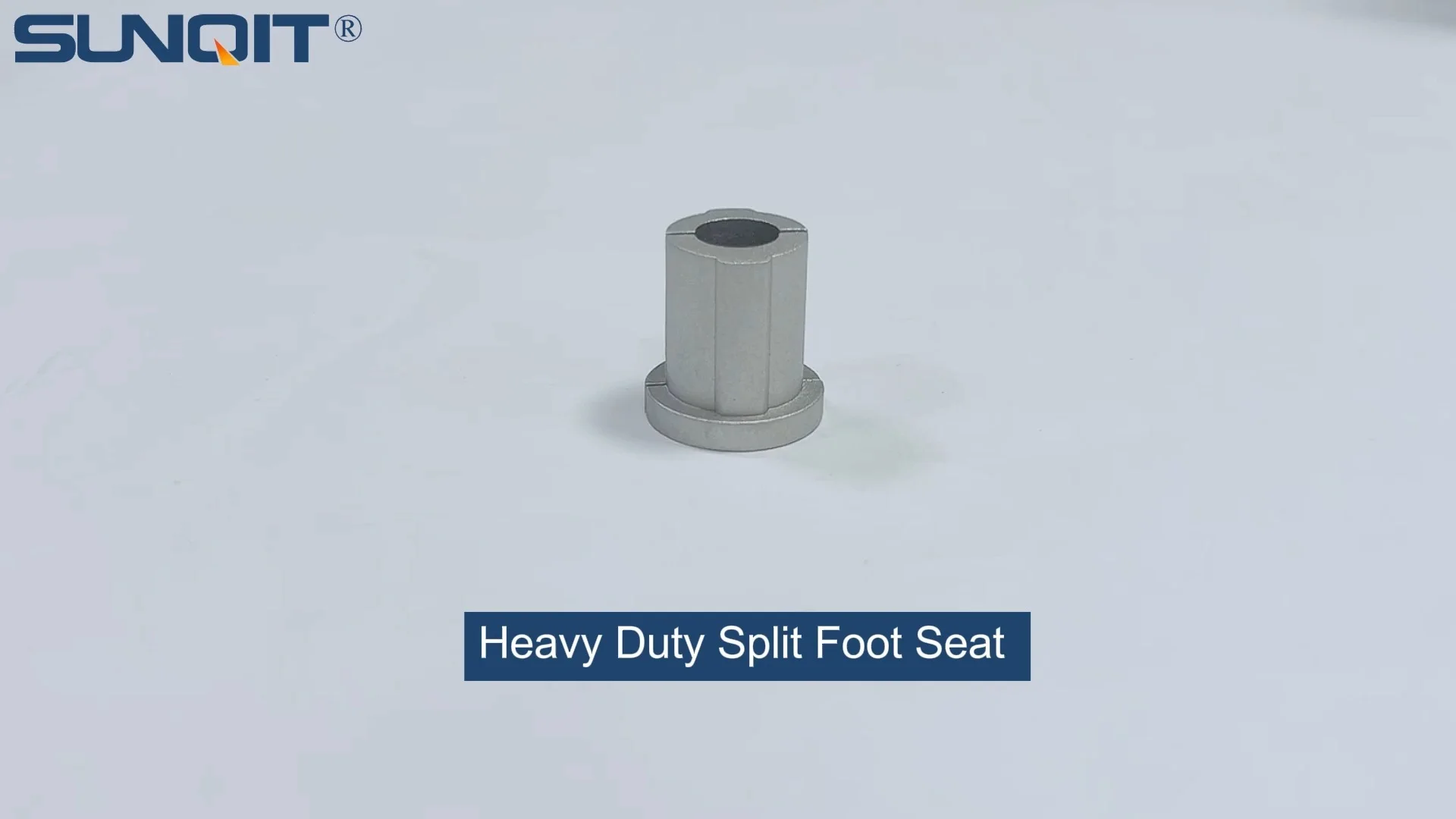
Heavy Duty Split Foot Seat
M10 aluminum heavy duty split foot deat with foot adjuster for workbench and flow rack.
Walk into any manufacturing plant, warehouse, or assembly line, and you'll spot them: workbenches stacked with tools, material racks loaded with components, and conveyor systems humming with products. Behind the scenes, keeping all these structures stable, safe, and functional are small but critical components—like the heavy-duty split foot seat. It's not the flashiest part of a workbench or a material rack, but when it fails, the consequences can be costly: delayed production, damaged goods, or worse, worker injuries. That's why load testing these unassuming heroes isn't just a box to check—it's a cornerstone of responsible manufacturing. In this article, we'll dive into what heavy-duty split foot seats are, why load testing matters, the industry standards that govern these tests, and how suppliers and buyers can ensure they're getting components they can trust.
What Exactly Is a Heavy Duty Split Foot Seat?
Before we get into the testing, let's make sure we're all on the same page about the star of the show: the heavy-duty split foot seat. Think of it as the "feet" of industrial furniture and equipment. These components are designed to anchor structures like workbenches, material racks, and turnover trolleys to the ground, distributing weight evenly and preventing wobbling, tipping, or sinking—even when the load gets heavy. The "split" in the name refers to their two-part design: a base plate that attaches to the structure (like the legs of a workbench) and a lower plate that connects to the floor or adjustable leveling feet, sometimes with casters for mobility. This split design isn't just for looks; it adds flexibility, allowing for minor adjustments to account for uneven floors, and strengthens the connection between the structure and its support system.
Most heavy-duty split foot seats are made from robust materials like cold-rolled steel, stainless steel, or aluminum—depending on the application. Steel versions are common in high-load scenarios, like workbenches holding automotive parts or machinery, while aluminum might be preferred for lighter but still sturdy setups, especially when paired with aluminum profile frames. Some even come with built-in slots or holes to accommodate accessories like adjustable leveling feet (those handy screw-in feet that let you tweak height) or caster and accessories (wheels for moving the structure when needed). This versatility makes them a favorite among lean system suppliers, who need components that can adapt to different workflows and environments.
To visualize, picture a typical workbench in an electronics assembly plant. The frame is built from aluminum profile—lightweight, easy to assemble, and compatible with all sorts of accessories. At the bottom of each leg, you'll find a split foot seat bolted on. Underneath that, adjustable leveling feet are screwed in, ensuring the workbench stays perfectly level even if the factory floor has a slight slope. Without that split foot seat, the legs might bend under the weight of circuit boards, tools, and testing equipment, or the workbench might rock, making precise assembly impossible. In short, these little components are the unsung stabilizers of the industrial world.
Why Load Testing Heavy Duty Split Foot Seats Is Non-Negotiable
Now, you might be thinking: "They're just metal plates—how much could go wrong?" The answer, unfortunately, is "plenty." Load testing isn't about being overly cautious; it's about preventing disasters before they happen. Let's break down why it's so critical.
Safety First: Protecting Workers and Workplaces
The most obvious reason is safety. Imagine a material rack B (3 row and 3 floor) in a warehouse, loaded with boxes of raw materials weighing 200 pounds per shelf. The split foot seats at the base are supposed to support that weight—over 1,800 pounds in total. If those seats weren't load-tested and fail, the rack could tip, sending boxes crashing to the ground. Workers nearby could be injured, and the materials (which might be expensive or time-sensitive) could be damaged. Even a small wobble can be dangerous: a workbench holding a 300-pound machine tool that shifts unexpectedly could cause the operator to lose balance, leading to cuts, bruises, or worse. Load testing ensures that the split foot seats can handle not just the "normal" load, but also unexpected spikes—like when someone leans on the workbench, or a box is dropped onto the rack.
Cost Savings: Avoiding Downtime and Replacements
Beyond safety, there's the bottom line. A failed split foot seat might seem like a minor issue, but it can bring production to a halt. Let's say a manufacturer uses workbenches with untested foot seats on their assembly line. One day, a foot seat cracks under the weight of a heavy component, causing the workbench to tilt. The line stops while the bench is repaired or replaced, workers stand idle, and deadlines get missed. Multiply that by multiple workbenches or a entire factory, and the costs add up fast—downtime, replacement parts, labor to fix the issue, and potential lost orders. In contrast, investing in load testing upfront is cheap insurance. It catches weak spots early, before the component is installed, saving suppliers and buyers from costly callbacks, warranty claims, and reputational damage.
Compliance: Meeting Industry Regulations and Standards
Finally, there's compliance. Most industries—from automotive to aerospace to pharmaceuticals—have strict regulations governing workplace safety and equipment durability. For example, OSHA in the U.S. requires that "all materials stored in tiers shall be stacked, racked, blocked, interlocked, or otherwise secured to prevent sliding, falling, or collapse" (29 CFR 1910.176(b)). If a split foot seat fails and causes a rack collapse, the employer could face fines, inspections, or even legal action. Load testing ensures that components meet these regulatory standards, giving businesses peace of mind and protecting them from liability. For suppliers, it's also a competitive edge: being able to prove that your split foot seats pass rigorous load tests makes buyers more likely to choose you over a competitor who can't provide that documentation.
Take it from Maria, a quality control manager at a mid-sized lean pipe supplier. A few years back, her company started receiving complaints from a client: their workbenches were wobbling after a month of use. An investigation revealed that the split foot seats, sourced from a new, cheaper vendor, hadn't been load-tested. Under the weight of the client's tools, the welds holding the split plates together were cracking. "We had to recall all the benches, replace the foot seats, and cover the client's downtime," Maria recalls. "It cost us tens of thousands of dollars and almost lost us the client. Now, we test every batch of split foot seats—no exceptions. It's not just about avoiding mistakes; it's about respecting the trust our clients put in us."

Industry Standards: The Rules of the Road for Load Testing
Load testing isn't a free-for-all. To ensure consistency and reliability, the industry follows a set of standards developed by organizations like the International Organization for Standardization (ISO), the American Society for Testing and Materials (ASTM), and the European Committee for Standardization (CEN). These standards outline everything from how much weight to apply, how long to apply it, to the acceptable amount of deformation (bending or warping) before a component is considered a failure. Let's take a closer look at the most common ones you'll encounter.
ISO 13857: Safety of Machinery – Prevention of Hazards Arising from Machinery
ISO 13857 is a broad standard that covers the safety of machinery, including the stability of structures like workbenches and material racks. While it doesn't focus exclusively on split foot seats, it sets guidelines for "static stability"—how well a structure resists tipping when loaded. For split foot seats, this translates to testing how much horizontal and vertical force they can withstand before the structure becomes unstable. The standard specifies that structures should be able to handle a static load equal to 1.5 times their rated capacity (the maximum weight they're designed to hold) without tipping or causing the foot seats to fail. For example, if a workbench is rated for 500 pounds, the split foot seats must support 750 pounds during testing.
ASTM F2057: Standard Test Method for Evaluating the Performance of Work Surfaces
ASTM F2057 is more specific to workbenches and their components, including split foot seats. It outlines procedures for testing the strength and durability of work surfaces, but it also includes requirements for the "support structure," which includes legs, braces, and—you guessed it—foot seats. Under this standard, split foot seats are tested under both static and dynamic loads. Static load testing involves applying a weight (usually distributed evenly across the workbench) and leaving it for a specified time (often 24 hours) to check for deformation. Dynamic testing, on the other hand, involves applying sudden or repeated loads—like dropping a weight onto the workbench—to simulate real-world use, where materials might be placed roughly or tools might be set down with force. The standard requires that after testing, the foot seats show no permanent deformation (they shouldn't bend or crack) and that the workbench remains stable.
EN 527: Office Furniture – Workbenches and Desks
EN 527 is a European standard that applies to office and light industrial workbenches, but it's often referenced by lean system suppliers globally. It categorizes workbenches into three classes based on load capacity: Class 1 (light duty, up to 50 kg per shelf), Class 2 (medium duty, up to 150 kg per shelf), and Class 3 (heavy duty, up to 300 kg per shelf). For split foot seats used in Class 3 workbenches, EN 527 requires load testing at 1.5 times the rated load for 1 hour, with no visible damage or permanent displacement. It also includes a "fatigue test"—applying the load repeatedly (usually 10,000 cycles) to simulate long-term use. This is crucial because even if a foot seat holds up under a single heavy load, repeated stress over time could weaken it, leading to failure down the line.
To help you compare these standards at a glance, here's a quick reference table:
| Standard | Focus Area | Load Test Requirement | Duration | Acceptance Criteria |
|---|---|---|---|---|
| ISO 13857 | Static stability of machinery/structures | 1.5x rated capacity (vertical + horizontal force) | Continuous until stability is confirmed | No tipping; foot seats intact |
| ASTM F2057 | Work surface performance | Static load (rated capacity) + dynamic impact load | Static: 24 hours; Dynamic: 10 impacts | No permanent deformation; stable structure |
| EN 527 (Class 3) | Heavy-duty workbenches | 1.5x rated capacity (static) + 10,000 cycles (fatigue) | Static: 1 hour; Fatigue: N/A (cycles) | No visible damage; ≤2mm permanent displacement |
These standards aren't just guidelines—they're the minimum requirements. Many reputable suppliers go above and beyond, testing at 2x the rated load or adding additional checks for corrosion resistance (important in humid or chemical-heavy environments) or compatibility with accessories like adjustable leveling feet and caster and accessories. For example, a supplier might test how well a split foot seat holds up when paired with heavy-duty casters, ensuring that the connection doesn't loosen when the structure is rolled across rough floors. This extra rigor is what separates a reliable lean pipe supplier from a fly-by-night vendor.

A Deep Dive into Load Testing Procedures
So, how exactly do manufacturers test these split foot seats? It's not as simple as piling weights on top and crossing fingers. Load testing is a structured process with specific steps, tools, and metrics. Let's walk through a typical testing scenario, using a heavy-duty split foot seat designed for a Class 3 workbench (rated to support 300 kg per shelf, per EN 527 standards).
Step 1: Pre-Test Preparation
Before any weights are applied, the test setup needs to mimic real-world conditions as closely as possible. First, the split foot seats are installed on a mock-up of the actual structure—usually a frame made from the same materials (aluminum profile, steel tubing) as the final workbench or rack. This ensures that the load is distributed the way it would be in use. Next, the mock-up is placed on a flat, rigid surface (like a concrete floor) to eliminate variables from uneven ground. If the foot seats are designed to be used with adjustable leveling feet, those are installed too—set to their mid-height position, since fully extended or retracted feet might affect stability.
Testing equipment includes load cells (sensors that measure force), hydraulic rams or weight stacks to apply pressure, and dial indicators or laser levels to measure deformation. The test engineer will also inspect the foot seats for any pre-existing defects—scratches, weld cracks, or bent plates—that could affect results. If any are found, the sample is discarded, and a new one is used. After all, the goal is to test the component's performance, not its ability to survive damage from poor manufacturing.
Step 2: Static Load Testing
Static load testing is the most basic—and most critical—test. It checks how well the split foot seats handle a constant, steady weight over time. For our Class 3 workbench example, the rated load per shelf is 300 kg, so the total load on the four split foot seats (one per leg) would be around 1,200 kg (assuming even distribution). Following EN 527, we test at 1.5x that load: 1,800 kg total, or 450 kg per foot seat.
The weight is applied gradually—never all at once—to avoid shock loading, which could damage the structure artificially. Using a hydraulic ram, the force is increased slowly until it reaches 450 kg per foot seat, then held steady for 1 hour. During this time, the test engineer monitors for any signs of failure: bending in the foot seat plates, cracks in the welds, or movement in the connection between the foot seat and the frame. Dial indicators measure how much the foot seat deflects (bends) under load; EN 527 allows for minor temporary deflection, but any permanent bending (meaning the plate doesn't spring back to its original shape after the load is removed) is a failure.
Step 3: Dynamic and Fatigue Testing
Static testing tells us how the foot seat handles steady loads, but real-world use is rarely steady. Workbenches get bumped, racks get loaded and unloaded repeatedly, and floors vibrate from nearby machinery. That's where dynamic and fatigue testing come in.
Dynamic testing involves applying sudden, short bursts of force to simulate impacts—like a worker dropping a heavy tool on the workbench, or a pallet being slammed into a material rack. For split foot seats, this might involve using a drop weight: a heavy object (usually 10-20 kg) dropped from a height of 30-50 cm onto the workbench surface, directly above the foot seat. The test is repeated 10 times, and the foot seat is inspected for cracks or loosening bolts after each drop.
Fatigue testing, on the other hand, checks long-term durability. Using a mechanical arm or hydraulic system, the rated load (300 kg per shelf for our example) is applied and removed repeatedly—often 10,000 cycles or more. This mimics months or years of use, where the foot seat is loaded and unloaded daily. The goal is to see if the repeated stress weakens the material or welds, leading to failure. If the foot seat survives all cycles without breaking or deforming permanently, it passes.
Step 4: Environmental Testing (When Needed)
Depending on the application, some split foot seats undergo additional environmental testing. For example, if they'll be used in a food processing plant (where cleanliness is critical), they might be tested for corrosion resistance by exposing them to salt spray (following ASTM B117) for 100 hours. If they'll be used outdoors or in humid environments, a humidity chamber test checks for rust or degradation. Even temperature extremes—like the sweltering heat of a foundry or the cold of a freezer warehouse—can affect material strength, so some tests involve subjecting the foot seats to -40°C or +80°C temperatures before load testing.
After all tests are complete, the results are documented in a test report, which includes photos, measurements, and whether the component passed or failed. Reputable lean pipe suppliers will provide these reports to buyers on request—so don't be afraid to ask for them. A supplier who hesitates to share test data is a red flag.

Factors That Affect Split Foot Seat Performance (And How to Account for Them)
Load testing gives us a baseline, but real-world performance depends on more than just the component itself. Several factors can influence how well a heavy-duty split foot seat holds up, from the materials used to the way it's installed. Let's break down the most common variables and how suppliers and buyers can manage them.
Material Quality and Thickness
Not all steel (or aluminum) is created equal. The grade of metal used in a split foot seat has a huge impact on its strength. For example, cold-rolled steel (CRS) is stronger and more durable than hot-rolled steel, thanks to the rolling process that compresses the metal grains, reducing weaknesses. Similarly, aluminum 6061-T6 is a popular choice for aluminum profile components because it's heat-treated for extra strength, making it suitable for medium-load applications. Thickness matters too: a 3mm steel plate will resist bending better than a 1.5mm plate under the same load. Some suppliers cut corners by using thinner material or lower-grade steel to save costs, which is why material certification (like a mill test report) is just as important as load test results.
Weld Quality and Design
Most split foot seats are made by welding two plates together (the "split" parts), and a poor weld is a ticking time bomb. Welds with porosity (tiny air bubbles), undercutting (where the weld melts away the base metal), or insufficient penetration (the weld doesn't fully fuse the two plates) are weak points that can crack under load. Skilled welders, proper welding techniques (like MIG or TIG welding for steel), and post-weld inspections (using dye penetrant testing to check for cracks) are essential. Some suppliers even use robotic welding for consistency, ensuring every weld meets the same standard. The design of the weld joint matters too: a fillet weld (a triangular bead along the edge) might be sufficient for light loads, but heavy-duty applications often require a full penetration weld, where the weld penetrates the entire thickness of the plates, creating a stronger bond.
Installation and Compatibility
Even the best split foot seat will fail if installed incorrectly. Common mistakes include using the wrong bolts (too short, too weak, or the wrong thread type), overtightening (which can strip threads or warp the plates), or undertightening (which allows the foot seat to shift, leading to stress cracks). Compatibility with other components is another issue: if the split foot seat is designed for use with M10 bolts, but the adjustable leveling feet have M8 threads, the connection will be loose, reducing stability. Buyers should always check that the foot seat, leveling feet, casters, and frame (aluminum profile or steel) are all compatible—most lean pipe suppliers provide compatibility charts or technical drawings to help with this.
Environmental Conditions
Humidity, chemicals, and temperature can all degrade split foot seats over time. In a factory with high moisture (like a food processing plant), uncoated steel foot seats will rust, weakening the metal. That's why many suppliers offer powder-coated or galvanized options: powder coating adds a durable, corrosion-resistant layer, while galvanizing (dipping the metal in molten zinc) creates a protective barrier. In chemical-heavy environments (like a battery manufacturing plant), stainless steel is a better choice, as it resists corrosion from acids and alkalis. Even UV exposure (if the structure is used outdoors) can break down powder coatings over time, so outdoor applications might need extra protection, like a UV-resistant topcoat.
User Error and Overloading
Sometimes, the issue isn't the foot seat itself—it's how it's used. Workers might overload a workbench beyond its rated capacity, assuming "heavy duty" means "indestructible." Or they might remove adjustable leveling feet and replace them with casters without checking if the split foot seat is rated for the added stress of movement (casters can create dynamic loads when rolling over uneven floors). To prevent this, clear labeling is key: workbenches and racks should have visible load ratings, and workers should be trained on proper use. Suppliers can help by including usage guidelines in their product manuals, like "Do not exceed 300 kg per shelf" or "Use only compatible caster and accessories."
For example, a automotive parts supplier once had a client complain about split foot seats failing on their material racks. The investigation revealed the client had stacked 500 kg per shelf—double the rated load—because they assumed "heavy duty" meant "as much as we can fit." The foot seats, which passed EN 527 testing at 450 kg (1.5x the 300 kg rating), couldn't handle 500 kg over time. The solution? The supplier worked with the client to add reinforcement plates to the foot seats and relabel the racks with clear load limits. Problem solved—thanks to a mix of better communication and product adaptation.
Real-World Applications: Where Split Foot Seats Make a Difference
To really understand the impact of load-tested split foot seats, let's look at how they're used in everyday industrial settings. From busy assembly lines to quiet labs, these components play a role in keeping operations running smoothly.
Manufacturing Workbenches
Workbenches are the backbone of assembly lines, and their split foot seats are critical for precision work. In an aerospace parts shop, for example, workers might be assembling small, delicate components that require steady hands. A workbench with unstable split foot seats would wobble, making it impossible to drill precise holes or solder connections. Load-tested foot seats ensure the bench stays rock-solid, even when tools, parts, and workers lean on it. Many of these workbenches also use adjustable leveling feet to compensate for uneven floors, and the split design of the foot seats makes it easy to install and adjust those feet without compromising stability.
Material Racks and Flow Racks
Material racks, like the material rack B (3 row and 3 floor) mentioned earlier, are workhorses in warehouses, holding everything from raw materials to finished goods. Split foot seats here need to handle not just the weight of the materials, but also the stress of loading and unloading—forklifts might bump the rack, or workers might pull heavy boxes off the shelves, creating sudden lateral forces. A load-tested foot seat with strong welds and thick steel can absorb these forces without bending or cracking, preventing the entire rack from tipping. Flow racks, which use roller track to slide materials forward, add another layer of complexity: the constant movement of products creates vibration, which can loosen connections over time. Fatigue-tested split foot seats (like those tested to EN 527's 10,000 cycles) are a must here to ensure long-term durability.
Cleanrooms and Lab Environments
In pharmaceutical or electronics manufacturing, cleanrooms require equipment that's not just stable, but also easy to clean. Stainless steel split foot seats are common here, as they resist corrosion from harsh cleaning chemicals and don't harbor bacteria. Load testing is still critical: lab workbenches might hold expensive microscopes or testing equipment, and even a small wobble could ruin experiments. Some cleanroom setups also use aluminum profile frames with anodized finishes (to prevent particle shedding) and split foot seats designed to be completely flat, with no crevices where dust can collect. In these environments, load testing isn't just about strength—it's about maintaining precision and cleanliness.
Choosing a Supplier: What to Look for Beyond the Sales Pitch
For buyers, selecting a lean pipe supplier or lean system supplier for heavy-duty split foot seats can feel overwhelming. With so many options online, how do you separate the reliable vendors from the ones cutting corners? Here are the key questions to ask and checks to perform before placing an order.
Can They Provide Load Test Reports and Material Certifications?
This should be your first question. Any reputable supplier will have no problem sharing test reports from accredited labs (look for ISO 17025 certification) that show their split foot seats meet ASTM, ISO, or EN standards. They should also provide material certifications, like mill test reports for steel or aluminum, proving the grade and thickness of the metal used. If a supplier says, "We test them in-house," ask for details: what equipment do they use? Who trains their testers? Do they follow a standard procedure, or is it "eyeball testing"? In-house testing is fine if done properly, but third-party certification adds an extra layer of credibility.
What's Their Quality Control Process?
Quality control (QC) isn't a one-time test—it's a process. Ask the supplier to walk you through their QC steps, from raw material inspection (how do they check for defects in steel plates?) to welding inspection (do they use dye penetrant or X-ray testing for critical welds?) to final assembly checks (do they test every foot seat, or just a sample batch?). A good supplier will have a documented QC plan and be happy to share it. For example, some suppliers use statistical process control (SPC), where they test a sample from each production batch and track results over time to spot trends (like a sudden increase in weld defects). This shows they're proactive about quality, not just reactive.
Do They Offer Custom Solutions?
Every workplace is different, and off-the-shelf split foot seats might not always fit your needs. Maybe you need a larger base plate to distribute weight on soft floors, or a stainless steel version with a specific finish for a cleanroom. A supplier with engineering capabilities can design custom split foot seats tailored to your application, ensuring they meet your load requirements and fit your existing aluminum profile or steel frames. Ask if they have in-house engineers or partner with design firms, and what the lead time is for custom orders. Be wary of suppliers who only offer "one size fits all"—it might mean they're not willing to invest in meeting your unique needs.
What's Their Reputation in the Industry?
Do a little digging online. Check review sites, industry forums, or LinkedIn for feedback from other buyers. Look for comments about durability ("We've had these foot seats for 5 years and no issues") or customer service ("They helped us troubleshoot an installation problem quickly"). You can also ask the supplier for references—most will be happy to connect you with past clients. If a supplier has multiple complaints about failed components or unresponsive support, it's a red flag. On the flip side, a supplier with long-term clients (5+ years) is a good sign they deliver consistent quality.
How Do They Handle Failures or Issues?
Even the best suppliers have issues—no manufacturing process is perfect. What matters is how they respond. Ask: "If a batch of split foot seats fails in our facility, what's your warranty policy?" A strong warranty (at least 1 year) shows confidence in their product. Also, ask about their return and replacement process: Will they send a technician to inspect the failure? Do they offer a refund or replacement? A supplier who blames the buyer ("You must have overloaded them") without investigating is one to avoid. A good partner will work with you to find the root cause and fix it—whether it's a manufacturing defect, compatibility issue, or user error.
Remember, price shouldn't be the only factor. A slightly cheaper split foot seat might save you money upfront, but if it fails, the cost of downtime, replacements, and potential injuries will far outweigh the savings. As Maria (the quality control manager we mentioned earlier) puts it: "We've learned to invest in quality. The right supplier isn't just a vendor—they're a partner in keeping our clients safe and productive."
Conclusion: The Bottom Line on Split Foot Seat Load Testing
Heavy-duty split foot seats might not be the most glamorous components in your facility, but they're among the most important. They're the silent sentinels keeping your workbenches stable, your material racks upright, and your workers safe. Load testing isn't just a regulatory checkbox—it's a commitment to quality, reliability, and responsibility. By understanding what these components do, why testing matters, and how to choose a supplier who prioritizes both, you can avoid costly failures, keep your operations running smoothly, and build a safer workplace.
Whether you're a lean pipe supplier crafting components or a buyer outfitting a new factory, remember: every split foot seat has a job to do. Make sure it's up to the task. After all, in the world of manufacturing and logistics, stability isn't just a nice-to-have—it's the foundation of success.