- Company Articles
- Industry articles
- Industry standards
- How 2020 EU Standard Aluminum Profile Supports Industry 4.0 Initiatives

How 2020 EU Standard Aluminum Profile Supports Industry 4.0 Initiatives
Related Product
2020 EU Standard Aluminum Profile
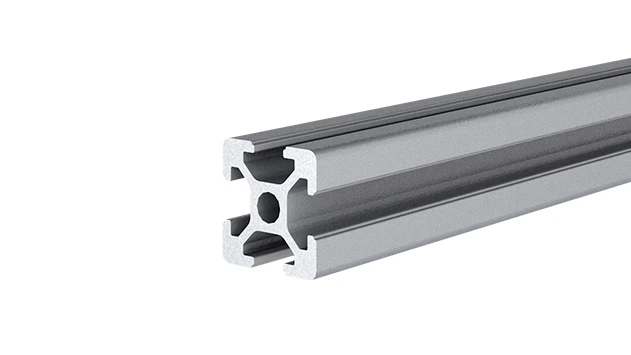
2020 is a 2.00 x 2.00CM fractional 20 series square extrusion T-slot profile with four open T-slots, one on each 2.00 face. The profile has align-a-grooves to assist in aligning connecting profiles.
In the era of Industry 4.0, where smart factories, flexible production, and data-driven efficiency are no longer buzzwords but operational imperatives, manufacturers worldwide are on the hunt for foundational tools that can keep pace with rapid change. At the heart of this transformation lies a seemingly unassuming yet critical component: the 2020 EU Standard Aluminum Profile. More than just a building material, this engineered solution has emerged as a silent enabler, bridging the gap between traditional manufacturing rigidity and the dynamic demands of modern industrial innovation. Let's dive into how this profile—paired with thoughtful design and aluminum profile accessories—becomes the backbone of Industry 4.0 initiatives.
Understanding the 2020 EU Standard Aluminum Profile: More Than Metal
Before we connect it to Industry 4.0, let's clarify what makes the 2020 EU Standard Aluminum Profile stand out. Unlike generic aluminum extrusions, this profile is designed to meet stringent European union standards for precision, durability, and sustainability. Crafted through advanced aluminum extrusion profile techniques, it features consistent cross-sections, smooth surfaces, and integrated T-slots—a detail that might seem small but unlocks endless possibilities. These T-slots act as built-in channels for attaching components, eliminating the need for welding or drilling and turning the profile into a modular canvas for industrial design.
What truly sets it apart, though, is its balance of strength and adaptability. Made from high-grade aluminum alloys, it's lightweight enough for easy reconfiguration yet robust enough to support heavy machinery, tools, and workbenches. This duality is crucial for Industry 4.0, where factories must switch between production runs quickly, scale operations up or down, and integrate new technologies without overhauling their entire infrastructure.
Key Features Driving Industry 4.0 Readiness
Industry 4.0 thrives on four pillars: connectivity, intelligence, flexibility, and customization. The 2020 EU Standard Aluminum Profile addresses each, often in ways that traditional materials like steel or wood cannot. Let's break down its most impactful attributes:
1. Modularity: The Foundation of Flexible Production
Imagine a smartphone with a fixed battery versus one with a removable back—modularity changes everything. The 2020 EU Standard Aluminum Profile works similarly for factories. Thanks to its T-slot design and compatible aluminum profile accessories (think joints, brackets, and connectors), it allows teams to build, disassemble, and rebuild structures in hours, not weeks. A workbench today might support electronics assembly; tomorrow, with a few adjustments, it could become a testing station for automotive parts. This agility is game-changing for manufacturers facing shorter product lifecycles and unpredictable consumer demand.
2. Compatibility with Smart Systems
Industry 4.0 isn't just about physical flexibility—it's about data flow. The 2020 EU Standard Aluminum Profile's precision engineering ensures that sensors, IoT devices, and automation tools can be mounted securely and precisely. For example, a conveyor system built with this profile can integrate RFID scanners to track inventory in real time, or vibration sensors to alert maintenance teams of potential breakdowns. The T-slots even simplify cable management, keeping wires organized and reducing the risk of interference—critical for reliable data transmission.
3. Sustainability: Aligning with Green Manufacturing Goals
Modern industrial initiatives aren't just about profit; they're about planet too. Aluminum is 100% recyclable, and the 2020 EU Standard Aluminum Profile's long lifespan (often decades) means less waste compared to disposable or short-lived materials. Additionally, its lightweight nature reduces energy consumption during transportation and reconfiguration. For lean system suppliers and manufacturers aiming to shrink their carbon footprint, this profile isn't just a tool—it's a sustainability statement.

The Role of Aluminum Profile Accessories: Turning Vision into Reality
A profile is only as good as the accessories that bring it to life. Aluminum profile accessories—such as corner brackets, sliding nuts, and adjustable feet—act as the "glue" that makes modular design possible. For instance, internal rotary aluminum joints allow for 360-degree rotation, enabling workbenches or material racks to pivot and adapt to ergonomic needs. Similarly, quick-connect brackets let teams attach shelves, lighting, or tool holders without specialized tools, empowering frontline workers to make on-the-fly adjustments.
These accessories also enhance safety—a non-negotiable in smart factories. Rubber end caps prevent sharp edges, while anti-slip leveling feet stabilize structures on uneven floors, reducing the risk of accidents. For a lean system supplier, offering a full suite of accessories alongside the 2020 EU Standard Aluminum Profile means providing a turnkey solution, not just parts. It's this ecosystem approach that makes the profile indispensable for Industry 4.0.
Real-World Impact: A Case for the 2020 EU Standard Aluminum Profile
To put this in perspective, let's consider a mid-sized electronics manufacturer facing a common Industry 4.0 challenge: ramping up production for a new smartphone model while phasing out an older one. Historically, this would require retooling the entire assembly line—a process taking 4–6 weeks and costing tens of thousands of dollars. With the 2020 EU Standard Aluminum Profile, the scenario changes dramatically.
The factory's existing workbenches, built with the profile, are disassembled. Using aluminum profile accessories, teams reconfigure the layout to accommodate new machinery, adding height-adjustable shelves for larger components and integrating cable management channels for updated testing equipment. The entire process takes three days, and because the profile is reusable, there's minimal waste. The result? The manufacturer meets its launch deadline, reduces downtime by 90%, and avoids the cost of new infrastructure. For a lean system supplier, stories like this aren't anomalies—they're the norm when leveraging this profile.
Comparing Traditional vs. 2020 EU Standard Aluminum Profile Solutions
| Feature | Traditional Steel Framing | 2020 EU Standard Aluminum Profile |
|---|---|---|
| Reconfiguration Time | Weeks (requires welding/cutting) | Hours (tool-free assembly with accessories) |
| Weight | Heavy (increases transport/installation costs) | Lightweight (reduces labor and energy use) |
| Smart System Integration | Limited (difficult to mount sensors/tools precisely) | Seamless (T-slots and precision fit for IoT devices) |
| Sustainability | High waste (often single-use; difficult to recycle) | Low waste (100% recyclable; long lifespan) |
| Cost Over Time | High (frequent replacements and retooling) | Low (reusable; minimal maintenance) |
Conclusion: The 2020 EU Standard Aluminum Profile—Your Industry 4.0 Partner
Industry 4.0 isn't coming—it's here. And its success hinges on foundational tools that can keep up with its pace. The 2020 EU Standard Aluminum Profile, paired with aluminum profile accessories, isn't just a building material; it's a strategic asset. It empowers manufacturers to be flexible, connected, and sustainable—three qualities that define the factories of tomorrow.
Whether you're a small workshop looking to scale or a global enterprise reimagining production, this profile offers a path forward. It's a reminder that sometimes, the most innovative solutions aren't flashy or high-tech—they're the ones that quietly adapt, endure, and enable progress. So, the next time you walk through a smart factory, take a closer look at the structures around you. Chances are, the 2020 EU Standard Aluminum Profile is there, supporting the future of manufacturing—one T-slot at a time.