- Company Articles
- Industry articles
- Industry standards
- How 2040 EU Standard Aluminum Profile Meets EN 755 Extrusion Standards

How 2040 EU Standard Aluminum Profile Meets EN 755 Extrusion Standards
Related Product
2040 EU Standard Aluminum Profile
2040 is a 2.00 x 4.00CM fractional 20 series square extrusion T-slot profile with four open T-slots, two side with 2.00cm face, the other side with 4.00cm face. The profile has align-a-grooves to assist in aligning connecting profiles.
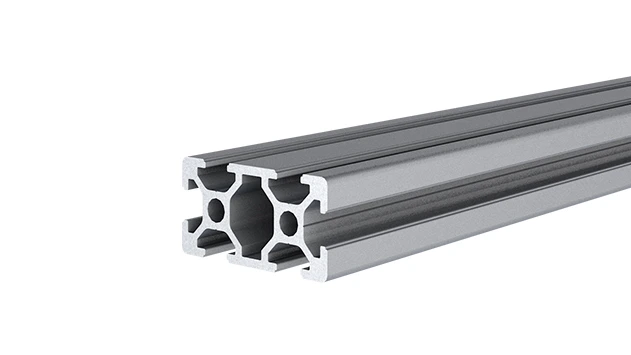
Walk into any modern manufacturing facility, warehouse, or workshop, and you'll likely be surrounded by the quiet workhorses of industrial design: aluminum extrusion profiles. These sleek, modular frames form the backbone of workbenches, conveyor systems, machine guards, and material racks, quietly ensuring operations run smoothly day in and day out. Among the most versatile and widely used of these profiles is the 2040 EU standard aluminum profile—a name that might sound technical, but whose impact is anything but. What makes this 20mm x 40mm extrusion a favorite among engineers and builders? A big part of the answer lies in its strict adherence to EN 755, the European standard that sets the gold benchmark for aluminum extrusions. In this article, we'll unpack what the 2040 profile is, why EN 755 matters, and how this unassuming piece of aluminum meets some of the toughest quality standards in the industry.
What is the 2040 EU Standard Aluminum Profile?
Let's start with the basics: the 2040 EU standard aluminum profile is exactly what its name suggests—a rectangular aluminum extrusion with a cross-section of 20 millimeters by 40 millimeters. But don't let its simple dimensions fool you. This profile is a study in balance: wide enough to provide stability, narrow enough to stay lightweight, and hollow with internal ribs (or "webs") that boost rigidity without adding unnecessary bulk. It's like the Swiss Army knife of aluminum profiles—versatile enough to build everything from a small workbench top to a large-scale production line frame.
Most 2040 EU profiles are made from aluminum alloy 6063, a material chosen for its excellent extrudability (meaning it can be shaped into complex cross-sections easily), good corrosion resistance, and impressive strength-to-weight ratio. When heat-treated to the T5 temper (a process that involves cooling the extrusion quickly and then artificially aging it to harden the material), 6063 becomes even more robust, making it ideal for load-bearing applications. But what really sets the "EU standard" apart is its consistency. Unlike generic aluminum profiles, which can vary wildly in quality, the 2040 EU standard profile is manufactured to strict European specifications—including, crucially, compliance with EN 755.
Understanding EN 755: The Backbone of Aluminum Extrusion Quality
Before we dive into how the 2040 profile meets EN 755, let's clarify what EN 755 actually is. Developed by the European Committee for Standardization (CEN), EN 755 is a multi-part standard that covers "Aluminium and aluminium alloys — Extruded profiles." Think of it as a rulebook that ensures every aluminum extrusion leaving a factory meets minimum requirements for safety, performance, and consistency. Without standards like EN 755, builders and manufacturers would be left guessing: Is this profile strong enough to hold that machine? Will these two profiles from different suppliers fit together? EN 755 eliminates that guesswork.
EN 755 isn't a single document, though—it's a series of parts, each focusing on a specific aspect of extrusion quality:
- EN 755-2: Mechanical properties. This part specifies minimum requirements for tensile strength, yield strength, and elongation (how much the material can stretch before breaking) for different aluminum alloys and tempers.
- EN 755-3: Surface finish. It outlines acceptable surface conditions, including limits on defects like scratches, dents, or discoloration, as well as requirements for coatings like anodizing or powder coating.
- EN 755-9: Dimensional tolerances. This is all about precision—how closely the actual dimensions of the extrusion (like cross-section, straightness, and length) must match the design specifications.
- Other parts cover everything from testing methods (EN 755-1) to specific alloy requirements, but for our purposes, these three are the most critical when evaluating the 2040 profile.
Now, let's explore how the 2040 EU standard aluminum profile checks each of these boxes.

Meeting EN 755-2: Mechanical Properties That Stand Up to the Test
Imagine building a workbench with aluminum profiles, only to have it sag under the weight of your tools. Or constructing a conveyor frame that bends when a heavy part moves across it. That's where mechanical properties come in—and EN 755-2 is the gatekeeper here. For the 2040 profile, which is typically made from alloy 6063-T5, EN 755-2 sets clear minimums for strength and ductility.
Let's break down the key metrics:
Tensile Strength: How Much Pull Can It Take?
Tensile strength is the maximum stress a material can withstand before breaking under tension (i.e., being pulled apart). For 6063-T5, EN 755-2 requires a minimum tensile strength of 160 megapascals (MPa). To put that in perspective, 160 MPa is roughly the force needed to lift 16 metric tons with a single square centimeter of material—more than enough for most industrial applications. In practice, most 2040 EU profiles exceed this minimum, often hitting 180–200 MPa, giving builders a safety margin for heavy loads.
Yield Strength: When Does It Start to Bend?
Tensile strength tells us when a profile will break, but yield strength is about when it starts to deform permanently. EN 755-2 mandates a minimum yield strength of 110 MPa for 6063-T5. This means the profile can handle up to 110 MPa of stress without bending out of shape. For a 2040 profile used in a workbench, this ensures that even if you clamp a heavy vice to it or stack materials on top, the frame won't warp over time. Manufacturers test this by pulling samples of the extrusion in a machine until they start to stretch permanently—if the yield strength meets or exceeds 110 MPa, it passes EN 755-2.
Elongation: Can It Bend Without Breaking?
Elongation measures how much a material can stretch before fracturing, expressed as a percentage of its original length. EN 755-2 requires a minimum elongation of 8% for 6063-T5. Why does this matter? A profile with low elongation is brittle—it might snap under sudden impact. But 8% elongation means the 2040 profile can bend slightly (say, if a heavy object bumps into it) and spring back, rather than cracking. This is especially important in dynamic environments like factories, where accidental collisions are part of daily life.
| Mechanical Property | EN 755-2 Minimum Requirement (6063-T5) | Typical 2040 EU Profile Value | Compliance Status |
|---|---|---|---|
| Tensile Strength | 160 MPa | 180–200 MPa | Exceeds requirement |
| Yield Strength | 110 MPa | 120–140 MPa | Exceeds requirement |
| Elongation | 8% | 10–12% | Exceeds requirement |
As the table shows, the 2040 EU profile doesn't just meet EN 755-2's mechanical requirements—it surpasses them. This isn't by accident: manufacturers carefully control the extrusion process (temperature, speed, cooling rate) and heat treatment to ensure every batch hits these targets. For builders, this means peace of mind: when you spec a 2040 EU profile, you know it's strong enough for the job.
Dimensional Accuracy: Why EN 755-9 Tolerances Matter for the 2040 Profile
Strength is critical, but so is precision. Imagine trying to assemble a workbench where one profile is 20.5mm wide and another is 19.8mm—those small differences would make it impossible to align the T-slots (the grooves that let you attach accessories like brackets or panels). That's where EN 755-9 comes in. This part of the standard specifies dimensional tolerances for extruded profiles, ensuring that every 2040 profile—no matter which supplier you buy it from—is, well, a 2040 profile.
Cross-Sectional Tolerances: Getting the 20x40 Right
EN 755-9 defines how much a profile's cross-sectional dimensions (like width and height) can deviate from the nominal size. For the 2040 profile, the nominal width is 20mm, and the height is 40mm. EN 755-9 classifies tolerances based on the profile's complexity, but for a simple rectangular profile like the 2040, the standard typically allows a deviation of ±0.3mm for the width and ±0.4mm for the height (these numbers can vary slightly based on the profile's wall thickness, but the idea is the same). That means a "20mm width" could be as small as 19.7mm or as large as 20.3mm—and still be EN 755 compliant. For builders, this tight tolerance ensures that T-slot nuts, brackets, and other accessories will fit snugly, no matter which 2040 profile they're used with.
Straightness: No More Wobbly Frames
Even if the cross-section is perfect, a bent profile is useless. EN 755-9 also sets limits on how much a profile can deviate from straightness. For a 2040 profile cut to 2 meters in length, the maximum allowable bow (bend along the length) is typically 2mm. To put that in context, 2mm over 2 meters is like a ruler bending by less than the width of a penny—hardly noticeable to the eye, but crucial for building level, stable structures. How do manufacturers achieve this? After extrusion, profiles are "stretched" on a tensioning machine to straighten them, and then checked with precision tools like laser aligners to ensure they meet EN 755-9's straightness limits.
Length Tolerances: Cutting It Close
Finally, EN 755-9 specifies how accurately profiles must be cut to length. For a 2040 profile ordered at 3 meters, the standard allows a tolerance of +10mm/-0mm (meaning it can be up to 10mm longer than ordered, but not shorter). This might seem generous, but it's practical: longer is better than shorter, since you can always cut a profile down to size on-site. Manufacturers use automated saws with precision guides to hit these tolerances, ensuring that even a 6-meter-long 2040 profile is cut accurately enough to build a seamless frame.
Surface Finish: EN 755-3 and the 2040 Profile's Polished Look
Strength and precision are non-negotiable, but surface finish matters too—both for aesthetics and performance. A rough or pitted surface can trap dirt, corrode faster, or even scratch workers. EN 755-3 addresses this by setting standards for the surface quality of aluminum extrusions, including limits on defects like cracks, blisters, and scratches.
Most 2040 EU profiles come with a mill finish (the natural surface left by extrusion) or anodized finish (an electrolytic process that adds a protective oxide layer). EN 755-3 doesn't require a specific finish, but it does require that the surface be free of defects that could affect performance. For mill-finished profiles, this means no deep scratches (deeper than 0.1mm) or cracks. For anodized profiles, it means the anodize layer must be uniform in thickness (typically 10–20 microns) and free of peeling or discoloration. Why does this matter? A smooth, defect-free surface is easier to clean, resists corrosion better, and looks more professional—important in industries like food processing or pharmaceuticals, where cleanliness is critical.
Beyond the Profile: Aluminum Profile Accessories and EN 755
A profile is only as good as the accessories that go with it. The 2040 EU standard aluminum profile isn't just a standalone product—it's part of a system, and that system includes accessories like end caps, rubber strips, brackets, and connectors. While EN 755 focuses on the extrusion itself, these accessories rely on the profile's EN 755-compliant dimensions to work properly. Take the 2040 aluminum profile end cap, for example. This small plastic or metal cap snaps onto the end of the profile to cover sharp edges, prevent debris from entering the hollow core, and give the finished structure a clean look. Because the 2040 profile's outer dimensions are controlled by EN 755-9, accessory manufacturers can design end caps that fit perfectly—no loose caps, no gaps, no hassle.
Similarly, the aluminum profile rubber strip is a simple but essential accessory. Designed to fit into the T-slot of the 2040 profile, this strip cushions delicate items (like wires or glass panels) placed in the slot, reduces vibration, and even helps seal out dust or moisture. Again, this only works if the T-slot's width and depth are consistent—something EN 755-9 ensures. Imagine trying to insert a rubber strip into a T-slot that varies by 1mm from one profile to the next; it would either be too loose (falling out) or too tight (ripping during installation). Thanks to EN 755, that's never an issue.
Even accessories for other profiles, like the 3030 aluminum profile end cap (designed for 30mm x 30mm profiles), benefit indirectly from EN 755. Because 3030 profiles also adhere to EN 755 dimensional tolerances, their end caps are designed to a consistent standard, making it easy for builders to mix and match profiles (e.g., using 2040 for the frame and 3030 for the shelves) without compatibility issues. In short, EN 755 doesn't just make the 2040 profile better—it makes the entire ecosystem of aluminum extrusion products more reliable.
Real-World Impact: Why EN 755 Compliance Matters for You
By now, you might be thinking, "This all sounds great, but why should I care if my 2040 profile meets EN 755?" The answer is simple: compliance translates to better results for your projects. Let's say you're building a production line workbench using 2040 profiles. If the profiles are EN 755 compliant, you know they'll be strong enough to support the tools and materials (thanks to EN 755-2), straight enough to build a level surface (thanks to EN 755-9), and consistent enough that all the brackets and panels will align (again, EN 755-9). The result? A workbench that's safe, durable, and easy to assemble—no rework, no frustration, no unexpected failures.
Or consider a manufacturer sourcing 2040 profiles from multiple suppliers. Without EN 755, each supplier might produce profiles with slightly different dimensions or strengths, leading to assembly headaches or even product recalls. But with EN 755, the manufacturer can trust that all profiles—regardless of the supplier—will perform the same. This reduces supply chain risk and ensures consistent quality in the final product.
EN 755 compliance also opens doors for businesses. In Europe, many industries (like aerospace, automotive, and medical device manufacturing) require suppliers to use EN 755-compliant materials as part of their quality management systems. By choosing 2040 EU standard profiles that meet EN 755, businesses can bid on these projects with confidence, knowing their materials meet the required standards.
Conclusion: The 2040 Profile—Built on EN 755, Built for Reliability
The 2040 EU standard aluminum profile might seem like a simple piece of metal, but its ability to meet EN 755 is what makes it a cornerstone of modern industrial design. From mechanical strength (EN 755-2) to dimensional precision (EN 755-9) to surface quality (EN 755-3), this profile checks every box, ensuring that builders, manufacturers, and end-users can trust it to perform. And when paired with accessories like the 2040 aluminum profile end cap or aluminum profile rubber strip—accessories that rely on EN 755's tight tolerances to work seamlessly—it becomes part of a system that's greater than the sum of its parts.
So the next time you see a workbench, a conveyor, or a machine frame made with 2040 profiles, take a moment to appreciate the standard behind it. EN 755 isn't just a set of rules—it's a promise: that the aluminum you're relying on is strong, precise, and consistent. And in a world where reliability matters, that promise is invaluable.