- Company Articles
- Industry articles
- Industry standards
- How 2060 EU Standard Aluminum Profile Reduces Production Downtime

How 2060 EU Standard Aluminum Profile Reduces Production Downtime
Related Product
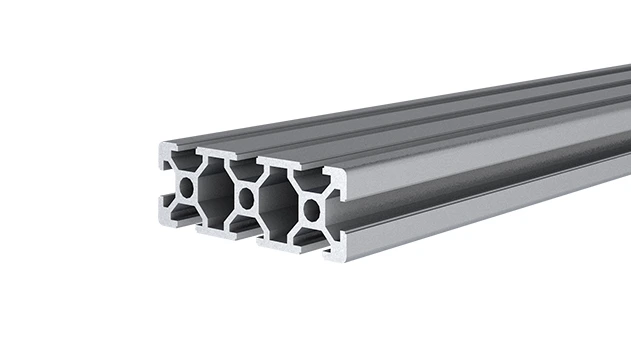
2060 EU Standard Aluminum Profile
2060 is a 2.00 x 4.00CM fractional 20 series square extrusion T-slot profile with four open T-slots, two side with 2.00cm face, the other side with 6.00cm face. The profile has align-a-grooves to assist in aligning connecting profiles.
A closer look at how modular design, durability, and lean integration transform manufacturing efficiency
The Hidden Cost of Downtime: Why Every Minute Matters
Ask any production manager what keeps them up at night, and "downtime" will likely top the list. Whether it's a jammed conveyor, a wobbly workbench, or a last-minute reconfiguration for a new product line, unplanned stops in manufacturing aren't just inconvenient—they're expensive. Industry reports estimate that downtime can cost factories anywhere from $5,000 to $20,000 per hour, depending on the sector. Over a year, those minutes add up to lost revenue, missed deadlines, and frustrated teams stuck waiting instead of working.
The root causes of downtime are often predictable: outdated equipment that breaks down, rigid workstations that can't adapt to new tasks, or slow assembly processes that drag out even routine setups. For decades, manufacturers relied on heavy steel frames, custom-welded structures, or flimsy plastic components to build their production lines. But these solutions come with trade-offs: steel rusts and is hard to reconfigure; custom welding takes days (or weeks) to adjust; plastic bends under heavy loads. None of these are built for the fast-paced, ever-changing world of modern manufacturing.
Enter the 2060 EU standard aluminum profile —a but powerful tool that's quietly revolutionizing how factories operate. Part of the broader family of aluminum extrusion profiles , this specific profile (measuring 20mm x 60mm) is designed to address the very issues that cause downtime. Its modularity, durability, and compatibility with aluminum profile accessories make it a cornerstone of efficient production lines, from small workshops to large-scale facilities. Let's dive into how it works—and why it might just be the solution your factory has been missing.
What Is 2060 EU Standard Aluminum Profile, Anyway?
Before we get into the "how," let's clarify the "what." The 2060 EU standard aluminum profile is a type of extruded aluminum product, shaped under high pressure through a die to create a consistent, precise cross-section. The "2060" refers to its dimensions: 20 millimeters in width and 60 millimeters in height. The "EU standard" tag means it adheres to strict European quality and safety regulations, ensuring uniformity in material composition, strength, and finish—no more guessing if a part from one supplier will fit with another.
At first glance, it might look like just another metal bar, but the magic is in the details. Like most aluminum extrusion profiles, the 2060 variant features a T-slot design —long, narrow grooves running along its length. These slots act as built-in connection points, allowing you to attach brackets, panels, wheels, or other accessories without drilling, welding, or cutting. Imagine building with Legos, but for industrial equipment: simple, flexible, and infinitely reconfigurable.
The material itself is typically made from 6063-T5 aluminum alloy, a blend prized for its strength, corrosion resistance, and lightweight properties. Unlike steel, it won't rust when exposed to moisture or chemicals—a big plus in factories where spills or humidity are common. And at roughly one-third the weight of steel, it's easier to handle during assembly, reducing the risk of worker fatigue (and the accidents that come with it).

3 Key Features That Slash Downtime
So, what makes the 2060 EU standard aluminum profile stand out from other materials? Let's break down the features that directly impact downtime—and how they add up to a more efficient operation.
1. Modularity: Build, Break Down, and Rebuild in Hours (Not Days)
Traditional production setups often feel like permanent fixtures. A steel workbench welded to the floor, a conveyor system bolted into concrete—changing anything means bringing in a welder, cutting through metal, or even jackhammering parts of the floor. That's downtime measured in days, not hours. With 2060 aluminum profiles, reconfiguration is a breeze.
Thanks to the T-slot design and compatible aluminum profile accessories (think brackets, hinges, and connectors), you can assemble a basic workstation in under an hour. Need to adjust the height of a workbench? Loosen a few bolts, slide the legs up or down, and retighten. Want to add a shelf for tools? Snap a bracket into the T-slot and secure it with a screw. Even major overhauls—like reconfiguring a material rack for a new product size—can be done in a single shift, not a week.
This flexibility is a game-changer for manufacturers dealing with short production runs or frequent product changes. Instead of waiting for custom fabrication, your team can adapt on the fly, keeping the line moving and minimizing idle time.
2. Durability: Less Maintenance, Fewer Breakdowns
Nothing kills productivity faster than a sudden breakdown. A bent steel frame, a cracked plastic roller, or a rusted connector can bring an entire line to a halt while you hunt for replacements. The 2060 aluminum profile is built to withstand the chaos of factory life, reducing the need for constant repairs.
Aluminum's natural corrosion resistance means it holds up in damp or chemical-heavy environments—no more replacing rusted parts every few months. The 6063-T5 alloy also has excellent structural integrity; it can support heavy loads (up to 500kg per meter in some configurations) without bending or warping, even under constant use. And because the T-slot connections distribute weight evenly, there's less stress on individual components, lowering the risk of sudden failures.
Compare that to plastic profiles, which can crack under pressure, or steel, which requires regular painting or coating to prevent rust. With 2060 aluminum, maintenance becomes proactive (a quick inspection here, a tightened bolt there) rather than reactive (scrambling to fix a broken part during a production run).
3. Precision: No More "Close Enough" Assembly
Ever tried to assemble a piece of furniture where the holes don't line up? Frustrating, right? Now multiply that by 100 in a factory setting, and you've got a recipe for hours of wasted time. The EU standard ensures that every 2060 aluminum profile is extruded to exact specifications—dimensions, slot placement, and straightness are consistent across batches and suppliers.
This precision means parts fit together perfectly the first time. A 90° aluminum profile connector from one supplier will slide into the T-slot of a 2060 profile from another without gaps or forced adjustments. No more filing down edges, drilling new holes, or improvising with extra washers. When every component works as intended, assembly time drops, and the risk of errors (which often lead to future breakdowns) plummets.
From Profiles to Productivity: Real-World Applications
The 2060 EU standard aluminum profile isn't just a theoretical solution—it's transforming how factories operate across industries. Let's look at three common applications where it directly reduces downtime: workbenches, material racks, and lean manufacturing cells.
Workbenches: The Heart of the Line
A workbench is more than just a table; it's where operators spend most of their day assembling, testing, or packaging products. If it's unstable, too low, or lacks storage, productivity suffers. Traditional wooden or steel workbenches are often one-size-fits-all—great until you need to adjust for a taller operator or add a tool rail.
With 2060 aluminum profiles, you can build a workbench tailored to your team's exact needs. Want a height-adjustable surface? Use telescoping legs with locking bolts. Need integrated tool storage? Attach pegboards or drawers using T-slot brackets. Even specialized setups, like ESD (electrostatic discharge) workstations for electronics manufacturing, are easy to create by adding conductive panels or grounding accessories.
Case in point: A small electronics manufacturer in Germany recently switched from fixed steel workbenches to 2060 aluminum-based ones. When they introduced a new, larger circuit board, they reconfigured their workbenches in a single afternoon by adding extension arms and adjusting the height—no welding, no downtime. Previously, they would have waited two weeks for custom steel extensions, losing valuable production time.
Material Racks: Keeping Parts Flowing
Inefficient material storage is a silent downtime culprit. If operators have to walk across the factory to fetch parts, or if a rack collapses under the weight of components, production stops. 2060 aluminum profiles excel here, too, thanks to their strength and adaptability.
Take material rack B (3 row and 3 floor) —a common design for storing small to medium parts. Built with 2060 profiles and reinforced with gusset plates (a type of aluminum profile accessory), it can hold hundreds of kilograms of inventory while remaining lightweight enough to move with casters if needed. The T-slot design lets you add dividers, label holders, or even roller tracks (using, you guessed it, roller track placon mount accessories) to slide parts directly to the workbench, cutting down on fetching time.
A automotive parts supplier in Spain reported a 30% reduction in "walking time" after installing 2060-based material racks near their assembly lines. By customizing the rack height and adding roller tracks, they turned a 5-minute round trip for parts into a 30-second slide—saving hours per day across their team.
Lean Manufacturing Cells: Eliminating Waste, Boosting Flow
Lean manufacturing is all about eliminating waste—whether it's time, materials, or motion. The 2060 EU standard aluminum profile is a lean manager's dream, as it supports the "5S" principles (Sort, Set in Order, Shine, Standardize, Sustain) and flexible workflow design.
For example, a lean cell built with 2060 profiles can be quickly rearranged to optimize the flow of materials—no more fixed layouts that force operators into inefficient motions. Need to add a quality control station? Attach a small shelf to the existing frame. Want to separate defective parts? Slide in a divider using T-slot connectors. This adaptability means your production line evolves with your processes, not the other way around.
A furniture manufacturer in Italy used 2060 profiles to build a lean cell for assembling chairs. By integrating a conveyor (supported by aluminum guide rails) and adjustable workstations, they reduced the time per chair from 25 minutes to 18 minutes. When they introduced a new chair model, they reconfigured the cell in 4 hours, compared to the 3 days it took with their old steel setup.
Traditional vs. 2060 Aluminum: The Downtime Showdown
Still not convinced? Let's put it all together with a side-by-side comparison of traditional materials and the 2060 EU standard aluminum profile. The table below breaks down key downtime factors and how each material stacks up.
| Factor | Traditional Steel Frames | Plastic Profiles | 2060 EU Standard Aluminum Profile |
|---|---|---|---|
| Installation Time | 2–5 days (requires welding, drilling) | 1–2 days (simpler assembly but less secure) | 1–4 hours (T-slot connections, no special tools) |
| Maintenance Frequency | Every 3–6 months (rust, paint touch-ups) | Every 1–3 months (cracking, bending under load) | Every 12–24 months (minimal: tighten bolts, inspect connections) |
| Reconfiguration Ease | Major overhaul (cutting/welding required); 1–2 weeks of downtime | Possible but limited (parts may break during disassembly); 1–2 days | Tool-free adjustments; 1–8 hours of downtime |
| Durability (Lifespan) | 5–8 years (with regular maintenance) | 1–3 years (prone to wear and environmental damage) | 10–15 years (corrosion-resistant, high structural integrity) |
| Weight (Handling Ease) | Heavy (risk of worker fatigue/injury during setup) | Light (but less stable for heavy loads) | Lightweight yet strong (easy to handle, reduces injury risk) |
The numbers speak for themselves: 2060 aluminum profiles outperform traditional materials in every category that impacts downtime. From faster installation to fewer maintenance headaches, the savings add up quickly—both in time and money.
Beyond the Profile: The Power of Accessories
A profile is only as good as the accessories that go with it. The 2060 EU standard aluminum profile's versatility shines when paired with the right aluminum profile accessories —small parts that turn a simple metal bar into a fully functional system. Let's highlight a few that make a big difference in reducing downtime.
Connectors: The Glue That Holds It All Together
Connectors are the unsung heroes of modular systems. The 2060 profile works with a range of options, from basic 90° aluminum profile connectors for right-angle joints to more complex internal rotatory aluminum joints that allow parts to pivot. These connectors are designed to slide into T-slots and secure with a simple bolt, creating a tight, wobble-free connection in seconds. No welding, no drilling—just quick, secure assembly.
Casters: Mobility Without Compromise
Need to move a workstation or material rack? Casters (wheels) turn static equipment into mobile units. Aluminum-compatible casters attach directly to the profile's T-slots, with options for locking brakes to keep things stable during use. A flat swivel castor wheel with brake , for example, lets you reposition a workbench in minutes, then lock it in place—perfect for cleaning or reorganizing the floorplan without downtime.
Panels and Surfaces: Customization at Your Fingertips
From aluminum honeycomb panels for workbench tops to corrugated aluminum sheets for machine guards, panels add functionality without bulk. They attach via T-slot brackets, so you can swap out a damaged surface in 10 minutes instead of replacing the entire workbench.
The Bottom Line: More Uptime, More Profit
At the end of the day, the 2060 EU standard aluminum profile isn't just a material—it's an investment in uptime. By reducing installation time, minimizing maintenance, and making reconfiguration a breeze, it frees your team to focus on what matters: producing quality products, meeting deadlines, and growing your business.
Whether you're building a simple workbench or a complex lean manufacturing cell, this profile and its accessories deliver the flexibility and durability modern factories need. And in a world where every minute of downtime costs money, that's not just an advantage—it's a necessity.
So, the next time you're staring down a production delay, ask yourself: Could a better foundation—like the 2060 EU standard aluminum profile—have prevented it? Chances are, the answer is yes.