- Company Articles
- Industry articles
- Industry standards
- How 3030a EU Standard Aluminum Profile Enhances Medical Device Workstations

How 3030a EU Standard Aluminum Profile Enhances Medical Device Workstations
Related Product
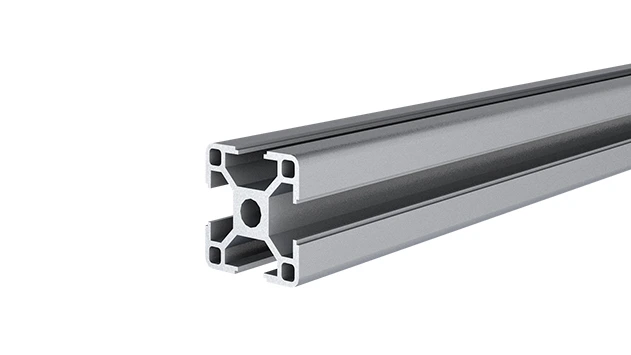
3030A EU Standard Aluminum Profile
3030 is a 3.00 x 3.00CM fractional 30 series square extrusion T-slot profile with four open T-slots, each side with 3.00cm face. The profile has align-a-grooves to assist in aligning connecting profiles.
In the high-precision world of medical device manufacturing, every detail matters. From the smallest component in a pacemaker to the intricate wiring of a diagnostic machine, the spaces where these life-saving tools are built must balance rigor with adaptability. Enter the 3030a EU Standard Aluminum Profile—a unassuming yet transformative material that's redefining what medical workstations can achieve. More than just extruded metal, this profile is the backbone of workspaces that prioritize precision, compliance, and the well-being of the technicians who rely on them daily. Let's dive into how this material is quietly elevating medical manufacturing standards, one workstation at a time.
The Foundation of Reliability: Why 3030a Aluminum Profile Stands Apart in Medical Settings
Medical device manufacturing isn't just about building products—it's about building trust. That trust starts with the materials that form the workspace itself. The 3030a EU Standard Aluminum Profile is engineered to meet the unique demands of this field, starting with its core composition. Made from high-grade aluminum alloy, it strikes an impressive balance between strength and weight: at just 1.5kg per meter, it's easy to maneuver during setup, yet robust enough to support up to 300kg per linear meter—plenty for heavy equipment, tools, and batches of delicate components.
Corrosion resistance is another non-negotiable feature in medical environments, where frequent cleaning with harsh disinfectants is standard. Unlike steel, which can rust or degrade over time, 3030a profiles boast a naturally protective oxide layer that stands up to daily wipe-downs with isopropyl alcohol or hydrogen peroxide. This durability isn't just about longevity; it's about maintaining a sterile environment where cross-contamination risks are minimized. Imagine a technician in a busy cleanroom—they shouldn't have to worry if their workstation's surface will chip or harbor bacteria after the third sanitization of the day. With 3030a, that worry fades.
Compliance is the backbone of medical manufacturing, and 3030a profiles are designed with this in mind. They meet EU standards for medical device production, including ISO 13485, which sets rigorous benchmarks for quality management systems. Their smooth, non-porous surface leaves no room for dust or debris to hide, and their non-magnetic properties ensure they won't interfere with sensitive imaging equipment or magnetic resonance components during production. For manufacturers aiming to sell globally, this compliance isn't just a checkbox—it's a competitive advantage.
Design Flexibility: Crafting Workstations That Grow With Your Team
Medical device teams rarely work with the same set of tools or processes for long. New device models, updated regulations, or shifts in production volume mean workstations must adapt quickly. This is where the 3030a profile truly shines, thanks to its innovative T-slot design and compatibility with a vast array of aluminum profile accessories.
Picture a small team tasked with assembling both large diagnostic monitors and tiny surgical tools. With traditional wooden or welded steel workstations, they'd need separate setups—one tall enough for monitors, another low for work. But with 3030a profiles, a single workstation can transform. Using 90° aluminum profile connectors, technicians can add or remove shelves in minutes. Need a higher surface for tomorrow's batch of monitors? Loosen a few T-slot bolts, adjust the legs, and re-tighten. The next day, swap in a lower shelf with 45° connectors to accommodate smaller tools. No welding, no specialized tools, no downtime.
Ergonomics, too, get a boost from this flexibility. Medical technicians often spend 8+ hours at their workstations, and repetitive strain injuries are a real risk. 3030a-based aluminum workbenches solve this with adjustable height mechanisms—using anti-slip adjustable leveling feet, teams can raise or lower surfaces to match each technician's ideal working height. Add in accessories like T-slot rubber seal covers to tuck away messy cables, and suddenly the workspace feels less cluttered, more focused, and safer. Even small touches, like nylon handles attached via aluminum profile fixings, make moving modular components (like portable tool trays) a breeze during shift changes.
The customization doesn't stop at structure. Need to integrate a microscope for inspecting circuit boards? Use aluminum profile 3 way connectors to mount it at the perfect angle. Storing delicate sensors that need protection from light? Add a hinged cover with aluminum hinges. The possibilities are limited only by the team's needs—and with lean system suppliers constantly expanding their range of 3030a-compatible parts, those possibilities grow every year.

Safety First: 3030a Profiles and the ESD Workstation Advantage
Electrostatic discharge (ESD) is a silent threat in medical manufacturing. A single static spark—imperceptible to the human eye—can fry the sensitive electronics in a pacemaker or render a glucose monitor inaccurate. That's why ESD workstations are non-negotiable, and 3030a aluminum profiles play a critical role in making these setups both effective and adaptable.
Aluminum's natural conductivity makes it an ideal grounding material. When integrated into an ESD workstation, the 3030a profile acts as a continuous grounding path: static charges from a technician's hands, tools, or components flow harmlessly through the profile and into the facility's grounding system. Unlike plastic workbenches, which require separate grounding straps (and often fail when those straps wear out), aluminum profiles provide consistent protection with minimal maintenance.
But ESD safety isn't just about conductivity—it's about integration. 3030a profiles work seamlessly with specialized ESD accessories: conductive ESD mats attach via T-slot aluminum pipe with board holders, ensuring they stay flat and grounded. Anti-slip adjustable leveling feet with suction cup bases add stability, preventing the workstation from shifting (and breaking the grounding path) during busy shifts. Even the smallest details, like ESD-safe caster wheels (when mobility is needed), can be added without compromising protection—simply swap out standard casters for ESD-rated ones using the same T-slot connections.
For teams working with Class III medical devices (the highest risk category, including implants), this reliability is game-changing. Audits become less stressful when ESD protection is built into the workstation's core, not just added as an afterthought. Technicians can focus on precision, knowing their workspace is actively safeguarding the components they handle.
Lean System Alignment: Reducing Waste, Boosting Efficiency
Lean system principles—minimizing waste, optimizing flow, and continuous improvement—are the heartbeat of modern medical manufacturing. 3030a aluminum profiles don't just support these principles; they embody them. Let's break down how:
Waste Reduction: Traditional workstations are often overbuilt or underutilized. A steel bench might be strong enough for heavy machinery but takes up valuable floor space when production shifts to smaller devices. 3030a profiles, being lightweight and modular, let teams right-size their workspaces. Need to shrink a production line during low-volume periods? Disassemble unused sections and store the profiles—they're light enough for two people to move. When demand spikes, reassemble in hours. No need to buy new workstations or discard old ones, cutting down on material waste.
Optimized Flow: In lean manufacturing, material and information should flow smoothly. 3030a profiles pair effortlessly with roller track and accessories, creating gravity-fed flow racks that move components from one station to the next without manual lifting. For example, a workbench built with 3030a can have a roller track placon mount attached to its side, letting trays of circuit boards glide to the next technician. This reduces time spent walking between stations and minimizes the risk of dropping components.
Continuous Improvement: Lean thrives on feedback, and 3030a workstations make it easy to act on that feedback. If a team notices tools are always out of reach, add a hanging shelf with parallel aluminum joint a connectors. If inventory storage is disorganized, install a small rack using 3030a profiles and aluminum guide rail b. These changes take hours, not weeks, turning "we should fix this" into "we fixed this" before the next shift.
Lean system suppliers often highlight 3030a profiles as a cornerstone of their offerings, and it's easy to see why. They turn abstract lean goals into tangible, everyday solutions that technicians actually use—and appreciate.
Comparing the Options: Why 3030a Stands Out Among Profiles
Not all aluminum profiles are created equal. Medical teams have options, from smaller 2020 profiles to larger 4040 models, or even stainless steel for extreme environments. So why choose 3030a? The answer lies in its balance of strength, versatility, and cost—traits that make it the "goldilocks" of medical workbench materials.
| Feature | 3030a EU Aluminum Profile | 2020 EU Aluminum Profile | 4040 EU Aluminum Profile | Stainless Steel |
|---|---|---|---|---|
| Dimensions (WxH) | 30mm x 30mm | 20mm x 20mm | 40mm x 40mm | Varies (10-50mm) |
| Weight (per meter) | ~1.5kg | ~0.8kg | ~2.8kg | ~8.0kg |
| Max Load Capacity | 200-300kg/m | 80-150kg/m | 400-500kg/m | 500+kg/m |
| Accessory Compatibility | Extensive (most EU-standard accessories) | Limited (smaller T-slot size) | Extensive (but heavier accessories) | Minimal (requires welding) |
| Typical Use Case | General assembly, ESD workstations, modular shelving | Light-duty tasks, small parts storage | Heavy equipment, industrial machinery | Corrosive environments (rare in medical settings) |
| Cost (per meter) | Moderate (~€15-25) | Low (~€8-12) | High (~€30-45) | Very High (~€50-80) |
For most medical device teams, 3030a hits the sweet spot. It's strong enough for daily use (200-300kg capacity handles most components), light enough to reconfigure, and affordable enough to scale without breaking the budget. While 2020 profiles are cheaper, they lack the stability for heavier tools; 4040 profiles offer more strength but add unnecessary weight and cost. Stainless steel, though durable, is overkill for cleanrooms (where aluminum's corrosion resistance is sufficient) and far harder to modify.
Real-World Impact: A Case Study in Adaptation
To see 3030a profiles in action, consider a mid-sized EU medical device company specializing in portable ultrasound machines. Two years ago, their production line relied on fixed steel workstations. When they introduced a new, smaller ultrasound model, they faced a problem: the existing workstations were too large, cluttering the floor and slowing workflow. Retrofitting them would take weeks, and buying new ones was costly.
Enter 3030a EU Standard Aluminum Profiles. The company partnered with a lean system supplier to replace three steel workstations with modular aluminum setups. Here's what changed:
- Space Savings: The new workstations, built with 3030a and aluminum guide rails, were 40% narrower. This freed up floor space for a new testing station, increasing overall production capacity by 15%.
- Quick Changeovers: Switching between old and new ultrasound models now takes 30 minutes (adjusting shelves and tool holders) instead of 4 hours (reconfiguring steel benches).
- ESD Compliance: The new ESD workstations, grounded via 3030a profiles, reduced component failures due to static by 90%—a critical win for a product with sensitive circuit boards.
- Technician Satisfaction: Post-implementation surveys showed a 28% increase in reported ergonomic comfort, with fewer complaints of back strain during long shifts.
Today, the company has expanded its 3030a-based setup to 12 workstations, with plans to replace all remaining steel benches by next year. As their production manager put it: "We're not just building workstations—we're building a factory that can keep up with how medicine evolves."
Looking Ahead: Sustainability and Smart Integration
The future of medical manufacturing will demand even more from workspaces: sustainability, connectivity, and adaptability to emerging technologies. 3030a aluminum profiles are already poised to meet these demands.
Sustainability: Aluminum is infinitely recyclable, and many lean system suppliers now offer 3030a profiles made from 100% recycled aluminum. This aligns with the EU's strict environmental regulations (like the Circular Economy Action Plan) and helps medical companies reduce their carbon footprint. Unlike wooden workstations (which degrade over time) or plastic (which often ends up in landfills), 3030a profiles can be melted down and reused at the end of their lifespan—no waste, no guilt.
Smart Workstations: The Internet of Things (IoT) is making its way into manufacturing, and 3030a profiles are ready. T-slot aluminum pipe with board holders can house small sensors that monitor temperature, humidity, or workstation usage. Imagine a profile with a built-in sensor that alerts the team if a workstation's surface temperature rises above safe levels (a sign of overheating equipment) or if it's been idle for too long (indicating a bottleneck). This data-driven insight helps teams catch issues before they become problems.
Longevity: With minimal maintenance (occasional tightening of T-slot bolts, wiping down with mild detergent), 3030a profiles can last 15+ years. Compare that to plastic workbenches (3-5 years) or particleboard (2-3 years), and the long-term cost savings become clear. For medical companies planning for decades of innovation, this durability is invaluable.
Conclusion: More Than a Profile—A Partner in Progress
In the end, the 3030a EU Standard Aluminum Profile is more than just a building material. It's a tool that empowers medical device teams to do their best work—safely, efficiently, and adaptably. By blending compliance-ready durability with endless customization, it transforms workstations from static pieces of furniture into dynamic hubs of innovation.
Whether you're assembling life-saving implants or cutting-edge diagnostic tools, the right workspace can mean the difference between meeting deadlines and falling behind, between flawless products and costly errors. 3030a profiles don't just enhance medical device workstations—they elevate the people who use them, one T-slot connection at a time.