- Company Articles
- Industry articles
- Industry standards
- How 3030a EU Standard Aluminum Profile Supports Sustainable Lean Practices

How 3030a EU Standard Aluminum Profile Supports Sustainable Lean Practices
Related Product
3030A EU Standard Aluminum Profile
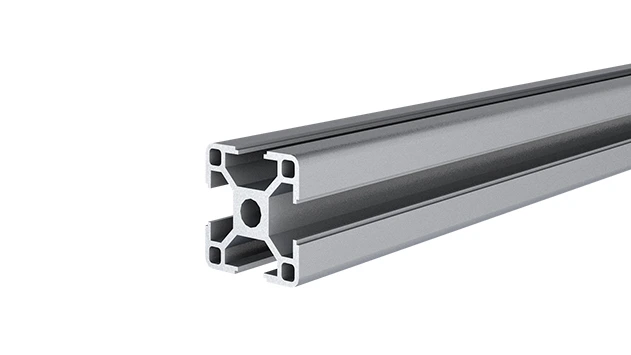
3030 is a 3.00 x 3.00CM fractional 30 series square extrusion T-slot profile with four open T-slots, each side with 3.00cm face. The profile has align-a-grooves to assist in aligning connecting profiles.
How 3030a EU Standard Aluminum Profile Supports Sustainable Lean Practices
In today's fast-paced manufacturing landscape, two priorities stand out for forward-thinking businesses: lean system efficiency and environmental sustainability. For decades, manufacturers have chased the "perfect process"—one that eliminates waste, streamlines workflows, and delivers maximum value to customers. But in recent years, this pursuit has expanded to include a critical third dimension: minimizing environmental impact. The challenge? Finding tools and materials that don't just boost productivity but also align with circular economy goals. Enter the 3030a EU Standard Aluminum Profile—a humble yet transformative component that's quietly revolutionizing how factories balance lean principles with sustainability.
At first glance, a 30x30mm aluminum extrusion might seem like just another industrial part. But for plant managers, production engineers, and sustainability officers, it's much more: a bridge between the precision of lean manufacturing and the responsibility of green operations. This article dives into how this specific aluminum profile—designed to EU standards, built for adaptability, and rooted in resource efficiency—has become a cornerstone for businesses aiming to "do more with less" while leaving a lighter footprint on the planet.
Lean Manufacturing and Sustainability: A Symbiotic Relationship
Before we unpack the role of the 3030a profile, let's clarify why lean and sustainability matter together. Lean manufacturing, born from Toyota's Production System, focuses on five core principles: identifying value, mapping the value stream, creating flow, establishing pull, and pursuing perfection. At its heart is the elimination of "muda" (waste)—whether that's excess inventory, unnecessary motion, or idle time. Sustainability, on the other hand, centers on reducing environmental harm by optimizing resource use, cutting emissions, and minimizing waste.
The two aren't just compatible; they're complementary. A lean system that streamlines workflows inherently reduces energy use and material waste. A sustainable operation, by prioritizing durability and recyclability, avoids the waste of constant replacement. Together, they create a "win-win" where efficiency and eco-consciousness reinforce each other. But to unlock this synergy, manufacturers need tools that are both flexible (to adapt to lean's demand for flow) and eco-friendly (to support sustainability's circular goals). This is where the 3030a aluminum profile shines.
What Is the 3030a EU Standard Aluminum Profile?
Let's start with the basics: What exactly is the 3030a EU Standard Aluminum Profile? In simple terms, it's a structural component made from aluminum extrusion profile —a process where aluminum alloy is forced through a die to create a consistent, cross-sectional shape. The "3030a" refers to its dimensions (30mm in width and height) and adherence to EU manufacturing standards, which ensure uniformity in tolerances, material quality, and performance. Unlike generic aluminum bars, this profile is engineered with a specific design: a T-slot along its length, which allows for easy attachment of accessories like brackets, connectors, and panels without welding or drilling.
But what makes this profile special? For starters, aluminum itself is a material with sustainability baked in. It's 100% recyclable, meaning it can be melted down and reused indefinitely without losing quality. In fact, over 75% of all aluminum ever produced is still in use today—a testament to its circular potential. Additionally, aluminum extrusion is an inherently efficient process: the high pressure of extrusion minimizes material waste, and modern facilities often use recycled aluminum (known as "secondary aluminum") in production, reducing the energy needed compared to mining raw bauxite.
The 3030a's EU standard is another key advantage. In a global supply chain, consistency matters. EU standards ensure that profiles from different suppliers will fit together seamlessly, reducing the risk of mismatched components and the waste that comes with returns or rework. For manufacturers operating across borders, this standardization simplifies sourcing and ensures that a lean system designed in Germany can be replicated in Spain or Poland with minimal adjustments.
Key Features of 3030a Aluminum Profile: Built for Lean and Green
To understand why the 3030a is a game-changer for sustainable lean practices, let's break down its core features and how they align with both methodologies:
1. Modularity: Adaptability Without Waste
Lean manufacturing thrives on adaptability. Production lines change—new products are introduced, demand fluctuates, or workflows are optimized. Traditional fixed structures (think welded steel racks or custom-built workbenches) become obsolete quickly, leading to waste: either the cost of scrapping them or the inefficiency of working around a rigid setup. The 3030a profile solves this with modularity.
Thanks to its T-slot design and compatible aluminum profile accessories (like corner brackets, end caps, and panel mounts), the 3030a can be assembled and disassembled in minutes. Need to reconfigure a workbench from a single-deck to a double-deck setup? Swap out the brackets. Want to adjust the height of a material rack to accommodate taller bins? Loosen a few fasteners and reposition the uprights. This flexibility eliminates the "waste of overproduction" (producing fixed structures that outlive their use) and the "waste of waiting" (downtime spent building new structures from scratch).
For example, consider a electronics manufacturer that shifts from producing smartphones to tablets. A traditional steel workbench might be too low for the larger tablet assembly process, requiring a new bench to be built. With a 3030a-based workbench, the legs can be extended using telescoping aluminum tubes, and the surface can be widened by adding crossbars—all without cutting, welding, or generating scrap metal. The old components? They're reused, not discarded.
2. Lightweight Strength: Efficiency in Motion
Aluminum is renowned for its strength-to-weight ratio. At roughly one-third the weight of steel, the 3030a profile makes structures easier to move, reposition, and transport—reducing the "waste of motion" (both for workers and machinery). A material rack built with 3030a can be wheeled across the factory floor by two people, eliminating the need for forklifts or cranes and cutting down on energy use.
This lightweight nature also shines in transportation. When components are shipped from suppliers to factories, lighter materials mean lower fuel consumption and fewer carbon emissions. For a manufacturer sourcing profiles from an aluminum supplier in Italy to a plant in France, the reduced weight of 3030a compared to steel translates to tangible sustainability gains over time.
3. Durability: Longevity That Reduces Waste
Sustainability isn't just about recycling—it's about making products that last. The 3030a profile's aluminum alloy (typically 6063-T5, a common grade for extrusions) is corrosion-resistant, even in humid or dusty factory environments. Unlike steel, it doesn't rust, so it requires no painting or coating to maintain its integrity. This durability extends the lifespan of structures built with 3030a, reducing the frequency of replacements and the waste associated with disposing of worn-out equipment.
Consider a material rack B (3 row and 3 floor) —a common setup for storing small parts or components. A steel version might start to rust after a few years in a damp warehouse, requiring repairs or replacement. A 3030a aluminum rack, by contrast, will remain structurally sound for decades, even with daily use. When it finally does reach the end of its life, it can be recycled, closing the loop.
4. Low Maintenance: Time and Resource Savings
Lean manufacturing abhors unnecessary maintenance. Time spent painting, oiling, or repairing equipment is time not spent adding value to products. The 3030a profile minimizes this waste. Aluminum's natural corrosion resistance means no need for rust treatments. Its smooth surface is easy to clean—just a wipe with a damp cloth removes dust or spills. Even the T-slot accessories, often made from stainless steel or durable plastics, are designed to withstand repeated assembly and disassembly without wear.
For busy factories, this low-maintenance aspect is a hidden sustainability win. Less time spent on upkeep means lower labor costs, and fewer chemicals (like paints or lubricants) mean reduced environmental impact. It's a small detail, but in the context of lean's "pursuit of perfection," every minute saved adds up.
Bridging Lean and Sustainability: Real-World Applications
To see the 3030a's impact in action, let's look at three common manufacturing scenarios where it transforms both lean efficiency and sustainability:
Case 1: Workbenches for Assembly Lines
Assembly lines are the heart of many manufacturing operations, and workbench design directly impacts workflow efficiency. A poorly designed workbench forces workers into awkward positions, slows down tasks, and increases the risk of errors. Traditional workbenches, often made from wood or steel, are fixed in height and layout, making it hard to adapt to different tasks or worker heights.
A 3030a-based workbench solves this. Using adjustable leg brackets and modular accessories (like tool holders, monitor mounts, and anti-fatigue mats), the workbench can be tailored to each worker's needs. Need a higher surface for standing assembly? Extend the legs. Adding a shelf for tools? Snap on a crossbar and panel. When the line switches to a new product, the workbench evolves with it—no need to build a new one. This reduces the "waste of inappropriate processing" (forcing workers to adapt to the bench instead of vice versa) and cuts down on material waste from discarded benches.
Sustainability-wise, the aluminum frame's longevity means the workbench will outlast multiple product cycles. When it's finally retired, the aluminum is recycled, and even the accessories (many of which are also aluminum or plastic) can be repurposed or recycled. Compare this to a wooden workbench, which may warp or splinter after a few years, or a steel one that rusts—both end up in landfills.
Case 2: Material Racks for Just-In-Time (JIT) Inventory
Just-In-Time (JIT) inventory is a cornerstone of lean manufacturing, aiming to deliver materials to the production line exactly when needed, reducing excess stock and storage waste. To make JIT work, material racks must be organized, accessible, and flexible enough to adjust to changing part sizes or demand.
The material rack B (3 row and 3 floor) is a classic example. Built with 3030a profiles, this rack can be customized with adjustable shelves, dividers, and roller tracks (for easy sliding of bins). If a new component is introduced that requires a taller shelf, the 3030a's modular brackets allow for quick reconfiguration. If demand for a part drops, a floor can be removed to free up space for higher-priority items. This adaptability ensures that the rack always supports the "flow" of materials, a key lean principle.
From a sustainability angle, the rack's aluminum construction means it's lightweight enough to be moved (reducing the need for multiple fixed racks in different areas) and durable enough to handle heavy loads without bending. Unlike plastic racks, which degrade under UV light or heavy use, or cardboard bins, which need constant replacement, the 3030a rack is a long-term investment that minimizes waste.
Case 3: Conveyor Systems for Smooth Flow
Lean manufacturing emphasizes "flow"—the uninterrupted movement of products through the production process. Conveyor systems are critical to maintaining this flow, but traditional conveyors (often made from steel or heavy plastic) can be energy-intensive, hard to modify, and costly to replace.
3030a aluminum profiles offer a lighter, more adaptable alternative. Conveyor frames built with 3030a are easy to extend, shorten, or reroute using T-slot connectors. Roller tracks, which guide products along the conveyor, can be attached directly to the profile using specialized mounts, eliminating the need for custom brackets. This modularity means that if a production line is rearranged to reduce bottlenecks, the conveyor system can be reconfigured in hours, not days.
Sustainably, the aluminum frame reduces the conveyor's overall weight, lowering the energy needed to power motors (for motorized conveyors) or the force required to push products (for gravity-fed systems). Additionally, the use of recycled aluminum in the profile cuts down on the carbon footprint of production. Over time, these small energy savings add up to significant environmental benefits.
Comparing 3030a to Traditional Materials: A Sustainability and Lean Analysis
To truly appreciate the 3030a's impact, let's compare it to two common alternatives: traditional steel and PE-coated lean pipes (a type of plastic-covered steel pipe often used in older lean systems). The table below breaks down key factors for lean efficiency and sustainability:
| Factor | 3030a Aluminum Profile | Traditional Steel | PE-Coated Lean Pipe |
|---|---|---|---|
| Weight | Lightweight (1/3 steel's weight) | Heavy; requires machinery for movement | Moderate (steel core with plastic coating) |
| Recyclability | 100% recyclable; high recycled content | Recyclable but energy-intensive to process | Plastic coating complicates recycling; steel core recyclable but often contaminated |
| Reconfigurability | Tool-free assembly; quick disassembly | Requires welding/cutting; difficult to reconfigure | Somewhat reconfigurable but joints wear over time |
| Maintenance | Corrosion-resistant; no painting needed | Prone to rust; requires painting/coating | Plastic coating can crack; steel core may rust if damaged |
| Standardization | EU standard ensures cross-supplier compatibility | Varies by supplier; less consistent sizing | Limited standards; joint compatibility issues common |
| Longevity | 30+ years with proper care | 20-25 years (if maintained) | 5-10 years (coating degradation) |
The table tells a clear story: 3030a aluminum profile outperforms alternatives in nearly every category that matters for sustainable lean practices. Its lightweight design supports lean's need for flow and adaptability, while its recyclability and durability align with sustainability's circular goals. Even in upfront cost (often a concern for manufacturers), the 3030a's long lifespan and low maintenance mean it's often cheaper over time—a classic example of "investing in the future" to reduce waste and costs.
Challenges and Solutions: Overcoming Barriers to Adoption
Of course, no solution is without challenges. For some manufacturers, the initial cost of 3030a aluminum profiles may seem higher than steel or PE-coated pipes. However, this is often a short-term perspective. When factoring in longevity, recyclability, and reduced maintenance, the total cost of ownership (TCO) is typically lower. For example, a steel rack may cost 30% less upfront but need replacement in 10 years, while a 3030a rack lasts 30 years with minimal upkeep. Over three decades, the aluminum option is far cheaper.
Another barrier is familiarity. Many production teams are used to working with steel or traditional lean pipes and may resist switching to a new system. To address this, suppliers often offer training sessions or demo kits, allowing teams to test the 3030a's modularity firsthand. Once workers see how quickly they can assemble a rack or reconfigure a workbench, resistance fades.
Finally, sourcing can be a concern for smaller manufacturers. However, the EU standardization of 3030a profiles means a growing network of suppliers across Europe and beyond. Many suppliers also offer pre-configured kits (like workbench frames or material rack sets) that simplify ordering and assembly, making adoption easier for teams with limited technical expertise.
The Future: Smart Factories and Circular Economies
As manufacturing evolves toward smart factories and Industry 4.0, the role of the 3030a profile is set to grow. Smart factories rely on connected, data-driven systems, and the 3030a's modularity makes it easy to integrate sensors, IoT devices, and automation tools. For example, a 3030a-based material rack can be fitted with RFID scanners to track inventory in real time (supporting JIT principles), or a workbench can include cable management for tablets and barcode scanners—all without modifying the core structure.
In the context of the circular economy, the 3030a is also poised to play a key role. As regulations around waste and carbon emissions tighten, manufacturers will face increasing pressure to design products and processes with end-of-life in mind. The 3030a's recyclability and modularity make it a model for "design for disassembly"—a principle where products are built to be taken apart and recycled at the end of their use. For example, a manufacturer could lease 3030a profiles instead of buying them, with the supplier taking back and recycling the materials when no longer needed.
Conclusion: A Small Profile with a Big Impact
The 3030a EU Standard Aluminum Profile may not grab headlines, but its impact on sustainable lean practices is undeniable. By combining aluminum's inherent sustainability with modular design and EU standardization, it addresses two of manufacturing's biggest challenges: how to do more with less, and how to do so responsibly.
For manufacturers ready to embrace the future, the 3030a is more than a material choice—it's a statement. It says that efficiency and sustainability aren't competing goals but partners in progress. It says that a lean system can be both productive and planet-friendly. And it says that even the smallest components—like a 30x30mm aluminum extrusion—can drive meaningful change.
In the end, the measure of a truly lean and sustainable practice isn't just how much waste it eliminates today, but how well it adapts to tomorrow. With the 3030a aluminum profile, manufacturers aren't just building better factories—they're building factories that can keep getting better, for years to come.