- Company Articles
- Industry articles
- Industry standards
- How 3030b EU Standard Aluminum Profile Enhances Flexible Production Workstations

How 3030b EU Standard Aluminum Profile Enhances Flexible Production Workstations
Related Product
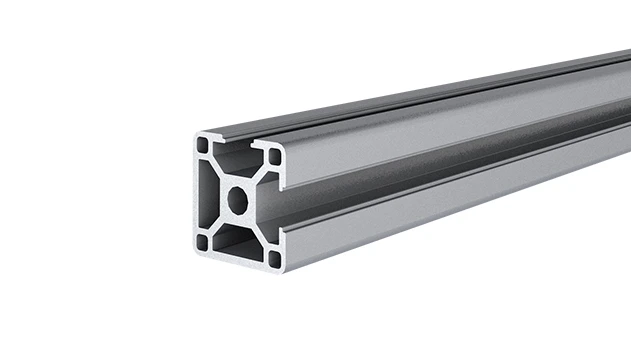
3030B EU Standard Aluminum Profile
3030 is a 3.00 x 3.00CM fractional 30 series square extrusion T-slot profile with two side open T-slots, each side with 3.00cm face, 2 side with open slot, 2 side with closed face. The profile has align-a-grooves to assist in aligning connecting profiles.
The unsung hero behind adaptable, efficient, and future-ready factory floors
The Heartbeat of Modern Factories – Flexible Workstations
Walk into any thriving manufacturing facility today, and you'll notice something different from a decade ago: the production floor isn't a static maze of heavy machinery bolted to the ground. Instead, it's a dynamic ecosystem where workstations shift, evolve, and reconfigure like pieces of a well-designed puzzle. This flexibility isn't just a luxury—it's the backbone of staying competitive in an era where product lifecycles shrink, customer demands for customization grow, and market trends pivot overnight.
Imagine a small electronics manufacturer ramping up for a holiday rush, then scaling back to prototype a new gadget come January. Or an automotive parts supplier switching between components for electric vehicles and traditional engines. In these scenarios, rigid workstations become bottlenecks. A workstation that works perfectly for assembling smartphone cases might be useless for packaging smartwatches, and a material rack built for bulk steel parts isn't ideal for lightweight circuit boards. The ability to adapt quickly isn't just about saving time—it's about survival.
At the center of this adaptability revolution lies a critical question: What material can serve as the building block for workstations that are strong enough to handle daily wear, lightweight enough to reconfigure, and versatile enough to grow with the business? For forward-thinking manufacturers, the answer increasingly points to one solution: the 3030b EU Standard Aluminum Profile.
The Problem with Traditional Workstation Setups
To appreciate why 3030b aluminum profile is transforming factory floors, let's first look at the limitations of the materials that came before it. For decades, manufacturers relied on three main options for building workstations, each with its own set of frustrations.
Wood: The "Quick Fix" That Fails Long-Term
Wooden workbenches and racks are cheap and easy to build, which is why many small workshops start with them. But wood warps with humidity, splinters under heavy tools, and can't withstand the chemical spills common in manufacturing. Worse, once you cut a wooden shelf to size, there's no going back—reconfiguring means sawing new pieces, sanding, and repainting, turning a half-day project into a week-long hassle.
Steel: Strong but Stubborn
Steel is the tough guy of workstation materials. It can handle heavy loads and resist wear, but that strength comes with a price: weight. A steel workbench isn't something two people can move across the floor, let alone reconfigure. Welding or bolting steel components also requires skilled labor, and making even minor adjustments (like adding a shelf or adjusting height) often means starting from scratch. For companies needing to pivot quickly, steel feels like trying to dance in concrete boots.
Basic Aluminum: A Step Forward, But Not Enough
Basic aluminum profiles improved on steel by being lighter, but early versions lacked standardization. Different suppliers offered profiles with unique slot sizes, non-compatible accessories, and flimsy joints that loosened over time. A manufacturer might buy a batch of aluminum tubes only to find the connectors from another supplier didn't fit, turning a "flexible" setup into a frustrating game of trial and error. These profiles also often skimped on wall thickness, making them unsuitable for heavy-duty tasks like supporting tool cabinets or loaded material racks.
Traditional vs. Modern: A Clear Gap
| Material | Flexibility (1-5) | Durability (1-5) | Ease of Assembly | Long-Term Cost | Best For |
|---|---|---|---|---|---|
| Wood | 2/5 (Easy to cut, hard to reuse) | 2/5 (Warping, splintering) | Simple (hand tools) | High (frequent replacement) | Temporary, low-load tasks |
| Steel | 1/5 (Permanent, hard to modify) | 5/5 (Heavy-duty, wear-resistant) | Hard (requires welding/bolting) | High (labor + limited reuse) | Static, high-load environments |
| Basic Aluminum | 3/5 (Light, but limited compatibility) | 3/5 (Thin walls, weak joints) | Moderate (hit-or-miss) | Medium (replacements for failed parts) | Low-to-medium load, simple setups |
| 3030b EU Aluminum Profile | 5/5 (Tool-free reconfiguration) | 4/5 (Anodized, high-strength alloy) | Easy (click-and-lock accessories) | Low (reusable, minimal waste) | Dynamic, high-mix, high-change environments |

Enter 3030b EU Standard Aluminum Profile: A Game-Changer
The 3030b EU Standard Aluminum Profile isn't just another piece of metal. It's a product of decades of engineering focused on solving the very problems that made traditional workstations obsolete. Let's break down what makes it special.
What Exactly Is 3030b?
First, the "3030" refers to its dimensions: 30mm in width and 30mm in height, a sweet spot that balances strength and versatility. Too narrow (like 20mm profiles) and it can't support heavy tools; too wide (like 40mm or 80mm) and it becomes overkill for smaller workstations. The "b" denotes a specific extrusion design within the EU standard lineup—think of it as a specific model with optimized T-slot placement and wall thickness for general-purpose use.
But the real magic is in the "EU Standard" label. Unlike generic aluminum profiles, which vary wildly in slot size, wall thickness, and finish, EU-standard profiles are manufactured to strict specifications. This means a 3030b profile from one certified supplier will fit perfectly with accessories from another—no more guessing if a connector will slide into the T-slot or if a bracket will align with the holes. It's like Legos for adults, but built to hold hundreds of pounds.
Why Aluminum? The Material Advantage
Aluminum itself is a standout material for workstations. It's 30% lighter than steel but offers comparable strength when alloyed with elements like magnesium and silicon—key for a material that needs to be both portable and sturdy. It's naturally resistant to corrosion, and when anodized (a common finish for 3030b profiles), it develops a hard, protective layer that stands up to oil, chemicals, and daily scrapes. Unlike steel, it won't rust if exposed to moisture, making it ideal for environments like food processing or cleanrooms where hygiene matters.
But 3030b takes aluminum's benefits further. Its extrusion process creates a uniform, hollow structure with internal ribs that boost rigidity without adding weight. This design ensures the profile can handle heavy loads—think of a workbench topped with a 500-pound CNC machine—without bending or warping over time.
Key Features of 3030b Aluminum Profile That Drive Flexibility
The 3030b profile's power lies in its features, each engineered to make flexibility feel effortless. Let's dive into the ones that matter most for production workstations.
T-Slot Design: The "Swiss Army Knife" of Connections
At the core of 3030b's versatility is its T-slot design—long, narrow grooves running the length of the profile. These slots aren't just for show; they're the gateway to infinite configurations. Using simple fasteners (like T-nuts and bolts), you can attach almost any accessory directly to the profile without drilling holes or welding. Need a shelf? Slide a bracket into the T-slot and tighten a bolt. Want to add a light bar? Clip it in place and secure with a nut. Even complex components like conveyor tracks or tool holders can be mounted in minutes, not hours.
The T-slots on 3030b are spaced at standardized intervals, too. This means you can move an accessory from one position to another and know it will line up perfectly—a huge plus when reconfiguring a workstation for a new product.
Modularity: Build, Break, Rebuild—No Tools Required
Traditional workstations are built to last forever, but "forever" in manufacturing often means "until next quarter." 3030b flips this mindset by being intentionally temporary—temporary in the best way. Its modular design lets you disassemble a workstation in minutes, repurpose the profiles and accessories, and build something entirely new. A material rack used for storing boxes in Q1 can become a testing bench in Q2 with just a few adjustments.
This modularity extends to growth, too. Need to add a second shelf to a workbench? Buy a few extra profiles and brackets—no need to replace the entire unit. Scaling up (or down) becomes a matter of adding or removing pieces, not investing in furniture.
The Ecosystem: Accessories That Expand Possibilities
A profile is only as good as the accessories that work with it, and 3030b shines here thanks to the EU standard. The market is flooded with compatible parts designed specifically for 3030b and similar profiles, including:
- Connectors & Brackets: 90° aluminum profile connectors for right-angle joints, 45° connectors for slopes, and 135° connectors for corners. Even three-way and four-way connectors let you build complex structures like multi-tiered material racks.
- End Caps: 3030 aluminum profile end caps snap into the ends of profiles to hide sharp edges, prevent dust buildup, and give workstations a clean, professional look.
- Gussets: Gusset alp 3030 brackets reinforce joints, adding extra stability for heavy loads—critical for workbenches holding power tools or assembly equipment.
- Panels & Covers: T-slot rubber seal covers fill unused slots to keep out debris, while aluminum honeycomb panels or plywood can be mounted to create shelves, work surfaces, or machine guards.
- Casters: Add locking casters to turn a stationary workbench into a mobile cart, making it easy to move materials between production lines.
This ecosystem means you're never limited by the profile itself—if you can imagine a workstation setup, there's likely an accessory to help you build it.
Real-World Applications: How 3030b Transforms Workstations
Talk is cheap—let's look at how 3030b is actually used on factory floors to solve real problems. These examples aren't hypothetical; they're drawn from manufacturers who've made the switch and never looked back.
Workbenches: From Static to Dynamic
Workbenches are the most common workstation, and 3030b redefines what they can do. Take a standard assembly workbench: with 3030b, you can customize height (critical for ergonomics—no more hunching over a too-low surface), add adjustable shelves for tools, and mount a pegboard or tool rail directly to the frame using T-slot accessories. Need to add a vice? Bolt it to the bench top, which is supported by 3030b's rigid frame. Want to move the bench to a new line? Swap out fixed feet for casters, roll it into place, and lock the wheels.
One automotive parts manufacturer we worked with recently replaced their old steel workbenches with 3030b models. They now reconfigure their assembly line for different car models in under two hours, down from two days with the steel setups. Employees even adjust their workbench heights daily to switch between standing and sitting—boosting comfort and reducing fatigue.
Material Racks: Organized, Accessible, and Adaptable
Material racks are another area where 3030b excels. Traditional steel racks are fixed in height and width, meaning you often end up with wasted space (too much room between shelves) or crammed items (not enough space). With 3030b, you can build racks like Material Rack B (3 row and 3 floor) but adjust shelf heights on the fly. Need to store taller boxes? Loosen the shelf brackets, slide them up, and retighten. Switching to smaller components? Add extra shelves in between. It's organization without compromise.
A cosmetics manufacturer used this to great effect. Their product line includes everything from small lipstick tubes to large lotion bottles, and their 3030b material racks adapt weekly. They even added inclined roller tracks (using roller track placon mount brackets) to the shelves, turning static storage into a gravity-fed system where boxes slide forward as the front one is removed—no more reaching to the back of deep shelves.
Lean System Integration: Waste Reduction at Its Best
Lean manufacturing is all about eliminating waste—whether it's time, materials, or space. 3030b aligns perfectly with this philosophy. Its modularity means you only buy what you need, reducing over-investment in oversized workstations. Its reusability cuts down on waste from discarded old equipment. And its quick reconfiguration minimizes downtime when switching production runs—downtime that once cost manufacturers thousands per hour.
Consider a lean principle like "5S" (Sort, Set in Order, Shine, Standardize, Sustain). 3030b makes "Set in Order" effortless: tools have dedicated spots on the workbench, materials are stored at eye level, and everything is within arm's reach. When employees can find what they need in seconds, productivity soars. One electronics plant reported a 15% increase in assembly speed after switching to 3030b workstations and implementing 5S—all because the workbench itself supported the system.
Case Study: A Small Manufacturer's Big Leap with 3030b
The Challenge: A Growing Electronics Company Stuck in a Rigid Rut
Company: TechNova, a 50-person manufacturer of custom circuit boards for medical devices.
Problem: TechNova's product line was expanding, but their production floor was stuck in 2010. They used wooden workbenches and steel material racks that couldn't keep up. When a new client ordered a batch of larger circuit boards, they had to build entirely new racks—costing $5,000 and taking a week of downtime. Employee turnover was also high, partly due to uncomfortable, fixed-height workbenches.
Solution: They invested in 3030b EU Standard Aluminum Profile workstations and material racks, including:
- 12 adjustable-height workbenches with built-in tool rails and storage shelves
- 4 modular material racks with adjustable shelves and roller tracks for easy part access
- Mobile carts (using 3030b frames and casters) for moving components between lines
Results: Within three months:
- Downtime for reconfiguration dropped from 1 week to 4 hours when switching between product sizes.
- New workstation costs fell by 40% —they reused 70% of the 3030b profiles when upgrading, instead of buying racks.
- Employee complaints about ergonomics decreased by 80% as workers adjusted bench heights to their preference.
- Scrap rates dropped by 15% because materials moved more smoothly on roller-track racks, reducing damage.
Quote from Operations Manager, Maria Gomez: "We used to see the production floor as a fixed part of the business—like the walls. Now, with 3030b, it's a tool we can reshape whenever we need. It's not just about saving money; it's about feeling like we can keep up with our own growth."
Long-Term Benefits: Beyond the Initial Setup
The value of 3030b aluminum profile doesn't stop at the first assembly. Over time, its benefits compound, making it a smart investment for manufacturers of all sizes.
Cost Savings: Pay Once, Reuse Forever
3030b has a higher upfront cost than wood or basic aluminum, but its longevity and reusability erase that gap quickly. A steel workstation might cost $800 and last 10 years, but if you need to replace it after 3 years because your needs change, you're effectively paying $267/year. A 3030b workstation might cost $1,000, but if you reconfigure it 5 times over 10 years, you're paying $100/year—with no downtime for replacements.
Plus, aluminum is 100% recyclable. When a profile finally reaches the end of its life (decades from now), it can be melted down and reused, reducing waste and aligning with sustainability goals—a growing priority for customers and regulators alike.
Future-Proofing: Ready for Whatever Comes Next
The only constant in manufacturing is change. New technologies, new regulations, new customer demands—all require a production floor that can pivot. 3030b doesn't just handle today's needs; it's built for tomorrow's unknowns. Want to integrate collaborative robots (cobots) into your line? Mount their bases to 3030b profiles. Need to add ESD protection for sensitive electronics? Swap out standard shelves for ESD workstation tops using the same T-slot system. The profile doesn't care what you attach to it—only that it fits the EU standard.
Employee Satisfaction: When Workstations Work for People
Happy employees are productive employees, and 3030b workstations put people first. Adjustable heights reduce strain, clean, modern designs boost morale, and the ability to customize their workspace (adding a cup holder, a tool organizer, or a phone mount) gives workers a sense of ownership. In a tight labor market, small perks like a comfortable, adaptable workstation can be the difference between retaining a skilled employee and watching them leave for a competitor.
Conclusion: 3030b – The Foundation of Flexible Manufacturing
Flexible production workstations aren't just a trend—they're the future of manufacturing. And at the heart of that future is the 3030b EU Standard Aluminum Profile. It's more than a material; it's a philosophy: build workstations that adapt to your needs, not the other way around.
Whether you're a small workshop looking to scale or a large manufacturer aiming to stay agile, 3030b delivers where traditional materials fail. It's strong enough to handle the daily grind, flexible enough to grow with your business, and smart enough to save you time and money in the long run. In a world where change is the only constant, 3030b isn't just a profile—it's your factory's best tool for keeping up.
So the next time you walk through your production floor, look at those workstations. Are they holding you back, or are they ready to evolve? With 3030b, the answer can be the latter—today, tomorrow, and for years to come.